Other Softwood Logs for Furniture Manufacturing
CN → US| HS Code | Tariff Rate | Origin | Destination | Doc |
|---|---|---|---|---|
| 4407190092 | 35.0% | CN | US | Official Doc |
| 4407190093 | 35.0% | CN | US | Official Doc |
| 4403210165 | 35.0% | CN | US | Official Doc |
| 4403260165 | 35.0% | CN | US | Official Doc |
Product Images
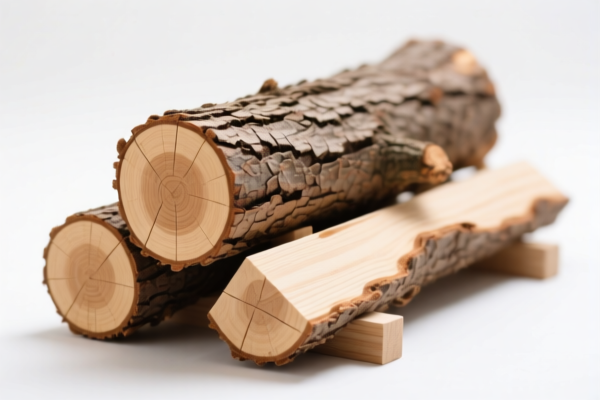
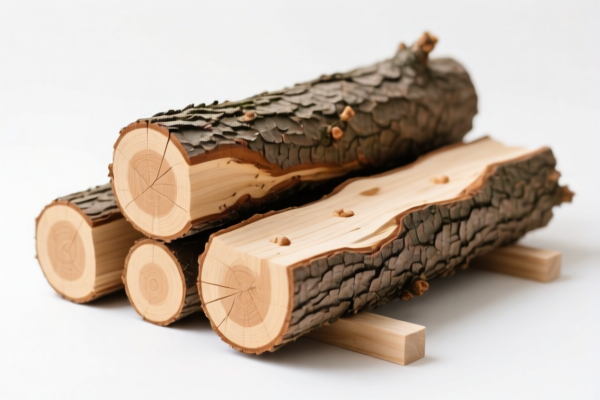
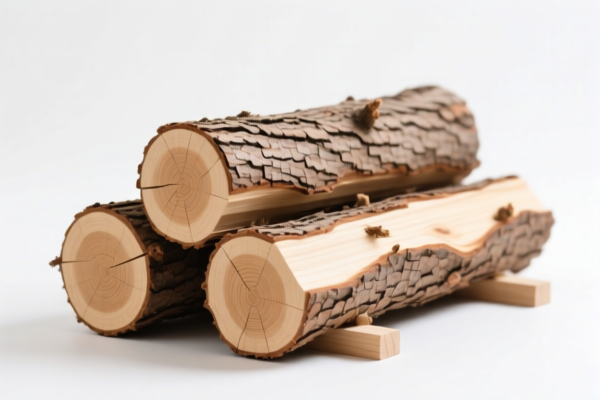
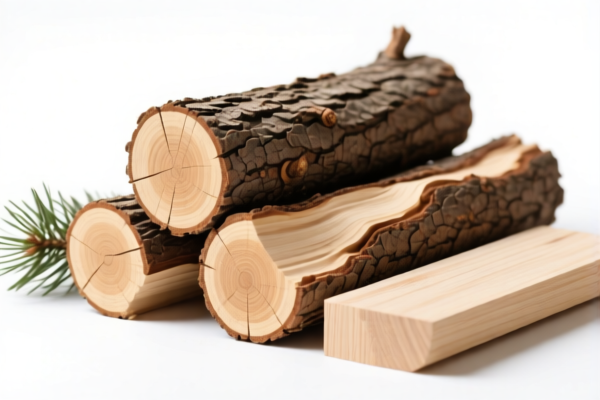
AI Analysis
🪵 Softwood Logs for Furniture Manufacturing (Wood in the Rough)
🌐 HS Code Reference & Customs Clearance Guide | 2026 Latest Tariff Analysis | Professional Wood Import Strategy
📌 I. Product Definition & Classification: Are You Importing "Logs" or "Lumber"?
Softwood logs intended for furniture manufacturing are raw timber materials. In international trade, the distinction between "Wood in the Rough" and "Sawn Wood" is critical and strictly enforced by customs authorities.
Wood in the Rough (Logs/Timber): - Unprocessed or roughly squared timber. - Strip of bark or sapwood removed or not. - Shape is irregular or roughly cylindrical/squared, not yet processed into planks or boards.
Sawn Wood (Lumber/Planks): - Lengthwise cut, sliced, or peeled. - Thickness exceeds 6 mm. - Planed, sanded, or end-jointed.
⚠️ Key Distinction Point:
- If the wood is rough, uncut, or only roughly squared (no precise planing/sanding beyond basic shaping) → Classified under Chapter 4403 (Wood in the Rough).
- If the wood is sawn, planed, sanded, or has a thickness >6mm with refined surfaces → Classified under Chapter 4407 (Wood Sawn/Sliced).
- Furniture Manufacturing Context: If you are importing raw logs to saw into furniture parts domestically, it is 4403. If you are importing pre-sawn planks ready for joinery, it is 4407.
📦 II. HS Code Classification Details (2026 Latest Tariff Authority Match)
Based on your input "Other Softwood Logs for Furniture Manufacturing", the most accurate classification falls under Chapter 4403 (Wood in the rough...). Since "Furniture Manufacturing" implies general usage and not a specific species like Pine mentioned in 4403.21, it likely falls under "Other".
| HS Code | Product Description | Applicable Scenario | Is it "Rough"? |
|---|---|---|---|
4403.26.01.65 |
Wood in the rough: Other, coniferous: Other Other | General softwood logs (non-Pine, non-Larch, non-Spruce/Pine specific), stripped or not, roughly squared | ✅ Yes (Rough) |
4407.19.00.92 |
Wood sawn... thickness >6mm: Coniferous: Other: Larch (Larix spp.): Rough | Specifically Larch wood, but processed/sawn surface | ❌ No (Sawn/Processed) |
4407.19.00.93 |
Wood sawn... thickness >6mm: Coniferous: Other: Other | Generic Softwood, but processed/sawn surface | ❌ No (Sawn/Processed) |
4403.21.01.65 |
Wood in the rough: Other, coniferous: Pine (Pinus spp.), smallest cross-section ≥15cm | Specifically Pine logs, large diameter | ✅ Yes (Rough, Pine) |
🔍 Critical Reminder:
- The term "Logs" strongly implies Chapter 4403.
- However, if the logs have been planed, sanded, or precisely squared to a thickness >6mm, they MUST be reclassified to Chapter 4407 (e.g.,4407.19.00.92or4407.19.00.93).
- Misclassification Risk: Declaring planed lumber as "logs" under 4403 is a common customs error that leads to penalties.
💰 III. 2026 Latest Tariff Rate Detail (US-China Trade Context)
✅ Applicable Country: United States (US)
✅ Origin: China (CN) (Note: Rates below are based on the provided DATA which reflects 25% additional tariffs, typical for Section 301 goods)
✅ Effective Time: Current rates apply
🎯 1. 4403.26.01.65 —— Wood in the Rough, Other Coniferous (General Softwood Logs)
| Item | Content |
|---|---|
| Base Tariff | 0.0% (ad valorem) |
| Additional Tariff (Section 301) | +25.0% |
| Total Tariff Rate | 25.0% |
| Tax Calculation | CIF Value × 25% |
| De Minimis Exemption | ❌ Not Applicable (Section 301 goods are generally excluded from de minimis relief if above threshold) |
| Legal Basis | USITC:4403.26.01.65 → Footnote:25%AdditionalDuty |
📌 Explanation:
- "Base Tariff 0%" indicates the standard MFN rate for rough wood.
- "Additional Tariff 25%" is the critical cost driver. This is due to US trade policies on Chinese-origin wood products.
- Total Cost Impact: For every $10,000 CIF value, you pay $2,500 in duties.
🎯 2. 4407.19.00.92 —— Larch Wood, Sawn/Processed (Thickness >6mm)
| Item | Content |
|---|---|
| Base Tariff | 0.0% |
| Additional Tariff (Section 301) | +25.0% |
| Total Tariff Rate | 25.0% |
| Tax Calculation | CIF Value × 25% |
| Legal Basis | USITC:4407.19.00.92 → Footnote:25%AdditionalDuty |
📌 Note: Even though Larch is a specific species, if it is processed (sawn/planed), it falls under 4407. The tariff rate remains 25% in the provided data.
🎯 3. 4407.19.00.93 —— Other Softwood, Sawn/Processed (Thickness >6mm)
| Item | Content |
|---|---|
| Base Tariff | 0.0% |
| Additional Tariff (Section 301) | +25.0% |
| Total Tariff Rate | 25.0% |
| Tax Calculation | CIF Value × 25% |
| Legal Basis | USITC:4407.19.00.93 → Footnote:25%AdditionalDuty |
📌 Note: This is the catch-all for processed softwoods (like Spruce, Fir, Hemlock, etc.) that are not Pine or Larch. 25% total duty.
🎯 4. 4403.21.01.65 —— Pine Logs, Large Diameter (≥15cm)
| Item | Content |
|---|---|
| Base Tariff | 0.0% |
| Additional Tariff (Section 301) | +25.0% |
| Total Tariff Rate | 25.0% |
| Tax Calculation | CIF Value × 25% |
| Legal Basis | USITC:4403.21.01.65 → Footnote:25%AdditionalDuty |
📌 Note: If your "logs" are specifically Pine (Pinus spp.) with a smallest cross-sectional dimension of 15 cm or more, use this code. Same 25% rate.
🛠️ IV. Customs Clearance Practical Advice (Pitfall Avoidance Guide)
✅ 1. Essential Documentation Checklist
| Document | Required | Explanation |
|---|---|---|
| ✅ Commercial Invoice | ✔️ | Must clearly state "Wood in the Rough" or "Sawn Wood" as per actual condition. Do not use vague terms like "Timber". |
| ✅ Packing List | ✔️ | Detail dimensions, volume (CBM), and weight. Specify if logs are debarked or squared. |
| ✅ Phytosanitary Certificate | ✔️ | Mandatory for wood products. Issued by the country of origin's plant protection organization. Must state no pests/wood-boring insects. |
| ✅ Fumigation Certificate | ✔️ | Often required alongside Phytosanitary cert, proving treatment against invasive species. |
| ✅ Species Declaration | ✔️ | Must identify genus/species (e.g., Pinus sylvestris, Larix decidua). Incorrect species can lead to misclassification. |
| ✅ Bill of Lading | ✔️ | Ensure HS Codes are consistent across Invoice, Packing List, and B/L. |
✅ 2. Declaration Strategy (Key Mnemonics)
🔥 "Rough is 4403, Sawn is 4407; Mislabeling Costs 25%!"
| Scenario | Correct HS Code | Wrong Code | Consequence |
|---|---|---|---|
| Raw Logs (Unprocessed) | 4403.26.01.65 or 4403.21.01.65 |
4407.xxxx.xxxx |
Potential under-declaration if processed, or over-complication. |
| Planed/Sanded Planks (>6mm thick) | 4407.19.00.92 (Larch) or 4407.19.00.93 (Other) |
4403.26.01.65 |
High Risk! Customs may reject "logs" declaration for finished lumber, causing delays and fines. |
| Pine Logs ≥15cm | 4403.21.01.65 |
4403.26.01.65 |
Minor classification error, but correct code ensures accurate data tracking. |
| Small Diameter Pine (<15cm) | 4403.26.01.65 (as "Other") |
4403.21.01.65 |
Misclassification. |
📌 Tip: If the wood is not treated (not pressure-treated, not chemically preserved), ensure the description explicitly says "Not Treated". Treated wood may require additional declarations or fall under different regulatory controls.
✅ 3. Special Cases
| Case | Handling Advice |
|---|---|
| Mixed Species | If a shipment contains Pine, Larch, and Spruce, you MUST separate them into different HS codes (4403.21.01.65, 4407.19.00.92, 4407.19.00.93) if they meet different criteria. Do not lump them under "Other" if specific codes apply. |
| Larch Identification | Larch (Larix spp.) is distinct. If you have Larch, do not use the generic "Other" codes unless it's not sawn. If sawn, use 4407.19.00.92. |
| Furniture Use | The end-use (furniture) does not determine the HS Code. The physical state (rough vs. sawn) and species do. |
🌍 V. Global Market Comparison (2026)
| Country/Region | Recommended HS Code | Tariff (China Origin) | Certification | Notes |
|---|---|---|---|---|
| 🇺🇸 USA | 4403.26.01.65 (Rough) or 4407.19.00.93 (Sawn) |
25% | Phytosanitary Cert | Section 301 Duty Applies |
| 🇨🇳 China | 4403.26.00.00 (Import) |
0-5% (depending on species) | Phytosanitary | Low base duty, but high logistics |
| 🇪🇺 EU | 4403.49 (Other coniferous) |
0% (Mostly) | FLEGT/Legal Timber | Strict legality documentation |
| 🇯🇵 Japan | 4403.49 |
0-5% | Phytosanitary | No major additional tariffs |
📌 Conclusion:
- The 25% additional tariff is the single biggest cost factor for US imports of Chinese wood.
- Ensure Phytosanitary Certificates are flawless to avoid port quarantine delays, which can incur demurrage charges.
📌 VI. Common Errors & Pitfalls (Lessons Learned)
❌ Error 1: Declaring Sawn/Planed Lumber as "Logs" (4403)
👉 Consequence: Customs may classify it as processed wood, but if the declaration says "rough," it creates a discrepancy. If actually rough, no issue. If actually sawn, it's a misdeclaration risk.
❌ Error 2: Ignoring Species Specificity (Pine vs. Larch vs. Other)
👉 Consequence: Using a generic code when a specific one (like 4403.21.01.65 for Pine) applies can lead to data inaccuracies and potential scrutiny.
❌ Error 3: Missing Phytosanitary Certificate
👉 Consequence: Shipment held at port, potential destruction or re-export. Very costly.
❌ Error 4: Not specifying "Not Treated"
👉 Consequence: If the wood is chemically treated, it may be classified as 4403.20 or require different handling. Clarity prevents questions.
✅ Correct Declaration Example:
"Wood in the Rough, Coniferous, Other, Not Treated, Species: Mixed Softwood, Volume: 10 CBM, Fumigated, HS Code: 4403.26.01.65"
🎯 VII. Conclusion: Precise Classification Saves 25%!
🎯 Remember:
🔹 "Logs are Rough, Planks are Sawn"
🔹 "25% Duty on US Imports from China"
🔹 "Phytosanitary Cert is Your Passport"
📌 Pro Tip:
If your wood is not from China (e.g., from Canada, Russia, or Europe), the 25% additional tariff does NOT apply. The total tariff would be 0% (Base 0% + 0% Additional). Verify the Country of Origin carefully!
📣 Action Item:
📞 Contact your freight forwarder to verify the Phytosanitary Certificate format.
📦 Inspect wood to confirm if it is "Rough" or "Sawn/Planed" before finalizing HS Code.
🚀 Ensure CIF value includes all costs to calculate the 25% duty accurately.
✨ Smart Importing Starts with the Right HS Code!
💼 Don't let misclassification cost you 25% of your value!
Customer Reviews
About HS Code Classification
The Harmonized System (HS) is an internationally standardized nomenclature developed by the World Customs Organization (WCO) to classify traded products. Over 200 countries use the HS system as the basis for customs tariffs, trade statistics, and import/export regulations.
Each HS code follows a hierarchical structure:
- Chapter (2 digits) — Broad category of goods (e.g., Chapter 84: Machinery and Mechanical Appliances)
- Heading (4 digits) — More specific grouping within the chapter
- Subheading (6 digits) — Internationally standardized breakdown, used by all WCO member countries
- National subdivisions (8-10 digits) — Country-specific extensions for further classification, such as US HTSUS 10-digit codes
Correct HS code classification is essential for smooth customs clearance, accurate duty payment, and compliance with trade regulations. Misclassification can lead to customs delays, overpayment of duties, or penalties.
When importing from CN to US, the applicable tariff rates may include:
- Most-Favored-Nation (MFN) rate — The standard duty rate applied to WTO members
- General rate — Applied to countries without trade agreements
- Trade remedy duties — Additional tariffs such as Section 301 (anti-dumping), Section 232 (national security), or countervailing duties
The information provided on this page is for reference purposes only. For official classification, please consult with your local customs authority or a licensed customs broker.