Other Sulfurized Rubber Dust Proof Sealing Rings
CN → US| HS Code | Tariff Rate | Origin | Destination | Doc |
|---|---|---|---|---|
| 4017000000 | 37.7% | CN | US | Official Doc |
| 8708995500 | 37.5% | CN | US | Official Doc |
| 4016931050 | 37.5% | CN | US | Official Doc |
| 4016931020 | 37.5% | CN | US | Official Doc |
| 8708990300 | 35.0% | CN | US | Official Doc |
Product Images
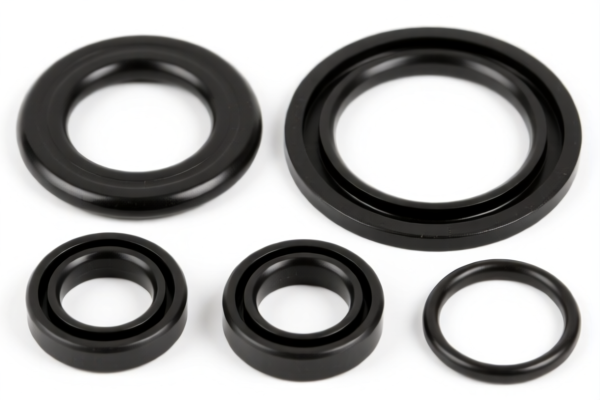
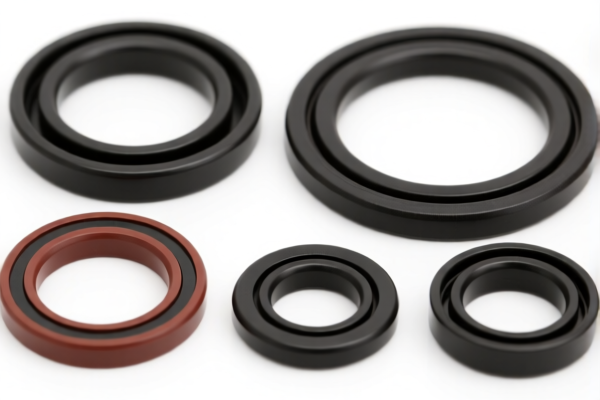
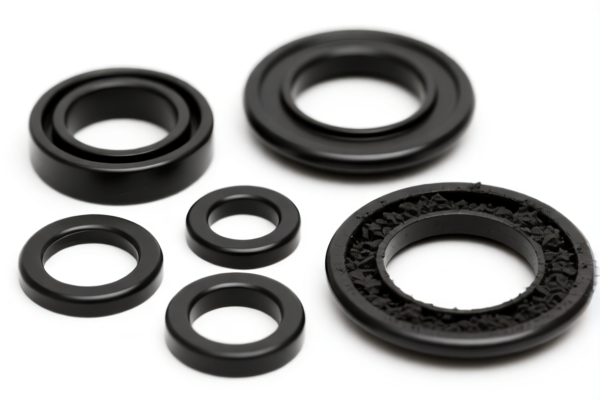
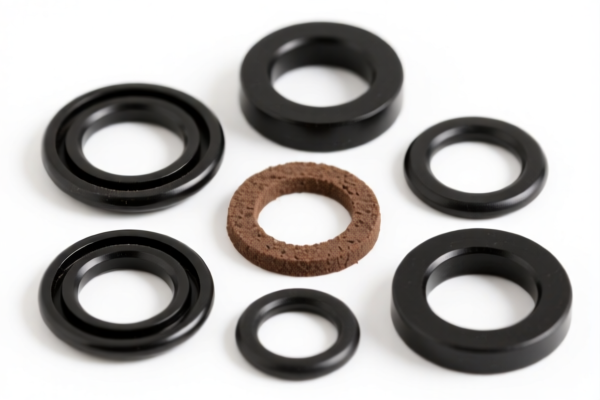
AI Analysis
🛡️ Other Sulfurized Rubber Dust Proof Sealing Rings (Automotive & Industrial)
🌐 HS Code Reference & Customs Clearance Guide | 2026 Latest Tariff Breakdown | Professional Classification Strategy
📌 I. Product Definition & Classification: What Are "Dust Proof Sealing Rings"?
"Sulfurized Rubber Dust Proof Sealing Rings" are flexible components made from vulcanized rubber (sulfurized rubber), designed primarily to seal gaps, prevent dust ingress, and protect mechanical parts. While commonly used in automotive applications (hence "Other"), they are fundamentally rubber articles.
In international trade, classification hinges on two critical factors: 1. Material: Vulcanized rubber (Sulfurized). 2. Function/State: Sealing elements (rings, strips, gaskets) vs. finished vehicle parts.
⚠️ Critical Distinction:
- If the item is a raw material (hard rubber) → 4017.00.00.00
- If the item is a rubber article (seal/gasket) not elsewhere specified → 4016.93.10.xx
- If the item is explicitly a vehicle part → 8708.99.xx.xx
📦 II. HS Code Classification Details (2026 Latest Tariff Authority Mapping)
Based on the provided data, here are the five potential HS Codes and their specific matching logic:
| HS Code | Product Description & Logic | Tax Rate | Key Matching Criteria |
|---|---|---|---|
| 4017.00.00.00 | Hard Rubber & Articles Thereof | 37.7% | Material Match: "Vulcanized rubber" fits the category of "Hard Rubber." Form: "Sealing strip" is considered a rubber article. Logic: Broadest category for rubber articles; no conflict with classification notes. |
| 8708.99.55.00 | Parts & Accessories of Motor Vehicles (Other) | 37.5% | Material: Contains rubber. Application: "Automotive sealing strip." Logic: Classified as a "part and accessory" for vehicles under "Other." |
| 4016.93.10.50 | Other Rubber Articles: Gaskets, Washers, & Other Seals | 37.5% | Material: Sulfurized rubber. Form: "Sealing ring/strip." Logic: Fits the definition of "other seals" in Chapter 40. No material or use conflict. |
| 4016.93.10.20 | Rubber Gaskets, Washers, & Seals (Auto Specific) | 37.5% | Material: Sulfurized rubber. Form: "Sealing strip" falls under "Gaskets/Washers/Seals." Application: "For automobiles" matches the restriction for Chapter 87 goods. Logic: Specific "Other" category for rubber seals used in auto. |
| 8708.99.03.00 | Parts & Accessories of Motor Vehicles (Other) | 35.0% | Material: Contains rubber. Form: "Sealing strip" (Auto part). Logic: Fits "Other parts & accessories" in Chapter 87. |
🔍 Key Insight:
- The lowest tariff (35.0%) applies to 8708.99.03.00.
- The highest tariff (37.7%) applies to 4017.00.00.00.
- Codes 4016.93.10.50 and 4016.93.10.20 are structurally similar (Rubber Seals) but differ slightly in sub-classification specificity for auto use.
💰 III. 2026 Latest Tariff Rate Breakdown (Including Surcharges)
✅ Applicable Country: United States (US)
✅ Country of Origin: China (CN)
✅ Effective Date: From November 10, 2025 (and subsequent imports)
🎯 1. 4017.00.00.00 —— Hard Rubber & Articles (Highest Cost)
| Item | Details |
|---|---|
| Base Tariff | 2.7% |
| Section 301 Surcharge | +25.0% |
| IEEPA Surcharge (122 Clause) | +10.0% |
| Total Tariff Rate | 37.7% |
| Calculation | CIF Value × 37.7% |
| De Minimis Eligibility | ❌ Not Eligible (High tariff rates exclude this from $800 exemption) |
| Legal Authority Path | IEEPA:9903.01.25 → USITC:4017.00.00.00 |
📌 Note:
This code attracts the highest surcharge because it is often treated broadly under rubber articles without the specific "auto part" exemptions that might apply to other sub-headings.
🎯 2. 8708.99.55.00 & 4016.93.10.50 & 4016.93.10.20 —— Mid-Range Tariffs
| Item | Details |
|---|---|
| Base Tariff | 2.5% |
| Section 301 Surcharge | +25.0% |
| IEEPA Surcharge (122 Clause) | +10.0% |
| Total Tariff Rate | 37.5% |
| Calculation | CIF Value × 37.5% |
| De Minimis Eligibility | ❌ Not Eligible |
| Legal Authority Path | IEEPA:9903.01.24 → USITC:8708.99.55.00 / 4016.93.10.xx |
📌 Note:
These codes are identical in tax burden (37.5%). The choice between them depends on whether customs prefers to view the item as a "general rubber seal" (4016) or an "auto part" (8708). Both carry the standard 301 + 122 surcharges.
🎯 3. 8708.99.03.00 —— Lowest Tariff Option (Recommended)
| Item | Details |
|---|---|
| Base Tariff | 0.0% |
| Section 301 Surcharge | +25.0% |
| IEEPA Surcharge (122 Clause) | +10.0% |
| Total Tariff Rate | 35.0% |
| Calculation | CIF Value × 35.0% |
| De Minimis Eligibility | ❌ Not Eligible |
| Legal Authority Path | IEEPA:9903.01.24 → USITC:8708.99.03.00 |
📌 Critical Advantage:
- The 0% base tariff significantly reduces the cost burden compared to codes with 2.5% or 2.7% base rates.
- This is the most cost-effective classification for "Sulfurized Rubber Dust Proof Sealing Rings" if they can be justified as "other parts and accessories of motor vehicles."
🛠️ IV. Customs Clearance Operational Advice (Practical Pitfall Avoidance)
✅ 1. Documentation Checklist (Essential)
| Document | Required | Purpose |
|---|---|---|
| ✅ Product Specification Sheet | ✔️ | Must specify: Material (Vulcanized/Sulfurized Rubber), Shape (Ring/Strip), Function (Dust Proof/Sealing). |
| ✅ Technical Drawings | ✔️ | Proves the item is a "part" for auto assembly, supporting 8708 classification. |
| ✅ Product Photos | ✔️ | Clear images showing the "sealing ring" structure and any mounting points. |
| ✅ Commercial Invoice | ✔️ | Description: "Automotive Rubber Sealing Strip/Ring, Sulfurized, Dust Proof." Avoid vague terms like "rubber piece." |
| ✅ Bill of Lading | ✔️ | Ensure packaging indicates auto parts/seals. |
✅ 2. Classification Strategy (Key Tip)
🔥 "Justify as Auto Part to Save 2.7%!"
| Scenario | Recommended HS Code | Reason |
|---|---|---|
| General Industrial Seal | 4016.93.10.xx |
Safer if no specific auto application is proven. |
| Automotive Dust Seal | 8708.99.03.00 |
BEST FOR COST. Justifies 0% base rate. Must prove use in motor vehicles. |
| Unknown/Hybrid Use | 4017.00.00.00 |
Risk of highest tariff (37.7%). Avoid unless certain. |
💡 Pro Tip:
If the sealing rings are exclusively used in automotive manufacturing (OEM or aftermarket), always argue for Chapter 87 (8708). This leverages the 0% base tariff. If they are used in general machinery (motors, pumps), use Chapter 40 (4016), which has a 2.5% base rate.
✅ 3. Special Case Handling
| Situation | Action |
|---|---|
| Mixed Shipments | If auto and non-auto seals are shipped together, consider splitting the invoice to apply 8708 to auto parts and 4016 to others. |
| Customs Scrutiny | Provide a Letter of Certification from the end-user stating the seals are for automotive use. |
| Origin Declaration | Ensure the "Country of Origin" is correctly marked as China to apply the correct IEEPA/301 surcharges. |
🌍 V. Global Market Comparison (2026 Outlook)
| Market | Recommended HS Code | Est. Total Tariff | Key Requirement |
|---|---|---|---|
| 🇺🇸 USA | 8708.99.03.00 |
35.0% | Proof of automotive use to justify 0% base rate. |
| 🇪🇺 EU | 4016.93.10 |
~4.0% - 6.5% | CE marking if for specific industrial uses. No 301/IEEPA. |
| 🇨🇳 China | 4016.93.10 |
~5% - 7% | Standard import duty. No high surcharges. |
| 🇲🇽 Mexico | 8708.99.99 |
0% (if USMCA) | Must meet local content rules for tariff-free entry. |
📌 Conclusion:
- USA is the most expensive market due to Section 301 + IEEPA surcharges.
- Minimizing the Base Rate is the only lever available (0% vs 2.5%).
-8708.99.03.00is the optimal code for cost efficiency in the US market.
📌 VI. Common Mistakes & Pitfalls (Lessons Learned)
❌ Mistake 1: Classifying as 4017.00.00.00 (Hard Rubber)
👉 Result: Pays 37.7% instead of 35.0%.
💡 Fix: Ensure description emphasizes "Sealing Article" not "Hard Rubber Material."
❌ Mistake 2: Using generic "Rubber Part" in Invoice
👉 Result: Customs may default to the highest duty or demand extra proof.
💡 Fix: Use precise terms: "Automotive Sulfurized Rubber Sealing Ring."
❌ Mistake 3: Assuming De Minimis ($800) Applies
👉 Result: Shipment detained or taxed at full rate.
💡 Fix: All these HS codes are excluded from de minimis due to high surcharges.
🎯 VII. Conclusion: Optimize Cost, Ensure Compliance
🎯 Key Takeaway:
🔹 Target Code:
8708.99.03.00
🔹 Total Tax: 35.0% (Lowest possible)
🔹 Strategy: Prove Automotive Application to unlock the 0% Base Rate.
📌 Action Plan:
1. Review Product Use: Is it for a car/truck? → Use 8708.
2. Update Documentation: Highlight "Automotive Seal" in invoices.
3. Calculate CIF: Apply 35.0% tax for budgeting.
📣 Final Advice:
"Don't let a 2.7% base rate difference cost you profit.
Classify correctly, document clearly, and clear customs smoothly!"
✨ Professional Classification, Efficient Customs Clearance!
💼 Every percentage point saved is pure profit.
Customer Reviews
About HS Code Classification
The Harmonized System (HS) is an internationally standardized nomenclature developed by the World Customs Organization (WCO) to classify traded products. Over 200 countries use the HS system as the basis for customs tariffs, trade statistics, and import/export regulations.
Each HS code follows a hierarchical structure:
- Chapter (2 digits) — Broad category of goods (e.g., Chapter 84: Machinery and Mechanical Appliances)
- Heading (4 digits) — More specific grouping within the chapter
- Subheading (6 digits) — Internationally standardized breakdown, used by all WCO member countries
- National subdivisions (8-10 digits) — Country-specific extensions for further classification, such as US HTSUS 10-digit codes
Correct HS code classification is essential for smooth customs clearance, accurate duty payment, and compliance with trade regulations. Misclassification can lead to customs delays, overpayment of duties, or penalties.
When importing from CN to US, the applicable tariff rates may include:
- Most-Favored-Nation (MFN) rate — The standard duty rate applied to WTO members
- General rate — Applied to countries without trade agreements
- Trade remedy duties — Additional tariffs such as Section 301 (anti-dumping), Section 232 (national security), or countervailing duties
The information provided on this page is for reference purposes only. For official classification, please consult with your local customs authority or a licensed customs broker.