Other Sulfurized Rubber Protective Covers
CN → US| HS Code | Tariff Rate | Origin | Destination | Doc |
|---|---|---|---|---|
| 4016996010 | 37.5% | CN | US | Official Doc |
| 4016990300 | 38.0% | CN | US | Official Doc |
| 4016935010 | 37.5% | CN | US | Official Doc |
| 8487900040 | 38.9% | CN | US | Official Doc |
| 4016935020 | 37.5% | CN | US | Official Doc |
Product Images
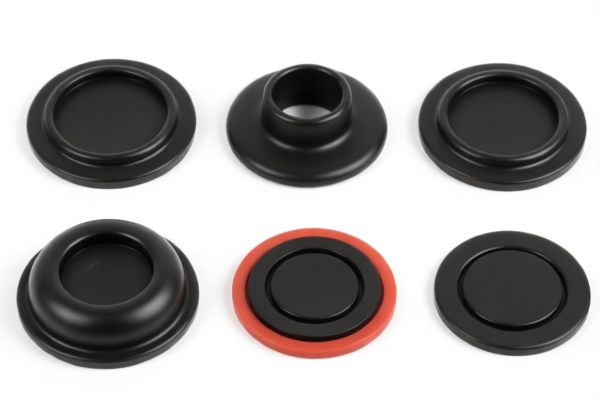
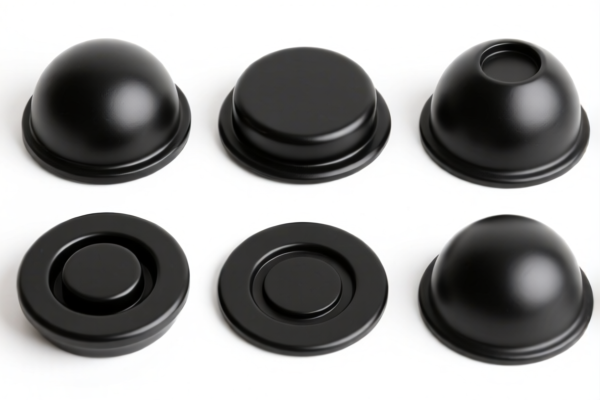
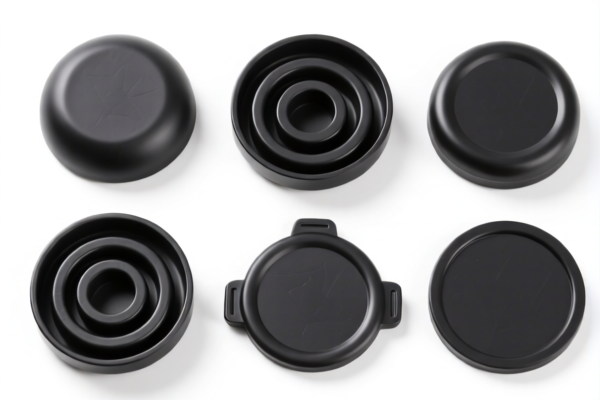
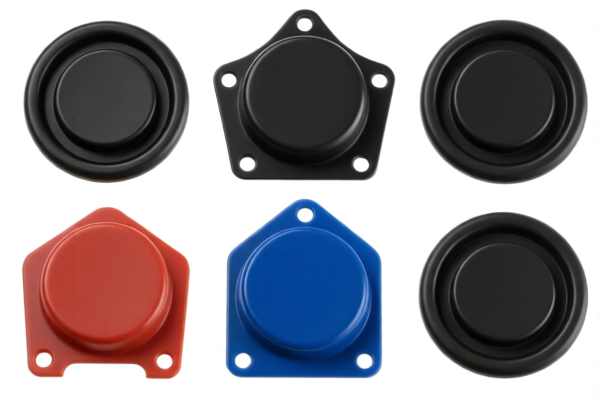
AI Analysis
🛡️ Other Sulfurized Rubber Protective Covers
🌐 HS Code Reference & Clearance Guide | 2026 Latest Tariff Analysis | Professional Entry Strategy
📌 I. Product Definition & Classification: Do You Truly Understand "Protective Covers"?
Sulfurized Rubber Protective Covers are specialized industrial or consumer goods made from vulcanized rubber (sulfurized rubber). In international trade, their classification hinges on two critical factors: 1. Material: They must be classified under Chapter 40 (Rubber and Articles Thereof) because they are made of vulcanized rubber. 2. Form/Function: They are considered "Other" articles if they do not fit specific sub-headings for containers, gaskets, or specific machinery parts.
⚠️ Key Distinction Point:
- If the item is a "Sealing Ring/Gasket" (used specifically to prevent leakage in mechanical joints) → It may fall under4016.93(Seals, Gaskets).
- If the item is a "Protective Cover" (used for protection against dust, water, or physical damage, and not primarily a seal) → It falls under4016.99(Other vulcanized rubber articles).
- Critical Warning: While some systems might attempt to classify rubber parts under Chapter 84 (Machinery Parts), HS Note 2 to Chapter 84 explicitly excludes articles of Chapter 40. Therefore, pure rubber covers should generally remain in Chapter 40 unless they are integral, custom-shaped parts of a machine with no other functional identity.
📦 II. HS Code Classification Details (2026 Latest Tariff Authority Match)
Based on the provided data, here are the 5 matched HS Codes for "Other Sulfurized Rubber Protective Covers," along with their logic and tax implications.
| HS Code | Product Description | Matching Logic (Why it Fits) | Total Tax Rate (US Origin) |
|---|---|---|---|
4016.99.60.10 |
Other vulcanized rubber articles, other (Protective Cover) | Material + Form Match: Matches "Sulfurized Rubber" material and "Protective Cover" as a finished article. Since it's a "protective cover" (not a specific seal or container), it fits the "Other" fallback category. | 37.5% |
4016.99.03.00 |
Other vulcanized rubber articles, other | Material + Function Match: Matches "Sulfurized Rubber" material. The "Protective Cover" is an "Other Article" not falling into specific container or gasket categories. | 38.0% |
4016.93.50.10 |
Other seals, gaskets | Use/Function Match: If the "protective cover" is primarily used as a seal (e.g., oil seal, dust seal), it matches the "Seal/Gasket" category. | 37.5% |
8487.90.00.40 |
Other parts of machinery | Component Match (Debatable): Some systems may classify it as a "Machinery Part" if it is custom-fitted. Note: This contradicts HS Note 2 to Ch. 84 (which excludes Ch. 40 articles), but the provided data indicates a match based on "part/component" logic when material conflict is ignored. | 38.9% |
4016.93.50.20 |
Other seals, gaskets | Use/Function Match: Similar to 4016.93.50.10, this code applies if the cover functions as a seal. The "Sulfurized Rubber" material and "Seal" function align perfectly. |
37.5% |
🔍 Important Clarification on
8487.90.00.40:
While8487.90.00.40is listed as a match in the data, customs authorities often reject this for pure rubber covers because Chapter 40 takes precedence over Chapter 84 for rubber articles. Use this code only if the rubber part is strictly a mechanical component with a specific mechanical function beyond simple sealing or covering, and even then, it carries a higher risk of re-classification.
💰 III. 2026 Latest Tariff Rate Breakdown (Including Surcharges)
✅ Applicable Country: United States (US)
✅ Origin: China (CN)
✅ Effective Date: 2025/2026 (Current Trade War Context)
🎯 1. 4016.99.60.10 & 4016.93.50.10/20 —— Other Rubber Articles / Seals
| Item | Details |
|---|---|
| Base Tariff | 2.5% (ad valorem) |
| Section 301 Surcharge | +25.0% (USITC Footnote for China-origin rubber goods) |
| IEEPA Surcharge | +10.0% (Executive Order 14032 on China) |
| Total Effective Rate | 37.5% |
| Tax Calculation | CIF Value × 37.5% |
| De Minimis Exemption | ❌ NOT Eligible (Section 301 & IEEPA taxes apply even under $800) |
| Legal Path | USITC:4016.99.60.10 → FOOTNOTE:301.88.01 → IEEPA:9903.01.25 |
📌 Explanation:
- 2.5% Base Rate: Standard MFN rate for rubber articles. - 25% Section 301 Tax: Applies to most rubber products from China. - 10% IEEPA Tax: Additional surcharge for Chinese origin. - Total: 37.5%. This is a high-cost item for importers.
🎯 2. 4016.99.03.00 —— Other Rubber Articles (Other)
| Item | Details |
|---|---|
| Base Tariff | 3.0% (ad valorem) |
| Section 301 Surcharge | +25.0% |
| IEEPA Surcharge | +10.0% |
| Total Effective Rate | 38.0% |
| Tax Calculation | CIF Value × 38.0% |
| De Minimis Exemption | ❌ NOT Eligible |
| Legal Path | USITC:4016.99.03.00 → FOOTNOTE:301.88.01 → IEEPA:9903.01.25 |
📌 Explanation:
- Slightly higher base rate (3.0%) than4016.99.60.10(2.5%), but the surcharges are identical. - Total: 38.0%.
🎯 3. 8487.90.00.40 —— Machinery Parts (If Applied)
| Item | Details |
|---|---|
| Base Tariff | 3.9% (ad valorem) |
| Section 301 Surcharge | +25.0% |
| IEEPA Surcharge | +10.0% |
| Total Effective Rate | 38.9% |
| Tax Calculation | CIF Value × 38.9% |
| De Minimis Exemption | ❌ NOT Eligible |
| Legal Path | USITC:8487.90.00.40 → FOOTNOTE:301.88.01 → IEEPA:9903.01.25 |
📌 Explanation:
- Highest Risk: This code has the highest total rate (38.9%) and the highest risk of customs dispute. - Why?: HS Note 2 to Chapter 84 states that articles of Chapter 40 (rubber) are excluded from Chapter 84. Using this code may trigger a customs audit, potential re-classification, and penalties.
🛠️ IV. Customs Clearance Practical Advice (Pitfall Avoidance Guide)
✅ 1. Required Documentation Checklist
| Document | Required? | Purpose |
|---|---|---|
| ✅ Product Specification Sheet | ✔️ | Must clearly state "Vulcanized Rubber" or "Sulfurized Rubber" as material. |
| ✅ Product Photos | ✔️ | Show the item as a cover/protective sleeve, not just a raw rubber sheet. |
| ✅ Declaration of Use | ✔️ | Clarify if it is for protection (dust/water) vs. sealing (leak prevention). This determines 4016.99 vs 4016.93. |
| ✅ Bill of Lading / Invoice | ✔️ | Consistent description: "Protective Cover for [Machine Name], Sulfurized Rubber." |
| ✅ Country of Origin Certificate | ✔️ | To confirm China origin (triggering 301/IEEPA taxes). |
✅ 2. Declaration Tips (Key Mnemonics)
🔥 “Material First, Function Second, Code Specific, Tax Clear!”
| Scenario | Correct HS Code | Incorrect Code | Risk |
|---|---|---|---|
| General Protective Cover | 4016.99.60.10 (37.5%) |
8487.90.00.40 |
High risk of re-classification + higher tax (38.9%) |
| Sealing Gasket/Cover | 4016.93.50.10 (37.5%) |
4016.99.60.10 |
Minor tax difference, but function must match |
| Unknown/Raw Rubber Part | 4016.99.03.00 (38.0%) |
8487.90.00.40 |
Avoid Chapter 84 for pure rubber |
📌 Critical Rule:
- Do NOT use8487.90.00.40unless the rubber part is integral to a machine's mechanical operation (e.g., a custom-molded rubber bushing in a suspension system). For general "covers," stick to Chapter 40. - Clearly label the product as "Protective Cover" to justify4016.99(Other articles). If you label it as "Seal," it may be forced into4016.93.
✅ 3. Special Cases
| Situation | Recommendation |
|---|---|
| OEM Custom Covers | Provide design drawings to prove the shape is specific to a machine, but still declare under Chapter 40. |
| Hybrid Products (Rubber + Plastic) | If >50% by weight is rubber, it may still be Chapter 40. If mixed, consult a specialist. |
| Small Parts (Under $800) | No De Minimis Exemption! Section 301 and IEEPA taxes apply regardless of value. |
🌍 V. Global Market Comparison (2026 Latest)
| Country/Region | Recommended HS Code | Tariff Rate | Notes |
|---|---|---|---|
| 🇺🇸 USA | 4016.99.60.10 |
37.5% | High taxes due to 301/IEEPA. |
| 🇨🇳 China | 4016.99.60.10 |
8-10% | No surcharges. Import duty applies. |
| 🇪🇺 EU | 4016.99.90 |
6.5% | No trade war surcharges. |
| 🇯🇵 Japan | 4016.99.900 |
6% | No surcharges. |
| 🇦🇺 Australia | 4016.99.00 |
5% | No surcharges. |
📌 Conclusion:
- USA is the most expensive market for these goods due to 37.5% total tax. - EU, Japan, and Australia are much more favorable with rates around 5-7%.
📌 VI. Common Mistakes & Pitfalls (Lessons Learned)
❌ Mistake 1: Using 8487.90.00.40 for a simple rubber cover.
👉 Result: Customs may reject this as it violates HS Note 2 to Chapter 84. Risk of delay, audit, and back-tax payment.
❌ Mistake 2: Ignoring the IEEPA 10% surcharge.
👉 Result: Under-declaring taxes. The total tax is not just 301 (25%) + Base (2.5%), but also +10% IEEPA. Total 37.5%.
❌ Mistake 3: Assuming De Minimis ($800) exemption applies.
👉 Result: False! Section 301 and IEEPA taxes do not apply to de minimis shipments from China. All shipments are taxed.
✅ Correct Approach:
"Declare as 'Sulfurized Rubber Protective Cover' under
4016.99.60.10. Pay 37.5% total tax. Do not attempt to use Chapter 84 unless the part is mechanically critical and custom-integrated."
🎯 VII. Conclusion: Professional Declaration, Cost Control, Efficiency!
🎯 Remember the Rule:
🔹 "Rubber is Chapter 40, Not Chapter 84!"
🔹 "Total Tax = Base (2.5-3.9%) + 301 (25%) + IEEPA (10%) = ~37.5-38.9%."
🔹 "No De Minimis for China-Origin Rubber to USA!"
📌 Pro Tip:
If your protective covers are originating from Vietnam, Mexico, or Thailand, you may avoid the 25% Section 301 and 10% IEEPA taxes, reducing the rate to the base rate only (2.5-3.9%).
👉 Action: Consider supply chain diversification to these countries to save ~35% in taxes.
📣 Immediate Action:
📞 Consult a customs broker for a Pre-Ruling (Advance Ruling) on your specific product.
🚀 Ensure your invoice and packing list clearly state "Vulcanized Rubber" to avoid classification disputes.
✨ Professional Clearance Starts with Accurate Classification!
💼 Every Percent Saved is Profit Gained!
Customer Reviews
About HS Code Classification
The Harmonized System (HS) is an internationally standardized nomenclature developed by the World Customs Organization (WCO) to classify traded products. Over 200 countries use the HS system as the basis for customs tariffs, trade statistics, and import/export regulations.
Each HS code follows a hierarchical structure:
- Chapter (2 digits) — Broad category of goods (e.g., Chapter 84: Machinery and Mechanical Appliances)
- Heading (4 digits) — More specific grouping within the chapter
- Subheading (6 digits) — Internationally standardized breakdown, used by all WCO member countries
- National subdivisions (8-10 digits) — Country-specific extensions for further classification, such as US HTSUS 10-digit codes
Correct HS code classification is essential for smooth customs clearance, accurate duty payment, and compliance with trade regulations. Misclassification can lead to customs delays, overpayment of duties, or penalties.
When importing from CN to US, the applicable tariff rates may include:
- Most-Favored-Nation (MFN) rate — The standard duty rate applied to WTO members
- General rate — Applied to countries without trade agreements
- Trade remedy duties — Additional tariffs such as Section 301 (anti-dumping), Section 232 (national security), or countervailing duties
The information provided on this page is for reference purposes only. For official classification, please consult with your local customs authority or a licensed customs broker.