Other Sulfurized Rubber Sealing Rings
CN → US| HS Code | Tariff Rate | Origin | Destination | Doc |
|---|---|---|---|---|
| 8708995500 | 37.5% | CN | US | Official Doc |
| 4016931050 | 37.5% | CN | US | Official Doc |
| 4016931020 | 37.5% | CN | US | Official Doc |
| 8708990300 | 35.0% | CN | US | Official Doc |
| 4017000000 | 37.7% | CN | US | Official Doc |
Product Images
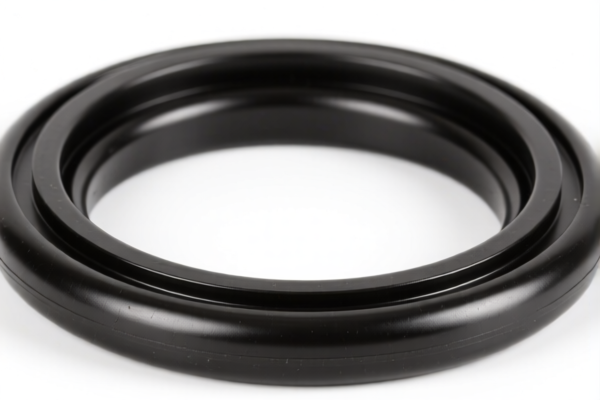
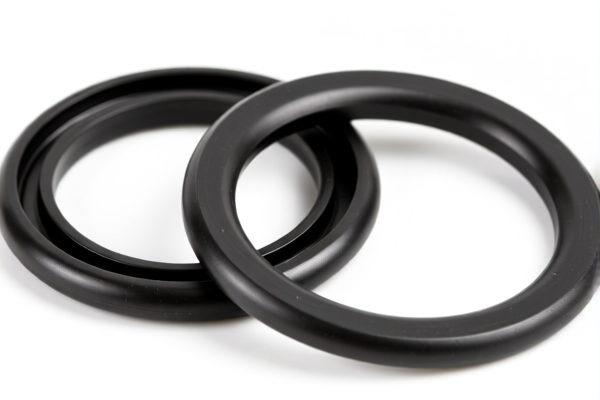
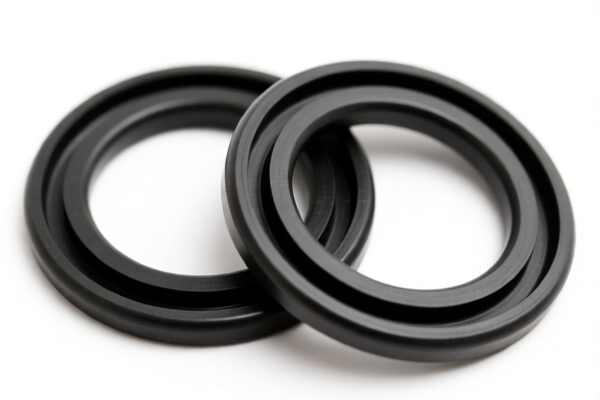
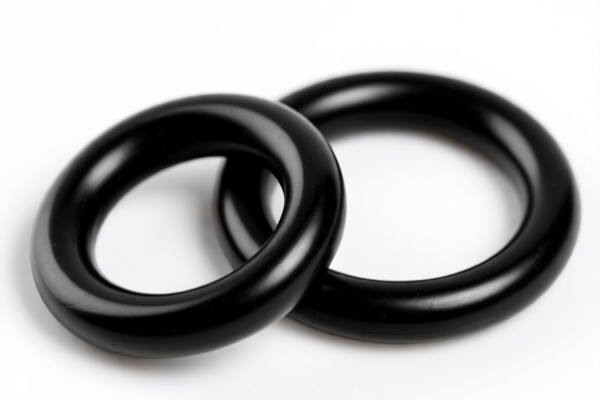
AI Analysis
🚨 High-Tariff Alert: Other Sulfurized Rubber Sealing Rings (Automotive & Industrial)
🌐 HS Code Reference & Clearance Guide | 2026 Latest Tariff Analysis | Professional Customs Strategy
📌 I. Product Definition & Classification: What Are "Sulfurized Rubber Sealing Rings"?
"Sulfurized Rubber Sealing Rings" (commonly known as Vulcanized Rubber Seals) are critical components used to prevent leakage of fluids, gases, or dust in mechanical systems. In international trade, these products are often categorized based on their end-use (Automotive vs. General Industrial) and physical form (Strips/Profiles vs. Precision Rings/O-rings).
⚠️ Key Classification Distinction:
Automotive Parts (Ch. 87): If the seal is specifically designed for and used in motor vehicles (e.g., door seals, window seals, engine gaskets), it may fall under Chapter 87.
General Rubber Articles (Ch. 40): If the seal is a general-purpose gasket, O-ring, or sealing strip not exclusively for vehicles, it falls under Chapter 40.
🔍 Critical Note for Clearance:
The distinction between "Automotive Part" (8708) and "Other Rubber Articles" (4016/4017) drastically changes the Base Tariff Rate, although the Additional Tariffs remain similar due to Section 301 and IEEPA sanctions. Misclassification can lead to significant duty discrepancies.
📦 II. HS Code Classification Details (2026 Latest Customs Tariff Authority)
Based on the provided data, here are the precise HS Codes for "Other Sulfurized Rubber Sealing Rings" and their corresponding tax breakdowns.
| HS Code | Product Description & Summary | Applicable Scenario | Base Tariff | Total Tax Rate |
|---|---|---|---|---|
| 8708.99.55.00 | Sulfurized Rubber Automotive Sealing Strips (Defined as: Parts and accessories for motor vehicles) |
Car door seals, window sealing strips, trunk seals | 2.5% | 37.5% |
| 4016.93.10.50 | Sulfurized Rubber Sealing Parts (Defined as: Other sealing parts conforming to definition) |
General industrial gaskets, hydraulic seals | 2.5% | 37.5% |
| 4016.93.10.20 | Sulfurized Rubber Sealing Strips (Defined as: Gaskets, washers, and other sealing parts) |
Automotive gaskets (if not classified as 8708), industrial strips | 2.5% | 37.5% |
| 8708.99.03.00 | Sulfurized Rubber Sealing Strips (Defined as: Other automotive parts and accessories) |
Specific automotive sealing components | 0.0% | 35.0% |
| 4017.00.00.00 | Sulfurized Rubber Sealing Strips (Defined as: Hard rubber and articles thereof) |
Rigid rubber seals, hard rubber components | 2.7% | 37.7% |
🔍 Key Insight:
- Code8708.99.03.00offers the lowest total tax rate (35.0%) because it has a 0.0% Base Tariff. This is ideal if your product can be legally justified as a general automotive part under this specific subheading.
- Codes under4016(Gaskets/Seals) and8708.99.55(Auto Strips) carry a 2.5% Base Tariff, leading to a 37.5% total rate.
- Code4017is for "Hard Rubber" and has the highest rate (37.7%) due to a 2.7% Base Tariff. Use only if the product is rigid/hard rubber.
💰 III. 2026 Latest Tariff Rate Breakdown (Detailed Tax Clauses)
✅ Applicable Country: United States (US)
✅ Origin: China (CN)
✅ Effective Date: 2025/2026 (Current Trade Policies)
All listed HS Codes are subject to the following Additional Tariffs due to US-China trade tensions:
🎯 1. Common Additional Tariffs (Applies to All Codes Above)
| Component | Rate | Legal Basis | Explanation |
|---|---|---|---|
| Section 301 / USITC | +25.0% | USITC Footnotes | Additional duty on Chinese-origin rubber goods and auto parts. |
| IEEPA (Section 122) | +10.0% | IEEPA Order | Additional 10% duty on specific Chinese goods (often referred to as "122 Clause" or similar sanctions). |
| Total Additional | +35.0% | Sum of 25% + 10% |
🎯 2. Code-Specific Tax Calculations
🚗 A. Automotive Parts Category (8708)
| HS Code | Base Tariff | Add. Tariff (301+122) | Total Effective Rate | Calculation Formula |
|---|---|---|---|---|
| 8708.99.55.00 | 2.5% | +35.0% | 37.5% | CIF Value × 37.5% |
| 8708.99.03.00 | 0.0% | +35.0% | 35.0% | CIF Value × 35.0% |
📌 Explanation:
-8708.99.03.00is the most cost-effective option if your sealing strips are clearly automotive parts. The 0% base tariff saves you 2.5% compared to other codes.
-8708.99.55.00is for specific "sealing strips" in auto parts. If your product is a strip (not a gasket/ring), this code is accurate but costs 2.5% more.
🏭 B. General Rubber Seals Category (4016)
| HS Code | Base Tariff | Add. Tariff (301+122) | Total Effective Rate | Calculation Formula |
|---|---|---|---|---|
| 4016.93.10.50 | 2.5% | +35.0% | 37.5% | CIF Value × 37.5% |
| 4016.93.10.20 | 2.5% | +35.0% | 37.5% | CIF Value × 37.5% |
📌 Explanation:
- Both4016.93.10.50and4016.93.10.20fall under "Gaskets, Washers, and Other Sealing Parts."
-4016.93.10.20is often used for "sealing strips" or "gaskets" in general machinery.
-4016.93.10.50is a broader "other sealing parts" category.
- Caution: Do not use these for automotive-specific seals if8708applies, as CBP may reclassify and demand back taxes + penalties.
🔩 C. Hard Rubber Category (4017)
| HS Code | Base Tariff | Add. Tariff (301+122) | Total Effective Rate | Calculation Formula |
|---|---|---|---|---|
| 4017.00.00.00 | 2.7% | +35.0% | 37.7% | CIF Value × 37.7% |
📌 Explanation:
- Only use this if the rubber is vulcanized hard rubber (e.g., ebonite), not soft flexible sealing rings.
- Highest tax rate among the options; avoid unless the material composition strictly matches "hard rubber."
🛠️ IV. Customs Clearance Practical Advice (Risk Avoidance Guide)
✅ 1. Documentation Checklist (Essential for Clearance)
| Document | Required | Purpose |
|---|---|---|
| Product Specification Sheet | ✔️ | Must clearly state: Material (Sulfurized/Vulcanized Rubber), Hardness (Shore A), Application (Auto/Industrial). |
| Drawings/Technical Schematics | ✔️ | Critical to prove whether the item is an Auto Part (8708) or General Seal (4016). Show mounting points, vehicle models, or machine compatibility. |
| Commercial Invoice | ✔️ | Description must match HS Code summary. Use terms like "Automotive Door Sealing Strip" for 8708 or "Industrial Rubber Gasket" for 4016. |
| Certificate of Origin (CO) | ✔️ | Confirms Chinese origin, triggering the 301/122 tariffs. |
| Packaging List | ✔️ | Ensure no mixing of HS Codes in one shipment to avoid customs holds. |
✅ 2. Declaration Strategy (Key Mantras)
🔥 "Auto Parts Need Proof, General Seals Need Specs. Choose Wisely, Save Money!"
| Scenario | Recommended HS Code | Reason | Risk if Misclassified |
|---|---|---|---|
| Car Door/Window Seal Strip | 8708.99.55.00 or 8708.99.03.00 |
Clearly an auto part. | If declared as 4016, may be accepted, but if declared as 8708 when it's generic, CBP may reject. |
| Engine Gasket / Hydraulic Seal | 4016.93.10.20 or 4016.93.10.50 |
Not exclusively auto; general industrial use. | If declared as 8708 but not for a specific vehicle, CBP will reclassify to 4016 (same tax, but fine risk). |
| Hard Rubber Insulator/Seal | 4017.00.00.00 |
Material is hard rubber. | If soft rubber, CBP will reclassify to 4016 (lower tax, but penalty for false declaration). |
✅ 3. Special Considerations for "Sealing Rings"
- O-Rings vs. Strips:
- O-Rings (circular cross-section) are typically classified under
4016.93.10. - Strips/Profiles (long continuous shapes) may be classified under
4016.93.10or8708.99if auto-specific.
- O-Rings (circular cross-section) are typically classified under
- "Other Sulfurized" Meaning:
- This implies Vulcanized Rubber. Ensure your documentation states "Vulcanized" or "Sulfur-Cured" to align with Chapter 40 heading 40.16 or 40.17.
- Anti-Circumvention:
- Do not attempt to under-declare value or mislabel "Auto Parts" as "General Industrial" to avoid scrutiny. CBP uses AI to detect patterns.
🌍 V. Global Market Comparison (2026)
| Market | Recommended HS Code | Tariff Impact | Notes |
|---|---|---|---|
| 🇺🇸 USA | 8708.99.03.00 (Best Rate) |
35.0% (Total) | Section 301 + IEEPA 122 apply. 0% Base is key advantage. |
| 🇨🇳 China | 4016.93.10 / 8708.99 |
Low (2.5%-5%) | No additional tariffs. Import duties are minimal. |
| 🇪🇺 EU | 4016.93 / 8708.99 |
0% - 4.5% | No Section 301. Most favorable market for rubber parts. |
| 🇯🇵 Japan | 4016.93 / 8708.99 |
0% - 3.2% | Low tariffs. No additional sanctions. |
📌 Conclusion:
- The USA is the highest-cost market due to 35-37.7% effective tariffs.
- For US exports,8708.99.03.00is the optimal HS Code if your product qualifies as an automotive part, saving 2.5% compared to other codes.
- If the product is not exclusively for vehicles,4016.93.10.20or.50are standard choices.
📌 VI. Common Errors & Pitfalls (Lessons Learned)
❌ Error 1: Declaring a General Industrial Rubber Seal as an Automotive Part (8708).
👉 Consequence: CBP may accept it, but if audited, you face penalties for false declaration. If rejected, you pay back duties + interest.
Fix: Ensure product has OEM documentation linking it to a specific vehicle model (VIN, Make, Model).
❌ Error 2: Using 4017.00.00.00 for soft rubber seals.
👉 Consequence: 37.7% Tax instead of 37.5%. Worse, it may be rejected for incorrect material description ("Hard Rubber").
Fix: Use 4016.93 for flexible rubber seals.
❌ Error 3: Confusing "Sealing Rings" (O-Rings) with "Sealing Strips".
👉 Consequence: While tax rates are similar (37.5%), incorrect description can lead to inspections and delays.
Fix: Use precise terms: "Vulcanized Rubber O-Ring" vs. "Vulcanized Rubber Sealing Strip/Profile".
🎯 VII. Conclusion: Precision Classification Saves Money
🎯 Key Takeaway:
🔹 For Automotive Parts: Try to qualify for
8708.99.03.00(35.0% Total) by providing OEM proof.
🔹 For General Seals: Use4016.93.10.20or.50(37.5% Total).
🔹 Avoid4017unless it is truly hard rubber (37.7% Total).
📌 Pro Tip:
If your volume is high, consider applying for a Binding Ruling from US CBP. This provides legal certainty on whether your specific sealing ring qualifies for 8708.99.03.00, potentially saving 2.5% on every shipment.
✨ Professional Customs Clearance Starts with Accurate Classification!
💼 Every 0.1% of Tariff Difference Matters in High-Volume Trade!
Customer Reviews
About HS Code Classification
The Harmonized System (HS) is an internationally standardized nomenclature developed by the World Customs Organization (WCO) to classify traded products. Over 200 countries use the HS system as the basis for customs tariffs, trade statistics, and import/export regulations.
Each HS code follows a hierarchical structure:
- Chapter (2 digits) — Broad category of goods (e.g., Chapter 84: Machinery and Mechanical Appliances)
- Heading (4 digits) — More specific grouping within the chapter
- Subheading (6 digits) — Internationally standardized breakdown, used by all WCO member countries
- National subdivisions (8-10 digits) — Country-specific extensions for further classification, such as US HTSUS 10-digit codes
Correct HS code classification is essential for smooth customs clearance, accurate duty payment, and compliance with trade regulations. Misclassification can lead to customs delays, overpayment of duties, or penalties.
When importing from CN to US, the applicable tariff rates may include:
- Most-Favored-Nation (MFN) rate — The standard duty rate applied to WTO members
- General rate — Applied to countries without trade agreements
- Trade remedy duties — Additional tariffs such as Section 301 (anti-dumping), Section 232 (national security), or countervailing duties
The information provided on this page is for reference purposes only. For official classification, please consult with your local customs authority or a licensed customs broker.