Other Support Plastic Film
CN → US| HS Code | Tariff Rate | Origin | Destination | Doc |
|---|---|---|---|---|
| 8485200000 | 38.1% | CN | US | Official Doc |
| 3921904010 | 39.2% | CN | US | Official Doc |
| 3921905010 | 39.8% | CN | US | Official Doc |
| 3920992000 | 39.2% | CN | US | Official Doc |
| 3921905050 | 39.8% | CN | US | Official Doc |
Product Images
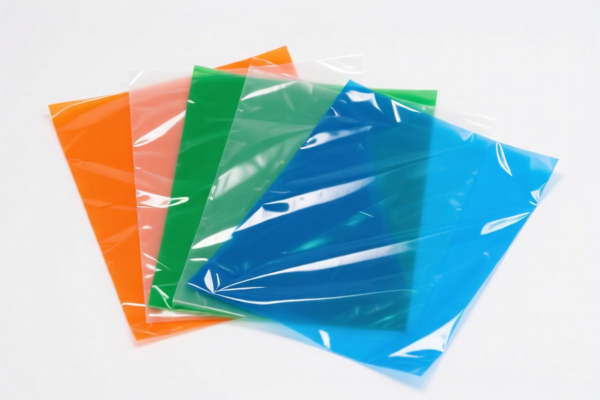

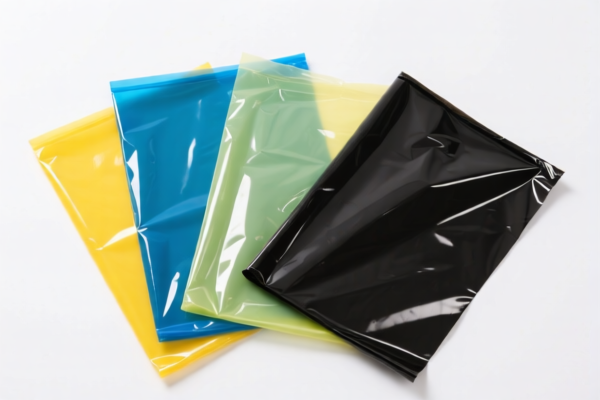

AI Analysis
🎞️ Other Plastic Film (Layered/Composite)
🌐 HS Code Reference & Customs Clearance Guide | 2026 Latest Tariff Analysis | Professional Clearance Strategy
📌 I. Product Definition & Classification: Do You Really Understand "Other Plastic Film"?
"Other Plastic Film" in international trade typically refers to layered plastic films (composite films) or specialty flexible films that do not fall under the standard categories of simple single-layer polyethylene/polypropylene sheets. These products are often used for packaging, shading, construction, or industrial applications.
In the context of US-China trade relations (as indicated by the "Section 301" and "Section 122" tariffs in the data), these goods are highly sensitive. They are generally classified under Chapter 39 (Plastics and Articles Thereof), specifically headings 3920 (Other plates, sheets, film, foil and strip, of plastics) or 3921 (Other plates, sheets, film, foam, strip and block, of plastics).
⚠️ Key Distinction Point:
- Layered/Composite Films (Multiple materials laminated together): Usually fall under 3921.
- Single-Layer Specialty Films (e.g., Shading films, specific flexible membranes): May fall under 3920.
- "Other" Classification: If it doesn't fit specific listed items (like agricultural mulch or simple PE/PP films), it goes to the "Other" subheadings.
📦 II. HS Code Classification Details (2026 Latest Tariff Authority Comparison)
Based on the provided data, here are the specific HS Codes, their summaries, and tax implications for "Other Layered/Plastic Films":
| HS Code | Summary / Description | Total Tax Rate | Tax Detail Breakdown |
|---|---|---|---|
| 8485.20.00.00 | Other layered plastic films (Note: See Critical Error Note Below) | 38.1% | Base: 3.1% + Section 301: 25.0% + Section 122: 10.0% |
| 3921.90.40.10 | Other layered plastic films, conforming to "Other plastic plates, sheets, film, foil & strip" | 39.2% | Base: 4.2% + Section 301: 25.0% + Section 122: 10.0% |
| 3921.90.50.10 | Other layered plastic films, conforming to "Plastic plates, sheets, film, foil & strip" | 39.8% | Base: 4.8% + Section 301: 25.0% + Section 122: 10.0% |
| 3920.99.20.00 | Other plastic shading films, conforming to "Other plastic flexible films" | 39.2% | Base: 4.2% + Section 301: 25.0% + Section 122: 10.0% |
| 3921.90.50.50 | Other plastic shading films, conforming to "Other plastic plates, sheets, film, foil & strips" | 39.8% | Base: 4.8% + Section 301: 25.0% + Section 122: 10.0% |
🔍 Critical Error Note on
8485.20.00.00:
Please Verify! The HS Code8485.20.00.00typically refers to "Parts of machinery" (specifically, parts of printing, binding, or paper-processing machines).
- If your product is truly "Plastic Film", it is highly likely a data error in the source provided. Plastic films belong in Chapter 39, not Chapter 84.
- Recommendation: If the product is indeed plastic film, DO NOT use 8485.20.00.00. Use one of the 392x codes below. Misclassification can lead to severe penalties, seizure, or refusal of entry.
- Assumption for this guide: We will focus on the 39xx codes (3920.99.20.00, 3921.90.40.10, 3921.90.50.10, 3921.90.50.50) as they correctly describe "Plastic Films."
💰 III. 2026 Latest Tariff Rate Breakdown (Including Surtaxes)
✅ Applicable Country: United States (US)
✅ Origin: China (CN)
✅ Effective Date: Ongoing (Subject to current trade policy)
🎯 1. The "Section 301" & "Section 122" Tariff Structure
All the relevant Chapter 39 plastic film codes listed above share a similar high-tax structure due to US-China trade tensions.
| Component | Rate | Description |
|---|---|---|
| Base MFN Rate | 3.1% – 4.8% | The standard Most Favored Nation duty for "Other plastic films." Varies slightly by specific sub-heading (3920 vs 3921). |
| Section 301 Surtax | +25.0% | Retaliatory tariff imposed on Chinese goods under Trade Act of 1974, Section 301. |
| Section 122 Surtax | +10.0% | Additional tariff under Section 122 of the Trade Expansion Act of 1962 (applied to specific steel/aluminum/plastic imports). |
| Total Effective Duty | 38.1% – 39.8% | High Risk Zone. |
📌 Explanation:
- The Base Rate is relatively low (3-5%), but the Surtaxes (35%) dominate the cost.
- No De Minimis Exemption: These goods cannot use the $800 de minimis exemption for small shipments. All shipments are subject to full duty calculation.
- Calculation Basis: Taxes are applied to the CIF Value (Cost, Insurance, Freight).
🛠️ IV. Customs Clearance Practical Advice (Pitfall Avoidance Guide)
✅ 1. Documentation Checklist (Non-Negotiable)
| Document | Required? | Purpose |
|---|---|---|
| Product Specification Sheet | ✔️ | Must detail: Material composition (e.g., PET/PE/PP layers), thickness, width, layer count. |
| Commercial Invoice | ✔️ | Must clearly state: "Layered Plastic Film," "Composite Plastic Film," or "Shading Film." Avoid vague terms like "Plastic Material." |
| Packing List | ✔️ | Detail weight, dimensions, and quantity. |
| Certificate of Origin | ✔️ | Crucial to prove origin. If not China, check for Free Trade Agreement (FTA) benefits (though unlikely for these specific codes under current US policy). |
| Material Safety Data Sheet (MSDS) | ✔️ | If the film has any coating, adhesive, or chemical treatment, this is required for hazard classification. |
| Photo of Product & Label | ✔️ | To verify HS Code classification accuracy. |
✅ 2. Declaration Tips (Key Mnemonics)
🔥 "Material Composition is King, Layer Structure Defines Code!"
| Scenario | Correct Declaration Approach | Incorrect Approach |
|---|---|---|
| Multi-Layer Composite Film | Use 3921.90.xxxx. Declare: "Composite plastic film, 3 layers, PET/PE/ALU, for packaging." | Declare as "Single-layer Plastic Film" → Risk of penalty. |
| Shading Film (Agricultural/Industrial) | Use 3920.99.20.00 or 3921.90.50.50. Declare: "Plastic Shading Film, UV stabilized, black color." | Declare as generic "Plastic Sheet" → May be misclassified. |
| Raw Material vs. Finished Good | If it's a reel of film ready for use → 3920/3921. | If it's processed into bags → Could be 3923/3926. |
✅ 3. Special Circumstances Handling
| Situation | Handling Advice |
|---|---|
| Mixed Containers | If mixed with other goods, ensure plastic film is separated in documentation. Do not bundle under a generic "Mixed Plastic Goods" invoice. |
| New Product Type | If the film has a novel structure (e.g., nano-coated), apply for an Advance Ruling from CBP to avoid delays at the port. |
| Origin Evasion | Attempting to relabel Chinese film as "Made in Vietnam" without substantial transformation is smuggling. CBP checks material source codes extensively. |
🌍 V. Global Market Comparison (2026 Latest)
| Country/Region | Recommended HS Code | Approx. Total Duty (China Origin) | Key Certifications | Notes |
|---|---|---|---|---|
| 🇺🇸 USA | 3921.90.40.10 etc. |
38.1% – 39.8% | None specific, but FDA compliant if for food contact | High Tariff Zone. |
| 🇨🇳 China | 3920.99.20.00 |
~3.1% – 4.8% | CCC (if applicable) | Low duty, high volume. |
| 🇪🇺 EU | 3920.99 |
~6.5% | REACH, RoHS | No retaliatory tariffs. |
| 🇬🇧 UK | 3920.99 |
~6.5% | UKCA, REACH | Post-Brexit alignment with EU. |
| 🇯🇵 Japan | 3920.99 |
~5.0% | JIS | Stable market. |
📌 Conclusion:
- The USA is currently the most expensive market for Chinese plastic films due to Section 301 & 122 tariffs.
- Supply Chain Strategy: Consider sourcing from Vietnam, India, or Thailand if possible, to mitigate the 35% surtax (though anti-circumvention checks are tightening).
📌 VI. Common Mistakes & Pitfall Guide (Lessons Learned)
❌ Mistake 1: Using HS Code 8485.20.00.00 for plastic film.
👉 Consequence: Customs Rejection. This code is for machine parts. Even if the tax rate looks slightly lower (38.1% vs 39.2%), the legal risk is massive.
✅ Fix: Always use Chapter 39 codes for plastic films.
❌ Mistake 2: Vague Description "Plastic Film."
👉 Consequence: Customs may assign the highest general duty rate or require extensive manual review, causing clearance delays of 2-4 weeks.
✅ Fix: Use precise descriptions: "Layered Polyethylene Terephthalate (PET) Plastic Film, 50 microns, Silver Coated."
❌ Mistake 3: Ignoring Section 122 Tariffs.
👉 Consequence: Underpayment of duty. If Section 122 is not applied, CBP will issue a duty deficiency notice + interest + penalties.
✅ Fix: Verify if the specific product line is currently subject to Section 122 (10%) in the HTSUS lookup tools.
🎯 VII. Conclusion: Professional Classification Saves Money!
🎯 Key Takeaway:
🔹 "Plastic Film = Chapter 39. Never Chapter 84."
🔹 "Total Tax = Base (4%) + Section 301 (25%) + Section 122 (10%) ≈ 39%."
🔹 "Accurate Description is the Best Shield Against Customs Audits."
📌 Pro Tip:
For high-volume imports, consider applying for a Binding Ruling from US Customs and Border Protection (CBP). This provides legal certainty on the HS Code and duty rate, protecting you from future audits and retroactive duty assessments.
📣 Immediate Action:
📞 Contact a Licensed Customs Broker to verify the exact material composition against HTSUS codes.
📝 Review your Invoice Descriptions to ensure they match the 392x codes precisely.
🚀 Optimize Your Supply Chain to account for the ~39% total duty burden.
✨ Professional clearance starts with accurate classification!
💼 Your bottom line depends on every percentage point!
Customer Reviews
About HS Code Classification
The Harmonized System (HS) is an internationally standardized nomenclature developed by the World Customs Organization (WCO) to classify traded products. Over 200 countries use the HS system as the basis for customs tariffs, trade statistics, and import/export regulations.
Each HS code follows a hierarchical structure:
- Chapter (2 digits) — Broad category of goods (e.g., Chapter 84: Machinery and Mechanical Appliances)
- Heading (4 digits) — More specific grouping within the chapter
- Subheading (6 digits) — Internationally standardized breakdown, used by all WCO member countries
- National subdivisions (8-10 digits) — Country-specific extensions for further classification, such as US HTSUS 10-digit codes
Correct HS code classification is essential for smooth customs clearance, accurate duty payment, and compliance with trade regulations. Misclassification can lead to customs delays, overpayment of duties, or penalties.
When importing from CN to US, the applicable tariff rates may include:
- Most-Favored-Nation (MFN) rate — The standard duty rate applied to WTO members
- General rate — Applied to countries without trade agreements
- Trade remedy duties — Additional tariffs such as Section 301 (anti-dumping), Section 232 (national security), or countervailing duties
The information provided on this page is for reference purposes only. For official classification, please consult with your local customs authority or a licensed customs broker.