Other Tanned Animal Leather (Flesh Side), Premium Leather
CN → US| HS Code | Tariff Rate | Origin | Destination | Doc |
|---|---|---|---|---|
| 4107115000 | 12.8% | CN | US | Official Doc |
| 4205000500 | 37.9% | CN | US | Official Doc |
| 4107998000 | 12.4% | CN | US | Official Doc |
| 4205008000 | 35.0% | CN | US | Official Doc |
| 4107918000 | 12.4% | CN | US | Official Doc |
Product Images
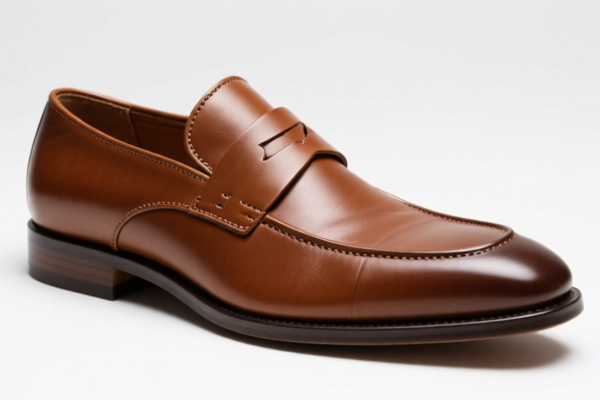
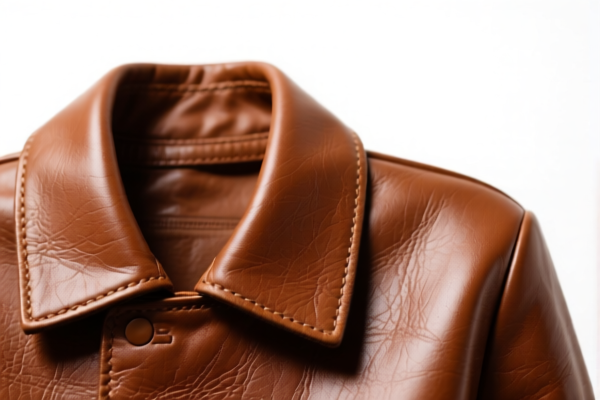
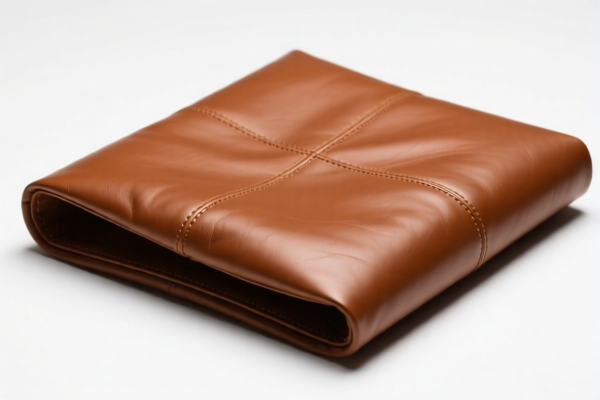
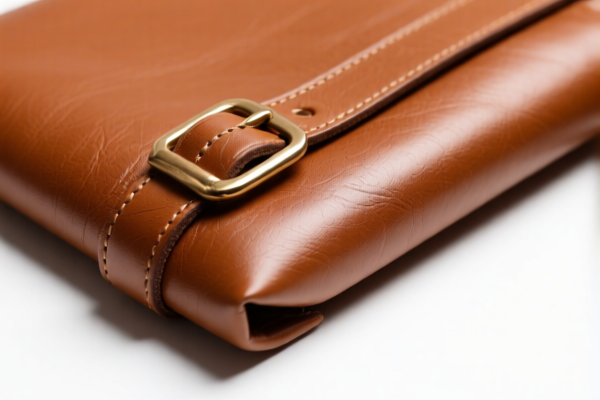
AI Analysis
🐄 Other Tanned Animal Leather (Flesh Side), Premium Leather
🌐 HS Code Reference & Clearance Guide | 2026 Latest Tariff Analysis | Professional Clearance Strategy
📌 I. Product Definition & Classification: What Exactly Is "Premium Tanned Leather"?
"Other Tanned Animal Leather (Flesh Side)" typically refers to high-quality animal hides (cow, goat, sheep, etc.) that have undergone the tanning process. In international trade, the key distinction lies in the surface finish and intended use:
- Surface-Finished/Toppined Leather: The flesh side is treated or buffed, often used for upholstery, furniture, or garments. This falls under specific HS codes like
4107.11or4107.91. - Non-Surface-Finished/Flesh-Side Raw: The flesh side retains its natural texture or is merely fleshed but not sanded/buffed to a uniform smoothness. These often fall under
4107.99.
⚠️ Key Distinction Point:
- If the leather is furniture-grade, fully tanned, and surface-finished → It likely falls under4107.11.50.00.
- If the leather is decorative (e.g., exotic skins, textured finishes for bags/jackets) → It may fall under4107.91.80.00.
- If the leather is generic/industrial or has irregular textures (flesh-side dominant) → It likely falls under4107.99.80.00.
📦 II. HS Code Classification Details (2026 Latest Tariff Authority Comparison)
| HS Code | Product Description | Application Scenario | Surface Finish |
|---|---|---|---|
4107.11.50.00 |
Tanned animal leather for furniture | High-end furniture, sofas, car seats | ✅ Surface-finished (smooth) |
4107.99.80.00 |
Other tanned animal leather accessories/goods | Industrial parts, generic hides, bulk leather | ❌ Flesh-side dominant/rough |
4107.91.80.00 |
Decorative tanned animal leather | Exotic skins, textured leather for fashion/bags | ✅ Decorative/Textured |
🔍 Important Reminder:
- "Premium" is a marketing term, not a customs classification term. Customs looks at physical characteristics (tanning method, surface treatment, thickness, size).
- If your "Premium Leather" is used for furniture, use4107.11.50.00.
- If it is used for decoration/exotic purposes, use4107.91.80.00.
- If it is generic/industrial, use4107.99.80.00.
💰 III. 2026 Latest Tariff Rate Details (Including Surcharges & Policy Add-ons)
✅ Applicable Country: United States (US)
✅ Origin: China (CN)
✅ Effective Date: From November 10, 2025 (including subsequent imports)
🎯 1. 4107.11.50.00 —— Tanned Animal Leather for Furniture
| Item | Content |
|---|---|
| Base Tariff Rate | 2.8% (ad valorem) |
| Section 301 Surcharge | 0.0% |
| IEEPA 122 Clause Tariff | +10% (Specific to certain leather goods from China) |
| Total Tariff Rate | 12.8% |
| Tax Calculation | CIF Value × 12.8% |
| De Minimis Exemption? | ❌ Not Applicable (Deny de_minimis) |
| Legal Basis Path | IEEPA:122 → USITC:4107.11.50.00 |
📌 Explanation:
- "Base Tariff 2.8%": Standard Most Favored Nation (MFN) rate for furniture leather.
- "IEEPA 122 Clause 10%": A specific additional tariff imposed on certain Chinese-origin leather goods under Executive Order 14117 (Section 122 of the Trade Expansion Act).
- Total 12.8%: This is a moderate-high tariff, significantly higher than base rates due to the 122 clause.
🎯 2. 4107.99.80.00 —— Other Tanned Animal Leather (Generic/Flesh-Side)
| Item | Content |
|---|---|
| Base Tariff Rate | 2.4% (ad valorem) |
| Section 301 Surcharge | 0.0% |
| IEEPA 122 Clause Tariff | +10% |
| Total Tariff Rate | 12.4% |
| Tax Calculation | CIF Value × 12.4% |
| De Minimis Exemption? | ❌ Not Applicable |
| Legal Basis Path | IEEPA:122 → USITC:4107.99.80.00 |
📌 Note:
- Slightly lower than furniture leather due to a lower base rate (2.4% vs 2.8%).
- Still subject to the 10% IEEPA 122 surcharge.
- Commonly used for bulk hides, industrial leather, or non-decorative tanned goods.
🎯 3. 4107.91.80.00 —— Decorative Tanned Animal Leather
| Item | Content |
|---|---|
| Base Tariff Rate | 2.4% (ad valorem) |
| Section 301 Surcharge | 0.0% |
| IEEPA 122 Clause Tariff | +10% |
| Total Tariff Rate | 12.4% |
| Tax Calculation | CIF Value × 12.4% |
| De Minimis Exemption? | ❌ Not Applicable |
| Legal Basis Path | IEEPA:122 → USITC:4107.91.80.00 |
📌 Note:
- Applies to "exotic" or textured leathers (e.g., crocodile, embossed cowhide for luxury bags).
- Same tariff structure as generic leather (4107.99.80.00).
- Do not confuse with leather accessories (which fall under Chapter 42 and face much higher tariffs).
🛠️ IV. Clearance Practical Advice (Battle-Tested Pitfall Guide)
✅ 1. Required Documentation Checklist (Mandatory)
| Document | Must Provide | Description |
|---|---|---|
| ✅ Product Specification Sheet | ✔️ | Detail tanning process (vegetable, chrome, oil), thickness, size, flesh-side finish |
| ✅ Photos of Flesh Side & Grain Side | ✔️ | Critical for determining HS Code (smooth vs. rough/textured) |
| ✅ Commercial Invoice | ✔️ | Must clearly state "Tanned Animal Leather," not "Finished Leather Goods" |
| ✅ Packing List | ✔️ | Weight, dimensions, number of hides/skins |
| ✅ Certificate of Origin (CO) | ✔️ | To prove China origin (if applicable) |
| ✅ Tanning Declaration | ✔️ | Confirm no restricted chemicals (e.g., banned azo dyes) |
✅ 2. Declaration Tips (Key Mnemonics)
🔥 "Surface Determines Code, Use Determines Class, 122 Clause Adds 10%!"
| Scenario | Correct HS Code | Wrong Practice |
|---|---|---|
| Furniture leather (smooth surface) | 4107.11.50.00 |
Misdeclare as "fabric" → 0% base but high risk of penalty |
| Decorative/exotic leather | 4107.91.80.00 |
Misdeclare as "accessories" → 37.9% tax |
| Generic/industrial hides | 4107.99.80.00 |
Misdeclare as "garments" → 25%+301+122 |
| Leather accessories (belts, straps) | 4205.00.05.00 etc. |
Misdeclare as "raw leather" → Underpayment penalty |
📌 Crucial Distinction:
- Chapter 41: Raw/Tanned Leather (Hides/Skins)
- Chapter 42: Manufactured Leather Goods (Belts, Bags, Shoes)
- Do not mix them! If your "Premium Leather" is already cut into straps or bags, it is NOT Chapter 41.
✅ 3. Special Case Handling
| Scenario | Handling Advice |
|---|---|
| "Premium" Embossed Leather | Declare as 4107.91.80.00 (Decorative). Provide embossing pattern details. |
| Leather for Furniture Upholstery | Declare as 4107.11.50.00. Provide end-use declaration (e.g., "For Sofa Manufacturing"). |
| Mixed Hides (Cow + Goat) | Declare based on principal value or quantity. If mixed, clarify in invoice. |
| Leather with Resin Coating | May fall under 4107.99.80.00 if not surface-finished. Provide coating specs. |
🌍 V. Global Market Clearance Comparison (2026 Latest)
| Country/Region | Recommended HS Code | Tariff Rate | Certification Requirements | Notes |
|---|---|---|---|---|
| 🇺🇸 USA | 4107.11.50.00 |
12.8% | FDA (if food contact), CPSIA (if toys) | 122 Clause adds 10%; High scrutiny |
| 🇨🇳 China | 4107.11.50.00 |
2.8% | CCC (if applicable) | Base rate only; No IEEPA surcharge |
| 🇪🇺 EU | 4107.11.50.00 |
~10% (varies) | REACH (chemical compliance) | Strict chemical regulations |
| 🇬🇧 UK | 4107.11.50.00 |
~10% | UKCA (if applicable) | Post-Brexit rules apply |
| 🇯🇵 Japan | 4107.11.50.00 |
~8-10% | JIS (if industrial) | Low surcharge, stable rates |
📌 Conclusion:
- USA is the most complex market due to the IEEPA 122 Clause (10%).
- EU/UK require strict chemical compliance (REACH/UKCA).
- China/Japan have lower total tariffs for base leather.
📌 VI. Common Mistakes & Pitfall Guide (Blood & Tears Lessons)
❌ Mistake 1: Declaring "Finished Leather Products" (e.g., belts) as "Tanned Leather"
👉 Consequence: Tariff drops from 37.9% to 12.8% → Severe penalty, seizure, and blacklisting!
❌ Mistake 2: Ignoring the IEEPA 122 Clause
👉 Consequence: Underpayment of 10% → Back taxes + Interest + Fines!
❌ Mistake 3: Misclassifying "Decorative Leather" as "Furniture Leather"
👉 Consequence: If audited, customs may reclassify → Rate change from 12.4% to 12.8% (minor, but compliance issue).
❌ Mistake 4: Providing vague descriptions like "Premium Leather"
👉 Consequence: Customs cannot determine HS Code → Hold for inspection, delay in clearance!
✅ Correct Practice:
"Tanned Cowhide Leather, Chrome-Tanned, Smooth Surface, 1.2mm Thickness, For Furniture Upholstery, HS Code 4107.11.50.00, 12.8% Duty"
🎯 VII. Conclusion: Professional Declaration, Save Time and Money!
🎯 Remember the Mnemonics:
🔹 "Surface Smooth? Furniture (4107.11). Textured? Decorative (4107.91). Rough? Other (4107.99)."
🔹 "122 Clause Adds 10%, Don't Skip, Don't Hide!"
🔹 "Leather Accessories (Ch42) ≠ Raw Leather (Ch41), Check the Chapter!"
📌 Pro Tip:
If your leather is originating from Vietnam, Mexico, or Thailand, you may exempt from IEEPA 122 surcharge, reducing the total tariff to 2.4%-2.8%.
Recommendation: Apply for Advance Ruling (Pre-Classification) to confirm the HS Code and avoid customs delays.
📣 Take Action Now:
📞 Contact a Professional Customs Broker + Provide Product Photos + Apply for HS Code Pre-Ruling
🚀 Ensure your leather goods clear customs smoothly, efficiently, and cost-effectively!
✨ Professional Clearance Starts with Accurate Classification!
💼 Every cent of your cost deserves precise calculation!
Customer Reviews
About HS Code Classification
The Harmonized System (HS) is an internationally standardized nomenclature developed by the World Customs Organization (WCO) to classify traded products. Over 200 countries use the HS system as the basis for customs tariffs, trade statistics, and import/export regulations.
Each HS code follows a hierarchical structure:
- Chapter (2 digits) — Broad category of goods (e.g., Chapter 84: Machinery and Mechanical Appliances)
- Heading (4 digits) — More specific grouping within the chapter
- Subheading (6 digits) — Internationally standardized breakdown, used by all WCO member countries
- National subdivisions (8-10 digits) — Country-specific extensions for further classification, such as US HTSUS 10-digit codes
Correct HS code classification is essential for smooth customs clearance, accurate duty payment, and compliance with trade regulations. Misclassification can lead to customs delays, overpayment of duties, or penalties.
When importing from CN to US, the applicable tariff rates may include:
- Most-Favored-Nation (MFN) rate — The standard duty rate applied to WTO members
- General rate — Applied to countries without trade agreements
- Trade remedy duties — Additional tariffs such as Section 301 (anti-dumping), Section 232 (national security), or countervailing duties
The information provided on this page is for reference purposes only. For official classification, please consult with your local customs authority or a licensed customs broker.