Other Textile Materials Non woven Fabric
CN → US| HS Code | Tariff Rate | Origin | Destination | Doc |
|---|---|---|---|---|
| 5603949090 | 35.0% | CN | US | Official Doc |
| 5603949070 | 35.0% | CN | US | Official Doc |
Product Images
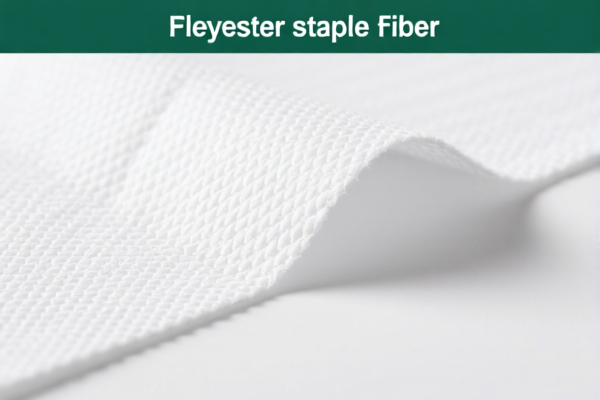
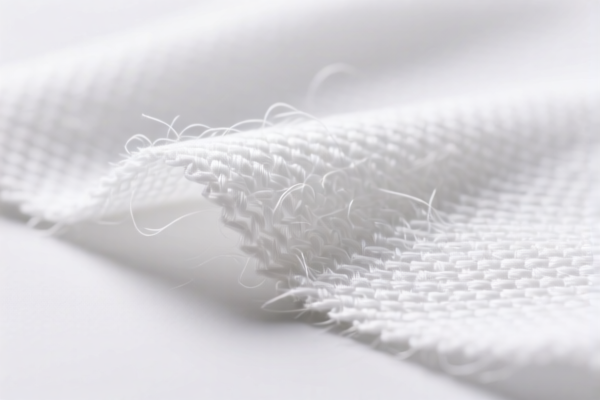
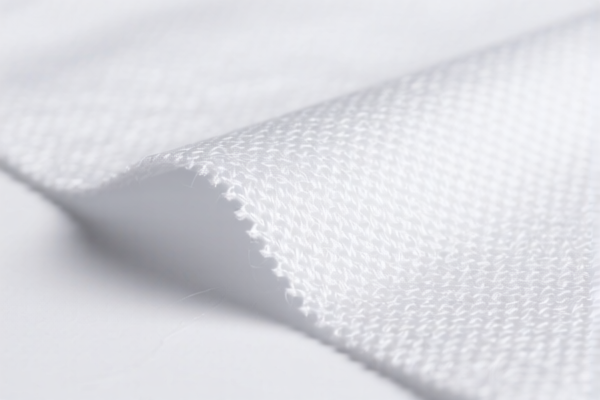
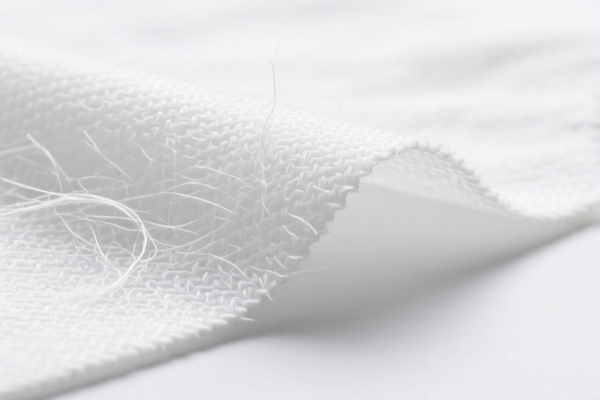
AI Analysis
🧵 Nonwovens (Other Textile Materials)
🌐 HS Code Reference & Customs Clearance Guide | 2026 Latest Tariff Analysis | Professional Clearance Strategy
📌 1. Product Definition and Classification: Do You Truly Understand "Nonwoven Fabrics"?
Nonwovens, also known as non-woven fabrics, are engineered fabrics made from fibers bonded together mechanically, thermally, or chemically. Unlike woven or knitted fabrics, they do not involve spinning and weaving processes.
In international trade, this category is specifically defined under Heading 56.03. The classification depends heavily on two critical technical parameters: 1. Weight per square meter (GSM): The weight of the fabric per square meter. 2. Fiber Type: Whether the fabric is made from Filaments (continuous fibers) or Staple Fibers (cut fibers).
⚠️ Key Distinction Point:
- If the fabric weighs more than 150 g/m², it falls under subheading 5603.94.
- The final HS Code depends on whether it is made of Staple Fibers or Filaments.
📦 2. HS Code Classification Details (2026 Latest Tariff Authority Comparison)
Based on the provided data, here are the two specific HS Codes for nonwovens weighing more than 150 g/m²:
| HS Code | Product Description | Applicable Scenario | Fiber Type |
|---|---|---|---|
5603.94.90.90 |
Other nonwovens, whether or not impregnated, coated or covered: Other: Of staple fibers | Medical gowns, heavy-duty filters, industrial cleaning cloths, geotextiles, carpet backing | ✅ Staple Fibers (Cut fibers like polyester, polypropylene, cotton blends) |
5603.94.90.70 |
Other nonwovens, whether or not impregnated, coated or covered: Other: Of filaments | Protective clothing, synthetic leather backing, high-strength industrial fabrics, laminated fabrics | ✅ Filaments (Continuous long fibers) |
🔍 Important Reminder:
- Both codes apply to nonwovens weighing > 150 g/m².
- If the weight is ≤ 150 g/m², different HS codes (5603.93 series) would apply.
- The distinction between "Staple" and "Filament" is crucial for correct classification and tariff calculation.
💰 3. 2026 Latest Tariff Rate Details (Including Surtaxes)
✅ Applicable Country: United States (US)
✅ Origin: China (CN)
✅ Effective Time: Current rates apply (Section 301 Surtaxes)
🎯 1. 5603.94.90.90 — Nonwovens of Staple Fibers (>150 g/m²)
| Item | Content |
|---|---|
| Basic Tariff Rate | 0.0% (Ad valorem) |
| Section 301 Surtax | +25.0% |
| Total Tax Rate | 25.0% |
| Tax Calculation | CIF Value × 25% |
| De Minimis Exemption | ❌ Not Eligible (Usually, Section 301 goods are excluded from de minimis relief for small shipments) |
| Legal Basis | HTSUS:5603.94.90.90 → 301 List 4A |
📌 Explanation:
- The basic duty for this category of nonwovens is 0%.
- However, due to US-China trade tensions, a 25% additional tariff (Section 301) is applied.
- Total effective tax rate = 25%.
- This is a significant cost burden for importers. Accurate classification is vital to avoid misclassification penalties.
🎯 2. 5603.94.90.70 — Nonwovens of Filaments (>150 g/m²)
| Item | Content |
|---|---|
| Basic Tariff Rate | 0.0% (Ad valorem) |
| Section 301 Surtax | +25.0% |
| Total Tax Rate | 25.0% |
| Tax Calculation | CIF Value × 25% |
| De Minimis Exemption | ❌ Not Eligible |
| Legal Basis | HTSUS:5603.94.90.70 → 301 List 4A |
📌 Note:
- The tariff structure is identical to the staple fiber variant.
- Whether the nonwoven is made of filaments or staple fibers, the 25% surtax applies if the origin is China.
- Do not assume filament fibers have lower duties; in this weight category, they are taxed equally under Section 301.
🛠️ 4. Customs Clearance Practical Advice (Battle-Tested Pitfall Guide)
✅ 1. Preparation Checklist (All Documents Required)
| Document | Required | Explanation |
|---|---|---|
| ✅ Product Specification Sheet | ✔️ | Must clearly state GSM (Weight), Fiber Type (Staple/Filament), and Composition |
| ✅ Technical Data Sheet | ✔️ | Include manufacturing process (spunbond, meltblown, needle-punched, etc.) |
| ✅ Product Photos | ✔️ | Clear images showing texture, edge, and any labels/coatings |
| ✅ Commercial Invoice | ✔️ | Must match HS Code description exactly. Avoid vague terms like "Fabric" |
| ✅ Packing List | ✔️ | Detail net/gross weight, dimensions, and quantity |
| ✅ Certificate of Origin | ✔️ | If applicable for preferential treatment (though unlikely for China in this category) |
| ✅ Impregnation/Coating Declaration | ✔️ | If the nonwoven is coated/laminated, declare explicitly as it may affect subheading |
✅ 2. Declaration Tips (Key Mantras)
🔥 "Weight is King, Fiber is Queen, Coating is Seen, Code is Clean!"
| Scenario | Correct Declaration | Incorrect Practice |
|---|---|---|
| Nonwoven >150g/m², Staple Fiber | 5603.94.90.90 |
Misdeclaring as "Textile Scrap" → High penalty |
| Nonwoven >150g/m², Filament | 5603.94.90.70 |
Misdeclaring as "Woven Fabric" → Wrong classification |
| Nonwoven ≤150g/m² | Different HS Code (5603.93 series) | Using >150g/m² code → Over/Under payment |
| Impregnated/Coated Nonwoven | Declare as such in description | Hiding coating information → Customs hold |
✅ 3. Special Circumstances Handling
| Situation | Handling Advice |
|---|---|
| Mixed Shipment | Separate Staple vs. Filament fibers in documentation. Do not combine under one HS code |
| Recycled Nonwovens | Still classified under 5603.94.90 if >150g/m². Declare recycled content if required for sustainability labels |
| Medical vs. Industrial Use | End-use does not change the HS Code for nonwovens in this category. Focus on technical specs (GSM, Fiber) |
| Laminated Nonwovens | If laminated with plastic or paper, ensure the base nonwoven weight is declared correctly |
🌍 5. Global Market Comparison (2026 Latest)
| Country/Region | Recommended HS Code | Tariff (China Origin) | Certification | Notes |
|---|---|---|---|---|
| 🇺🇸 USA | 5603.94.90.90/70 |
25% (Section 301) | None (Standard) | High tariff impact. Verify GSM strictly. |
| 🇪🇺 EU | 5603.94.90 |
~6.5% | CE (if medical) | No Section 301 surtax. Lower cost than US. |
| 🇨🇳 China | 5603.94.90 |
~0-10% | N/A | Export duty may apply. Check local policies. |
| 🇬🇧 UK | 5603.94.90 |
~6.5% | UKCA | Post-Brexit rules apply. |
| 🇯🇵 Japan | 5603.94.90 |
~5% | PSE (if electrical) | Stable trade relations. |
📌 Conclusion:
- The US market imposes a 25% penalty on these goods due to trade policies.
- EU/UK/Japan markets have significantly lower tariffs (~5-6.5%), making them more attractive for high-volume exports.
- Cost optimization strategy: Consider supply chain diversification if shipping to the US, or adjust pricing to absorb the 25% duty.
📌 6. Common Mistakes & Pitfall Guide (Lessons Learned)
❌ Mistake 1: Confusing GSM
👉 Consequence: Misclassifying >150g/m² as ≤150g/m² → Underpayment of duties → Audits & Fines!
❌ Mistake 2: Ignoring Fiber Type
👉 Consequence: Declaring "Staple" for "Filament" → Incorrect HS Code → 25% Surcharge Applies Regardless, but Compliance Risk Remains High.
❌ Mistake 3: Vague Description
👉 Consequence: Using "Nonwoven Fabric" without GSM/Fiber details → Customs Request for Information → Delayed Clearance.
❌ Mistake 4: Assuming All Nonwovens Are Low Duty
👉 Consequence: Underestimating landed cost due to the 25% Section 301 Surcharge on Chinese goods.
✅ Correct Practice:
"Nonwoven Fabric, Weight: 180 g/m², Material: Polyester Filaments, Uncoated, for Industrial Use, Made in China"
🎯 7. Conclusion: Precision Classification, Cost Control, Smooth Clearance!
🎯 Remember Mantra:
🔹 "Weight >150? Check Fiber Type. Staple or Filament, Both Hit 25% in the US!"
🔹 "Don't Guess GSM, Don't Ignore Coating, Get the Code Right, Save Your Money and Time!"
📌 Pro Tip:
- If you are importing medical-grade nonwovens, ensure they meet FDA/CE standards, but note that medical use does not exempt the 25% tariff in the US.
- Consider Advance Rulings from US Customs (CBP) if you are unsure about the GSM or fiber structure. This provides legal certainty and prevents future disputes.
📣 Immediate Action:
📞 Verify Product Specs (GSM & Fiber) → Select Correct HS Code (
5603.94.90.90or.70) → Calculate Landed Cost (CIF + 25%) → Prepare Complete Documentation
🚀 Ensure Accurate Declaration, Avoid Surprises, Maximize Profit Margins!
✨ Professional Customs Clearance Starts with Precise Classification!
💼 Every Percent of Tariff Matters!
Customer Reviews
About HS Code Classification
The Harmonized System (HS) is an internationally standardized nomenclature developed by the World Customs Organization (WCO) to classify traded products. Over 200 countries use the HS system as the basis for customs tariffs, trade statistics, and import/export regulations.
Each HS code follows a hierarchical structure:
- Chapter (2 digits) — Broad category of goods (e.g., Chapter 84: Machinery and Mechanical Appliances)
- Heading (4 digits) — More specific grouping within the chapter
- Subheading (6 digits) — Internationally standardized breakdown, used by all WCO member countries
- National subdivisions (8-10 digits) — Country-specific extensions for further classification, such as US HTSUS 10-digit codes
Correct HS code classification is essential for smooth customs clearance, accurate duty payment, and compliance with trade regulations. Misclassification can lead to customs delays, overpayment of duties, or penalties.
When importing from CN to US, the applicable tariff rates may include:
- Most-Favored-Nation (MFN) rate — The standard duty rate applied to WTO members
- General rate — Applied to countries without trade agreements
- Trade remedy duties — Additional tariffs such as Section 301 (anti-dumping), Section 232 (national security), or countervailing duties
The information provided on this page is for reference purposes only. For official classification, please consult with your local customs authority or a licensed customs broker.