Other Two Color Plastic Board
CN → US| HS Code | Tariff Rate | Origin | Destination | Doc |
|---|---|---|---|---|
| 3921905050 | 39.8% | CN | US | Official Doc |
| 3920992000 | 39.2% | CN | US | Official Doc |
| 3921190090 | 41.5% | CN | US | Official Doc |
| 3920995000 | 40.8% | CN | US | Official Doc |
| 3921190090 | 41.5% | CN | US | Official Doc |
Product Images
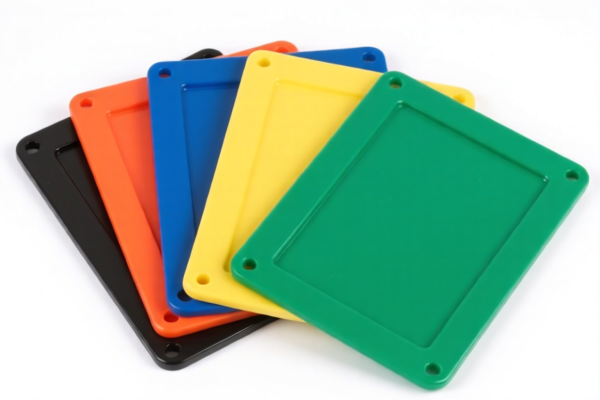
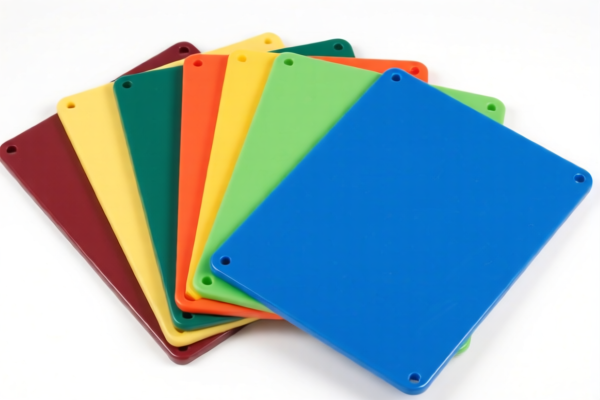
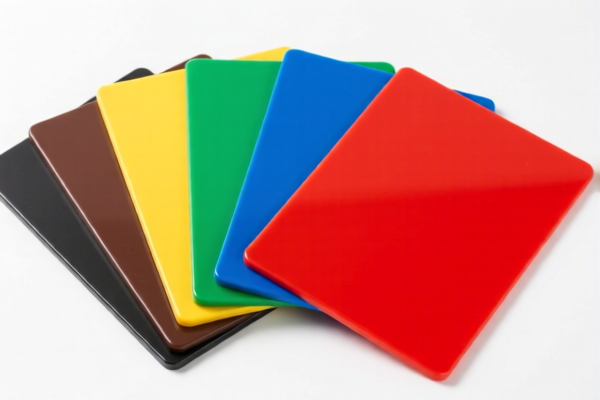
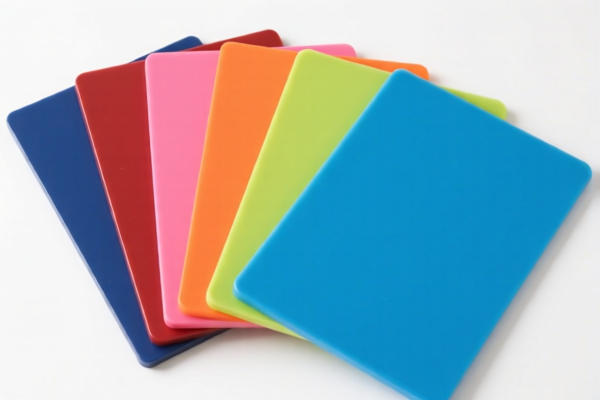
AI Analysis
🎨 Other Two Color Plastic Board (Composite Plastic Sheets)
🌐 HS Code Reference & Customs Clearance Guide | 2026 Latest Tariff Analysis | Professional Tier-1 Entry Strategy
📌 I. Product Definition: What is a "Two Color Plastic Board"?
In international trade, a "Two Color Plastic Board" typically refers to composite plastic sheets, laminates, or bilayer boards where two different colors or types of plastic are bonded together. This product falls squarely under Chapter 39 (Plastics and Articles Thereof), specifically within the categories of Plates, Sheets, Film, Foil, and Strip.
Key Classification Logic:
The classification depends on whether the board is foamed (honeycomb/expanded), reinforced, or solid/non-porous.
1. Solid/Non-Foamed: Usually classified under 3920 (Non-cellular plastics).
2. Cellular/Foamed: Usually classified under 3921 (Cellular plastics).
3. Other/Unspecified: If it doesn't fit specific sub-categories (like reinforced fiberglass), it falls under "Other" provisions.
⚠️ Critical Distinction Point:
- If the board is solid, non-cellular, and not reinforced → Likely3920series.
- If the board is cellular (foamed) or composite layered without specific reinforcement → Likely3921series.
- US Tariff Warning: All these items are subject to Section 301 and IEEPA surcharges due to their Chinese origin.
📦 II. HS Code Classification Details (2026 Authoritative Data)
Based on the provided data, here are the four possible HS Codes and the rationale for each. Note that the total tax burden is extremely high due to US trade policies.
| HS Code | Product Description & Rationale | Total Tax Rate | Tax Breakdown |
|---|---|---|---|
3921.90.50.50 |
Composite/Other Plastic Boards • Material: Plastic • Form: Board/Sheet • Rationale: Fits the general category of "Plates, sheets, film, foil, and strip" under "Other" provisions. It captures composite or unspecified plastic boards. |
39.8% | • Base: 4.8% • Section 301: 25.0% • Section 122/IEEPA: 10.0% |
3920.99.20.00 |
Non-Cellular Plastic Sheets (Other) • Material: Plastic • Form: Board/Sheet • Rationale: Based on the fallback principle for non-cellular plastic plates/sheets not specifically listed elsewhere (e.g., not polystyrene, not PVC). |
39.2% | • Base: 4.2% • Section 301: 25.0% • Section 122/IEEPA: 10.0% |
3921.19.00.90 |
Other Plastic Plates/Sheets (Cellular/Composite) • Material: Plastic • Form: Board • Rationale: Explicitly includes plastic plates/sheets that are "Other" (not specifically foam/foamed in the main sub-heading but fits the 3921 umbrella). Often used for composite or bilayer boards that don't fit 3920. |
41.5% | • Base: 6.5% • Section 301: 25.0% • Section 122/IEEPA: 10.0% |
3920.99.50.00 |
Non-Cellular Plastic Sheets (Other Specific) • Material: Plastic • Form: Board • Rationale: Matches material and form but does not explicitly state "foamed" or "reinforced." Based on initial material-form matching, it fits the "Other" non-cellular category. |
40.8% | • Base: 5.8% • Section 301: 25.0% • Section 122/IEEPA: 10.0% |
🔍 Key Insight:
-3921.19.00.90has the highest total tax (41.5%) due to a higher base rate (6.5%).
-3920.99.20.00has the lowest total tax (39.2%) due to a lower base rate (4.2%).
- The 25% Section 301 Tariff and 10% IEEPA/Section 122 Tariff are mandatory and non-negotiable for Chinese-origin goods.
💰 III. 2026 US Tariff Rate Detailed Breakdown
✅ Applicable Country: United States (US)
✅ Origin: China (CN)
✅ Effective Date: November 10, 2025, onwards
🎯 1. 3921.90.50.50 – Other Plastic Plates, Sheets, Film, Foil, and Strip
| Item | Detail |
|---|---|
| Base MFN Rate | 4.8% |
| Section 301 Surcharge | +25.0% |
| IEEPA/Section 122 Surcharge | +10.0% |
| Total Effective Rate | 39.8% |
| Calculation | CIF Value × 39.8% |
| De Minimis Exemption? | ❌ NO (deny_de_minimis applies) |
| Legal Basis | USITC:3921.90.50.50 → FOOTNOTE:9903.88.01 (Sec 301) → IEEPA:9903.01.24 (Sec 122) |
📌 Explanation:
- This code is for "Other" plastic boards. If your product is a composite bilayer (e.g., PVC+Acrylic), this is a strong candidate.
- Total cost impact: For every $10,000 of goods, you pay $3,980 in duties alone.
🎯 2. 3920.99.20.00 – Other Plates, Sheets, Film, Foil, and Strip, of Plastic, Non-Cellular
| Item | Detail |
|---|---|
| Base MFN Rate | 4.2% |
| Section 301 Surcharge | +25.0% |
| IEEPA/Section 122 Surcharge | +10.0% |
| Total Effective Rate | 39.2% |
| Calculation | CIF Value × 39.2% |
| De Minimis Exemption? | ❌ NO |
| Legal Basis | USITC:3920.99.20.00 → FOOTNOTE:9903.88.01 → IEEPA:9903.01.24 |
📌 Explanation:
- This is the most cost-effective option if the board is solid/non-foamed.
- Use this if the product is a simple, dense plastic sheet (e.g., solid PVC, ABS, or Polycarbonate board).
🎯 3. 3921.19.00.90 – Other Plates, Sheets, Film, Foil, and Strip, of Polymer
| Item | Detail |
|---|---|
| Base MFN Rate | 6.5% |
| Section 301 Surcharge | +25.0% |
| IEEPA/Section 122 Surcharge | +10.0% |
| Total Effective Rate | 41.5% |
| Calculation | CIF Value × 41.5% |
| De Minimis Exemption? | ❌ NO |
| Legal Basis | USITC:3921.19.00.90 → FOOTNOTE:9903.88.01 → IEEPA:9903.01.24 |
📌 Explanation:
- Highest base rate. Use only if the product is cellular/foamed or specifically structured under 3921.19.
- Avoid this code if3920is applicable, as it costs 2.3% more.
🎯 4. 3920.99.50.00 – Other Plates, Sheets, Film, Foil, and Strip, of Plastic, Non-Cellular
| Item | Detail |
|---|---|
| Base MFN Rate | 5.8% |
| Section 301 Surcharge | +25.0% |
| > IEEPA/Section 122 Surcharge | +10.0% |
| Total Effective Rate | 40.8% |
| Calculation | CIF Value × 40.8% |
| De Minimis Exemption? | ❌ NO |
| Legal Basis | USITC:3920.99.50.00 → FOOTNOTE:9903.88.01 → IEEPA:9903.01.24 |
📌 Explanation:
- Mid-range cost. Use if the product is non-cellular but doesn't fit3920.99.20.00due to specific material composition (e.g., specific polymer blend).
🛠️ IV. Customs Clearance Operational Advice
✅ 1. Required Documentation Checklist
| Document | Required? | Notes |
|---|---|---|
| Product Specification Sheet | ✅ Yes | Must detail: Material composition (e.g., PVC, ABS, PE), dimensions, thickness, and layer structure (if 2-color). |
| Material Safety Data Sheet (MSDS) | ✅ Yes | Required for customs and carrier safety compliance. |
| Commercial Invoice | ✅ Yes | Must clearly state: "Plastic Board, Two Color, HS Code: [Insert Code]", Origin: China. |
| Packing List | ✅ Yes | Include gross/net weight, dimensions, and number of pieces. |
| Certificate of Origin (CO) | ✅ Yes | Proof of Chinese origin triggers the 25%+10% tariffs. |
| Bill of Lading/Air Waybill | ✅ Yes | Standard shipping document. |
✅ 2. Declaration Strategy (Critical Tips)
🔥 "Be Specific on Material and Form!"
A generic description like "Plastic Board" invites customs scrutiny. Use precise technical terms.
| Scenario | Recommended Declaration | Risk |
|---|---|---|
| Solid, Non-Foamed | "Plastic Plates/Sheets, Non-Cellular, of [Material], Two Color Lamination" | Low (if material is clear) |
| Foamed/Cellular | "Plastic Plates/Sheets, Cellular, of [Material], Two Color" | Medium (must prove cellular structure) |
| Reinforced (e.g., Fiberglass) | "Plastic Plates, Reinforced with Fiberglass" | High (may fall under different subheading) |
| Vague Description | "Plastic Board" | High Risk → Audit, Delay, Penalty |
✅ 3. Cost Optimization Tips
- Prefer
3920.99.20.00: If your board is solid/non-foamed, this code has the lowest base rate (4.2%) and thus the lowest total tax (39.2%). - Avoid
3921.19.00.90: If the product is not strictly cellular/foamed, do not use this code. The base rate is 6.5%, leading to a 41.5% total tax. - Verify "Two Color" Nature: Ensure the product is truly a laminated board or bilayer. If it is a single material with two-tone printing, it may still fall under
3920or3921"Other," but the classification remains similar. - Pre-Ruling Application: For large shipments, apply for a US Customs and Border Protection (CBP) Binding Ruling to confirm the correct HS Code and avoid post-entry audits.
🌍 V. Global Market Comparison (2026)
| Region | Recommended HS Code | Total Duty (China Origin) | Key Notes |
|---|---|---|---|
| 🇺🇸 USA | 3920.99.20.00 |
39.2% | Highest cost due to 25% Sec 301 + 10% IEEPA. |
| 🇨🇳 China | 3920.99.20.00 |
4.2% | Domestic trade only. No export tariffs. |
| 🇪🇺 EU | 3920.99.20.00 |
4.2% | No Section 301/IEEPA tariffs. Standard EU duty. |
| 🇬🇧 UK | 3920.99.20.00 |
4.2% | Post-Brexit, standard UK import duty. |
| 🇯🇵 Japan | 3920.99.20.00 |
4.2% | No additional punitive tariffs. |
📌 Conclusion:
- The US is the only market with punitive surcharges.
- European, Japanese, and other markets offer standard duties (~4.2-6.5%).
- Export Strategy: If targeting the US, consider supply chain diversification (e.g., Vietnam, Mexico) to potentially qualify for IEEPA exemptions, though this is complex and requires substantial transformation.
📌 VI. Common Mistakes & Pitfalls
❌ Mistake 1: Declaring as "Plastic Sheet" without specifying "Non-Cellular" or "Cellular."
👉 Consequence: CBP may reclassify to the higher base rate (3921.19.00.90 → 41.5%).
❌ Mistake 2: Assuming "Two Color" changes the HS Code.
👉 Consequence: No specific HS Code exists for "Two Color." It is classified by material and structure (foamed vs. non-foamed).
❌ Mistake 3: Ignoring the 10% IEEPA Tariff.
👉 Consequence: Underpayment of duties leads to penalties, interest, and potential seizure.
✅ Best Practice:
"Two-Color Composite Plastic Board, Solid, Non-Cellular, PVC/ABS Laminate, HS Code: 3920.99.20.00, Origin: China"
🎯 VII. Final Recommendations
🎯 Key Takeaway:
- Lowest Cost:
3920.99.20.00(39.2% Total)- Highest Cost:
3921.19.00.90(41.5% Total)- Critical Factor: Is the board solid or foamed?
- US Market Reality: Prepare for ~40% duty. Factor this into your pricing strategy.
📌 Pro Tip:
If you are exporting to the US, consult a licensed customs broker to file a Pre-Importation Ruling. This provides legal certainty and protects against future audits.
For non-US markets, the duty burden is significantly lower (~4-6%), making exports to EU/Asia/Japan more cost-effective for this product.
📣 Action Plan:
1. Confirm Material Structure: Solid vs. Foamed.
2. Select HS Code: Prefer 3920.99.20.00 for solid boards.
3. Calculate Landed Cost: Include 39.2% (US) or 4.2% (EU) duty.
4. Prepare Documentation: MSDS, Specs, Invoice, CO.
5. Ship with Confidence: Accurate classification ensures smooth customs clearance.
✨ Precision in Classification, Profit in Trade!
💼 Your Plastic Board's Journey Begins with the Right HS Code!
Customer Reviews
About HS Code Classification
The Harmonized System (HS) is an internationally standardized nomenclature developed by the World Customs Organization (WCO) to classify traded products. Over 200 countries use the HS system as the basis for customs tariffs, trade statistics, and import/export regulations.
Each HS code follows a hierarchical structure:
- Chapter (2 digits) — Broad category of goods (e.g., Chapter 84: Machinery and Mechanical Appliances)
- Heading (4 digits) — More specific grouping within the chapter
- Subheading (6 digits) — Internationally standardized breakdown, used by all WCO member countries
- National subdivisions (8-10 digits) — Country-specific extensions for further classification, such as US HTSUS 10-digit codes
Correct HS code classification is essential for smooth customs clearance, accurate duty payment, and compliance with trade regulations. Misclassification can lead to customs delays, overpayment of duties, or penalties.
When importing from CN to US, the applicable tariff rates may include:
- Most-Favored-Nation (MFN) rate — The standard duty rate applied to WTO members
- General rate — Applied to countries without trade agreements
- Trade remedy duties — Additional tariffs such as Section 301 (anti-dumping), Section 232 (national security), or countervailing duties
The information provided on this page is for reference purposes only. For official classification, please consult with your local customs authority or a licensed customs broker.