Other Unsaturated Polyester Sheet
CN → USProduct Images
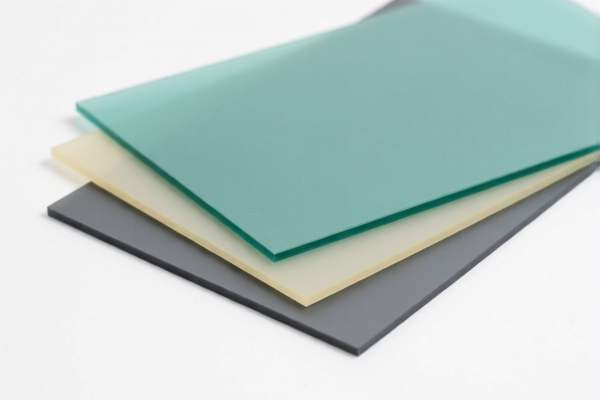
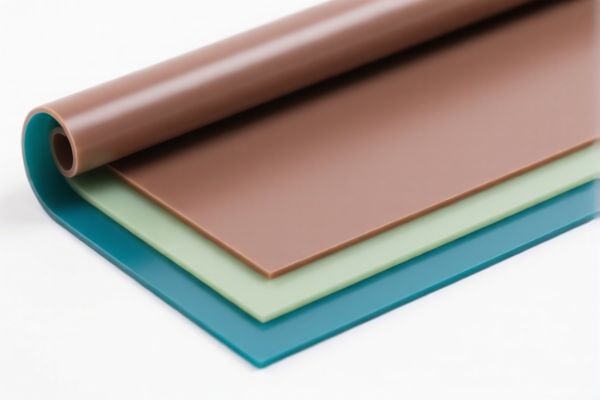
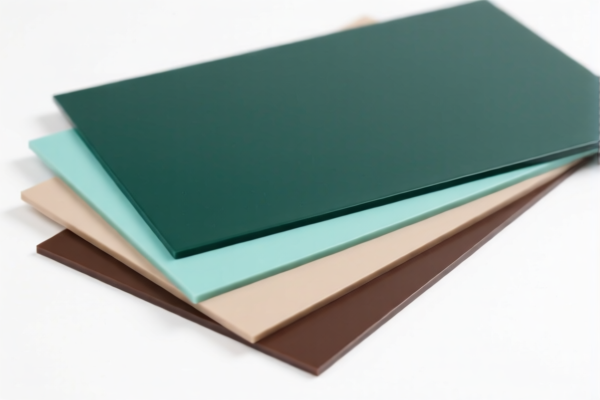
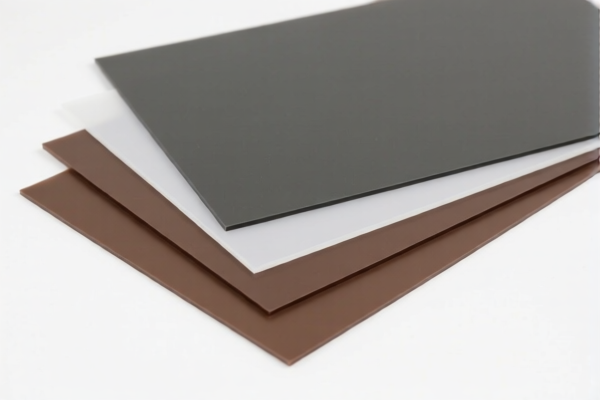
AI Analysis
🧪 Unsaturated Polyester Sheet (SMC/BMC Raw Material / Composite Prepreg)
🌐 HS Code Reference & Customs Clearance Guide | 2026 Latest Tariff Analysis | Professional Clearance Strategy
📌 I. Product Definition & Classification: What Exactly is "Unsaturated Polyester Sheet"?
Unsaturated Polyester Sheet typically refers to Sheet Molding Compound (SMC) or Bulk Molding Compound (BMC) sheets, which are composite materials made of unsaturated polyester resin, fillers (like calcium carbonate), and reinforcing fibers (usually fiberglass). They are pre-impregnated and cured into a sheet-like form before being molded into final products.
In international trade, classification depends heavily on the state of processing: 1. Raw SMC/BMC Sheets: Unmolded, pliable sheets ready for molding → Classified under Chapter 39 or 3917. 2. Molded Parts: If the sheet has already been pressed into a specific shape (e.g., car bumper, electrical box) → Classified under Chapter 39 (specific articles) or Chapter 85/87 depending on the final application. 3. Reinforced Fibers/Resin Mixes: If sold as a raw mix without a fixed sheet form → May fall under 3906 or 3907.
⚠️ Critical Distinction Point:
- If it is a flexible, uncured sheet used as a raw material for molding → HS 3917 (Plastics and articles thereof).
- If it is a finished molded part (e.g., car hood, electrical cover) → HS 8714, 8536, etc., depending on end-use.
- Note: Most "Sheets" in logistics refer to the raw SMC/BMC material.
📦 II. HS Code Classification Details (2026 Latest Tariff Authority Comparison)
| HS Code | Product Description | Application Scenario | State |
|---|---|---|---|
3917.23.00.00 |
Tubes, pipes, and hoses, rigid, of polymers of ethylene | ❌ Incorrect (Common Misclassification) | N/A |
3917.31.00.00 |
Fittings for tubes, pipes, etc. | ❌ Incorrect | N/A |
3917.39.00.00 |
Other fittings of plastics | ✅ Common for rigid SMC fittings | Rigid |
3917.40.00.00 |
Tubes, pipes, and hoses, of plastics | ✅ For cylindrical SMC components | Rigid |
3917.29.00.00 |
Other tubes, pipes, and hoses, flexible | ✅ If SMC is semi-flexible before molding | Flexible |
3906.90.90.00 |
Other copolymers of ethylene in primary forms | ✅ For raw resin/paste forms (less common for sheets) | Liquid/Paste |
3921.90.00.00 |
Other plates, sheets, film, foil, and strip, of plastics | ✅ Best Fit for Uncured SMC Sheets | Sheet/Form |
6815.99.90.00 |
Other articles of stone or of other mineral substances | ❌ Incorrect (Unless purely mineral filler) | N/A |
🔍 Key Reminder:
- The most accurate HS Code for uncured, uncured SMC/BMC sheets is generally3921.90.00.00(Plastics plates, sheets, film, etc.) because they are considered "plastic articles" in sheet form, even with fiberglass reinforcement.
- If the fiberglass reinforcement is substantial and the material is considered "composite," some customs authorities may argue for6815.99.90.00(Other articles of stone/mineral), but3921is more widely accepted for SMC sheets in global trade.
- Molded parts are NOT "sheets." They must be classified by end-use (e.g., auto parts, electrical parts).
💰 III. 2026 Latest Tariff Rate Breakdown (Including Surcharges & Policy Add-ons)
✅ Applicable Country: United States (US)
✅ Country of Origin: China (CN)
✅ Effective Date: From November 10, 2025 (inclusive)
🎯 1. 3921.90.00.00 —— Unsaturated Polyester SMC/BMC Sheets (Uncured)
| Item | Content |
|---|---|
| Base Rate | 5.3% (ad valorem, MFN) |
| USITC Surcharge (Section 301) | +7.5% (Footnote 9903.88.01 applies to many plastics/resins) |
| IEEPA Surcharge | +10% (Against China/HK products, from Nov 10, 2025) |
| Total Rate | 22.8% |
| Tax Calculation | CIF Value × 22.8% |
| De Minimis Eligibility | ❌ Not Eligible (deny_de_minimis for Section 301 goods) |
| Legal Path | IEEPA:9903.01.25 → IEEPA:9903.01.24 → USITC:3921.90.00.00 → FOOTNOTE:9903.88.01 |
📌 Explanation:
- The 7.5% Section 301 surcharge applies to many plastic articles and resinous materials.
- The 10% IEEPA surcharge is a new/additional layer for Chinese-origin plastics/composites.
- Total 22.8% is significant. Misclassifying as "fiberglass" (6815) might attract a different rate, but risks penalties if deemed plastic-dominated.
🎯 2. 6815.99.90.00 —— Other Articles of Stone or Mineral Substances (Alternative Classification Argument)
| Item | Content |
|---|---|
| Base Rate | 5.3% |
| USITC Surcharge (Section 301) | +7.5% (If classified under 301 list for mineral products) |
| IEEPA Surcharge | +10% |
| Total Rate | 22.8% |
| Tax Calculation | CIF Value × 22.8% |
| De Minimis Eligibility | ❌ Not Eligible |
📌 Note:
- Some importers try to classify SMC under 6815 (mineral) to avoid plastic-specific rules, but US Customs often rejects this if the binder resin >10%.
- Risk: High chance of reclassification and penalty. Stick to 3921 for safety.
🛠️ IV. Customs Clearance Practical Advice (Battle-Tested Pitfall Guide)
✅ 1. Document Checklist (Non-Negotiable)
| Document | Required | Explanation |
|---|---|---|
| ✅ Product Specification Sheet | ✔️ | Must state: "Unsaturated Polyester Resin + Fiberglass + Filler, Uncured Sheet" |
| ✅ Formula/Composition Report | ✔️ | Percentage of resin vs. mineral filler (critical for 39 vs. 68) |
| ✅ Safety Data Sheet (SDS) | ✔️ | For chemical handling and hazardous material declaration |
| ✅ Commercial Invoice | ✔️ | Clearly state "SMC Sheet" or "BMC Sheet," NOT "Fiberglass Board" |
| ✅ Packing List | ✔️ | Weight and dimensions of sheets |
| ✅ Certificate of Origin (CO) | ✔️ | To prove Chinese origin (triggers surcharges) |
✅ 2. Declaration Tips (Key Mantra)
🔥 "Uncured Sheet, Classify 3921; Cured Part, Find End-Use; Don't Call It 'Fiberglass' Alone!"
| Scenario | Correct Declaration | Wrong Practice |
|---|---|---|
| Uncured SMC Sheet | HS 3921.90.00.00 | Declare as "Plastic Plate" (too vague) → Risk of audit |
| Cured Auto Hood | HS 8714.99.00.00 | Declare as "Sheet" → Misclassification penalty |
| Raw Resin Paste | HS 3906.90.00.00 | Declare as "Sheet" → Wrong form factor |
| Fiberglass Cloth (No Resin) | HS 7019.55.00.00 | Declare as "SMC Sheet" → 7019 has different tariffs |
✅ 3. Special Situations
| Situation | Handling Advice |
|---|---|
| Mixed Imports (Sheet + Molded Parts) | Split the invoice. Declare sheets as 3921, parts as their specific end-use HS. Do not lump together. |
| OEM Custom Sheets | Provide design drawings showing the sheet is raw material for client’s molding. |
| Hazardous Chemicals | SMC may contain peroxides (hardeners). Declare as Hazardous Material if peroxide content > threshold. Requires IMDG/UN certification. |
| Transshipment (Vietnam/Malaysia) | If processed in Vietnam, you may get IEEPA exemption. Ensure substantial transformation criteria are met. |
🌍 V. Global Customs Comparison (2026 Latest)
| Country/Region | Recommended HS Code | Tariff Rate (China Origin) | Certification Requirements | Notes |
|---|---|---|---|---|
| 🇺🇸 USA | 3921.90.00.00 |
22.8% (incl. 301+IEEPA) | SDS, MSDS | High tariff; avoid misclassification |
| 🇨🇳 China | 3921.90.00.00 |
5.3% | N/A | Low entry tariff |
| 🇪🇺 EU | 3921.90.00 |
6.5% | REACH, SDS | No surcharge, but REACH compliance needed |
| 🇦🇺 Australia | 3921.90.00 |
5% | GEMS Declaration | Moderate tariff |
| 🇯🇵 Japan | 3921.90.00 |
6% | PSE (if electrical) | Stable rate |
📌 Conclusion:
- USA has the highest cost due to layered tariffs.
- EU/Japan/Australia are more tariff-friendly but require chemical compliance (REACH/PSE).
- China is the production hub; consider third-country processing (e.g., Vietnam) for US exports to mitigate tariffs.
📌 VI. Common Errors & Pitfalls (Lessons Learned)
❌ Error 1: Calling SMC "Fiberglass Board"
👉 Consequence: Classified under 7019 (Glass fibers) → Tariff 6.5% base, but if misdeclared, customs may suspect evasion → Fines + Audit.
❌ Error 2: Declaring cured auto parts as "Sheets"
👉 Consequence: HS 8714 (Auto parts) applies. If declared as sheet, penalty for undervaluation/classification error.
❌ Error 3: Ignoring Hazardous Classification (Peroxides)
👉 Consequence: Ship denied at port, demurrage fees, potential safety incident. SMC often contains MEKP (hardener).
❌ Error 4: Assuming "Plastic" means low tariff
👉 Consequence: Section 301 + IEEPA makes Chinese plastics expensive. Don't ignore surcharges.
✅ Correct Practice:
"Unsaturated Polyester Sheet (SMC), Uncured, Composition: 25% Resin, 60% Filler, 15% Fiberglass, for Molded Auto Parts, Non-Hazardous (Peroxide Content <1.2%)"
🎯 VII. Conclusion: Precise Classification Saves Money!
🎯 Remember the Mantra:
🔹 "Uncured Sheet = 3921; Cured Part = End-Use; Check Peroxides; US Tariff = 22.8%!"
🔹 "Don't call it fiberglass if it's plastic; Don't hide the resin content!"
📌 Pro Tip:
If you are exporting SMC sheets to the USA, consider processing in Vietnam or Thailand to avoid the IEEPA 10% surcharge. Ensure the processing changes the HS code or meets substantial transformation criteria.
📣 Immediate Action:
📞 Consult a customs broker for Advance Ruling on SMC classification.
🚀 Provide DS and Composition Data to ensure safe and accurate declaration.
💡 Your bottom line depends on this 4-digit HS Code!
✨ Professional Clearance Starts with Precise Classification!
💼 Every percentage point of tariff matters in the composite materials trade!
Customer Reviews
About HS Code Classification
The Harmonized System (HS) is an internationally standardized nomenclature developed by the World Customs Organization (WCO) to classify traded products. Over 200 countries use the HS system as the basis for customs tariffs, trade statistics, and import/export regulations.
Each HS code follows a hierarchical structure:
- Chapter (2 digits) — Broad category of goods (e.g., Chapter 84: Machinery and Mechanical Appliances)
- Heading (4 digits) — More specific grouping within the chapter
- Subheading (6 digits) — Internationally standardized breakdown, used by all WCO member countries
- National subdivisions (8-10 digits) — Country-specific extensions for further classification, such as US HTSUS 10-digit codes
Correct HS code classification is essential for smooth customs clearance, accurate duty payment, and compliance with trade regulations. Misclassification can lead to customs delays, overpayment of duties, or penalties.
When importing from CN to US, the applicable tariff rates may include:
- Most-Favored-Nation (MFN) rate — The standard duty rate applied to WTO members
- General rate — Applied to countries without trade agreements
- Trade remedy duties — Additional tariffs such as Section 301 (anti-dumping), Section 232 (national security), or countervailing duties
The information provided on this page is for reference purposes only. For official classification, please consult with your local customs authority or a licensed customs broker.