Other Unsaturated Polyester Sheets
CN → US| HS Code | Tariff Rate | Origin | Destination | Doc |
|---|---|---|---|---|
| 3920631000 | 39.2% | CN | US | Official Doc |
| 3921190090 | 41.5% | CN | US | Official Doc |
| 3920632000 | 40.8% | CN | US | Official Doc |
| 3907995050 | 41.5% | CN | US | Official Doc |
| 3921905050 | 39.8% | CN | US | Official Doc |
| 3907915000 | 41.5% | CN | US | Official Doc |
Product Images
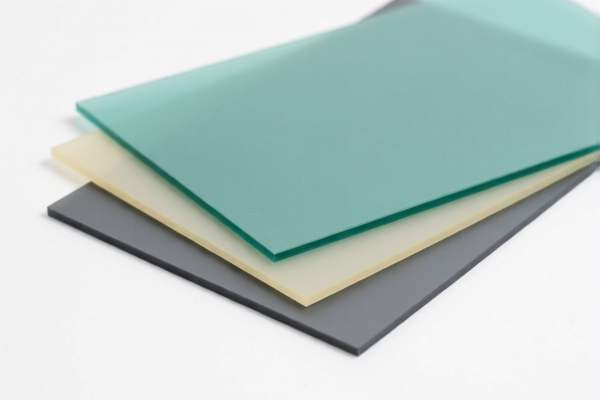
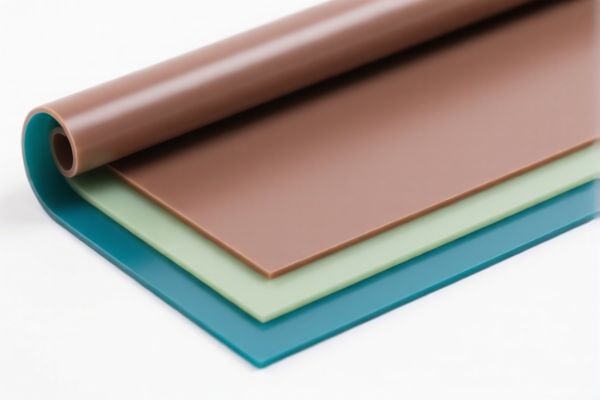
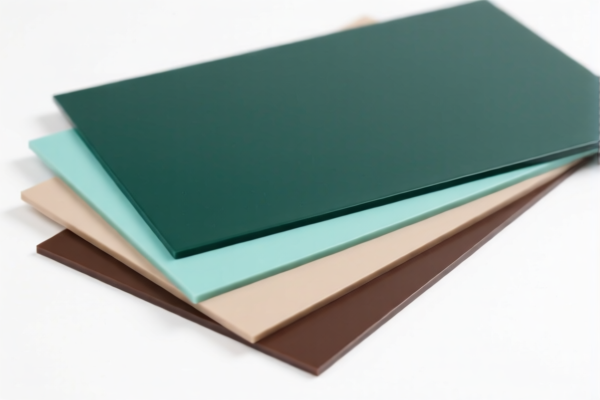
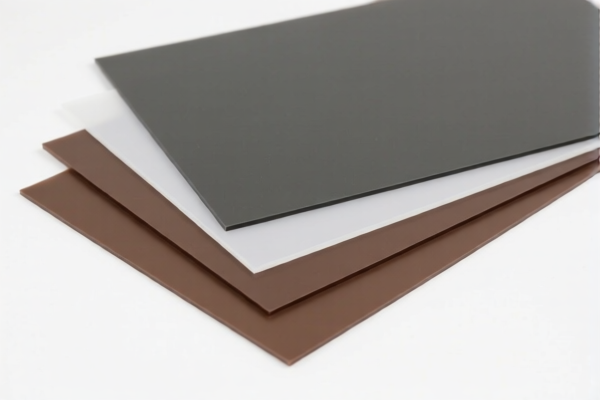
AI Analysis
🧱 Unsaturated Polyester Sheets (UP Sheets)
🌐 HS Code Reference & Customs Clearance Guide | 2026 Latest Tariff Analysis | Professional Level Clearance Strategy
📌 I. Product Definition & Classification: Do You Really Understand "Unsaturated Polyester Sheets"?
Unsaturated Polyester (UP) Sheets are composite materials primarily used in the manufacture of fiberglass-reinforced plastics (FRP), commonly known as fiberglass or GRP. They are thin sheets made from resin and reinforcement fibers (usually glass fiber), designed for hand lay-up, spray-up, or vacuum infusion processes.
In international trade, they are classified based on: 1. Material Composition: Whether it is pure resin or reinforced composite. 2. Form/State: Sheets, plates, films, or foils. 3. Processing Level: Raw material (semi-finished) vs. Finished article.
⚠️ Key Distinction Point:
- If the product is pure resin sheets or unreinforced polyester sheets → It falls under Chapter 39 (Plastics and Articles Thereof), specifically heading 3920 or 3921.
- If the product is fiberglass-reinforced (composite), it may still fall under 3920/3921 if classified as a plastic sheet with reinforcement, but must be carefully distinguished from other composite headings.
- Misclassification Risk: Declaring as "Plastic Sheets" without specifying "Unsaturated Polyester" can lead to customs detention or reclassification.
📦 II. HS Code Classification Details (2026 Latest Tariff Authoritative Comparison)
The following HS Codes are derived directly from the provided data for "Unsaturated Polyester Sheets":
| HS Code | Product Description | Matching Logic | Total Tax Rate |
|---|---|---|---|
3920.63.10.00 |
Unsaturated Polyester Sheets, Material: Unsaturated Polyester, Form: Thin Sheets | Highly Accurate Match: Explicitly matches material and form. | 39.2% |
3920.63.20.00 |
Unsaturated Polyester Sheets, Material: Unsaturated Polyester, Form: Thin Sheets | Highly Accurate Match: Similar to above, slight tariff variation due to subheading nuances. | 40.8% |
3921.19.00.90 |
Unsaturated Polyester Sheets, Form: Plates/Sheets/Films, Material: Plastic (Polyester Class), General Catch-all | Fallback Category: Used when specific unsaturated polyester subheading is unavailable or ambiguous. | 41.5% |
3907.99.50.50 |
Unsaturated Polyester Sheets, Material: Other Polyesters, Form: Thin Sheets, Primary/Semi-finished State | Partial Match: Applies if classified as "Other Polyesters" in primary/semi-finished form. | 41.5% |
3921.90.50.50 |
Unsaturated Polyester Sheets, Material: Plastic/Resin, Form: Plates/Sheets, No Material Conflict | Alternative Match: Broad category for plastic/resin sheets not elsewhere specified. | 39.8% |
3907.91.50.00 |
Unsaturated Polyester Sheets, Material: Unsaturated Polyester, Form: Thin Sheets, Common Processing State | Common Match: Frequently used for standard processing forms of unsaturated polyester. | 41.5% |
🔍 Important Reminder:
- 3920.63.10.00 and 3920.63.20.00 are the most precise matches for pure unsaturated polyester sheets.
- If the sheet is reinforced with glass fiber, it may still fall under 3920/3921 if the plastic matrix is predominant, but documentation must clarify the composition.
- 3907 codes apply if the product is considered a "polyester in primary forms" rather than a finished sheet.
💰 III. 2026 Latest Tariff Rate Breakdown (Including Additional Taxes & Policy Surcharges)
✅ Applicable Country: United States (US)
✅ Origin: China (CN)
✅ Effective Date: From November 10, 2025 (and subsequent imports)
🎯 1. 3920.63.10.00 —— Unsaturated Polyester Sheets (Most Precise Match)
| Item | Content |
|---|---|
| Base Tariff | 4.2% (Ad Valorem) |
| Section 301 Surcharge | +25.0% (Under USITC Footnote 9903.88.01) |
| Section 122 Clause Tariff | +10.0% (Specific Chinese trade measure) |
| Total Tax Rate | 39.2% |
| Tax Calculation | CIF Value × 39.2% |
| De Minimis Exemption | ❌ Not Eligible (deny_de_minimis) |
| Legal Basis Path | USITC:3920.63.10.00 → FOOTNOTE:9903.88.01 → Section 122: 10% |
📌 Explanation:
- The base rate of 4.2% reflects the standard MFN tariff for plastic sheets.
- The 25% Section 301 surcharge is applied to all Chinese-origin plastic sheets under this heading.
- The 10% Section 122 surcharge is an additional punitive tariff specifically targeting Chinese polyester products.
- Total 39.2% is extremely high. Importers must plan for significant cost impacts.
🎯 2. 3920.63.20.00 —— Unsaturated Polyester Sheets (Alternative Precise Match)
| Item | Content |
|---|---|
| Base Tariff | 5.8% (Ad Valorem) |
| Section 301 Surcharge | +25.0% |
| Section 122 Clause Tariff | +10.0% |
| Total Tax Rate | 40.8% |
| Tax Calculation | CIF Value × 40.8% |
| De Minimis Exemption | ❌ Not Eligible |
| Legal Basis Path | USITC:3920.63.20.00 → FOOTNOTE:9903.88.01 → Section 122: 10% |
📌 Note:
- Slightly higher base rate (5.8%) compared to 3920.63.10.00.
- Same additional surcharges apply.
- Choose this code if customs specifically requires the 3920.63.20.00 subheading based on physical characteristics.
🎯 3. 3921.19.00.90 —— Other Plastic Sheets (Polyester Class) (Fallback)
| Item | Content |
|---|---|
| Base Tariff | 6.5% (Ad Valorem) |
| Section 301 Surcharge | +25.0% |
| Section 122 Clause Tariff | +10.0% |
| Total Tax Rate | 41.5% |
| Tax Calculation | CIF Value × 41.5% |
| De Minimis Exemption | ❌ Not Eligible |
| Legal Basis Path | USITC:3921.19.00.90 → FOOTNOTE:9903.88.01 → Section 122: 10% |
📌 Note:
- Higher base rate (6.5%) and total tax (41.5%).
- Used when the product does not fit neatly into 3920.63.
- Risk of customs questioning why a more specific 3920 code was not used.
🎯 4. 3907.99.50.50 & 3907.91.50.00 —— Other Polyesters (Semi-finished)
| Item | Content |
|---|---|
| Base Tariff | 6.5% |
| Section 301 Surcharge | +25.0% |
| Section 122 Clause Tariff | +10.0% |
| Total Tax Rate | 41.5% |
| Tax Calculation | CIF Value × 41.5% |
| De Minimis Exemption | ❌ Not Eligible |
📌 Note:
- Applies if the sheets are considered "primary forms" of polyester rather than manufactured sheets.
- High tax burden. Ensure product documentation supports "sheet" classification over "resin block."
🎯 5. 3921.90.50.50 —— Other Plastic/Resin Sheets (Alternative)
| Item | Content |
|---|---|
| Base Tariff | 4.8% |
| Section 301 Surcharge | +25.0% |
| Section 122 Clause Tariff | +10.0% |
| Total Tax Rate | 39.8% |
| Tax Calculation | CIF Value × 39.8% |
| De Minimis Exemption | ❌ Not Eligible |
📌 Note:
- Lowest total tax among fallback codes (39.8%).
- Use only if 3920.63.10.00 is not applicable due to specific product attributes.
🛠️ IV. Customs Clearance Practical Advice (Combat Avoidance Guide)
✅ 1. Required Documentation Checklist (None Can Be Omitted)
| Document | Required | Description |
|---|---|---|
| ✅ Product Specification Sheet | ✔️ | Must detail: Composition (e.g., 30% glass fiber, 70% UP resin), Thickness, Width, Length, Color. |
| ✅ Material Safety Data Sheet (MSDS) | ✔️ | Essential for hazardous chemical classification (unsaturated polyester resins are often flammable). |
| ✅ Commercial Invoice | ✔️ | Must clearly state: "Unsaturated Polyester Sheet, Model XYZ, Made in China." Avoid vague terms like "Plastic Sheet." |
| ✅ Packing List | ✔️ | Specify net/gross weight, number of packages, and dimensions. |
| ✅ Certificate of Origin (CO) | ✔️ | For origin determination and potential exemption claims (if applicable). |
| ✅ Third-Party Test Report | ✔️ | UL, CE, RoHS, or REACH compliance certificates if required by end-user. |
| ✅ Photos of Product & Label | ✔️ | Clear images showing product form, labels, and any hazard symbols. |
✅ 2. Declaration Tips (Key Mantras)
🔥 "Material First, Form Second, Name Precise, Tax Reduced!"
| Scenario | Correct Declaration | Wrong Practice |
|---|---|---|
| Pure UP Sheets | 3920.63.10.00 - "Unsaturated Polyester Sheet" |
Misdeclaring as "Plastic Film" → 41.5% |
| Reinforced UP Sheets | 3920.63.10.00 - "Glass Fiber Reinforced UP Sheet" |
Misdeclaring as "Textile" → Higher tax + penalties |
| Resin Blocks (Not Sheets) | 3907.99.50.50 - "Unsaturated Polyester in Primary Form" |
Declaring as "Sheet" when it's a block → Rejection |
| Mixed Materials | 3921.19.00.90 - "Other Plastic Sheets" |
Using vague "Composite Material" → Customs Query |
✅ 3. Special Case Handling
| Situation | Handling Advice |
|---|---|
| Fragrant/Flexible Sheets | Provide elasticity tests. If too flexible, it may be classified as "Film" under 3920.39, which has different rates. |
| Flammable Materials | Unsaturated polyester resins are flammable. Ensure proper UN packaging and declaration for dangerous goods if applicable. |
| OEM Custom Sheets | Provide customer order + design specs to prove non-standard nature. |
| Small Sample Imports | Even samples are subject to de minimis denial. Do not rely on $800 exemption. |
🌍 V. Global Market Customs Clearance Comparison (2026 Latest)
| Country/Region | Recommended HS Code | Tariff (China Origin) | Certification Requirements | Remarks |
|---|---|---|---|---|
| 🇺🇸 USA | 3920.63.10.00 |
39.2% | None Specific | High tax due to 301 + Section 122 |
| 🇨🇳 China | 3920.63.10.00 |
5.0% | None | No additional surcharges |
| 🇪🇺 EU | 3920.63.00 |
4.5% | REACH Registration | Must comply with EU chemical regulations |
| 🇬🇧 UK | 3920.63.00 |
4.5% | UK REACH | Post-Brexit regulations apply |
| 🇦🇺 Australia | 3920.63.00 |
5.0% | ACCC | No surcharges |
| 🇯🇵 Japan | 3920.63.00 |
6.0% | Japan Chemical Review | No surcharges |
📌 Conclusion:
- USA is the most costly market for unsaturated polyester sheets due to aggressive tariffs.
- China, EU, and other markets have significantly lower tariffs (4.5%–6.0%).
- Strategic Recommendation: If targeting the US market, consider tariff engineering (e.g., changing product form slightly) or supply chain relocation (e.g., processing in Vietnam/Mexico) to avoid 39.2% duty.
📌 VI. Common Mistakes & Pitfalls (Blood & Tears Lessons)
❌ Mistake 1: Declaring "Unsaturated Polyester" as "Polyester Fabric"
👉 Consequence: Incorrect HS Code (e.g., 5407) → Customs Rejection + Fine.
❌ Mistake 2: Ignoring the "Section 122" Surcharge
👉 Consequence: Underpaying 10% → Back taxes + Penalties upon audit.
❌ Mistake 3: Using "Plastic Sheet" as the Description
👉 Consequence: Customs may assign the higher 41.5% rate (3921.19.00.90) due to lack of specificity.
❌ Mistake 4: Not Providing MSDS
👉 Consequence: Delayed clearance due to hazardous material verification.
✅ Correct Approach:
"Unsaturated Polyester Sheet, Glass Fiber Reinforced, 1.5mm Thickness, Model UP-150, Made in China"
🎯 VII. Conclusion: Professional Declaration, Cost Efficiency!
🎯 Remember Mantras:
🔹 "Material Precise, Form Clear, Tax Predicted!"
🔹 "US Tariff 39.2%, Think Twice Before Shipping!"
📌 Tips:
- If your product is sourced from Vietnam, Mexico, or Thailand, you may exempt from Section 301 and Section 122 tariffs.
- Consider applying for a Pre-arrival Ruling to confirm the correct HS Code before shipment.
📣 Immediate Action:
📞 Consult a licensed customs broker + Provide Product Specs + Apply for HS Code Pre-ruling
🚀 Ensure your Unsaturated Polyester Sheets clear customs smoothly, maximize profit, and minimize risk!
✨ Professional Customs Clearance Starts with Accurate Classification!
💼 Every Cent of Cost Deserves Precise Calculation!
Customer Reviews
About HS Code Classification
The Harmonized System (HS) is an internationally standardized nomenclature developed by the World Customs Organization (WCO) to classify traded products. Over 200 countries use the HS system as the basis for customs tariffs, trade statistics, and import/export regulations.
Each HS code follows a hierarchical structure:
- Chapter (2 digits) — Broad category of goods (e.g., Chapter 84: Machinery and Mechanical Appliances)
- Heading (4 digits) — More specific grouping within the chapter
- Subheading (6 digits) — Internationally standardized breakdown, used by all WCO member countries
- National subdivisions (8-10 digits) — Country-specific extensions for further classification, such as US HTSUS 10-digit codes
Correct HS code classification is essential for smooth customs clearance, accurate duty payment, and compliance with trade regulations. Misclassification can lead to customs delays, overpayment of duties, or penalties.
When importing from CN to US, the applicable tariff rates may include:
- Most-Favored-Nation (MFN) rate — The standard duty rate applied to WTO members
- General rate — Applied to countries without trade agreements
- Trade remedy duties — Additional tariffs such as Section 301 (anti-dumping), Section 232 (national security), or countervailing duties
The information provided on this page is for reference purposes only. For official classification, please consult with your local customs authority or a licensed customs broker.