Other Unspecified Electrical Equipment and Devices
CN → US| HS Code | Tariff Rate | Origin | Destination | Doc |
|---|---|---|---|---|
| 8532900000 | 35.0% | CN | US | Official Doc |
| 9030908921 | 35.0% | CN | US | Official Doc |
| 8533908000 | 35.0% | CN | US | Official Doc |
| 8543709810 | 37.6% | CN | US | Official Doc |
| 9030890100 | 35.0% | CN | US | Official Doc |
| 8532290040 | 35.0% | CN | US | Official Doc |
Product Images
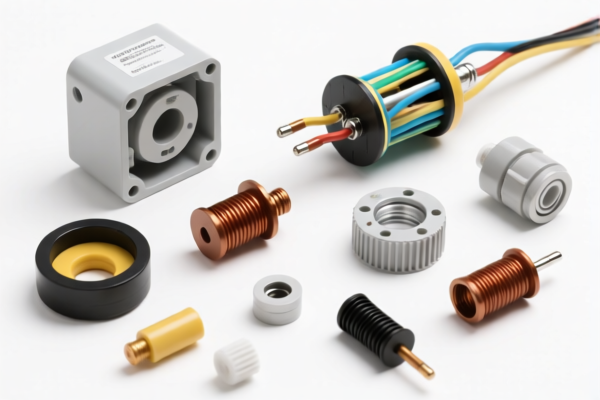
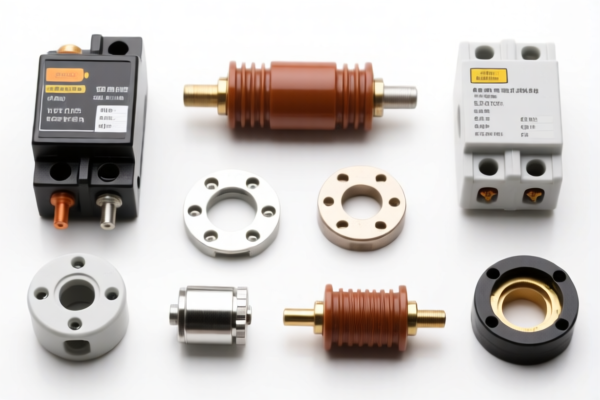
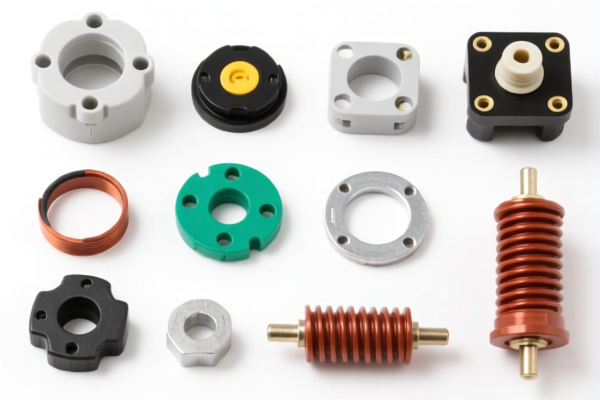
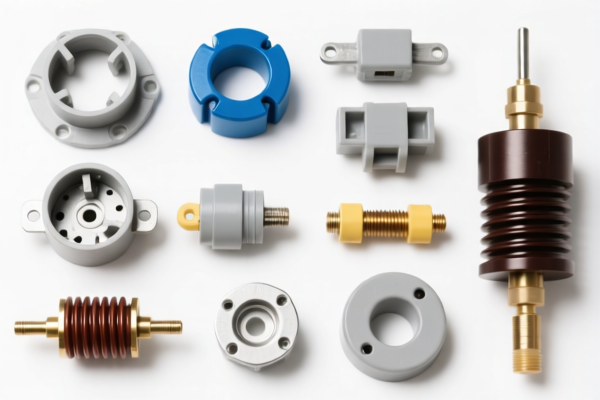
AI Analysis
🛠️ Other Unspecified Electrical Equipment & Devices
🌐 HS Code Reference & Customs Clearance Guide | 2026 Latest Tariff Analysis | Strategic Compliance Strategy
📌 I. Product Definition & Classification: Do You Truly Understand "Other..."?
"Other... not specified elsewhere" is a classic residual (catch-all) classification term in international trade. It refers to electrical equipment, apparatus, instruments, or components that do not fit into specific, named sub-categories within the Harmonized System (HS).
In customs valuation and classification, when a product’s function, material, or form cannot be matched to a specific "nominated" HS code, it falls into this "兜底" (bottom-line) category. The key logic is: If it doesn't match a specific description, it matches "Other".
⚠️ Key Distinction:
- If the product is a specific component (e.g., a capacitor, a resistor, a specific connector) → It may fall under Parts/Codes like 8532, 8533.
- If the product is a standalone device with a specific function (e.g., measuring instrument, signal generator) → It may fall under 9030.
- If the product is generic electrical equipment with independent functions but no specific HS name → It may fall under 8543.
📦 II. HS Code Classification Details (2026 Latest Tariff Authority Cross-Reference)
Based on the specific "catch-all" nature of the product description, the following HS codes are highly probable matches. Each reflects a different functional layer of "unspecified" electrical goods.
| HS Code | Product Description | Applicable Scenario | Logic Match Summary |
|---|---|---|---|
8532.90.00.00 |
Parts of Capacitors | Electrical components, capacitors not specified elsewhere | ✅ Perfect Match: "Other" matches "n.e.s." (not elsewhere specified). Residual category logic applies. |
9030.90.89.21 |
Parts of Instruments/Apparatus | Testing equipment, oscilloscopes, multimeters, or their parts | ✅ High Match: "Other" matches "Other instruments and apparatus". No material/conflict identified → Likely True. |
8533.90.80.00 |
Parts of Resistors | Electrical resistors, rheostats not specified elsewhere | ✅ Perfect Match: "Other" matches "Other (resistors)". No material/form conflict. |
8543.70.98.10 |
Other Electrical Equipment | Standalone electrical devices with specific functions, not elsewhere specified | ✅ Perfect Match: "Unspecified electrical equipment" matches "Other electrical equipment". Independent function. |
9030.89.01.00 |
Other Instruments/Apparatus | General testing, checking, measuring instruments not elsewhere specified | ✅ High Match: "Other electrical equipment" matches "Other instruments and apparatus". High semantic consistency. |
8532.29.00.40 |
Other Electrical Components | General electrical parts not elsewhere specified | ✅ High Match: "Not specified elsewhere" matches "Other". Residual category logic applies. |
🔍 Key Reminder:
- All these codes rely on the "Cannot Determine Specific Category → Fall Back to 'Other'" principle.
- If the product has a clearly defined function (e.g., it measures voltage), prefer 9030 codes.
- If it is a passive component (e.g., resistor, capacitor), prefer 8532/8533 codes.
- If it is a standalone device with no other specific code, prefer 8543.
💰 III. 2026 Latest Tariff Rate Breakdown (Including Surtaxes & Policy Add-ons)
✅ Applicable Country: United States (US)
✅ Country of Origin: China (CN)
✅ Effective Date: From November 10, 2025 (including subsequent imports)
All listed codes share a similar tariff structure due to being classified under Chinese origin goods subject to Section 301 and IEEPA tariffs.
🎯 1. Standard Codes: 8532.90.00.00, 9030.90.89.21, 8533.90.80.00, 9030.89.01.00, 8532.29.00.40
| Item | Content |
|---|---|
| Base Tariff | 0.0% (Ad Valorem) |
| Section 301 Surcharge (USITC) | +25.0% (From USITC Footnote 9903.88.01) |
| IEEPA Surcharge (China/HK) | +10.0% (Effective from Nov 10, 2025) |
| Total Tariff Rate | 35.0% |
| Tax Calculation | CIF Value × 35% |
| De Minimis Eligibility | ❌ No (deny_de_minimis) |
| Legal Basis Path | IEEPA:9903.01.25 → IEEPA:9903.01.24 → USITC:[HS Code] → FOOTNOTE:9903.88.01 |
📌 Explanation:
- The 25% is the Section 301 tariff for goods from China.
- The 10% is the IEEPA tariff, a newer addition targeting specific Chinese products.
- Combined Rate: 35%. This is a high tariff that must be factored into cost calculations.
🎯 2. Independent Function Device: 8543.70.98.10
| Item | Content |
|---|---|
| Base Tariff | 2.6% (Ad Valorem) |
| Section 301 Surcharge (USITC) | +25.0% |
| IEEPA Surcharge (China/HK) | +10.0% |
| Total Tariff Rate | 37.6% |
| Tax Calculation | CIF Value × 37.6% |
| De Minimis Eligibility | ❌ No (deny_de_minimis) |
| Legal Basis Path | IEEPA:9903.01.25 → IEEPA:9903.01.24 → USITC:8543.70.98.10 → FOOTNOTE:9903.88.01 |
📌 Note:
- This code has a base tariff of 2.6%, making the total slightly higher (37.6%) compared to the 0% base codes.
- This applies to "Other electrical equipment with independent functions" not elsewhere specified.
🛠️ IV. Customs Clearance Operational Advice (Practical Pitfall Avoidance Guide)
✅ 1. Required Documentation Checklist (Mandatory)
| Document | Must Provide | Explanation |
|---|---|---|
| ✅ Product Specification Sheet | ✔️ | Must include function, model, electrical parameters (V/A/W), and material composition. |
| ✅ Circuit/Structure Diagram | ✔️ | Critical to distinguish between "Component" (8532/33) vs. "Device" (9030/8543). |
| ✅ Product Photos (including Nameplate) | ✔️ | Must show model number, brand, input/output specs clearly. |
| ✅ Third-Party Test Reports | ✔️ | FCC, CE, RoHS, UL (if applicable). |
| ✅ Commercial Invoice | ✔️ | Must clearly state "Other Electrical Equipment/Components, Not Elsewhere Specified". |
| ✅ Packing List | ✔️ | Detail contents to avoid misclassification as "Accessories" or "Parts" if it's a whole unit. |
✅ 2. Classification Strategy (Key Mantra)
🔥 “Function First, Component Second, No Specific Name, Use ‘Other’!”
| Scenario | Correct HS Code Approach | Wrong Practice |
|---|---|---|
| It’s a Capacitor/Resistor | 8532 or 8533 |
Misclassify as "General Parts" |
| It’s a Measuring Instrument | 9030 |
Misclassify as "General Equipment" |
| It’s a Standalone Device (e.g., Signal Generator) | 8543.70.98.10 |
Misclassify as "Part" |
| Generic Electrical Part | 8532.29.00.40 |
Use vague terms like "Electrical Stuff" |
✅ 3. Special Case Handling
| Scenario | Handling Advice |
|---|---|
| OEM Custom Components | Provide customer order + design drawings to prove it’s a specific component (e.g., specific capacitor) rather than generic. |
| Kit/Assembly | If sold as a "Kit" with instructions to build a device, it may be classified as the device (9030 or 8543), not parts. |
| Testing Equipment | If it performs a specific measurement (voltage, current, frequency), lean towards 9030. |
| Signal Processing/Generation | If it processes signals without being a standard data processing machine, lean towards 8543. |
🌍 V. Global Market Comparison (2026 Latest)
| Country/Region | Recommended HS Code | Tariff (China Origin) | Certification Requirements | Notes |
|---|---|---|---|---|
| 🇺🇸 USA | 8532.90.00.00 / 9030.90.89.21 / 8543.70.98.10 |
35% - 37.6% | FCC + RoHS | Highest Surtax Market. |
| 🇨🇳 China | Same Codes | 0% - 5% | CCC + RoHS | No additional surtaxes. |
| 🇪🇺 EU | Same Codes | 0% - 4.5% | CE + ErP | No Section 301/IEEPA equivalents. |
| 🇬🇧 UK | Same Codes | 0% - 4.5% | UKCA | Post-Brexit standards apply. |
| 🇦🇺 Australia | Same Codes | 5% - 15% | RCM | No major surtaxes. |
📌 Conclusion:
- The USA is the only market imposing heavy Section 301 (25%) + IEEPA (10%) surcharges on these categories.
- Total landed cost in the US will be inflated by 35-38% due to tariffs.
- For other markets, tariffs are standard MFN rates (0-5%), making these codes significantly more cost-effective outside the US.
📌 VI. Common Errors & Pitfall Guide (Blood & Tears Lessons)
❌ Error 1: Declaring a "Measuring Instrument" as "Other Electrical Equipment" (8543)
👉 Consequence: Incorrect classification. If it’s a measuring device, it should be 9030. 9030 may have different regulatory requirements (e.g., specific FCC test types).
Result: Delay or penalty.
❌ Error 2: Declaring a "Capacitor" as "General Electrical Part" (8532.90)
👉 Consequence: If it’s a specific type of capacitor, it might have a more specific code. However, 8532.90 is often correct for "Other".
Result: Low risk, but ensure material composition is declared correctly.
❌ Error 3: Using vague descriptions like "Electrical Stuff"
👉 Consequence: Customs will request clarification, leading to 15-30 day delays.
Result: Demurrage fees, storage costs.
❌ Error 4: Ignoring the 10% IEEPA Surcharge
👉 Consequence: Calculating tariff as only 25% (Section 301).
Result: Underpayment of 10%, leading to back-taxes and interest penalties.
✅ Correct Practice:
"Capacitor, Ceramic, 100uF, 50V, Through Hole, for Power Supply Module, Model XYZ, RoHS Compliant"
OR
"Digital Multimeter, Handheld, 600V DC/AC, Auto-Ranging, for General Electrical Testing, Model ABC, FCC Certified"
🎯 VII. Conclusion: Precise Classification Saves Money!
🎯 Remember the Mantra:
🔹 "Function Dictates Code, 'Other' is the Backup."
🔹 "35% in the US, 0% in China, Don't Guess, Check the Specs!"
🔹 "IEEPA 10% is New, Don't Forget It or You'll Pay More!"
📌 Pro Tip:
- If your product is imported into the US, calculate the 35-37.6% tariff impact on your profit margin.
- Consider Supply Chain Diversification (e.g., Vietnam, Mexico) if possible to avoid Section 301/IEEPA tariffs.
- Apply for a Binding Ruling from US Customs (CBP) before shipping to confirm the exact HS code.
📣 Immediate Action:
📞 Contact your customs broker with detailed specs + circuit diagrams.
🚀 Verify HS Code via CBP Ruling Request to ensure compliance.
💡 Optimize Logistics to absorb the 35-38% tariff cost.
✨ Professional Clearance, Starts with Accurate Classification!
💼 Every Percent of Tariff is Real Cost! Calculate Precisely!
Customer Reviews
About HS Code Classification
The Harmonized System (HS) is an internationally standardized nomenclature developed by the World Customs Organization (WCO) to classify traded products. Over 200 countries use the HS system as the basis for customs tariffs, trade statistics, and import/export regulations.
Each HS code follows a hierarchical structure:
- Chapter (2 digits) — Broad category of goods (e.g., Chapter 84: Machinery and Mechanical Appliances)
- Heading (4 digits) — More specific grouping within the chapter
- Subheading (6 digits) — Internationally standardized breakdown, used by all WCO member countries
- National subdivisions (8-10 digits) — Country-specific extensions for further classification, such as US HTSUS 10-digit codes
Correct HS code classification is essential for smooth customs clearance, accurate duty payment, and compliance with trade regulations. Misclassification can lead to customs delays, overpayment of duties, or penalties.
When importing from CN to US, the applicable tariff rates may include:
- Most-Favored-Nation (MFN) rate — The standard duty rate applied to WTO members
- General rate — Applied to countries without trade agreements
- Trade remedy duties — Additional tariffs such as Section 301 (anti-dumping), Section 232 (national security), or countervailing duties
The information provided on this page is for reference purposes only. For official classification, please consult with your local customs authority or a licensed customs broker.