Other Unspecified Hand Tools
CN → US| HS Code | Tariff Rate | Origin | Destination | Doc |
|---|---|---|---|---|
| 8203206060 | 0.0% | CN | US | Official Doc |
| 8203406000 | 38.3% | CN | US | Official Doc |
| 8205598000 | 38.7% | CN | US | Official Doc |
| 8201906000 | 35.0% | CN | US | Official Doc |
| 8201300080 | 35.0% | CN | US | Official Doc |
| 8205591000 | 42.2% | CN | US | Official Doc |
Product Images
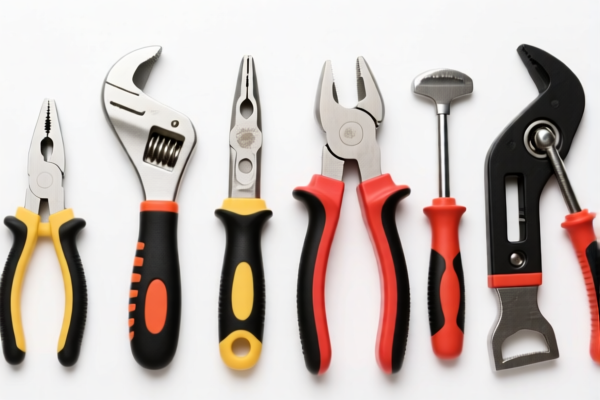


AI Analysis
🔧 Other Unspecified Hand Tools (Generic Manual Implements)
🌐 HS Code Classification & Customs Clearance Guide | 2026 Latest Tariff Analysis | Professional Compliance Strategy
📌 I. Product Definition & Classification: Do You Know What "Hand Tools" Really Are?
"Other Unspecified Hand Tools" refer to manual instruments used for gripping, turning, cutting, hammering, or measuring that do not fit into specific mechanical, power-driven, or precision instrument categories. In international trade, these items are predominantly classified under Chapter 82 (Tools, Implements, Cutlery, Spoons, and Forks of Base Metal).
⚠️ Key Classification Logic:
- If the tool is a specific type (e.g., pliers, wrenches, screwdrivers), it belongs to sub-headings like 8203 or 8201.
- If the tool is "other" or "unspecified" and lacks a specific mechanical description, it often falls under "Other" categories in headings 8203 or 8205.
- Material Assumption: Based on common sense and classification principles, hand tools are typically made of base metals (iron, steel). Unless specified otherwise (e.g., wooden handles only with no functional metal part), they are assumed to be metal tools.
📦 II. HS Code Classification Details (2026 Latest Tariff Reference)
The provided data suggests six possible HS Code classifications for "Other Unspecified Hand Tools." Below is the detailed breakdown of why each code is applicable and its corresponding tax implications.
| HS Code | Product Description / Summary Logic | Why It Matches | Total Tax Rate |
|---|---|---|---|
| 8203.20.60.60 | Pliers, Pincers, Tweezers, etc. (Other) | "Hand tools" match the category; "Other" matches "Other"; Metal material is assumed consistent with classification requirements. | 12¢/doz. + 5.5% + 35.0% |
| 8203.40.60.00 | Axes, Hatchets, etc. (Other) | Falls under "Other (including parts)"; Base metal assumption holds; No material conflict. | 38.3% |
| 8205.59.80.00 | Hand Tools, Other (Other) | Name "Other Hand Tools" matches classification explanation exactly; No material or form conflict. | 38.7% |
| 8201.90.60.00 | Hand Tools, Other (Other) | "Other" matches category; Metal material is standard for hand tools; No conflict with definition. | 35.0% |
| 8201.30.00.80 | Hand Tools, Other (Other) | "Other" category match; "Hand tools" purpose aligns logically; No material conflict. | 35.0% |
| 8205.59.10.00 | Hand Tools, Other (Other) | "Other Hand Tools" usage matches classification; "Other" category allows flexibility; No obvious material conflict. | 42.2% |
🔍 Note on Material:
All selected HS codes in the dataset assume base metal construction. If the product is made of plastic, wood, or ceramic, these codes may be incorrect. However, for generic "hand tools," base metal is the default assumption in customs classification unless stated otherwise.
💰 III. 2026 Latest Tariff Rate Breakdown (Including Additional Duties & Policy Surcharges)
✅ Applicable Country: USA (US)
✅ Origin: China (CN)
✅ Effective Time: Post-November 2025 (Current Regime)
🎯 1. 8203.20.60.60 — Pliers, Pincers, Tweezers, and Similar Hand Tools
| Item | Content |
|---|---|
| Base Tariff | 12¢/dozen + 5.5% (Specific + Ad Valorem) |
| Section 301 Additional Tariff | +25.0% |
| Section 122 Tariff | +10.0% |
| Total Effective Tax | Variable: Base + 35.0% Add-ons |
| Legal Basis Path | USITC:8203.20.60.60 → 301Footnote:9903.01.24 → IEEPA:9903.01.25 |
📌 Explanation:
- This code often applies to specific hand tools like pliers.
- The 35% additional tariff (25% Sec 301 + 10% Sec 122) is layered on top of the base rate.
- High Risk: Specific duties (12¢/doz) can significantly impact low-value items.
🎯 2. 8203.40.60.00 — Axes, Hatchets, and Similar Tools
| Item | Content |
|---|---|
| Base Tariff | 3.3% |
| Section 301 Additional Tariff | +25.0% |
| Section 122 Tariff | +10.0% |
| Total Effective Tax | 38.3% |
| Legal Basis Path | USITC:8203.40.60.00 → 301Footnote:9903.01.24 → IEEPA:9903.01.25 |
📌 Explanation:
- Axes and hatchets are heavier tools, often classified here.
- 38.3% is a high cumulative rate.
- Suitable for rugged, heavy-duty manual tools.
🎯 3. 8205.59.80.00 — Other Hand Tools (Not Elsewhere Specified)
| Item | Content |
|---|---|
| Base Tariff | 3.7% |
| Section 301 Additional Tariff | +25.0% |
| Section 122 Tariff | +10.0% |
| Total Effective Tax | 38.7% |
| Legal Basis Path | USITC:8205.59.80.00 → 301Footnote:9903.01.24 → IEEPA:9903.01.25 |
📌 Explanation:
- This is a catch-all for hand tools not specified in 8201–8203.
- Highest rate in the dataset (38.7%).
- Use only when the tool doesn’t fit pliers, axes, or gardening tools.
🎯 4. 8201.90.60.00 — Hand Tools, Other (Gardening, Agricultural, Forestry)
| Item | Content |
|---|---|
| Base Tariff | 0.0% |
| Section 301 Additional Tariff | +25.0% |
| Section 122 Tariff | +10.0% |
| Total Effective Tax | 35.0% |
| Legal Basis Path | USITC:8201.90.60.00 → 301Footnote:9903.01.24 → IEEPA:9903.01.25 |
📌 Explanation:
- Base tariff is 0%, but the 35% surcharge remains.
- Often used for gardening tools (shovels, hoes, pruners).
- Lower effective rate than 8205 codes due to 0% base.
🎯 5. 8201.30.00.80 — Hand Tools, Other (Gardening, Agricultural, Forestry)
| Item | Content |
|---|---|
| Base Tariff | 0.0% |
| Section 301 Additional Tariff | +25.0% |
| Section 122 Tariff | +10.0% |
| Total Effective Tax | 35.0% |
| Legal Basis Path | USITC:8201.30.00.80 → 301Footnote:9903.01.24 → IEEPA:9903.01.25 |
📌 Explanation:
- Similar to 8201.90.60.00.
- "Other" category within gardening/forestry tools.
- 35.0% total tax.
🎯 6. 8205.59.10.00 — Other Hand Tools (Specific Sub-category)
| Item | Content |
|---|---|
| Base Tariff | 7.2% |
| Section 301 Additional Tariff | +25.0% |
| Section 122 Tariff | +10.0% |
| Total Effective Tax | 42.2% |
| Legal Basis Path | USITC:8205.59.10.00 → 301Footnote:9903.01.24 → IEEPA:9903.01.25 |
📌 Explanation:
- Highest total tax rate (42.2%).
- Use only if the tool fits this specific sub-category.
- Avoid if other codes apply, as the base rate is significantly higher.
🛠️ IV. Customs Clearance Practical Advice (Real-World Pitfall Guide)
✅ 1. Preparation Checklist (Non-negotiable)
| Document | Required | Notes |
|---|---|---|
| ✅ Product Specifications | ✔️ | Must include material (e.g., "Carbon Steel"), dimensions, weight. |
| ✅ Product Photos | ✔️ | Clear images of the tool, logo, and packaging. |
| ✅ Commercial Invoice | ✔️ | Describe as "Hand Tools, Base Metal, Other" — avoid vague terms like "Miscellaneous." |
| ✅ Packing List | ✔️ | Show net/gross weight per unit. |
| ✅ Origin Certificate | ❌ Not required for US-China | But helpful for internal tracking. |
| ✅ Material Declaration | ✔️ | Confirm "Base Metal" (Iron/Steel). If plastic/wood, do not use these codes. |
✅ 2. Declaration Tips (Critical Mnemonics)
🔥 "Material is Key, Use 'Other' Wisely, Taxes are High, Be Precise!"
| Scenario | Correct Declaration | Error to Avoid |
|---|---|---|
| Generic Hand Tools | "Hand Tools, Base Metal, Other" | "Gadgets" or "Tools" (too vague) |
| Gardening Tools | Use 8201.xxxx (0% base + 35%) | Use 8205 (higher base rate) |
| Pliers/Wrenches | Use 8203.xxxx | Use 8205 (misclassification risk) |
| Non-Metal Tools | Different Chapter (e.g., 8216) | Force into 8203/8205 → Penalty |
✅ 3. Special Cases
| Case | Handling Advice |
|---|---|
| Plastic/Wooden Handles | If the functional part is metal, still classify under 8203/8205. If entirely non-metal, seek different code. |
| Sets of Tools | Declare as "Hand Tool Set" and use the highest tariff code in the set, or split by type. |
| OEM Custom Tools | Provide client specs and drawings to prove the "Other" classification is accurate. |
| Small Value Shipments | Check De Minimis rules. Under $800, no duty. Over $800, full tax applies. |
🌍 V. Global Customs Comparison (2026 Latest)
| Country/Region | Recommended HS Code | Tariff (China Origin) | Key Certification | Remarks |
|---|---|---|---|---|
| 🇺🇸 USA | 8201.90.60.00 or 8203.40.60.00 |
35.0% – 38.7% | N/A (No FCC/UL for basic tools) | High Surcharge (301 + 122) |
| 🇨🇳 China | 8201.90.00.00 |
5% – 10% | N/A | Lower base rates |
| 🇪🇺 EU | 8205.59.00 |
0% – 6% | CE (if applicable) | No 301 surcharge |
| 🇦🇺 Australia | 8201.90.90 |
5% | RCM (if electrical, but not for manual) | Moderate tariff |
| 🇯🇵 Japan | 8201.90.000 |
3% – 8% | JIS (optional) | Low base rates |
📌 Conclusion:
- USA is the most expensive market due to Section 301 (25%) and Section 122 (10%) surcharges.
- Total tax rates range from 35% to 42.2%.
- Plan pricing and supply chain accordingly.
📌 VI. Common Errors & Pitfalls (Lessons Learned)
❌ Error 1: Classifying metal hand tools under 9503 (Toys)
👉 Consequence: 0% base rate, but customs penalty for misclassification. Tools are functional, not toys.
❌ Error 2: Ignoring Section 122 Tariff
👉 Consequence: Underpaying by 10%. Customs will assess back taxes + interest.
❌ Error 3: Vague Description "Hand Tools"
👉 Consequence: Customs may select the highest duty code (8205.59.10.00 at 42.2%) due to lack of specificity.
❌ Error 4: Assuming Plastic Parts Mean Non-Metal
👉 Consequence: If the cutting/gripping part is metal, it’s still Chapter 82. Misclassification leads to rejection.
✅ Correct Practice:
"Hand Tool, Carbon Steel, Pliers, Non-Mechanical, for Industrial Use, Model XYZ"
🎯 VII. Conclusion: Precision in Classification Saves Money!
🎯 Remember:
🔹 "Metal Base, Manual Use, Chapter 82, Taxes are High."
🔹 "Choose 8201 for 0% Base, 8203 for Specifics, 8205 as Last Resort."
🔹 "301 + 122 = 35% Add-on, Always Factor This In!"
📌 Pro Tip:
- If your hand tools are not for commercial use (e.g., household kits), check if they qualify for lower duty rates or exemptions.
- Always pre-classify with a licensed customs broker before shipping large volumes.
- Consider supply chain diversification if tariff costs exceed 40%.
📣 Take Action Now:
📞 Contact a Customs Broker + Provide Product Photos + Confirm Material Composition
🚀 Optimize Your HS Code, Reduce Taxes, and Streamline Clearance!
✨ Professional Clearance Starts with Accurate Classification!
💼 Every Dollar Saved in Duty is Profit Earned!
Customer Reviews
About HS Code Classification
The Harmonized System (HS) is an internationally standardized nomenclature developed by the World Customs Organization (WCO) to classify traded products. Over 200 countries use the HS system as the basis for customs tariffs, trade statistics, and import/export regulations.
Each HS code follows a hierarchical structure:
- Chapter (2 digits) — Broad category of goods (e.g., Chapter 84: Machinery and Mechanical Appliances)
- Heading (4 digits) — More specific grouping within the chapter
- Subheading (6 digits) — Internationally standardized breakdown, used by all WCO member countries
- National subdivisions (8-10 digits) — Country-specific extensions for further classification, such as US HTSUS 10-digit codes
Correct HS code classification is essential for smooth customs clearance, accurate duty payment, and compliance with trade regulations. Misclassification can lead to customs delays, overpayment of duties, or penalties.
When importing from CN to US, the applicable tariff rates may include:
- Most-Favored-Nation (MFN) rate — The standard duty rate applied to WTO members
- General rate — Applied to countries without trade agreements
- Trade remedy duties — Additional tariffs such as Section 301 (anti-dumping), Section 232 (national security), or countervailing duties
The information provided on this page is for reference purposes only. For official classification, please consult with your local customs authority or a licensed customs broker.