Other Untanned Raw Cowhide (Preserved by Other Methods)
CN → US| HS Code | Tariff Rate | Origin | Destination | Doc |
|---|---|---|---|---|
| 4101901030 | 17.5% | CN | US | Official Doc |
| 4101905000 | 20.8% | CN | US | Official Doc |
| 4101901020 | 17.5% | CN | US | Official Doc |
| 4101903500 | 19.9% | CN | US | Official Doc |
| 4101901030 | 17.5% | CN | US | Official Doc |
Product Images
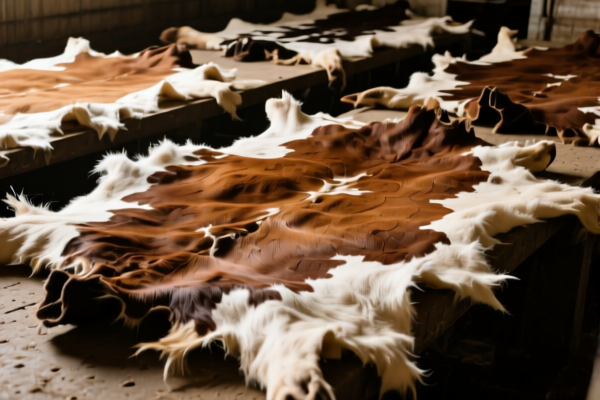
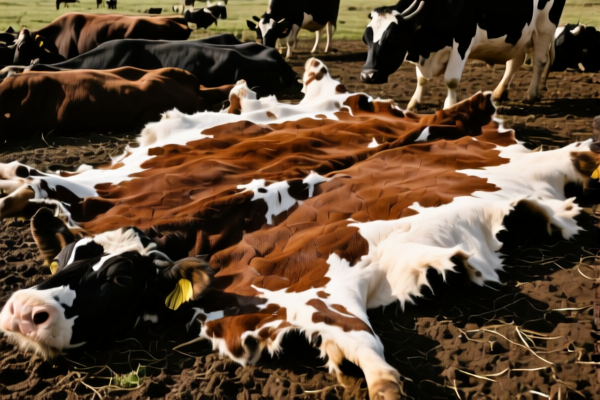
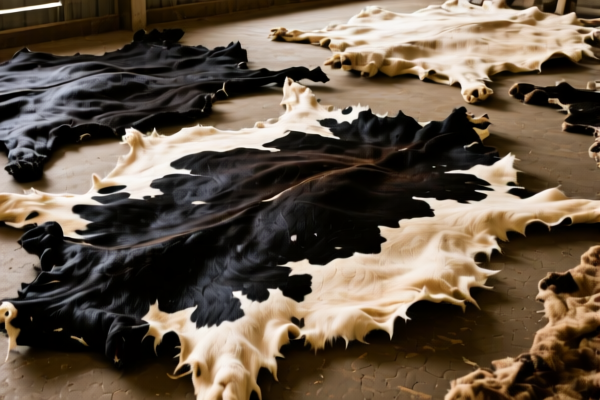
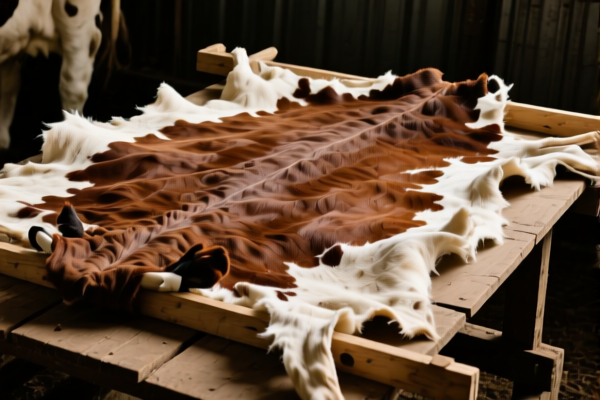
AI Analysis
🐄 Other Untanned Raw Cowhide (Preserved by Other Methods)
🌐 HS Code Reference & Customs Clearance Guide | 2026 Latest Tariff Analysis | Professional Compliance Strategy
📌 I. Product Definition & Classification: What Exactly is This Product?
Untanned Raw Cowhide (Preserved by Other Methods) refers to cattle hides or skins that have not been tanned, dressed, or otherwise processed beyond basic cleaning. The key characteristic is the preservation method: they are not preserved by salting (which usually falls under different sub-headings) but by other means such as: * Pickling (acid/salt solution) * Freezing * Drying (air-dried, sun-dried, but not fully cured) * Chemical preservation (other than salting)
⚠️ Key Distinction:
- If preserved by salting (wet salted, dry salted), it may fall under different sub-codes (e.g., 4101.21–4101.29).
- If tanned or crust-tanned, it does not belong to Chapter 41 heading 01.
- “Other methods” explicitly excludes salting as the primary preservation technique.
📦 II. HS Code Classification Details (2026 Latest Tariff Mapping)
Based on the provided data, here are the applicable HS Codes for "Other Untanned Raw Cowhide (Preserved by Other Methods)":
| HS Code | Product Description | Key Features | Tax Detail Breakdown |
|---|---|---|---|
| 4101.90.10.30 | Match for untanned raw cowhide preserved by other methods; material and form match. | - Untanned - Cowhide - Preserved by methods other than salting (e.g., freezing, pickling, chemical) - Primary classification match |
Total Tax: 17.5% - Base Tariff: 0.0% - Additional Tariff: 7.5% - Section 301/122 Tariff: 10% |
| 4101.90.50.00 | Match for untanned raw cowhide preserved by other methods; classified as "Other" category. | - Untanned - Cowhide - Preserved by other methods - Secondary/Alternative classification |
Total Tax: 20.8% - Base Tariff: 3.3% - Additional Tariff: 7.5% - Section 301/122 Tariff: 10% |
| 4101.90.10.20 | Match for untanned cowhide; material and form consistent; classified as "Other". | - Untanned - Cowhide (general) - Preserved by other methods |
Total Tax: 17.5% - Base Tariff: 0.0% - Additional Tariff: 7.5% - Section 301/122 Tariff: 10% |
| 4101.90.35.00 | Match for untanned cowhide; material is bovine/cattle hide; classified as "Other". | - Untanned - Bovine/Cattle Hide - Preserved by other methods |
Total Tax: 19.9% - Base Tariff: 2.4% - Additional Tariff: 7.5% - Section 301/122 Tariff: 10% |
| 4101.90.10.30 | Match for raw cowhide preserved by other methods; material and preservation method consistent. | - Same as first entry - Confirms primary match |
Total Tax: 17.5% - Base Tariff: 0.0% - Additional Tariff: 7.5% - Section 301/122 Tariff: 10% |
🔍 Critical Note:
- 4101.90.10.30 appears twice with identical tax details (17.5%). This is the most precise match for "preserved by other methods."
- 4101.90.50.00 and 4101.90.35.00 are broader or alternative classifications with higher base tariffs.
- 4101.90.10.20 is similar to .30 but listed as "Other" category.
💰 III. 2026 Latest Tariff Rate Breakdown (Including Surtaxes & Policy Add-ons)
✅ Applicable Country: United States (US)
✅ Origin: China (CN)
✅ Effective Time: 2025/2026 (Current Trade Policies)
🎯 1. 4101.90.10.30 —— Best Match: Untanned Raw Cowhide (Other Preservation Methods)
| Item | Detail |
|---|---|
| Base Tariff | 0.0% (ad valorem) |
| Section 301/Additional Tariff | +7.5% |
| 122 Clause Tariff | +10% |
| Total Effective Tariff | 17.5% |
| Tax Calculation | CIF Value × 17.5% |
| De Minimis Exemption | ❌ Not Applicable (High-value agricultural/animal product) |
| Legal Basis Path | HTSUS:4101.90.10.30 → Section 301: 7.5% → Section 122: 10% |
📌 Explanation:
- 0% Base Tariff: Raw hides are generally duty-free under base USITC rates.
- 7.5% Additional Tariff: Imposed under Section 301 on specific Chinese-origin goods.
- 10% 122 Clause Tariff: Part of recent trade measures targeting specific agricultural/by-product imports.
- Total 17.5% is the lowest effective rate among the matches.
🎯 2. 4101.90.50.00 —— Alternative: Other Untanned Raw Cowhide (Other Category)
| Item | Detail |
|---|---|
| Base Tariff | 3.3% |
| Section 301/Additional Tariff | +7.5% |
| 122 Clause Tariff | +10% |
| Total Effective Tariff | 20.8% |
| Tax Calculation | CIF Value × 20.8% |
| De Minimis Exemption | ❌ Not Applicable |
| Legal Basis Path | HTSUS:4101.90.50.00 → Section 301: 7.5% → Section 122: 10% |
📌 Note:
- Higher base tariff (3.3%) makes this less favorable than .10.30.
- Use only if .10.30 is deemed incorrect by customs due to specific preservation method nuances.
🎯 3. 4101.90.35.00 —— Bovine/Cattle Hide (Other)
| Item | Detail |
|---|---|
| Base Tariff | 2.4% |
| Section 301/Additional Tariff | +7.5% |
| 122 Clause Tariff | +10% |
| Total Effective Tariff | 19.9% |
| Tax Calculation | CIF Value × 19.9% |
| De Minimis Exemption | ❌ Not Applicable |
| Legal Basis Path | HTSUS:4101.90.35.00 → Section 301: 7.5% → Section 122: 10% |
📌 Note:
- Middle-ground tariff. May apply if "cowhide" is specified but preservation method is ambiguous.
🎯 4. 4101.90.10.20 —— Untanned Cowhide (Other)
| Item | Detail |
|---|---|
| Base Tariff | 0.0% |
| Section 301/Additional Tariff | +7.5% |
| 122 Clause Tariff | +10% |
| Total Effective Tariff | 17.5% |
| Tax Calculation | CIF Value × 17.5% |
| De Minimis Exemption | ❌ Not Applicable |
| Legal Basis Path | HTSUS:4101.90.10.20 → Section 301: 7.5% → Section 122: 10% |
📌 Note:
- Same total rate as .10.30, but .30 is described as a "match" with material and form consistency. Prefer .30 for precision.
🛠️ IV. Customs Clearance Practical Advice (Pitfall Avoidance Guide)
✅ 1. Documentation Checklist (Mandatory)
| Document | Required? | Description |
|---|---|---|
| ✅ Commercial Invoice | ✔️ | Must clearly state: "Untanned Raw Cowhide, Preserved by [Specific Method: e.g., Freezing/Pickling], Not Salted" |
| ✅ Packing List | ✔️ | Detail weight, quantity, preservation method, and storage conditions. |
| ✅ Certificate of Origin | ✔️ | Essential for determining base tariff and any potential exemptions. |
| ✅ Preservation Method Declaration | ✔️ | Critical! Must explicitly state how the hide was preserved (e.g., "Frozen at -18°C," "Pickled in HCl/NaCl solution," "Air-dried"). Do not just say "Other." |
| ✅ Phytosanitary/Veterinary Certificate | ✔️ | Required for animal products to prove disease-free status. |
| ✅ Product Photos | ✔️ | Show hides, labels, and preservation packaging (e.g., frozen blocks, chemical drums). |
✅ 2. Classification Strategy (Key Rules)
🔥 “Preservation Method Determines Code! Salt vs. Other is the Divide!”
| Scenario | Recommended HS Code | Risk if Misclassified |
|---|---|---|
| Frozen Raw Cowhide | 4101.90.10.30 |
✅ Correct (17.5%) |
| Pickled Raw Cowhide | 4101.90.10.30 |
✅ Correct (17.5%) |
| Air-Dried Raw Cowhide | 4101.90.10.30 |
✅ Correct (17.5%) |
| Salted Raw Cowhide | ❌ Do NOT use 4101.90.x.x | Must use salting-specific codes (e.g., 4101.21–4101.29), which have different tariffs. Misclassification → Penalty + Back Duties. |
| Tanned Cowhide | ❌ Do NOT use Chapter 41 Heading 01 | Must use Chapter 41 Heading 4104 (Tanned Leather). Misclassification → Severe Penalty. |
✅ 3. Special Cases Handling
| Situation | Advice |
|---|---|
| Mixed Preservation Methods | If a shipment contains both salted and unfrozen hides, split the declaration. Salted parts go to salting codes; unfrozen parts go to 4101.90.10.30. |
| Partial Tanning | If hides are only "crust-tanned" or partially processed, they no longer qualify as "Raw." Use Tanned Leather codes (4104.x.x). |
| OEM/Private Label | Ensure the invoice lists the biological source (Cattle/Cowhide) and preservation method. Generic terms like "Leather Hides" are rejected. |
| Freeze-Thaw Damage | If hides are damaged due to freezing, declare as "Rejected/Defective" if applicable, but still classify correctly. Tariff applies to CIF value. |
🌍 V. Global Market Comparison (2026 Latest)
| Country/Region | Recommended HS Code | Tariff (China Origin) | Certification Requirements | Notes |
|---|---|---|---|---|
| 🇺🇸 USA | 4101.90.10.30 |
17.5% | USDA Inspection, Veterinary Cert | High additional tariffs apply. |
| 🇨🇳 China | 4101.90.10.30 |
~0–5% (Import Duty) | CIQ Inspection | Domestic production often supplies this. |
| 🇪🇺 EU | 4101.90.10 |
~0–6% | REACH Compliance, Veterinary Cert | No Section 301/122 surcharges. |
| 🇬🇧 UK | 4101.90.10 |
~0–6% | UKCA/Health Cert | Post-Brexit rules apply. |
| 🇯🇵 Japan | 4101.90.10 |
~0–2.5% | FMD/BSMD Certification | Strict animal health checks. |
📌 Conclusion:
- USA is the most costly market due to Section 301 and 122 clause tariffs.
- EU/UK/Japan have lower base tariffs and no punitive surcharges.
- Preservation declaration is the single most critical factor for correct classification globally.
📌 VI. Common Errors & Pitfalls (Lessons Learned)
❌ Error 1: Declaring all hides as "Leather" without specifying "Raw" or "Tanned."
👉 Consequence: Classification error → Duty mismatch → Customs Hold.
❌ Error 2: Failing to specify the preservation method.
👉 Consequence: Customs cannot determine if it’s "Salted" (different code) or "Other" → Delay + Inspection.
❌ Error 3: Using generic terms like "Animal Skins" on the invoice.
👉 Consequence: Refused clearance → Must redeclare → Demurrage Charges.
❌ Error 4: Confusing "Untanned" with "Crust-Tanned."
👉 Consequence: Crust-tanned hides are not raw; misclassification leads to underpayment of duties.
✅ Correct Declaration Example:
"Untanned Raw Cowhide Hides, Preserved by Freezing (No Salt Added), Cleaned, USDA Approved, HS Code: 4101.90.10.30"
🎯 VII. Conclusion: Precision in Classification Saves Money!
🎯 Remember the Golden Rules:
🔹 "Raw? Check Preservation: Salted vs. Other is King!"
🔹 "Unsalted & Frozen/Pickled = 4101.90.10.30 (17.5%)"
🔹 "Salted? Go Elsewhere! Tanned? Chapter 4104!"
🔹 "Clear Description = Fast Clearance = Low Risk!"
📌 Pro Tip:
If you are importing into the USA, consider Advance Rulings from CBP to lock in the 17.5% rate for 4101.90.10.30.
If your hides are salted, ensure they are declared under the correct salting-specific codes to avoid penalties.
📣 Act Now:
📞 Consult with a licensed customs broker.
📄 Prepare detailed preservation certificates.
🚀 Ensure smooth, compliant, and cost-effective clearance for your raw cowhide!
✨ Professional Clearance Starts with Accurate Classification!
💼 Every Percent of Tariff Matters!
Customer Reviews
About HS Code Classification
The Harmonized System (HS) is an internationally standardized nomenclature developed by the World Customs Organization (WCO) to classify traded products. Over 200 countries use the HS system as the basis for customs tariffs, trade statistics, and import/export regulations.
Each HS code follows a hierarchical structure:
- Chapter (2 digits) — Broad category of goods (e.g., Chapter 84: Machinery and Mechanical Appliances)
- Heading (4 digits) — More specific grouping within the chapter
- Subheading (6 digits) — Internationally standardized breakdown, used by all WCO member countries
- National subdivisions (8-10 digits) — Country-specific extensions for further classification, such as US HTSUS 10-digit codes
Correct HS code classification is essential for smooth customs clearance, accurate duty payment, and compliance with trade regulations. Misclassification can lead to customs delays, overpayment of duties, or penalties.
When importing from CN to US, the applicable tariff rates may include:
- Most-Favored-Nation (MFN) rate — The standard duty rate applied to WTO members
- General rate — Applied to countries without trade agreements
- Trade remedy duties — Additional tariffs such as Section 301 (anti-dumping), Section 232 (national security), or countervailing duties
The information provided on this page is for reference purposes only. For official classification, please consult with your local customs authority or a licensed customs broker.