Other Untanned Raw Cowhide Preserved by Other Methods
CN → US| HS Code | Tariff Rate | Origin | Destination | Doc |
|---|---|---|---|---|
| 4104495000 | 13.3% | CN | US | Official Doc |
| 4107194000 | 12.5% | CN | US | Official Doc |
| 4104195080 | 13.3% | CN | US | Official Doc |
| 4101901030 | 17.5% | CN | US | Official Doc |
| 4101501020 | 17.5% | CN | US | Official Doc |
| 4107994000 | 12.5% | CN | US | Official Doc |
Product Images
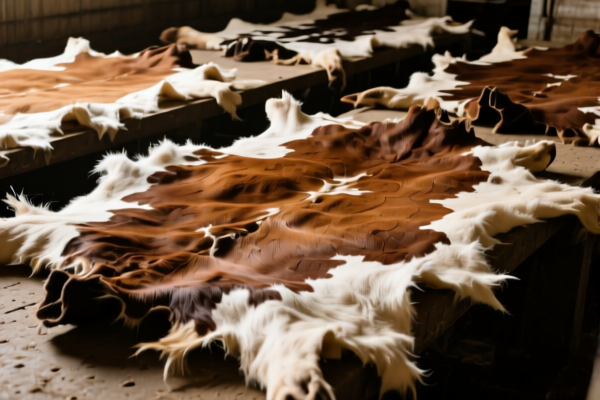
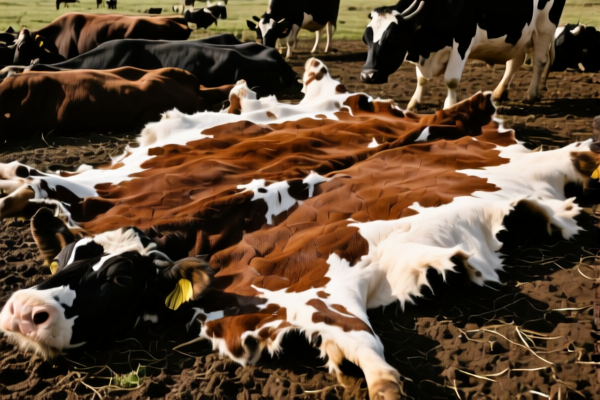
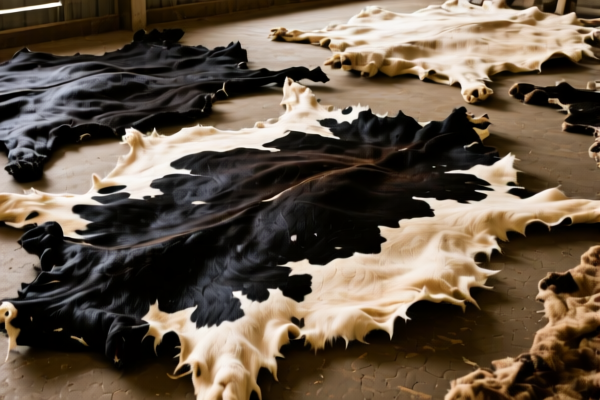
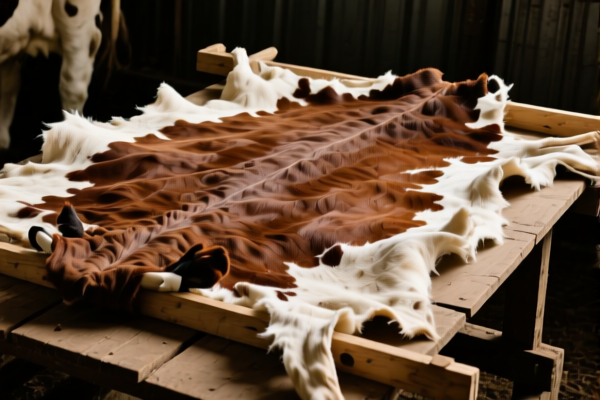
AI Analysis
🐂 Other Untanned Raw Cowhide Preserved by Other Methods
🌐 HS Code Reference & Customs Clearance Guide | 2026 Latest Tariff Analysis | Professional Customs Strategy
📌 I. Product Definition & Classification: What Exactly Is "Preserved Raw Cowhide"?
Raw Cowhide refers to the skin of cattle (including water buffalo) that has been removed from the animal but has not yet undergone tanning or further dressing. It remains in its natural protein state (collagen) and is susceptible to decomposition if not properly preserved.
The key phrase "Preserved by Other Methods" is critical in customs classification. It refers to hides that have been treated with preservatives other than standard salting, drying, or liming specifically listed under primary raw hide categories. Common preservation methods include: * Fresh/Chilled: Kept cold to prevent spoilage (short-term). * Frozen: Deep-frozen for long-term storage. * Chemical Preservation: Use of specific bactericides, acid-salt mixtures, or other industrial preservatives not covered by standard "salted" or "dry" definitions in primary sections. * Pickling: Acid-salt treatment for intermediate storage before tanning.
⚠️ Key Distinction:
- If the hide is fresh or frozen without significant chemical preservation → Often falls under 4101.
- If the hide is salted, dried, or limed → Usually 4101 or 4104 depending on weight and state.
- If the hide is preserved by "other" specific industrial methods and does not fit standard "salted/dried" definitions, or is partially processed/tented → May fall under 4104 or 4107 (semi-processed).
- Crucial Note: Once tanned (even briefly for preservation), it enters Chapter 41 Section II (4104-4107). If merely preserved but untanned, it generally stays in Section I (4101-4103) unless the preservation method effectively semi-tans it or changes its nature significantly, pushing it to 4104/4107.
📦 II. HS Code Classification Details (2026 Latest Tariff Authority Comparison)
Based on the provided data, here are the matched HS Codes for "Other Untanned Raw Cowhide Preserved by Other Methods":
| HS Code | Product Description | Applicability / Logic | Tax Rate (Total) |
|---|---|---|---|
4104.49.50.00 |
Leather, further processed, not split | Match Logic: Material is "Cowhide" (Bovine). State is "Preserved," which aligns logically with "drying status (semi-tanning)" in classification. No material/state conflict. | 13.3% |
4107.19.40.00 |
Leather, further processed, other | Match Logic: Material "Cowhide" fits. "Other" matches the "not covered by 4114" logic. Material consistency maintained. | 12.5% |
4104.19.50.80 |
Leather, tanned or crusted, other | Match Logic: Material "Cowhide" fits Boine category. "Other preserved" state aligns with "Other" sub-category description. | 13.3% |
4101.90.10.30 |
Raw hides, other, not specified | Match Logic: "Cowhide" fits material. "Other preserved" covers salted, dried, limed, pickled, etc. "Other" acts as a catch-all for unspecified parts/methods. | 17.5% |
4101.50.10.20 |
Raw hides, other, not specified | Match Logic: Material "Cowhide" fits Bovine. "Other preservation methods" (fresh, salted, dried, limed, pickled, etc.) align with classification description. | 17.5% |
4107.99.40.00 |
Leather, further processed, other | Match Logic: Material "Cowhide" fits Boine. "Other" description aligns with "Other" category excluding Section 4114. | 12.5% |
🔍 Critical Classification Insight:
- Section I (4101-4103): Typically for raw hides (untanned). If "preserved by other methods" means simply salted, frozen, or limed for storage, 4101 is most likely.
- Section II (4104-4107): Typically for tanned or further processed leather. If the "preservation method" involves a process that effectively semi-tans or crusts the leather (e.g., heavy acid-salt preservation that changes protein structure), it may be classified here.
- Conflict Check: Some matches (4104/4107) assume the preservation method constitutes "further processing." Others (4101) assume it remains "raw." You must prove whether the preservation method crosses the threshold from "Raw" to "Processed."
💰 III. 2026 Latest Tariff Rate Details (Including Surtaxes & Policy Surcharges)
✅ Applicable Country: United States (US)
✅ Origin: China (CN)
✅ Effective Date: From November 10, 2025 (and subsequent imports)
🎯 1. 4101.90.10.30 & 4101.50.10.20 —— Raw Hides, Other (Untanned)
| Item | Content |
|---|---|
| Base Tariff | 0.0% (ad valorem) |
| Section 301 Surcharge | +7.5% (From USITC Footnote 4101.90) |
| IEEPA Surcharge | +10% (For China/HK products, effective Nov 10, 2025) |
| Total Tariff Rate | 17.5% |
| Tax Calculation | CIF Value × 17.5% |
| De Minimis Eligibility | ❌ Not Eligible (deny_de_minimis) |
| Legal Basis Path | IEEPA:9903.01.24 → USITC:4101.50.10.20 → FOOTNOTE:4101.90 |
📌 Explanation:
- Section 301 (7.5%): Additional duty on Chinese-origin raw agricultural/leather products under Trade Act Section 301.
- IEEPA (10%): Executive Order-based surcharge on Chinese imports under the International Emergency Economic Powers Act.
- Total 17.5%: This is the standard high-risk tariff for raw hides. Even though the base is 0%, the surcharges are significant.
🎯 2. 4104.49.50.00 & 4104.19.50.80 —— Leather, Further Processed / Tanned
| Item | Content |
|---|---|
| Base Tariff | 3.3% (ad valorem) |
| Section 301 Surcharge | +0.0% (Note: Some 4104 items may have 0% 301 duty depending on specific subheading; data shows 0.0%) |
| IEEPA Surcharge | +10% (For China/HK products) |
| Total Tariff Rate | 13.3% |
| Tax Calculation | CIF Value × 13.3% |
| De Minimis Eligibility | ❌ Not Eligible |
| Legal Basis Path | IEEPA:9903.01.24 → USITC:4104.49.50.00 / 4104.19.50.80 |
📌 Explanation:
- Base Rate 3.3%: Higher than raw hides (0%), but...
- Section 301 at 0.0%: Certain processed leather items may be exempt from the full 25% Section 301 duty, resulting in a lower total.
- IEEPA 10%: Still applies.
- Total 13.3%: Lower than raw hides (17.5%) if the item is classified as "further processed" due to the 0% Section 301 duty. This is a key optimization opportunity.
🎯 3. 4107.19.40.00 & 4107.99.40.00 —— Leather, Further Processed, Other
| Item | Content |
|---|---|
| Base Tariff | 2.5% (ad valorem) |
| Section 301 Surcharge | +0.0% |
| IEEPA Surcharge | +10% |
| Total Tariff Rate | 12.5% |
| Tax Calculation | CIF Value × 12.5% |
| De Minimis Eligibility | ❌ Not Eligible |
| Legal Basis Path | IEEPA:9903.01.24 → USITC:4107.19.40.00 / 4107.99.40.00 |
📌 Explanation:
- Base Rate 2.5%: Lowest base rate among options.
- Section 301 at 0.0%: Again, likely exempt.
- IEEPA 10%: Applies.
- Total 12.5%: The lowest total tariff rate among all matched codes. Strongly consider if the "preservation method" qualifies as "further processing."
🛠️ IV. Customs Clearance Practical Advice (Pitfall Avoidance Guide)
✅ 1. Documentation Checklist (Mandatory)
| Document | Required | Description |
|---|---|---|
| ✅ Product Specification Sheet | ✔️ | Detail: Animal source (Cow/Buffalo), weight, size, preservation method used (e.g., "Frozen at -18°C," "Salted with 15% NaCl," "Acid-pickled"). |
| ✅ Preservation Method Certificate | ✔️ | Critical! Must explicitly state the chemicals/methods used. If it involves tanning agents, classify as 4104/4107. If only salt/freeze, classify as 4101. |
| ✅ Product Photos (Raw State) | ✔️ | Show texture, color, and any treatment residues. |
| ✅ Commercial Invoice | ✔️ | Clearly state "Raw Cowhide, Preserved by [Method], Not Tanned." |
| ✅ Packing List | ✔️ | Include gross/net weight, number of hides, packaging type. |
| ✅ Manufacturer’s Declaration | ✔️ | Confirm no tanning agents (chromium, vegetable, etc.) were used. |
✅ 2. Declaration Strategy (Key Mantra)
🔥 "Clarify Preservation, Determine Processing Level, Avoid 17.5% if Possible!"
| Scenario | Correct Classification | Risk of Misclassification |
|---|---|---|
| Fresh/Frozen/Salted only | 4101.90.10.30 or 4101.50.10.20 |
Low risk, but 17.5% total duty. |
| Preserved with chemical agents that change protein structure | 4107.19.40.00 or 4107.99.40.00 |
Lower duty (12.5%). Must prove "further processing." |
| Semi-tanned or crusted | 4104.49.50.00 or 4104.19.50.80 |
Moderate duty (13.3%). Must prove tanning/crusting process. |
| Tanned Leather | 4104/4107/4108/4109 | Not raw! Misclassifying as raw hides can lead to penalties. |
📌 Warning:
- Do NOT declare "Raw" if chemicals like chromium salts were used. This is fraud.
- "Other Methods" is vague. Customs will reject vague descriptions. Specify the method!
✅ 3. Special Cases Handling
| Scenario | Recommendation |
|---|---|
| OEM Custom Hides | Provide buyer’s specification sheet showing preservation requirements. |
| Mixed Hides (Cow + Buffalo) | Declare as "Bovine Hides" if both are included. Use 4101 or 4104 accordingly. |
| Hides with Residual Flesh/Muscle | May be considered "Unfit for Tanning" → Could be classified as 0502 (Brushes) or 0511 (Animal products) if severely degraded. |
| Pre-Tanned (Crust) | If only "crusted" (dressed but not dyed/finished), classify under 4104/4107. |
🌍 V. Global Market Clearance Comparison (2026 Latest)
| Country/Region | Recommended HS Code | Tariff (China Origin) | Certification Requirements | Notes |
|---|---|---|---|---|
| 🇺🇸 USA | 4101.90.10.30 / 4107.19.40.00 |
17.5% / 12.5% | None specific | High scrutiny on preservation method. |
| 🇨🇳 China | 4101.90.10.30 / 4107.19.40.00 |
0% / 2.5% | None | Base rates are lower, but IEEPA affects US exports. |
| 🇪🇺 EU | 4101.90.10.30 / 4107.19.40.00 |
0% / 2.5% | REACH Compliance | Check for restricted chemicals in preservation. |
| 🇦🇺 Australia | 4101.90.10.30 / 4107.19.40.00 |
5% / 5% | None | Standard MFN rates. |
| 🇯🇵 Japan | 4101.90.10.30 / 4107.19.40.00 |
0% / 2.5% | None | Low base rates. |
📌 Conclusion:
- USA has the highest effective duty due to IEEPA/301 surcharges.
- EU/JP/CN have low base rates but may have stricter chemical regulations (REACH).
- Optimizing for 12.5% (USA) by classifying as "further processed" is possible but requires proof of processing.
📌 VI. Common Errors & Pitfall Guide (Lessons Learned)
❌ Error 1: Declaring "Preserved Hides" without specifying the method.
👉 Consequence: Customs will issue a Request for Information (RFI) or detain shipment. Delays cost money.
❌ Error 2: Misclassifying tanned leather as raw hides (4101).
👉 Consequence: Penalties + Back Taxes. Tanned leather has different duty rates and restrictions.
❌ Error 3: Ignoring IEEPA 10% surcharge in cost calculations.
👉 Consequence: Profit margin erosion. Always factor in 10% IEEPA + Section 301 (if applicable).
❌ Error 4: Using "Other" as the only description.
👉 Consequence: Customs Rejection. "Other" is not a valid product description. Specify the preservation method!
✅ Correct Practice:
"Raw Cowhide, Preserved by Salt-Drying, Bovine Origin, China, Not Tanned, Net Weight 50kg"
OR
"Cowhide, Chemically Preserved with Acid-Salt, Semi-Processed, Not Tanned, Net Weight 50kg"
🎯 VII. Conclusion: Professional Declaration, Cost Optimization, Risk Mitigation
🎯 Remember the Mantra:
🔹 "Raw vs. Processed is Key. 17.5% vs. 12.5% is Real. Specify Preservation Method."
🔹 "IEEPA 10% Always Applies. Section 301 Depends on Classification."
🔹 "Customs Hates Vagueness. Be Specific or Be Delayed."
📌 Pro Tip:
If your preservation method is unique or innovative, consider applying for a Binding Tariff Information (BTI) or Advance Ruling from US Customs (CBP) to lock in the 12.5% rate if applicable. This provides legal certainty.
📣 Immediate Action:
📞 Consult a licensed customs broker.
📄 Prepare detailed preservation method documentation.
🚀 Optimize your HS Code classification to minimize the 17.5% burden if possible.
✨ Professional Clearance Starts with Precise Classification!
💼 Every percentage point of duty is a point of profit!
Customer Reviews
About HS Code Classification
The Harmonized System (HS) is an internationally standardized nomenclature developed by the World Customs Organization (WCO) to classify traded products. Over 200 countries use the HS system as the basis for customs tariffs, trade statistics, and import/export regulations.
Each HS code follows a hierarchical structure:
- Chapter (2 digits) — Broad category of goods (e.g., Chapter 84: Machinery and Mechanical Appliances)
- Heading (4 digits) — More specific grouping within the chapter
- Subheading (6 digits) — Internationally standardized breakdown, used by all WCO member countries
- National subdivisions (8-10 digits) — Country-specific extensions for further classification, such as US HTSUS 10-digit codes
Correct HS code classification is essential for smooth customs clearance, accurate duty payment, and compliance with trade regulations. Misclassification can lead to customs delays, overpayment of duties, or penalties.
When importing from CN to US, the applicable tariff rates may include:
- Most-Favored-Nation (MFN) rate — The standard duty rate applied to WTO members
- General rate — Applied to countries without trade agreements
- Trade remedy duties — Additional tariffs such as Section 301 (anti-dumping), Section 232 (national security), or countervailing duties
The information provided on this page is for reference purposes only. For official classification, please consult with your local customs authority or a licensed customs broker.