Other Vegetable Fiber Bundled Plaited Products
CN → US| HS Code | Tariff Rate | Origin | Destination | Doc |
|---|---|---|---|---|
| 1401904000 | 38.2% | CN | US | Official Doc |
| 1401204000 | 12.0% | CN | US | Official Doc |
| 4602198000 | 37.3% | CN | US | Official Doc |
| 4602191800 | 39.5% | CN | US | Official Doc |
| 4601940500 | 37.7% | CN | US | Official Doc |
| 4601990500 | 37.7% | CN | US | Official Doc |
Product Images
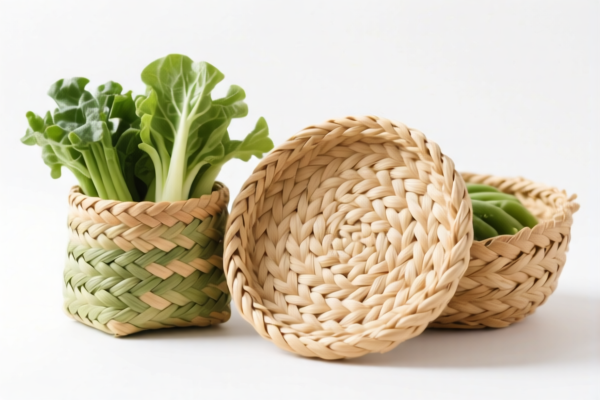
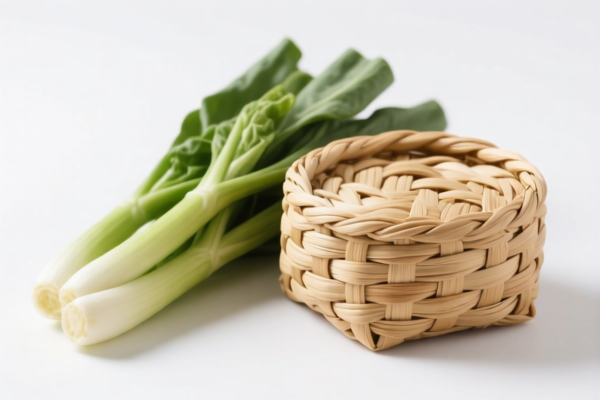
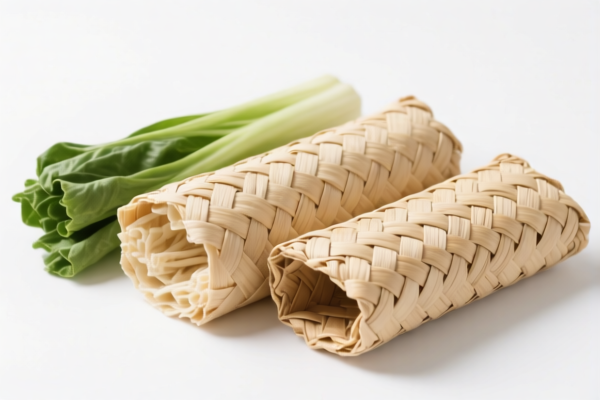
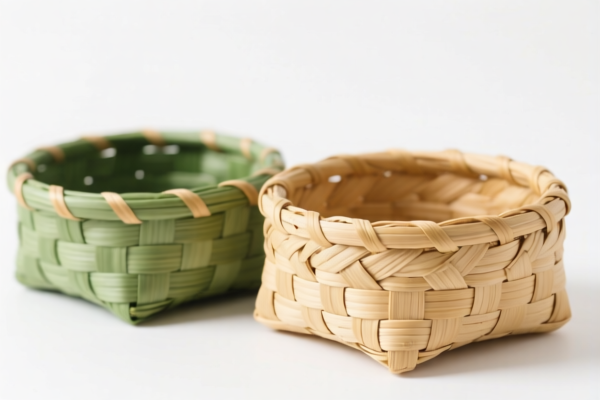
AI Analysis
🌿 Other Vegetable Fiber Bundled Plaited Products
🌐 HS Code Reference & Customs Clearance Guide | 2026 Latest Tariff Breakdown | Pro-Level Import Strategy
📌 One, Product Definition & Classification: What Exactly Are "Bundled Plaited Products"?
"Other Vegetable Fiber Bundled Plaited Products" refers to plaited or woven materials made from non-rattan, non-reed, non-osier vegetable fibers, such as bamboo, raffia, cleaned/bleached/dyed cereal straw, lime bark, or other unspecified plant fibers, which are bound together in parallel strands or woven into sheet form, but not yet finished into baskets, mats, or shaped articles.
These are unfinished plaiting materials — often sold in bundles, rolls, or sheets — used as raw materials for artisans, crafters, or manufacturers to produce baskets, mats, screens, or decorative items.
⚠️ Key Distinction: - If the product is already shaped into a basket, bag, or mat → HS Code 4602.19.18.00 or 4602.19.80.00 - If the product is still in bundled, plaited, or sheet form, and not assembled into a finished article → HS Code 4601.94.05.00 or 4601.99.05.00
📦 Two, HS Code Classification Details (2026 Official Tariff Table)
| HS Code | Product Description | Use Case | Finished Article? |
|---|---|---|---|
4601.94.05.00 |
Plaits and similar products of plaiting materials, whether or not assembled into strips; plaiting materials, plaits and similar products of plaiting materials, bound together in parallel strands or woven, in sheet form, whether or not being finished articles — of other vegetable materials | Raw plaiting material for crafts, mats, screens, or baskets | ❌ No (unfinished) |
4601.99.05.00 |
Plaits and similar products of plaiting materials, whether or not assembled into strips; plaiting materials, plaits and similar products of plaiting materials, bound together in parallel strands or woven, in sheet form, whether or not being finished articles — other | General category for unclassified vegetable fiber plaited products | ❌ No (unfinished) |
🔍 Critical Insight:
- These codes apply only to unshaped, plaited, or woven vegetable fiber materials — not to baskets, bags, or finished goods. - "Other vegetable materials" includes bamboo, raffia, cereal straw, lime bark, etc., but excludes rattans (1401.20.40.00) and reeds/osier (4601.91.05.00).
💰 Three, 2026 Latest Tariff Breakdown (With Add-on Duties & Policy Clauses)
✅ Applicable Country: United States (US)
✅ Origin: China (CN)
✅ Effective Date: November 10, 2025 (inclusive)
🎯 1. 4601.94.05.00 — Plaits of Other Vegetable Materials (Unfinished)
| Item | Details |
|---|---|
| Base Duty Rate | 0% (ad valorem) |
| USITC Additional Duty | +25% (under Section 301 of U.S. Trade Act) |
| IEEPA Additional Duty | +10% (International Emergency Economic Powers Act – China-specific) |
| Total Effective Duty | 45% |
| Tax Calculation | CIF Value × 45% |
| De Minimis Threshold | ❌ Not applicable (denied) |
| Legal Basis Path | IEEPA:9903.01.25 → IEEPA:9903.01.24 → USITC:4601.94.05.00 → FOOTNOTE:9903.88.01 |
📌 Explanation:
- Despite being raw material, the U.S. applies the same 45% tariff as for finished goods due to Section 301 and IEEPA. - This is a common trap — many exporters assume raw plaiting materials are "exempt", but they are not if from China.
🎯 2. 4601.99.05.00 — Other Plaited Products (Unfinished, General)
| Item | Details |
|---|---|
| Base Duty Rate | 0% |
| USITC Additional Duty | +25% |
| IEEPA Additional Duty | +10% |
| Total Effective Duty | 45% |
| Tax Calculation | CIF × 45% |
| De Minimis | ❌ Not allowed |
| Legal Basis Path | IEEPA:9901.25 → IEEPA:9903.01.24 → USITC:4601.99.05.00 → FOOTNOTE:9903.88.01 |
📌 Note:
- This code is a catch-all for plaited products not covered by more specific subheadings. - Same 45% rate applies — no exceptions for being "unfinished" or "raw".
🛠️ Four, Customs Clearance Best Practices (Pro Tips to Avoid Penalties)
✅ 1. Required Documentation (Must-Have List)
| Document | Required? | Purpose |
|---|---|---|
| ✅ Product Specification Sheet | ✔️ | Detail fiber type, dimensions, weave pattern |
| ✅ Photos (Bundle/Sheet Form) | ✔️ | Show raw, unshaped state |
| ✅ Commercial Invoice | ✔️ | Clearly state: "Unfinished Plaited Vegetable Fiber Material" |
| ✅ Packing List | ✔️ | Show bundle count, weight, dimensions |
| ✅ Certificate of Origin (CO) | ✔️ | If from non-China, may qualify for lower rates |
| ✅ Material Safety Data Sheet (MSDS) | ✔️ | If treated with chemicals (e.g., bleach) |
| ✅ Third-Party Test Report | ✔️ | Optional, but helpful for compliance |
✅ 2.申报技巧(Key Phrases to Use)
🔥 "Raw, unfinished plaited vegetable fiber bundles, not assembled into baskets or mats"
🔥 "Sheet-form plaiting material, for craft or industrial use"
🔥 "Not a finished article — used as raw material for wickerwork"❌ Never use:
- "Baskets"
- "Mats"
- "Wickerwork"
- "Decorative items"
→ These trigger finished product classification → higher risk of misclassification
✅ 3. Special Cases & Handling
| Scenario | Recommended Action |
|---|---|
| Bundles of raffia or bamboo | Use 4601.94.05.00 if not shaped |
| Bundles with mixed fibers (e.g., raffia + straw) | Use 4601.99.05.00 (general category) |
| Dyed or bleached fiber bundles | Still qualify under 4601.94.05.00 or 4601.99.05.00 |
| Exported from Vietnam/Mexico/Thailand | Apply for IEEPA exemption → 0% tariff |
| Used in handmade crafts (not mass production) | Still subject to 45% if from China |
🌍 Five, Global Market Comparison (2026)
| Country | Recommended HS Code | Tariff | Certification | Notes |
|---|---|---|---|---|
| 🇺🇸 USA | 4601.94.05.00 / 4601.99.05.00 |
45% (China origin) | None (but must declare) | High-risk due to IEEPA/301 |
| 🇨🇳 China | 4601.94.05.00 |
5% | CCC (if applicable) | No extra duties |
| 🇪🇺 EU | 4601.94.05.00 |
0% (if CE) | CE | No附加税 |
| 🇦🇺 Australia | 4601.94.05.00 |
5% | RCM | No附加税 |
| 🇯🇵 Japan | 4601.94.05.00 |
0% | PSE | No附加税 |
📌 Takeaway:
- The U.S. is the only market with 45% tariff on these raw materials from China. - Vietnam, Thailand, Mexico, and India are preferred sourcing countries to avoid tariffs.
📌 Six, Common Mistakes & How to Avoid Them (Real-World Pitfalls)
❌ Mistake 1: Calling raw bundles "wicker" or "craft materials"
👉 Result: Customs may reclassify as finished wickerwork → 45% tariff + penalties
❌ Mistake 2: Not proving the product is unshaped and unfinished
👉 Result: Audit risk, delay, or seizure
❌ Mistake 3: Assuming "raw material = zero duty"
👉 Result: Unexpected 45% tax at port
❌ Mistake 4: Exporting from China without verifying origin
👉 Result: Automatic 45% duty — no appeal
✅ Correct Approach:
Use precise language in invoice:
"Unfinished plaited vegetable fiber bundles, in sheet or bundle form, for further processing into baskets or mats — not a finished article."
🎯 Seven, Conclusion: Accurate Classification = Cost Control
🎯 Remember the Golden Rule:
🔹 "If it's not shaped, it's raw — but in the U.S., raw from China still pays 45%!"
🔹 "Don't assume 'unfinished' = 'exempt' — check the footnote!"
📌 Pro Tip:
🚀 Apply for a Pre-Clearance Ruling (Advance Ruling) with U.S. Customs before shipment.
🌐 Use a bonded warehouse in Mexico or Vietnam to reclassify and avoid 45% tariff.
📣 Act Now!
📞 Contact a customs broker with U.S. Section 301/IEEPA expertise
📄 Get your HS Code pre-verified
💸 Save thousands in unexpected duties
✨ Precision in Classification = Profit in Export!
💼 Your next shipment starts with the right HS Code.
Customer Reviews
About HS Code Classification
The Harmonized System (HS) is an internationally standardized nomenclature developed by the World Customs Organization (WCO) to classify traded products. Over 200 countries use the HS system as the basis for customs tariffs, trade statistics, and import/export regulations.
Each HS code follows a hierarchical structure:
- Chapter (2 digits) — Broad category of goods (e.g., Chapter 84: Machinery and Mechanical Appliances)
- Heading (4 digits) — More specific grouping within the chapter
- Subheading (6 digits) — Internationally standardized breakdown, used by all WCO member countries
- National subdivisions (8-10 digits) — Country-specific extensions for further classification, such as US HTSUS 10-digit codes
Correct HS code classification is essential for smooth customs clearance, accurate duty payment, and compliance with trade regulations. Misclassification can lead to customs delays, overpayment of duties, or penalties.
When importing from CN to US, the applicable tariff rates may include:
- Most-Favored-Nation (MFN) rate — The standard duty rate applied to WTO members
- General rate — Applied to countries without trade agreements
- Trade remedy duties — Additional tariffs such as Section 301 (anti-dumping), Section 232 (national security), or countervailing duties
The information provided on this page is for reference purposes only. For official classification, please consult with your local customs authority or a licensed customs broker.