Other Vegetable Fiber Plaited Car Floor Mats
CN → US| HS Code | Tariff Rate | Origin | Destination | Doc |
|---|---|---|---|---|
| 4602198000 | 37.3% | CN | US | Official Doc |
| 4602194500 | 41.6% | CN | US | Official Doc |
| 4601298000 | 35.0% | CN | US | Official Doc |
| 4601299000 | 43.0% | CN | US | Official Doc |
| 3926305000 | 22.8% | CN | US | Official Doc |
| 3926909989 | 22.8% | CN | US | Official Doc |
Product Images
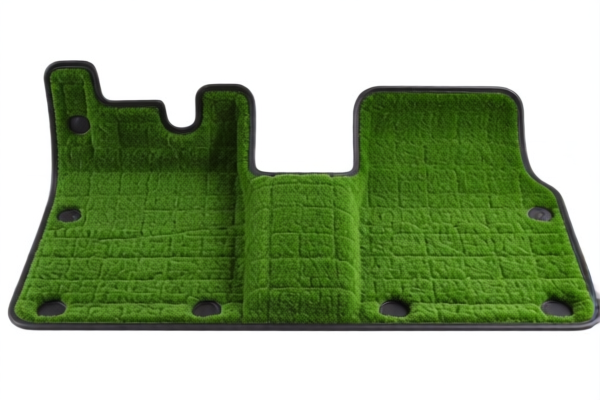
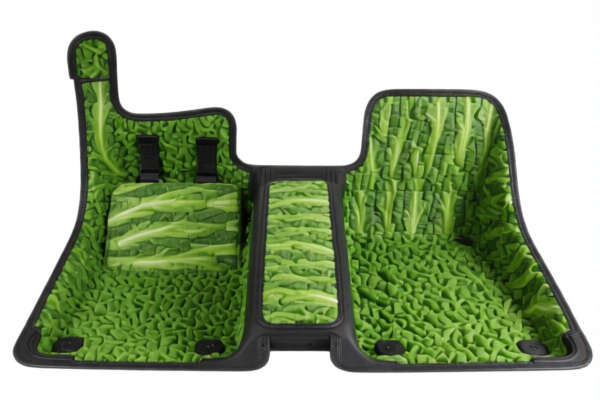
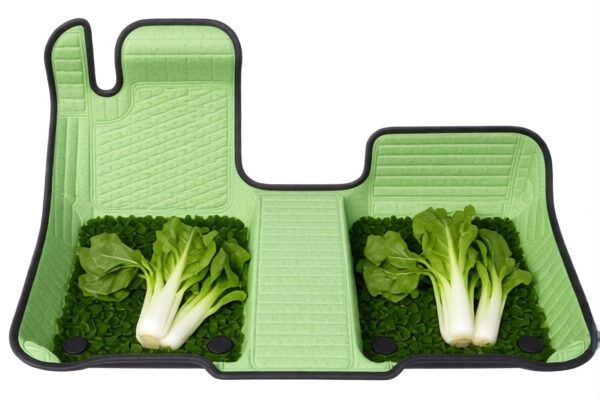
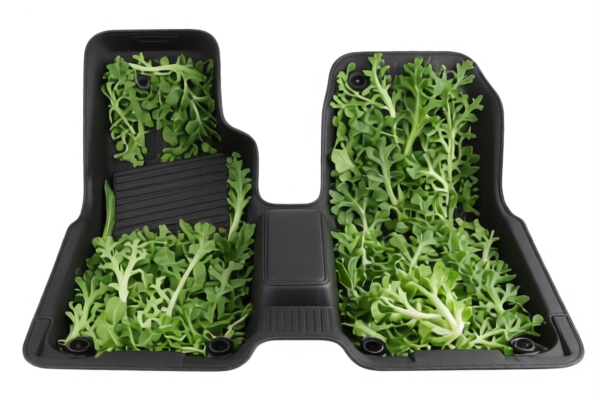
AI Analysis
🚗 Other Vegetable Fiber Plaited Car Floor Mats
🌐 HS Code Reference & Clearance Guide | 2026 Latest Tariff Analysis | Professional Customs Strategy
📌 1. Product Definition and Classification: What Exactly Are "Plaited Car Floor Mats"?
These products are floor coverings designed specifically for automotive use, manufactured from vegetable materials (such as sisal, coir, straw, or palm fibers) that have been plaited (interwoven) into mats. In international trade, they fall under Chapter 46 (Articles of straw, of alfa, or of other plaiting materials), distinct from rubber or synthetic textile mats (Chapter 40 or 59).
Key Classification Distinction: * Plaited Mats (Chapter 46): Made by weaving, plaiting, or twisting vegetable fibers. These are classified under Heading 4601. * Rubber/Synthetic Mats (Chapter 40/59): Made from vulcanized rubber or non-woven synthetic fibers. These are NOT covered by this analysis. * Finished Baskets (Chapter 4602): If the item is a rigid container, it goes to 4602. However, flexible floor coverings go to 4601.
⚠️ Critical Identification Point:
- If the mat is flexible, made of vegetable fibers, and plaited/woven → HS Code 4601.
- If the mat is made of rubber (even if textured) → Not HS 4601 (excluded from this data).
- If the mat is a rigid basket or tray → HS Code 4602 (different tax treatment).
📦 2. HS Code Classification Details (2026 Latest Tariff Authority Comparison)
| HS Code | Product Description | Application Scenario | Material & Structure | Tax Rate (US Origin/CN Origin) |
|---|---|---|---|---|
4601.29.80.00 |
Mats, matting and screens of vegetable materials: Other: Other: Floor coverings | Primary Match for plaited vegetable fiber car mats | ✅ Vegetable fibers (e.g., sisal, coir) ✅ Plaited/Woven structure ✅ Flexible |
Base: 0.0% Additional: 25.0% Total: 25.0% |
4602.19.80.00 |
Basketwork, wickerwork... Of vegetable materials: Other: Other: Other | Rarely applies to flat mats; for rigid baskets/trays | ❌ Usually rigid ❌ Not a flat mat |
0.0% |
4602.19.45.00 |
Basketwork... Of willow or wood: Other | For rigid baskets made of willow/wood | ❌ Wood/Willow ❌ Rigid structure |
0.0% |
4601.29.90.00 |
Mats, matting and screens... Other: Other: Other | Non-floor covering vegetable mats (e.g., screens, wall hangings) | ✅ Vegetable ❌ Not for floor use |
0.0% |
3926.30.50.00 |
Fittings for furniture, coachwork or the like: Other | Plastic clips/anchors holding the mat | ❌ Plastic accessory ❌ Not the mat itself |
0.0% |
3926.90.99.89 |
Other articles of plastics... Other | Plastic backing or synthetic parts (if mixed) | ❌ Plastic dominant ❌ Not vegetable fiber |
Base: 5.3% + Additional: 7.5% = 12.8% |
🔍 Key Insight:
-4601.29.80.00is the only correct HS code for plaited vegetable fiber floor mats.
- The 25% additional tariff applies specifically to this subheading.
- Do NOT classify as4602(baskets) unless the item is rigid and structural.
- Do NOT classify as3926unless it is primarily plastic.
💰 3. 2026 Latest Tariff Rate Breakdown (Including Surtax, Policy Add-ons)
✅ Applicable Country: United States (US)
✅ Origin: China (CN)
✅ Effective Date: 2025 onwards (Check latest USITC/Trade Act updates)
🎯 1. 4601.29.80.00 —— Plaited Vegetable Fiber Floor Mats
| Item | Details |
|---|---|
| Base Tariff | 0% (ad valorem) |
| USITC Additional Tariff | +25.0% (From USITC Footnote for Heading 4601.29.80.00) |
| IEEPA Additional Tariff | 0.0% (Not listed in provided data for this HS code; note: some general surtaxes may apply depending on final determination, but data shows 0.0% additional here) |
| Total Tariff Rate | 25.0% |
| Tax Calculation | CIF Value × 25% |
| De Minimis Eligibility | ❌ Not Eligible (High tariff goods typically excluded from $800 de minimis) |
| Legal Basis Path | USITC:4601.29.80.00 → FOOTNOTE:25% |
📌 Explanation:
- The 25% additional tariff is applied to plaited vegetable fiber floor coverings.
- This is a specific surtax under Section 301 or related trade acts.
- Total cost impact: 25% of the CIF value.
- No base tariff, but the 25% surtax is significant for low-value items.
🛠️ 4. Clearance Practical Advice (Battle-Tested Pitfall Guide)
✅ 1. Required Documentation Checklist (Non-Negotiable)
| Document | Must Provide? | Notes |
|---|---|---|
| ✅ Product Description | ✔️ | Must explicitly state: "Plaited Vegetable Fiber Floor Mats" |
| ✅ Material Composition | ✔️ | Specify fiber type (e.g., "Sisal", "Coconut Coir", "Palm Fiber") |
| ✅ Photos (Labeled) | ✔️ | Show plaiting texture, backing (if any), and packaging |
| ✅ Commercial Invoice | ✔️ | Value must include cost of packing, freight, insurance |
| ✅ Packing List | ✔️ | Detail number of mats per carton |
| ✅ Material Safety Data Sheet (MSDS) | ❓ | If treated with chemicals, may be required |
✅ 2. Declaration Tips (Golden Rules)
🔥 “Vegetable Fiber + Plaited + Floor = 4601.29.80.00”
| Situation | Correct Declaration | Wrong Practice |
|---|---|---|
| Plaited Sisal Mats | 4601.29.80.00 |
Misclassify as rubber mats (4016) → 25% risk |
| Mats with Plastic Backing | 4601.29.80.00 (if vegetable fiber is essential character) |
Split shipment → Higher total tax |
| Rigid Wooden Baskets | 4602.19.45.00 |
Classify as floor mats → 25% error |
| Synthetic Fiber Mats | Not Chapter 46 | Classify as vegetable → 25% error |
✅ 3. Special Scenarios
| Scenario | Handling Advice |
|---|---|
| Mixed Material Mats (Vegetable + Plastic) | If vegetable fiber is the essential character → 4601.29.80.00. If plastic dominates → 3926.90.99.89 (12.8%). |
| Custom Shaped Mats | Ensure they are still "plaited mats" and not "other articles" (4602). Shape alone doesn't change classification if material and process are plaited vegetable. |
| Accessories (Clips, Anchors) | Declare separately under 3926.30.50.00 (0% tax) if shipped as parts, not as mats. |
🌍 5. Global Market Clearance Comparison (2026 Latest)
| Country/Region | Recommended HS Code | Tariff Rate | Certification Required | Notes |
|---|---|---|---|---|
| 🇺🇸 USA | 4601.29.80.00 |
25% (Additional) | None specific | High tax cost due to 25% surtax |
| 🇨🇳 China | 4601.29.80.00 |
5% (General) | None | Low export tax, high import tax to US |
| 🇪🇺 EU | 4601.29.80.00 |
0% (Often) | CE (if treated) | Check specific member state rules |
| 🇬🇧 UK | 4601.29.80.00 |
0-5% | None | Post-Brexit rules may vary |
| 🇦🇺 Australia | 4601.29.80.00 |
5% | None | No major surtax |
📌 Conclusion:
- USA has a 25% additional tariff on plaited vegetable fiber floor mats.
- China is the primary source, so the 25% surtax directly impacts US importers.
- Diversify supply chains or consider value-added processing in third countries (if rules of origin permit) to mitigate US tariffs.
📌 6. Common Errors & Pitfall Guide (Lessons Learned)
❌ Error 1: Classifying as "Rubber Floor Mats" (4016.93.00.00)
👉 Consequence: If actually vegetable fiber, this is misclassification. Risk of 25% penalty + back taxes.
✅ Fix: Inspect material! If it’s natural fiber, it’s Chapter 46.
❌ Error 2: Classifying as "Baskets" (4602.19.80.00)
👉 Consequence: Wrong tax treatment. Baskets are 0%, Mats are 25%. But if it’s a flat mat, it’s not a basket.
✅ Fix: Use correct HS 4601.29.80.00.
❌ Error 3: Ignoring the "Plaited" aspect
👉 Consequence: If the mat is woven (not plaited), it may still be 4601, but description must be accurate.
✅ Fix: Use "Plaited" or "Woven" correctly in description.
❌ Error 4: Not declaring additional tariffs in commercial invoice
👉 Consequence: Delays at US customs. CBP may assess duties at highest possible rate.
✅ Fix: Clearly state HS Code and "Subject to 25% Additional Tariff" in invoice.
🎯 7. Conclusion: Strategic Clearance for Vegetable Fiber Mats
🎯 Key Takeaway:
🔹 "Vegetable Fiber + Plaited + Floor = 25% Surtax in USA"
🔹 "Do not confuse with rubber or plastic mats"
🔹 "Accurate material declaration is critical to avoid penalties"
📌 Pro Tip:
If your mats are shipped with plastic anchors (3926.30.50.00), declare them separately if possible to optimize tax burden (0% vs 25%). However, if they are sold as a set, they may be assessed together.
📣 Immediate Action:
📞 Confirm Material: Ensure 100% vegetable fiber.
📄 Label Clearly: "Plaited Vegetable Fiber Floor Mats"
📊 Calculate Landed Cost: Include 25% additional tariff in your margin planning.
✨ Professional Clearance Starts with Accurate Classification!
💼 Every Percent of Tariff Counts!
Customer Reviews
About HS Code Classification
The Harmonized System (HS) is an internationally standardized nomenclature developed by the World Customs Organization (WCO) to classify traded products. Over 200 countries use the HS system as the basis for customs tariffs, trade statistics, and import/export regulations.
Each HS code follows a hierarchical structure:
- Chapter (2 digits) — Broad category of goods (e.g., Chapter 84: Machinery and Mechanical Appliances)
- Heading (4 digits) — More specific grouping within the chapter
- Subheading (6 digits) — Internationally standardized breakdown, used by all WCO member countries
- National subdivisions (8-10 digits) — Country-specific extensions for further classification, such as US HTSUS 10-digit codes
Correct HS code classification is essential for smooth customs clearance, accurate duty payment, and compliance with trade regulations. Misclassification can lead to customs delays, overpayment of duties, or penalties.
When importing from CN to US, the applicable tariff rates may include:
- Most-Favored-Nation (MFN) rate — The standard duty rate applied to WTO members
- General rate — Applied to countries without trade agreements
- Trade remedy duties — Additional tariffs such as Section 301 (anti-dumping), Section 232 (national security), or countervailing duties
The information provided on this page is for reference purposes only. For official classification, please consult with your local customs authority or a licensed customs broker.