Other Vegetable Fiber Plaited Cushion Covers
CN → US| HS Code | Tariff Rate | Origin | Destination | Doc |
|---|---|---|---|---|
| 3926909989 | 22.8% | CN | US | Official Doc |
| 4601298000 | 35.0% | CN | US | Official Doc |
| 4601296000 | 39.8% | CN | US | Official Doc |
| 4602191800 | 39.5% | CN | US | Official Doc |
| 4602198000 | 37.3% | CN | US | Official Doc |
Product Images
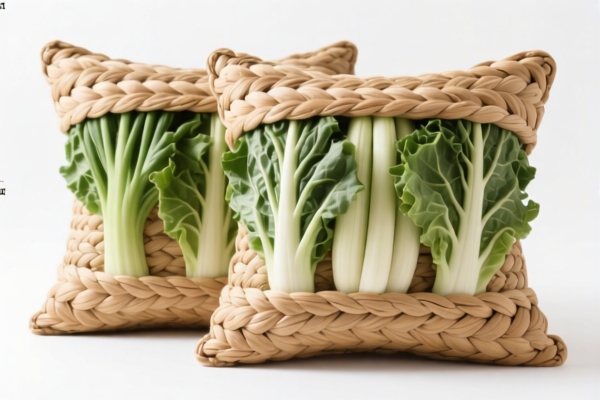
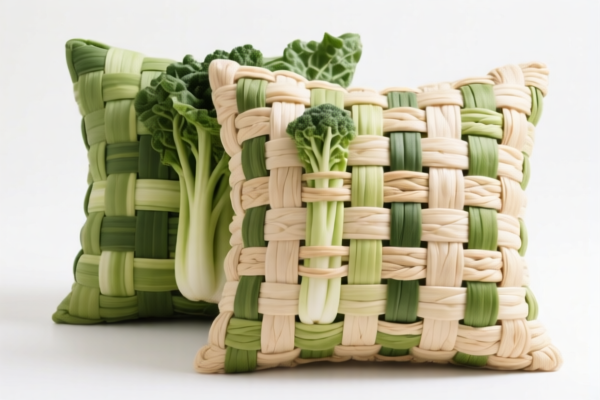
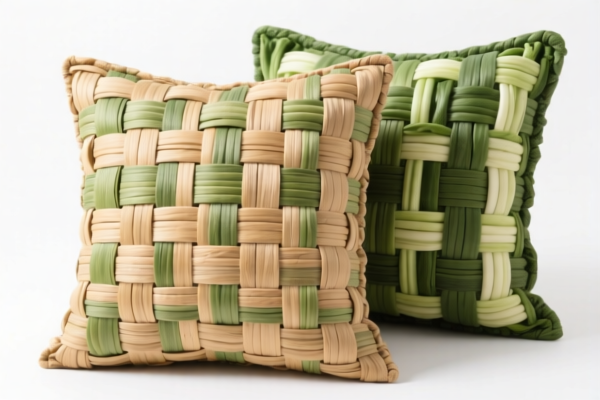
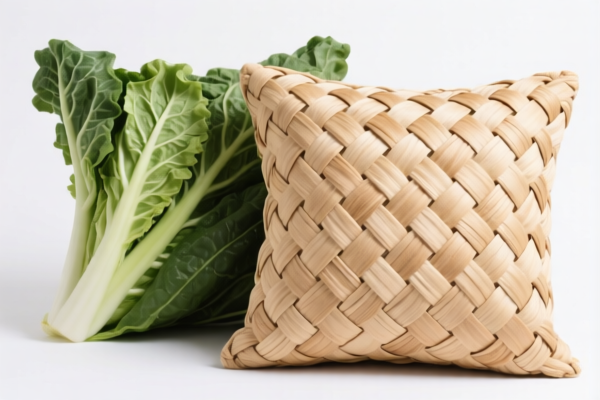
AI Analysis
🛋️ Other Vegetable Fiber Plaited Cushion Covers
🌐 HS Code Reference & Customs Clearance Guide | 2026 Latest Tariff Analysis | Professional Clearance Strategy
📌 I. Product Definition & Classification: What Exactly Are "Vegetable Fiber Plaited Cushion Covers"?
"Cushion covers" made from vegetable fibers (such as rattan, bamboo, straw, water hyacinth, or palm leaves) that are plaited (woven, braided, or interlaced) fall into a specific niche in international trade. They are distinct from fabric covers (Chapter 63) and furniture (Chapter 94). The key classification factor is the material composition and the manufacturing process (plaiting vs. simple weaving of mats).
In the context of US Imports from China, these goods are subject to significant additional tariffs under Section 301 and Section 122 of the Trade Act.
⚠️ Key Distinction:
- If the item is a flat mat or rug without a specific 3D cushion form → It may fall under 4601 (Plaited Matting).
- If the item is a 3D basket-like structure or general plaited article that doesn't fit the strict definition of a mat → It may fall under 4602 (Plaited Baskets & Other Articles).
- If the item is considered a general "other" plaited article not specifically enumerated → It may fall under 3926 (if misclassified as plastic/resin coated) or more likely, the generic "Other" categories under Chapter 46 or 39 depending on exact material processing. Note: The provided data suggests classification under 3926 and 460x, implying potential resin coating or generic classification nuances.
📦 II. HS Code Classification Details (Based on Provided Data)
The following HS Codes are derived from the provided dataset. Please note that Chapter 46 (Vegetable Plaiting Materials) is the most logical fit, but the data includes Chapter 39 (likely due to resin coating or generic "other" classification).
| HS Code | Product Description (Summary from Data) | Total Tax Rate | Tax Detail Breakdown |
|---|---|---|---|
3926.90.99.89 |
Other plant fiber plaited articles; classified as other articles; no material conflict. | 22.8% | Base: 5.3% + Section 301: 7.5% + Section 122: 10% |
4601.29.80.00 |
Plant fiber plaited mats; meets plant material and mat usage criteria. | 35.0% | Base: 0.0% + Section 301: 25.0% + Section 122: 10% |
4601.29.60.00 |
Plant fiber plaited mats; form and usage match; no conflict. | 39.8% | Base: 4.8% + Section 301: 25.0% + Section 122: 10% |
4602.19.18.00 |
Plant fiber plaited articles; extends to baskets and other plaited products. | 39.5% | Base: 4.5% + Section 301: 25.0% + Section 122: 10% |
4602.19.80.00 |
Plant fiber plaited articles; fits basket and plaited usage scope. | 37.3% | Base: 2.3% + Section 301: 25.0% + Section 122: 10% |
🔍 Analysis Note:
- Section 122 Tariff (10%): This is a critical recent addition for many textile and plaited goods from China.
- Section 301 Tariff (25%): Applies heavily to Chapter 46 goods (Matting/Plaited Articles).
- Base Rate: Varies from 0% to 5.3% depending on the specific subheading (Mat vs. Basket vs. Other).
💰 III. 2026 Latest Tariff Rate Detailed Explanation (Including Surcharges & Policy Additions)
✅ Applicable Country: United States (US)
✅ Origin: China (CN)
✅ Effective Time: Rates apply to imports as of current US Trade Act provisions.
🎯 1. 3926.90.99.89 —— Other Plaited Articles (Generic/Resin-Coated?)
| Item | Content |
|---|---|
| Base Rate | 5.3% (ad valorem) |
| USITC Surcharge (Sec 301) | +7.5% |
| Section 122 Surcharge | +10% |
| Total Tax Rate | 22.8% |
| Tax Calculation | CIF Value × 22.8% |
| De Minimis Exemption | ❌ Not Eligible (Section 301 goods are excluded from de minimis treatment under current enforcement trends) |
| Legal Basis Path | USITC:3926.90.99.89 → IEEPA:9903.01.25 → FOOTNOTE:122 |
📌 Explanation:
- This classification seems to capture "Other" plaited items that might be coated in plastic/resin (justifying Chapter 39) or are generic "Other" articles.
- The 22.8% rate is significantly lower than the Chapter 46 rates, making it a potentially attractive classification if the goods legally qualify. However, customs may challenge this if the item is purely natural fiber without significant plastic impregnation.
🎯 2. 4601.29.80.00 / 4601.29.60.00 —— Plaited Matting (Mats)
| Item | Content |
|---|---|
| Base Rate | 0.0% (for .80.00) / 4.8% (for .60.00) |
| USITC Surcharge (Sec 301) | +25.0% |
| Section 122 Surcharge | +10% |
| Total Tax Rate | 35.0% (for .80.00) / 39.8% (for .60.00) |
| Tax Calculation | CIF Value × Total Rate |
| De Minimis Exemption | ❌ Not Eligible |
| Legal Basis Path | USITC:4601.29.xx.xx → IEEPA:9903.01.24 → FOOTNOTE:122 |
📌 Explanation:
- These codes refer to Plaited Matting. If the "Cushion Cover" is flat and used as a mat cover, it falls here.
- The 25% Section 301 tariff is standard for Chapter 46.
- The 10% Section 122 tariff is the new major cost driver.
- Risk: If the item is a 3D cushion cover, CBP may reject Chapter 46 (Mats) in favor of Chapter 46.4602 (Baskets/Articles) or Chapter 63 (Textile Accessories), though the data provided only lists Chapter 46/39.
🎯 3. 4602.19.18.00 / 4602.19.80.00 —— Plaited Baskets & Other Articles
| Item | Content |
|---|---|
| Base Rate | 4.5% (for .18.00) / 2.3% (for .80.00) |
| USITC Surcharge (Sec 301) | +25.0% |
| Section 122 Surcharge | +10% |
| Total Tax Rate | 39.5% (for .18.00) / 37.3% (for .80.00) |
| Tax Calculation | CIF Value × Total Rate |
| De Minimis Exemption | ❌ Not Eligible |
| Legal Basis Path | USITC:4602.19.xx.xx → IEEPA:9903.01.24 → FOOTNOTE:122 |
📌 Explanation:
- These codes cover Plaited Baskets and Other Plaited Articles.
- A "Cushion Cover" made of stiffened plaited fiber might be argued as an "Other Plaited Article" under 4602.19.80.00.
- This is likely the most accurate classification for rigid, 3D plaited cushion covers that are not simple mats.
- Total Rate ~37.3-39.5% is high but may be lower than some textile alternatives if those carry higher base rates.
🛠️ IV. Customs Clearance Practical Advice (Practical Pitfall Avoidance Guide)
✅ 1. Preparation Checklist (Indispensable)
| Material | Mandatory | Description |
|---|---|---|
| ✅ Product Specifications | ✔️ | Must detail: Fiber type (e.g., Water Hyacinth, Rattan), Weaving Type (Plaited/Braided), Dimensions, Lining Material (if any). |
| ✅ 3D Structure Photos | ✔️ | Crucial to distinguish between Mat (4601) and Basket/Article (4602). Show depth and structure. |
| ✅ Material Composition | ✔️ | Confirm % of plastic/resin coating. If >50% plastic by weight, it might shift to Chapter 39 or 40, changing the HS Code. |
| ✅ Commercial Invoice | ✔️ | Must clearly state "Vegetable Fiber Plaited Cushion Cover" and include HTS codes. |
| ✅ Origin Certificate | ✔️ | Essential for verifying China origin and applying (or contesting) Section 301/122 tariffs. |
| ✅ Packaging List | ✔️ | List items individually if mixed SKUs. |
✅ 2. Declaration Tips (Key Mantras)
🔥 "Shape Defines Code: Flat is Mat, 3D is Article, Resin Shifts Chapter!"
| Scenario | Correct Declaration | Wrong Approach |
|---|---|---|
| Flat Plaited Sheet (used as backrest cover) | 4601.29.80.00 (Matting) |
Declare as "Cushion" → Misclassification |
| 3D Rigid Plaited Cover (Basket-like shape) | 4602.19.80.00 (Other Plaited Article) |
Declare as "Mat" → Rejection |
| Plastic-Coated Plaited Cover | 3926.90.99.89 (Other Plastic Articles) |
Declare as "Natural Fiber" → Customs Audit |
| Fabric-Lined Plaited Cover | Complex Case → Likely 4602 or 6307 |
Simple "Cushion Cover" → High Risk |
✅ 3. Special Handling Cases
| Case | Handling Suggestion |
|---|---|
| Mixed Material | If the cover has a fabric lining (cotton/polyester), CBP may argue it is a "Textile Article" (Chapter 63). Provide a cost breakdown showing the plaited fiber is the essential character. |
| Resin Coating | If the fibers are soaked in plastic for water resistance, ensure the description mentions "Plastic-Coated Vegetable Fibers" to justify 3926. This lowers the tariff from ~37% to ~22%. |
| Sample vs. Bulk | Ensure samples declared match bulk exactly in material and structure. Discrepancies lead to delays. |
| Section 122 Exemption? | Currently, no general exemption for Section 122 tariffs for Chinese plaited goods. Plan for the 10% addition. |
🌍 V. Global Main Market Clearance Comparison (2026 Latest)
| Country/Region | Recommended HS Code | Tariff (Approx.) | Certification Requirements | Remarks |
|---|---|---|---|---|
| 🇺🇸 USA | 4602.19.80.00 |
37.3% (Base 2.3% + 25% + 10%) | None Specific | High tariffs due to Sec 301 & 122 |
| 🇪🇺 EU | 4601.29 or 4602.19 |
0% - 4.5% | REACH (if plastic coated) | No Section 301/122 tariffs |
| 🇨🇳 China | 4602.19 |
5% - 8% | None | Standard import duty |
| 🇬🇧 UK | 4602.19 |
0% - 4.5% | UKCA (if plastic) | Post-Brexit tariff rates |
| 🇯🇵 Japan | 4602.19 |
0% - 4% | None | Favorable trade terms |
📌 Conclusion:
- USA is the most expensive market due to 35-40% effective tariff rates.
- EU and Japan offer near-zero duties, making them more attractive for volume sales if the US market is prohibitive.
- Cost Optimization: Consider if Chapter 39 classification (22.8%) is legally justifiable via resin coating to save ~15% in tariffs for the US market.
📌 VI. Common Mistakes & Pitfall Guide (Blood & Tears Lessons)
❌ Mistake 1: Classifying a 3D cushion cover as a Mat (4601)
👉 Consequence: CBP may downgrade or reclassify, leading to back taxes + penalties. Matting is flat; cushion covers are volumetric.
❌ Mistake 2: Ignoring Section 122 Tariff (10%)
👉 Consequence: Unexpected cost increase. Many importers forget this recent addition, leading to cash flow issues.
❌ Mistake 3: Declaring as "Textile Cushion Cover" (6302/6307)
👉 Consequence: If the primary material is plaited vegetable fiber, this is a material misclassification. CBP will correct it and apply the correct, often higher, tariff with penalties.
❌ Mistake 4: Not disclosing Plastic Coating
👉 Consequence: If the item is plastic-coated but declared as natural fiber, you risk fraud allegations. If declared correctly as plastic-coated, you might qualify for a lower tariff (3926).
✅ Correct Practice:
"Plaited Water Hyacinth Cushion Cover, Plastic-Coated for Weather Resistance, with Cotton Lining, Model #XYZ, HTS 4602.19.80.00"
🎯 VII. Conclusion: Professional Declaration, Save Money, Ensure Compliance!
🎯 Remember the Mantra:
🔹 "Shape matters: Flat=Mat, 3D=Article, Plastic=Chapter 39!"
🔹 "Sec 301 + Sec 122 = High Cost. Check Classification Early!"
🔹 "If you can justify resin coating, save 15% in US Tariffs!"
📌 Pro Tip:
If your product is plastic-coated, strongly consider arguing for 3926.90.99.89 (22.8% total) vs. 4602.19.80.00 (37.3% total). Provide material composition reports and photos showing the plastic sheen to support this classification. This can save you over 14% per unit.
📣 Immediate Action:
📞 Contact a Customs Broker + Provide Product Photos & Material Specs + Request Advance Ruling if volume is high.
🚀 Let your plaited goods clear smoothly, avoid penalties, and maximize profit margins!
✨ Professional Clearance Starts with Precise Classification!
💼 Every percentage point of tariff difference counts!
Customer Reviews
About HS Code Classification
The Harmonized System (HS) is an internationally standardized nomenclature developed by the World Customs Organization (WCO) to classify traded products. Over 200 countries use the HS system as the basis for customs tariffs, trade statistics, and import/export regulations.
Each HS code follows a hierarchical structure:
- Chapter (2 digits) — Broad category of goods (e.g., Chapter 84: Machinery and Mechanical Appliances)
- Heading (4 digits) — More specific grouping within the chapter
- Subheading (6 digits) — Internationally standardized breakdown, used by all WCO member countries
- National subdivisions (8-10 digits) — Country-specific extensions for further classification, such as US HTSUS 10-digit codes
Correct HS code classification is essential for smooth customs clearance, accurate duty payment, and compliance with trade regulations. Misclassification can lead to customs delays, overpayment of duties, or penalties.
When importing from CN to US, the applicable tariff rates may include:
- Most-Favored-Nation (MFN) rate — The standard duty rate applied to WTO members
- General rate — Applied to countries without trade agreements
- Trade remedy duties — Additional tariffs such as Section 301 (anti-dumping), Section 232 (national security), or countervailing duties
The information provided on this page is for reference purposes only. For official classification, please consult with your local customs authority or a licensed customs broker.