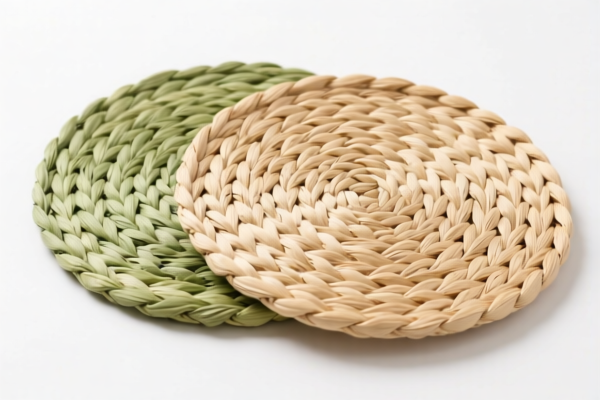
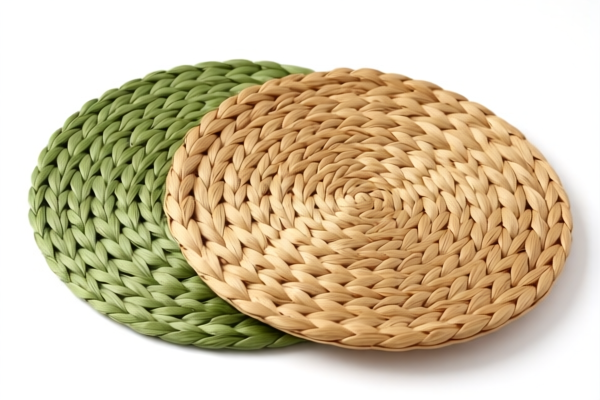
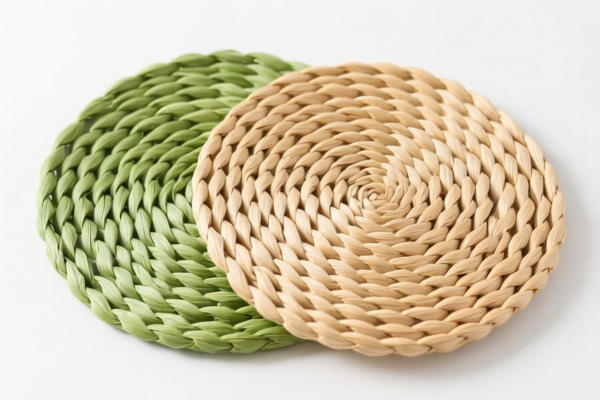
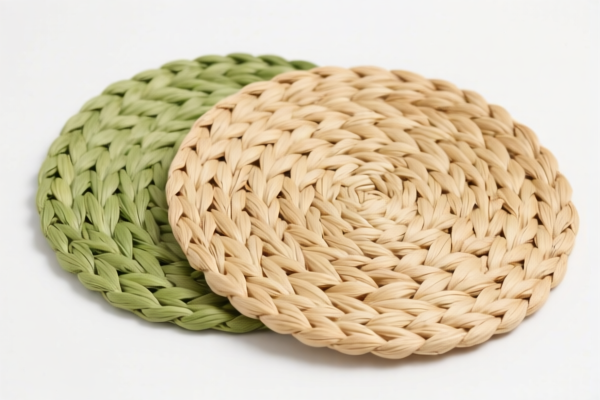
Other Vegetable Fiber Plaited Placemats
CN → US| HS Code | Tariff Rate | Origin | Destination | Doc |
|---|---|---|---|---|
| 3926909989 | 22.8% | CN | US | Official Doc |
| 4601298000 | 35.0% | CN | US | Official Doc |
| 4601296000 | 39.8% | CN | US | Official Doc |
| 4602191800 | 39.5% | CN | US | Official Doc |
| 4602198000 | 37.3% | CN | US | Official Doc |
Product Images
AI Analysis
🍽️ Vegetable Fiber Plaited Placemats (Other Vegetable Fiber Plaited Placemats)
🌐 HS Code Reference & Customs Clearance Guide | 2026 Latest Tariff Analysis | Professional Clearance Strategy
📌 I. Product Definition & Classification: Do You Really Understand "Plaited Placemats"?
Vegetable fiber placemats are essential tableware items used for decoration, heat insulation, and table protection in dining, hospitality, and retail sectors. In international trade, these products are primarily classified under Chapter 46 (Plaited materials; basketware and wickerwork products).
The critical distinction lies in the structure and weaving method: - Plaited Mats (Chapter 46): Flat or slightly shaped mats made by weaving plaiting materials (like straw, rattan, seagrass, bamboo strips). Classified under heading 4601 (Plaited material, sheets, etc.) or 4602 (Basketware and other articles, wickerwork). - Not Textile: They are not classified as textiles (Chapter 50–63) if they retain the structural integrity of plaited vegetable fibers. - Not Plastic: Even if mixed with synthetic threads, if the essential character is vegetable fiber, it remains in Chapter 46.
⚠️ Key Distinction Point:
- If the product is a flat mat produced by weaving plaiting materials into sheets → Likely 4601.
- If the product is a basket, tray, or structured container → Likely 4602.
- Misclassification into "Plastic" or "Textile" can lead to severe penalties due to incorrect duty rates.
📦 II. HS Code Classification Details (2026 Latest Tariff Authority Cross-Reference)
Based on the provided data, here are the precise HS codes and tax implications for vegetable fiber plaited placemats and related items:
| HS Code | Product Description | Application Scenario | Category |
|--------|--------------------------|--------------------------|
| 3926.90.99.89 | Other articles of plastic; Other vegetable fiber plaited articles (Note: Data summary indicates "classified as other plastic products" in error/misclassification context) | ⚠️ Warning: This code is for plastic articles. The data summary suggests a potential misclassification risk if the product is actually vegetable fiber. Do NOT use this unless the item is predominantly plastic. | Plastic Article |
| 4601.29.80.00 | Other vegetable fiber plaited mats | Flat placemats, table runners, woven from straw, rattan, etc. | Vegetable Fiber Mat |
| 4601.29.60.00 | Other vegetable fiber plaited mats | Similar to above, but may differ in specific fiber type or weaving technique under "Other". | Vegetable Fiber Mat |
| 4602.19.18.00 | Baskets and other articles of plaiting materials | Structured items like trays, baskets, or placemats with raised edges/forms. | Basket/Article |
| 4602.19.80.00 | Baskets and other articles of plaiting materials | Other structured plaited items not specified elsewhere. | Basket/Article |
🔍 Critical Reminder:
- Flat mats generally fall under 4601.29.
- Structured items (baskets, trays, placemats with form) fall under 4602.19.
-3926.90.99.89is an outlier in the data for "vegetable fiber" – it typically applies to plastic. If your product is truly vegetable fiber, using this code is high-risk and likely incorrect unless it is a composite with plastic as the essential character.
💰 III. 2026 Latest Tariff Rate Details (Including Surcharges & Policy Add-ons)
✅ Applicable Country: United States (US)
✅ Origin: China (CN)
✅ Effective Date: 2025 November 10 onwards (for subsequent imports)
🎯 1. 3926.90.99.89 —— Other Plastic Articles (Misclassified Vegetable Fiber Risk)
| Item | Detail |
|---|---|
| Base Tariff | 5.3% (ad valorem) |
| Section 301 Surtax | +7.5% |
| Section 122 Tariff | +10% |
| Total Rate | 22.8% |
| Tax Calculation | CIF Value × 22.8% |
| De Minimis Exemption | ❌ Not Eligible (deny_de_minimis) |
| Legal Basis Path | Section 301: 7.5% → Section 122: 10% → HTSUS: 3926.90.99.89 |
📌 Explanation:
- This rate applies if the item is deemed plastic.
- ⚠️ Risk: If declared as vegetable fiber but coded here, customs may reclassify, leading to audits, back taxes, and penalties.
- Ensure the product is not primarily vegetable fiber if using this code.
🎯 2. 4601.29.80.00 —— Other Vegetable Fiber Plaited Mats
| Item | Detail |
|---|---|
| Base Tariff | 0.0% |
| Section 301 Surtax | +25.0% |
| Section 122 Tariff | +10.0% |
| Total Rate | 35.0% |
| Tax Calculation | CIF Value × 35.0% |
| De Minimis Exemption | ❌ Not Eligible (deny_de_minimis) |
| Legal Basis Path | Section 301: 25% → Section 122: 10% → HTSUS: 4601.29.80.00 |
📌 Explanation:
- Standard mats (flat, woven) attract 25% Section 301 surcharge.
- Section 122 (10%) is applied on top, making the total 35%.
- This is the most common code for simple placemats.
🎯 3. 4601.29.60.00 —— Other Vegetable Fiber Plaited Mats
| Item | Detail |
|---|---|
| Base Tariff | 4.8% |
| Section 301 Surtax | +25.0% |
| Section 122 Tariff | +10.0% |
| Total Rate | 39.8% |
| Tax Calculation | CIF Value × 39.8% |
| De Minimis Exemption | ❌ Not Eligible (deny_de_minimis) |
| Legal Basis Path | Section 301: 25% → Section 122: 10% → HTSUS: 4601.29.60.00 |
📌 Explanation:
- Similar to the above, but has a base tariff of 4.8% (possibly due to specific fiber type or origin nuances).
- Total rate is higher (39.8%) than4601.29.80.00.
- Verify the exact fiber composition and weaving standard to avoid overpayment.
🎯 4. 4602.19.18.00 —— Baskets & Similar Plaited Articles
| Item | Detail |
|---|---|
| Base Tariff | 4.5% |
| Section 301 Surtax | +25.0% |
| Section 122 Tariff | +10.0% |
| Total Rate | 39.5% |
| Tax Calculation | CIF Value × 39.5% |
| De Minimis Exemption | ❌ Not Eligible (deny_de_minimis) |
| Legal Basis Path | Section 301: 25% → Section 122: 10% → HTSUS: 4602.19.18.00 |
📌 Explanation:
- Applies if the placemat has a structured form (e.g., raised edges, tray-like).
- 39.5% total duty.
- Ensure the product shape justifies "basket/article" classification over "mat".
🎯 5. 4602.19.80.00 —— Other Baskets & Similar Plaited Articles
| Item | Detail |
|---|---|
| Base Tariff | 2.3% |
| Section 301 Surtax | +25.0% |
| Section 122 Tariff | +10.0% |
| Total Rate | 37.3% |
| Tax Calculation | CIF Value × 37.3% |
| De Minimis Exemption | ❌ Not Eligible (deny_de_minimis) |
| Legal Basis Path | Section 301: 25% → Section 122: 10% → HTSUS: 4602.19.80.00 |
📌 Explanation:
- Another structured article code.
- 37.3% total duty.
- Lower base tariff than4602.19.18.00but still high due to surcharges.
🛠️ IV. Customs Clearance Practical Advice (Pitfall Avoidance Guide)
✅ 1. Required Documentation Checklist (Non-Negotiable)
| Document | Required | Explanation |
|---|---|---|
| ✅ Product Specification Sheet | ✔️ | Details fiber type (e.g., seagrass, rattan, straw), weaving method, dimensions. |
| ✅ Photographs (Clear) | ✔️ | Show flat vs. structured shape. Must clearly display "Vegetable Fiber" nature. |
| ✅ Commercial Invoice | ✔️ | State: "Plaited Mats/Baskets made of Vegetable Fiber, Origin: China." |
| ✅ Packing List | ✔️ | Item count, weight, packaging type. |
| ✅ Declaration of Non-Textile | ✔️ | Confirm it is not classified under Chapter 50-63. |
| ✅ Fiber Composition Proof | ✔️ | If mixed, provide % breakdown to justify Chapter 46 vs. Chapter 39/50. |
✅ 2. Declaration Tips (Key Mantra)
🔥 "Flat Mat = 4601, Shaped Article = 4602, Fiber Proof is Key!"
| Scenario | Correct Declaration | Wrong Approach |
|---|---|---|
| Flat Woven Placemat | 4601.29.80.00 or 4601.29.60.00 |
Misclassify as plastic (3926...) → Audit risk |
| Placemat with Raised Edge | 4602.19.18.00 or 4602.19.80.00 |
Declare as flat mat → Potential under/overpayment |
| Plastic-Coated Fiber | Check essential character. If plastic dominant → 3926... |
Force 4601 if plastic is main → Customs rejection |
| Mixed Fiber (Cotton + Veg) | May fall under Textile (Chapter 50-63) | Force 4601 → Misclassification penalty |
✅ 3. Special Cases Handling
| Case | Handling Advice |
|---|---|
| OEM Custom Designs | Provide design sketches to prove "mat" vs. "basket" structure. |
| High-Value Luxury Items | Consider if Section 301 exemptions apply (if any), but generally no. |
| Small Parcels (De Minimis) | ❌ No Exemption: All codes listed have deny_de_minimis. Every shipment is subject to full duty. |
| Origin Marking | Must clearly mark "Made in China" on product/packaging. |
🌍 V. Global Market Clearance Comparison (2026 Latest)
| Country/Region | Recommended HS Code | Tariff Rate | Certification | Remarks |
|---|---|---|---|---|
| 🇺🇸 USA | 4601.29.80.00 / 4602.19.xxxx |
35%–39.8% | None specific, but fiber proof needed | Highest tariffs due to Section 301 + 122. |
| 🇨🇳 China | 4601.29 / 4602.19 |
0%–13% (varies) | None | Low entry barrier for domestic use. |
| 🇪🇺 EU | 4601.29 / 4602.19 |
0%–6.5% | CE (if for contact) | No Section 301 equivalent. Lower risk. |
| 🇬🇧 UK | 4601.29 / 4602.19 |
0%–6.5% | None | Post-Brexit tariffs apply. |
| 🇯🇵 Japan | 4601.29 / 4602.19 |
0%–5% | None | FTA benefits may apply for some origins. |
📌 Conclusion:
- USA is the most challenging market for Chinese vegetable fiber placemats due to cumulative tariffs (35%+).
- EU/UK/Japan offer significantly lower duty rates, making them more competitive for price-sensitive buyers.
- Supply Chain Strategy: Consider sourcing from non-China origins (e.g., Vietnam, India) to avoid Section 301 surcharges if exporting to the US.
📌 VI. Common Mistakes & Pitfall Guide (Lessons Learned)
❌ Mistake 1: Declaring vegetable fiber placemats as plastic products (3926) | 🚫
👉 Consequence: If discovered, customs will reclassify to 4601/4602, leading to back taxes + penalties. Only use 3926 if plastic is the essential character.
❌ Mistake 2: Ignoring Section 122 Tariff | 🚫 👉 Consequence: Calculating duty without including the 10% Section 122 surcharge leads to underpayment. Total cost is Base + 301 + 122.
❌ Mistake 3: Confusing Mats (4601) with Baskets (4602) | 🚫 👉 Consequence: Wrong HS code leads to incorrect duty calculation. Flat = 4601, Structured = 4602.
❌ Mistake 4: Assuming De Minimis Exemption | 🚫 👉 Consequence: All listed HS codes are not eligible for de minimis. Small shipments are not tax-free.
✅ Correct Practice:
"Vegetable Fiber Plaited Mats, Flat Design, Seagrass Material, Origin: China, HS Code: 4601.29.80.00"
🎯 VII. Conclusion: Professional Declaration, Cost Control, Efficient Clearance!
🎯 Remember the Mantra:
🔹 "Flat Mat 4601, Shaped 4602, No De Minimis, Duty is High!"
🔹 "301 + 122 = 35%+, Check Fiber Type, Avoid Plastic Trap!"
📌 Pro Tip:
If your placemats are originating from Vietnam, India, or Thailand, you may qualify for lower Section 301 rates or exemptions when exporting to the US.
Consider Advance Ruling from US Customs (CBP) to confirm HS code classification before shipping large volumes.
📣 Immediate Action:
📞 Contact a Licensed Customs Broker + Provide Product Photos + Verify Fiber Composition
🚀 Ensure Compliance, Predict Cost, and Protect Profit Margins!
✨ Professional Clearance Starts with Accurate Classification!
💼 Every Dollar of Duty Counts!
Customer Reviews
About HS Code Classification
The Harmonized System (HS) is an internationally standardized nomenclature developed by the World Customs Organization (WCO) to classify traded products. Over 200 countries use the HS system as the basis for customs tariffs, trade statistics, and import/export regulations.
Each HS code follows a hierarchical structure:
- Chapter (2 digits) — Broad category of goods (e.g., Chapter 84: Machinery and Mechanical Appliances)
- Heading (4 digits) — More specific grouping within the chapter
- Subheading (6 digits) — Internationally standardized breakdown, used by all WCO member countries
- National subdivisions (8-10 digits) — Country-specific extensions for further classification, such as US HTSUS 10-digit codes
Correct HS code classification is essential for smooth customs clearance, accurate duty payment, and compliance with trade regulations. Misclassification can lead to customs delays, overpayment of duties, or penalties.
When importing from CN to US, the applicable tariff rates may include:
- Most-Favored-Nation (MFN) rate — The standard duty rate applied to WTO members
- General rate — Applied to countries without trade agreements
- Trade remedy duties — Additional tariffs such as Section 301 (anti-dumping), Section 232 (national security), or countervailing duties
The information provided on this page is for reference purposes only. For official classification, please consult with your local customs authority or a licensed customs broker.