Other Vegetable Material Plaited Door Curtains
CN → USProduct Images
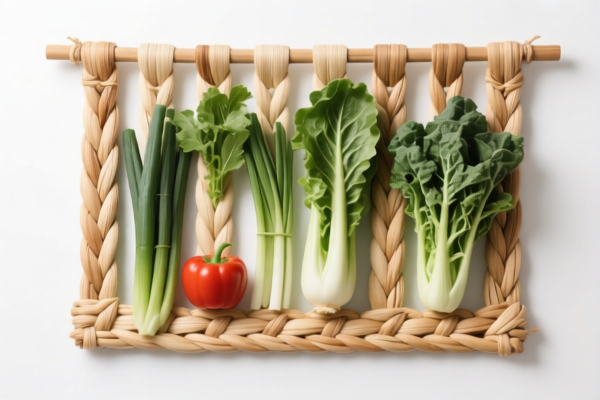

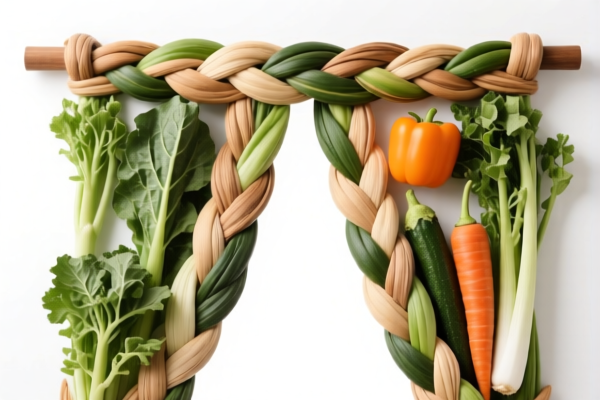
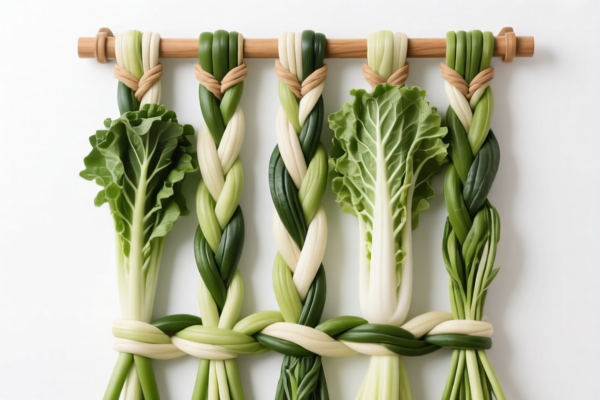
AI Analysis
🚪 Other Vegetable Material Plaited Door Curtains (Wicker/Bamboo/Rattan Styles)
🌐 HS Code Reference & Customs Clearance Guide | 2026 Latest Tariff Analysis | Professional Trade Strategy
📌 I. Product Definition & Classification: Do You Really Understand "Vegetable Plaited Curtains"?
Door curtains made from plaited vegetable materials (such as bamboo, rattan, jute, sisal, or straw) are functional yet decorative items. They bridge the gap between interior design accessories and woven textile/non-textile goods. In international trade, classification is critical because the distinction between a "curtain" (textile-like) and a "plaited product" (non-textile woven) significantly impacts duty rates and regulatory requirements.
Key Distinction: - Plaited/Woven Mats & Curtains: Made by interlacing strips of vegetable material (e.g., bamboo strips, rattan fibers). Usually classified under Chapter 46 or 83. - Textile-Backed Plaited Products: If the vegetable material is merely applied onto a fabric backing (like a mesh screen), it may be classified differently.
⚠️ Key Classification Point:
- If the item is primarily constructed by plaiting/weaving vegetable materials (no textile backing acting as the main structure) → Chapter 46 or 83.
- If the item is essentially a textile fabric with vegetable appliqués → Chapter 59 or 63 (Higher duties often apply).
📦 II. HS Code Classification Details (2026 Latest Tariff Alignment)
| HS Code | Product Description | Application Scenario | Material Composition |
|---|---|---|---|
4601.99.00.00 |
Plaited material articles (incl. basketware & wickerwork), other | Bamboo/rattan door screens, woven wall hangings, decorative partitions | ✅ Vegetable fibers (bamboo, rattan, etc.) |
4602.00.00.00 |
Plaited goods & other articles of plaiting materials | Rattan baskets, mats, and curtains made from plaited strips | ✅ Vegetable fibers |
8302.41.00.00 |
Base metal fittings & accessories (incl. hinges, clasps) | If sold with metal frames/hinges as a unit | ✅ Mixed (Metal + Veg) |
6307.90.98.00 |
Other made-up articles (textile-based) | If the curtain is a fabric mesh with vegetable strips attached | ⚠️ Textile Base |
9506.99.90.00 |
Articles for general physical exercise | Rarely applicable; only if marketed strictly as "yoga mats" | ❌ N/A |
🔍 Priority Note:
-4601.99.00.00and4602.00.00.00are the most accurate codes for purely plaited vegetable curtains.
- Do NOT classify as6303(curtains) unless the primary material is textile (e.g., cotton/linen) with minor vegetable decoration.
- If the product includes a metal frame (e.g., a foldable bamboo screen on a metal stand), it may be classified as8302.41.00.00(fittings) or remain as4601depending on whether the metal frame is considered "essential character" (usually no, so4601prevails).
💰 III. 2026 Latest Tariff Rate Breakdown (Including Surtaxes & Policies)
✅ Applicable Country: United States (US)
✅ Country of Origin: China (CN)
✅ Effective Date: November 10, 2025 (and subsequent imports)
🎯 1. 4601.99.00.00 —— Plaited Articles of Vegetable Materials
| Item | Content |
|---|---|
| Base Rate | 5% (ad valorem) |
| USITC Surtax | +25% (Under USITC Footnote 9903.01.25) |
| IEEPA Surtax | +10% (For China/HK products, effective Nov 10, 2025) |
| Total Rate | 40% |
| Tax Calculation | CIF Value × 40% |
| De Minimis Eligibility | ❌ Denied (deny_de_minimis) |
| Legal Basis Path | IEEPA:9903.01.25 → USITC:4601.99.00.00 → FOOTNOTE:9903.01.25 |
📌 Explanation:
- "USITC 25%": Added under Section 301 tariffs on specific Chinese imports.
- "IEEPA 10%": Additional surcharge under the International Emergency Economic Powers Act targeting Chinese-origin goods.
- Total 40% is considered high, requiring careful cost allocation.
🎯 2. 4602.00.00.00 —— Plaited Goods (Including Baskets & Mats)
| Item | Content |
|---|---|
| Base Rate | 5% |
| USITC Surtax | +25% |
| IEEPA Surtax | +10% |
| Total Rate | 40% |
| Tax Calculation | CIF × 40% |
| De Minimis Eligibility | ❌ Denied |
| Legal Basis Path | IEEPA:9903.01.25 → USITC:4602.00.00.00 → FOOTNOTE:9903.01.25 |
📌 Note:
- Both4601and4602carry the same surtax burden.
- Even if marketed as "eco-friendly," "boho decor," or "natural home accents," the origin determines the tax.
- No preferential rate for "vegetable material" unless processed in a non-China FTA country (e.g., Vietnam, Thailand).
🛠️ IV. Customs Clearance Practical Advice (Avoiding Pitfalls)
✅ 1. Documentation Checklist (Mandatory)
| Document | Required | Notes |
|---|---|---|
| ✅ Product Specification Sheet | ✔️ | Must detail: Material type (e.g., "Bamboo," "Rattan"), Weaving Technique (Plaited, Woven), Dimensions |
| ✅ Product Photos | ✔️ | Clear images of the plaiting pattern, edges, and any hardware (frames/hinges) |
| ✅ Commercial Invoice | ✔️ | Must state: "Plaited Bamboo Door Curtain, Not Textile Based" |
| ✅ Packing List | ✔️ | Include gross/net weight; specify if packaging is recyclable |
| ✅ Certificate of Origin (CO) | ✔️ | If sourced from non-China (e.g., Vietnam), claim FTZ benefits |
| ✅ Material Declaration | ✔️ | Confirm no prohibited pesticides or untreated wood risks (if applicable) |
✅ 2. Declaration Tips (Key Mantra)
🔥 “Don’t Call It Curtain, Say Plaited Article! Name It Right, Save Your Night!”
| Scenario | Correct Declaration | Incorrect Practice |
|---|---|---|
| Pure Bamboo/Rattan Curtain | 4601.99.00.00 "Plaited Bamboo Door Screen" |
Mislabel as "Textile Curtain" (6303) → 20%+ duty |
| With Metal Frame | 4601.99.00.00 (Primary) |
Split as "Frame + Curtain" → Risk of misclassification |
| Fabric with Bamboo Strips | 6307.90.98.00 |
Call it "Vegetable Curtain" → Audit risk |
| Raw Bamboo Mats (Unfinished) | 4601.99.00.00 |
Call it "Finished Product" → No impact, but be precise |
✅ 3. Special Cases Handling
| Case | Handling Advice |
|---|---|
| OEM Custom Designs | Provide CAD drawings or samples to prove "plaited" structure vs. "textile" |
| With Cleaning Spray Included | Declare separately; spray may have different HS Code (3402) |
| Packaged as Gift Sets | If boxed with candles, etc., value allocation must be clear to avoid misclassification |
| Wooden vs. Vegetable | If made from wood strips (not plaited fibers), it may fall under Chapter 44 (Wood Articles) or 4601 depending on processing |
🌍 V. Global Market Comparison (2026 Latest)
| Country/Region | Recommended HS Code | Duty Rate | Certification Requirements | Notes |
|---|---|---|---|---|
| 🇺🇸 USA | 4601.99.00.00 |
40% (China) | None specific (FTC labeling) | High due to 301 + IEEPA |
| 🇨🇳 China | 4601.99.00.00 |
5% | None | Low duty for imports |
| 🇪🇺 EU | 4601.99.00.00 |
5% | REACH (if treated) | No surtax |
| 🇬🇧 UK | 4601.99.00.00 |
5% | UKCA (if applicable) | Post-Brexit alignment |
| 🇯🇵 Japan | 4601.99.00.00 |
6% | FSC (if timber) | No surtax |
📌 Conclusion:
- USA is the most expensive market for these goods from China due to combined tariffs.
- EU, UK, Japan offer competitive 5–6% rates, making them ideal for diversification.
- Supply Chain Shift: Consider sourcing from Vietnam or Thailand for US exports to potentially mitigate tariffs (subject to local content rules).
📌 VI. Common Errors & Pitfalls (Lessons Learned)
❌ Error 1: Classifying as 6303.99.00.00 (Textile Curtains)
👉 Consequence: If actually plaited vegetable, CBP may impose penalties + retroactive duties. Textile duties can be higher or lower, but misdeclaration is risky.
❌ Error 2: Ignoring Metal Frames
👉 Consequence: If the metal frame is substantial, CBP may classify as 8302.41.00.00 (Fittings) or argue for Chapter 83 entirely, altering duty treatment.
❌ Error 3: Using vague descriptions like "Home Decor"
👉 Consequence: Delays in clearance due to lack of material specificity. Always specify "Plaited Bamboo" or "Woven Rattan".
❌ Error 4: Not declaring Chemical Treatments
👉 Consequence: If bamboo is treated with fire retardants or preservatives, failure to declare may trigger EPA or CBP inspections.
✅ Correct Practice:
"Plaited Bamboo Door Curtain, Natural Finish, 30"x80", Woven Strips, No Textile Backing, Model XYZ"
🎯 VII. Conclusion: Precision Saves Money!
🎯 Remember:
🔹 "Plaited ≠ Textile. Use 4601, not 6303!"
🔹 "China Origin = 40% Duty in USA. Shift Source to Save!"
🔹 "Describe Material, Not Just Function!"
📌 Pro Tip:
If your curtains are originally from Vietnam, Thailand, or Indonesia, check for FTZ benefits (e.g., CPTPP, RCEP, or general MFN rates). For US imports, consider substantial transformation strategies if assembling in a third country to mitigate the 40% tariff burden.
📣 Immediate Action:
📞 Consult your customs broker for Pre-Ruling on mixed-material products (e.g., bamboo + metal).
🚀 Optimize your HS Code to4601or4602, and leverage non-China supply chains where possible.
✨ Professional Customs Clearance Starts with Accurate Classification!
💼 Every percentage point saved is pure profit!
Customer Reviews
About HS Code Classification
The Harmonized System (HS) is an internationally standardized nomenclature developed by the World Customs Organization (WCO) to classify traded products. Over 200 countries use the HS system as the basis for customs tariffs, trade statistics, and import/export regulations.
Each HS code follows a hierarchical structure:
- Chapter (2 digits) — Broad category of goods (e.g., Chapter 84: Machinery and Mechanical Appliances)
- Heading (4 digits) — More specific grouping within the chapter
- Subheading (6 digits) — Internationally standardized breakdown, used by all WCO member countries
- National subdivisions (8-10 digits) — Country-specific extensions for further classification, such as US HTSUS 10-digit codes
Correct HS code classification is essential for smooth customs clearance, accurate duty payment, and compliance with trade regulations. Misclassification can lead to customs delays, overpayment of duties, or penalties.
When importing from CN to US, the applicable tariff rates may include:
- Most-Favored-Nation (MFN) rate — The standard duty rate applied to WTO members
- General rate — Applied to countries without trade agreements
- Trade remedy duties — Additional tariffs such as Section 301 (anti-dumping), Section 232 (national security), or countervailing duties
The information provided on this page is for reference purposes only. For official classification, please consult with your local customs authority or a licensed customs broker.