Other Vinyl Copolymers for Flooring
CN → US| HS Code | Tariff Rate | Origin | Destination | Doc |
|---|---|---|---|---|
| 3904400000 | 40.3% | CN | US | Official Doc |
| 3904905000 | 41.5% | CN | US | Official Doc |
| 3921125000 | 41.5% | CN | US | Official Doc |
| 3921902510 | 41.5% | CN | US | Official Doc |
Product Images
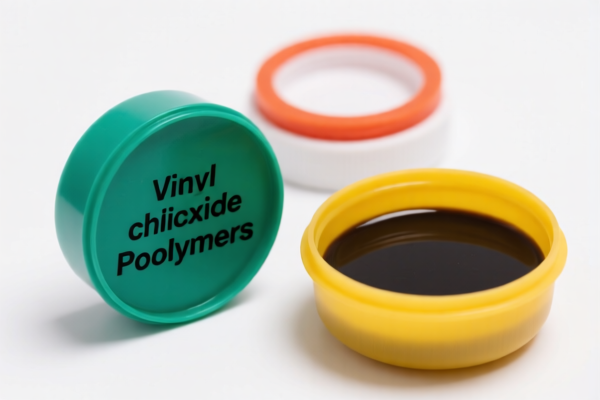

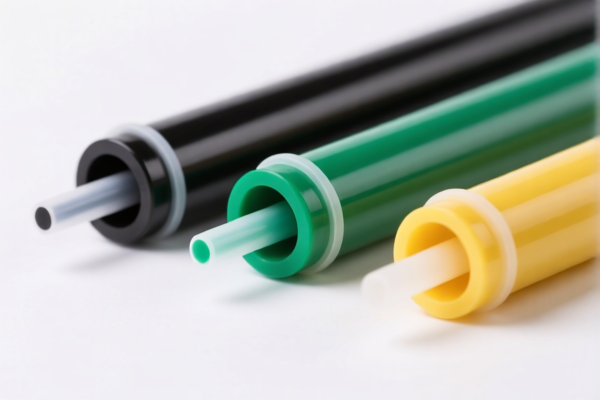
AI Analysis
🏗️ Vinyl Copolymers for Flooring: Strategic HS Code Classification & Customs Clearance Guide (2026 Update)
🌐 HS Code Reference & Customs Strategy | 2026 Latest Tariff Analysis | Professional Clearance Protocols
📌 I. Product Definition & Classification: What Exactly Are "Vinyl Copolymers for Flooring"?
Vinyl copolymers used in flooring are not finished floorboards or tiles. They are polymer materials in primary forms (such as granules, pellets, powders, or liquids) or semi-finished sheets/films that are subsequently processed into flooring products (LVT, SPC, WPC, or vinyl tiles).
In international trade, the critical distinction lies in whether the product is:
1. Primary Form (Raw Material): Granules, powders, or resins used by manufacturers to create flooring.
2. Semi-Finished/Form (Intermediate): Sheets, films, or plates of plastic, possibly cellular, ready for further cutting or lamination.
⚠️ Key Classification Point:
- If the product is raw resin/granules → It falls under Chapter 39, Heading 3904.
- If the product is a finished sheet/film (even if intended for flooring) → It falls under Chapter 39, Heading 3921.
- Crucial Distinction: "Vinyl Copolymer" vs. "Polyvinyl Chloride (PVC) Homopolymer." If the copolymer contains other monomers (e.g., vinyl acetate, ethylene), it may not be classified as pure PVC under 3904.10, but rather under "Other."
📦 II. HS Code Classification Details (2026 Authoritative Tariff Mapping)
Based on the provided data, the following HS Codes apply to "Other Vinyl Copolymers for Flooring." Note that the classification depends on the physical form (primary vs. sheet) and composition.
| HS Code | Product Description | Applicability | Form Type | Tax Rate (China → US) |
|---|---|---|---|---|
3904.40.00.00 |
Polymers of vinyl chloride or other halogenated olefins, in primary forms: Other vinyl chloride copolymers | Raw resin, granules, pellets used for extrusion/molding of flooring | ✅ Primary Form (Granules/Powder) | 30.3% |
3904.90.50.00 |
Polymers of vinyl chloride or other halogenated olefins, in primary forms: Other: Other | Non-copolymer PVC primary forms or unspecified primary forms | ✅ Primary Form (Granules/Powder) | 0.0% |
3921.12.50.00 |
Other plates, sheets, film, foil and strip, of plastics: Cellular: Of polymers of vinyl chloride: Other | Cellular PVC sheets (e.g., for foam-backed vinyl tiles or foam core flooring) | ✅ Sheet/Film (Cellular) | 31.5% |
3921.90.25.10 |
Other plates, sheets, film, foil and strip, of plastics: Other: Combined with textile materials and weighing more than 1.492 kg/m²: Products with textile components in which man-made fibers predominate by weight over any other single textile fiber Over 70 percent by weight of plastics | Composite flooring sheets (PVC + Textile backing), heavy-weight (>1.492 kg/m²) | ✅ Sheet (Composite with Textile) | 0.0% |
🔍 Critical Note:
-3904.40.00.00is the most common code for raw vinyl copolymer resins used to manufacture flooring.
-3921.90.25.10is highly specific: It applies only if the product is a sheet combined with textile (e.g., woven fiberglass backing), weighs >1.492 kg/m², and contains >70% plastic by weight with man-made fibers dominating. This often applies to rigid or semi-rigid composite flooring boards/sheets.
-3904.90.50.00is a fallback for primary forms that are not copolymers or do not fit other specific primary form categories.
-3921.12.50.00applies to cellular (foamed) PVC sheets, common in foam-core vinyl flooring or underlayment layers.
💰 III. 2026 Tariff Rate Breakdown (Including Additional Duties & Policy Surcharges)
✅ Applicable Country: United States (US)
✅ Country of Origin: China (CN)
✅ Effective Date: From November 10, 2025 (including subsequent imports)
🎯 1. 3904.40.00.00 — Other Vinyl Chloride Copolymers (Primary Forms)
| Item | Details |
|---|---|
| Base Tariff | 5.3% |
| Section 301 Additional Duty | +25.0% |
| Total Tax Rate | 30.3% |
| Tax Calculation | CIF Value × 30.3% |
| De Minimis Eligibility | ❌ Not Eligible (Deny de minimis) |
| Legal Basis Path | USITC:3904.40.00.00 → FOOTNOTE:301 (25% surcharge on Chinese origin goods) |
📌 Explanation:
- This code covers raw vinyl copolymer resins (e.g., vinyl chloride-vinyl acetate copolymers).
- The 30.3% total duty includes the base rate (5.3%) and the Section 301 surcharge (25%).
- High Impact: This is a significant cost for flooring manufacturers importing raw materials from China.
🎯 2. 3904.90.50.00 — Other PVC Primary Forms (Non-Copolymer/Unspecified)
| Item | Details |
|---|---|
| Base Tariff | 0.0% |
| Section 301 Additional Duty | +0.0% |
| Total Tax Rate | 0.0% |
| Tax Calculation | CIF Value × 0.0% |
| De Minimis Eligibility | ✅ Eligible (if under $800, but note: plastics from China often face scrutiny) |
| Legal Basis Path | USITC:3904.90.50.00 |
📌 Note:
- This code applies if the product is not a vinyl chloride copolymer (e.g., pure PVC homopolymer) or does not fit other primary form subheadings.
- Zero Duty makes this highly advantageous, but misclassification risks are high. Ensure the product is truly not a copolymer.
🎯 3. 3921.12.50.00 — Cellular PVC Sheets/Films
| Item | Details |
|---|---|
| Base Tariff | 6.5% |
| Section 301 Additional Duty | +25.0% |
| Total Tax Rate | 31.5% |
| Tax Calculation | CIF Value × 31.5% |
| De Minimis Eligibility | ❌ Not Eligible |
| Legal Basis Path | USITC:3921.12.50.00 → FOOTNOTE:301 |
📌 Explanation:
- Applies to foamed/cellular PVC sheets (e.g., for foam-backed vinyl tiles or WPC core layers).
- 31.5% total duty is slightly higher than raw resins due to the higher base tariff (6.5% vs. 5.3%).
🎯 4. 3921.90.25.10 — Composite PVC Sheets with Textile (>1.492 kg/m²)
| Item | Details |
|---|---|
| Base Tariff | 0.0% |
| Section 301 Additional Duty | +0.0% |
| Total Tax Rate | 0.0% |
| Tax Calculation | CIF Value × 0.0% |
| De Minimis Eligibility | ✅ Eligible (subject to textile-specific rules) |
| Legal Basis Path | USITC:3921.90.25.10 |
📌 Critical Clarification:
- This code is exclusively for sheets combined with textile materials, weighing more than 1.492 kg/m², with man-made fibers predominating and >70% plastic by weight.
- 0% Duty makes this extremely favorable, but strict compliance is required.
- Common Application: Rigid or semi-rigid composite flooring sheets with woven fiberglass backing.
- Risk: If the weight is ≤1.492 kg/m² or the textile component does not dominate, it may be misclassified.
🛠️ IV. Customs Clearance Practical Advice (Real-World Pitfall Guide)
✅ 1. Documentation Checklist (Essential)
| Document | Required | Purpose |
|---|---|---|
| ✅ Product Specification Sheet | ✔️ | Detail chemical composition (copolymer vs. homopolymer), form (granule, sheet, cellular), weight per m², and layer structure. |
| ✅ Formula/Composition Report | ✔️ | Prove whether it is a copolymer (for 3904.40.00.00) or composite (for 3921.90.25.10). |
| ✅ Weight per Square Meter Data | ✔️ | Critical for 3921.90.25.10. Must prove >1.492 kg/m². |
| ✅ Textile Composition Analysis | ✔️ | For composite sheets, prove man-made fibers dominate and >70% plastic content. |
| ✅ Product Photos (Raw & Finished) | ✔️ | Show form (granules, sheets, cellular structure). |
| ✅ Commercial Invoice | ✔️ | Clearly state: “Vinyl Chloride Copolymer Resin for Flooring” or “Cellular PVC Sheet for Flooring.” |
| ✅ Packing List | ✔️ | Indicate gross/net weight, dimensions, and number of packages. |
✅ 2. Declaration Tips (Key Mnemonic)
🔥 “Form Dictates Code, Weight Defines Composite, Copolymer Triggers Duty!”
| Scenario | Correct HS Code | Incorrect Code | Risk |
|---|---|---|---|
| Raw Vinyl Copolymer Granules | 3904.40.00.00 |
3904.90.50.00 |
Misclassification: Underpaying tax (30.3% vs. 0%). |
| Cellular PVC Foam Sheets | 3921.12.50.00 |
3921.90.25.10 |
Misclassification: Wrong duty rate (31.5% vs. 0%). |
| Composite Sheet >1.492 kg/m² with Textile | 3921.90.25.10 |
3921.12.50.00 |
Misclassification: Overpaying tax (31.5% vs. 0%). |
| Pure PVC Homopolymer Granules | 3904.90.50.00 |
3904.40.00.00 |
Misclassification: Overpaying tax (0% vs. 30.3%). |
✅ 3. Special Cases & Handling
| Scenario | Handling Advice |
|---|---|
| LVT (Luxury Vinyl Tile) Rolls | If the roll is a single-layer PVC sheet, classify under 3921 (e.g., 3921.90.90). If multi-layer with textile backing, evaluate 3921.90.25.10 if weight/composition criteria are met. |
| SPC/WPC Core Pellets | These are usually primary forms (granules). Classify under 3904.40.00.00 (if vinyl copolymer) or 3904.90.50.00 (if not). |
| Foam-Backed Vinyl Tiles | The foam layer may be classified as 3921.12.50.00 (cellular PVC) if sold separately. If sold as a finished tile, classification may shift to 3918.10 (floor coverings), which is not in the provided data. Stick to raw materials for this guide. |
| Textile-Backed Sheets <1.492 kg/m² | Do not use 3921.90.25.10. Use other 3921 subheadings (e.g., 3921.90.90), which may have different tax rates. |
🌍 V. Global Market Comparison (2026 Latest)
| Country/Region | Recommended HS Code | Tariff (China Origin) | Certification | Notes |
|---|---|---|---|---|
| 🇺🇸 USA | 3904.40.00.00 |
30.3% | None specific | Section 301 surcharge applies. |
| 🇺🇸 USA | 3921.90.25.10 |
0.0% | None specific | Only if weight >1.492 kg/m² and textile criteria met. |
| 🇨🇳 China | 3904.40.00.00 |
5.3% | No extra duties | No Section 301. |
| 🇪🇺 EU | 3904.40.00.00 |
6.5% | REACH | No additional surcharges. |
| 🇦🇺 Australia | 3904.40.00.00 |
5.0% | None | No Section 301. |
📌 Conclusion:
- USA imposes the highest duty (30.3%) on raw vinyl copolymers (3904.40.00.00).
- Composite sheets with textile backing (3921.90.25.10) enjoy 0% duty in the USA, but strict compliance with weight and composition rules is mandatory.
- Strategic Recommendation: If your product qualifies as a composite sheet >1.492 kg/m² with dominant man-made fibers and >70% plastic, optimize documentation to meet3921.90.25.10criteria to save 30%+ in duties.
📌 VI. Common Errors & Pitfall Guide (Lessons Learned)
❌ Error 1: Classifying raw copolymer granules as 3904.90.50.00 (0% duty)
👉 Consequence: Customs audit → Back taxes + penalties. The product is explicitly a copolymer, which falls under 3904.40.00.00 (30.3%).
❌ Error 2: Using 3921.90.25.10 for sheets weighing ≤1.492 kg/m²
👉 Consequence: Misclassification → 31.5% duty instead of 0%. Must provide weight certificates.
❌ Error 3: Failing to prove textile composition for composite sheets
👉 Consequence: Customs may reclassify as 3921.90.90 or similar, leading to higher duties. Provide fiber analysis reports.
❌ Error 4: Confusing cellular PVC (3921.12.50.00) with solid PVC
👉 Consequence: Cellular PVC has a higher base tariff (6.5% vs. 5.3% for primary forms). Ensure correct identification.
✅ Correct Practice:
“Vinyl Chloride Copolymer Resin, Primary Form, for Flooring Extrusion, Model XYZ, Composition: VC/VAc Copolymer, 99% Pure”
🎯 VII. Conclusion: Precision Classification Saves Thousands!
🎯 Remember the Mnemonic:
🔹 “Granules = 30.3%, Composite Sheet >1.492kg/m² = 0%, Cellular = 31.5%.”
🔹 “Weight and Fiber Content Dictate the 0% Rate for Composite Sheets.”
📌 Pro Tip:
- For raw materials, the 30.3% duty is unavoidable under current US-China trade rules.
- For composite sheets, meticulously document weight per m² and textile composition to qualify for the 0% duty under
3921.90.25.10.- Consider Advanced Ruling from US Customs (CBP) if your product sits on the boundary of these codes.
📣 Immediate Action:
📞 Contact a Licensed Customs Broker + Provide Weight & Composition Certificates + Apply for HS Code Advance Ruling
🚀 Maximize Savings, Minimize Clearance Risk!
✨ Professional Customs Clearance Starts with Accurate Classification!
💼 Your Every Cent of Cost Should Be Precisely Calculated!
Customer Reviews
About HS Code Classification
The Harmonized System (HS) is an internationally standardized nomenclature developed by the World Customs Organization (WCO) to classify traded products. Over 200 countries use the HS system as the basis for customs tariffs, trade statistics, and import/export regulations.
Each HS code follows a hierarchical structure:
- Chapter (2 digits) — Broad category of goods (e.g., Chapter 84: Machinery and Mechanical Appliances)
- Heading (4 digits) — More specific grouping within the chapter
- Subheading (6 digits) — Internationally standardized breakdown, used by all WCO member countries
- National subdivisions (8-10 digits) — Country-specific extensions for further classification, such as US HTSUS 10-digit codes
Correct HS code classification is essential for smooth customs clearance, accurate duty payment, and compliance with trade regulations. Misclassification can lead to customs delays, overpayment of duties, or penalties.
When importing from CN to US, the applicable tariff rates may include:
- Most-Favored-Nation (MFN) rate — The standard duty rate applied to WTO members
- General rate — Applied to countries without trade agreements
- Trade remedy duties — Additional tariffs such as Section 301 (anti-dumping), Section 232 (national security), or countervailing duties
The information provided on this page is for reference purposes only. For official classification, please consult with your local customs authority or a licensed customs broker.