Other Whole Furs (with Head and Tail)
CN → US| HS Code | Tariff Rate | Origin | Destination | Doc |
|---|---|---|---|---|
| 4301800290 | 17.5% | CN | US | Official Doc |
| 4301900000 | 10.0% | CN | US | Official Doc |
| 4303900000 | 35.0% | CN | US | Official Doc |
| 4303100060 | 39.0% | CN | US | Official Doc |
| 4302196000 | 38.5% | CN | US | Official Doc |
Product Images
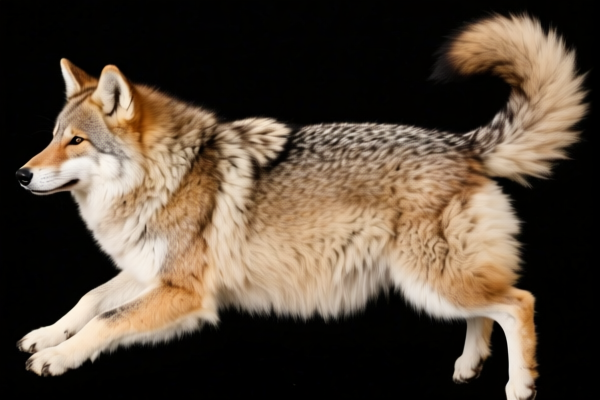
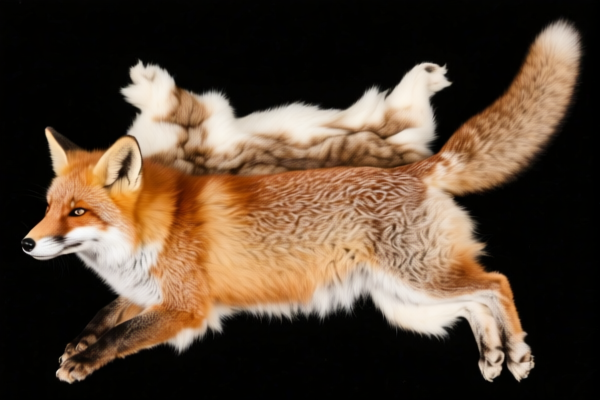
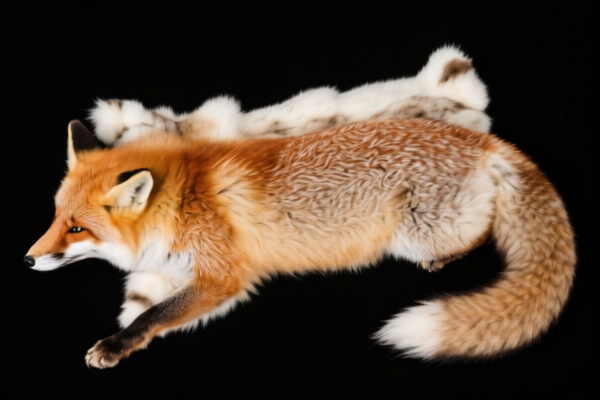
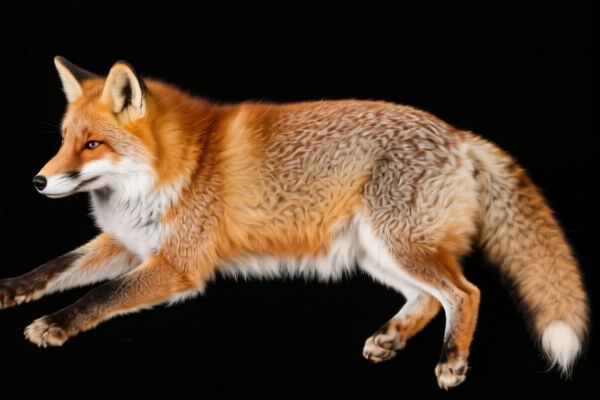
AI Analysis
🦊 Other Whole Furs (with Head, Tail, Claws)
🌐 HS Code Reference & Customs Clearance Guide | 2026 Latest Tariff Analysis | Professional Clearance Strategy
📌 Part 1: Product Definition & Classification – Are You Sure About "Whole Furs"?
"Other Whole Furs" refers to raw or processed animal skins that retain their natural integrity, specifically including the head, tail, and claws/paws. In international trade, this category is critical because the presence of these extremities often dictates whether the goods are classified as raw materials (Chapter 43, Heading 4301) or finished/semi-finished articles (Chapter 43, Heading 4302 or 4303).
The key distinction lies in the degree of processing and the specific exclusion of certain species (like lion, tiger, etc., which may fall under CITES restrictions). The term "Other" implies the fur is not from a specific high-value or restricted species listed in sub-headings 4301.10–4301.90 that cover specific types like bear, mink, or fox.
⚠️ Key Distinction Point:
- Raw/Whole Skins (Head/Tail/Claws intact): Typically fall under 4301.xx.xx (Raw furskins).
- Cut Pieces or Treated Skins (without extremities): May fall under 4302.xx.xx (Dressed, tanned, or further prepared).
- Articles of Fur (Garments, accessories): Fall under 4303.xx.xx (Articles of furskin).
📦 Part 2: HS Code Classification Details (2026 Latest Tariff Authority Comparison)
Based on the provided data, here are the possible HS codes and their matching logic:
| HS Code | Product Description | Matching Logic | Total Tax Rate |
|---|---|---|---|
4301.80.02.90 |
Other whole furskins (including raw, untanned) | Match Success: "Whole furs" + "with tails and claws" perfectly aligns with the definition of raw furskins (complete, regardless of head/tail/claws). Not a specific excluded species. | 17.5% |
4301.90.00.00 |
Other raw furskins (unspecified) | Match Success: "Whole furs with tails and claws" matches the material (fur) and form (with tail/paws) in the explanatory notes. | 10.0% |
4303.90.00.00 |
Other articles of furskin | Partial Match: "Furskins" matches material, and "Other" matches the residual category. Fits the "other" fallback logic but may be incorrect if the item is raw rather than an article. | 35.0% |
4303.10.00.60 |
Other articles of furskin (whole furskins) | Match Success: "Other whole furskins" matches material attributes of fur articles. "Whole furskins" fits the form factor for fur articles. | 39.0% |
4302.19.60.00 |
Dressed/Tanned furskins (other) | Full Match: Material is fur; Form includes tail and paws. Fits the "other" category description for dressed/tanned skins. | 38.5% |
🔍 Critical Note:
- Raw vs. Dressed: If the fur is untanned/raw, it should ideally be in 4301. If it is tanned/dressed, it moves to 4302. If it is made into an article (like a rug or trim), it goes to 4303.
- Tax Variance: The tax rate ranges from 10% (4301.90) to 39% (4303.10). Misclassification can lead to significant duty differences and potential penalties.
💰 Part 3: 2026 Latest Tariff Rate Breakdown (Including Additional Taxes & Policy Surcharges)
✅ Applicable Country: United States (US)
✅ Origin: China (CN)
✅ Effective Date: From November 10, 2025 (and subsequent imports)
🎯 1. 4301.80.02.90 – Other Whole Furskins (Raw/Untanned)
| Item | Details |
|---|---|
| Base Rate | 0% (ad valorem) |
| Section 301 Tariff (USITC) | +7.5% |
| Section 122 Tariff (IEEPA) | +10% |
| Total Effective Rate | 17.5% |
| Calculation Basis | CIF Value × 17.5% |
| De Minimis Exemption | ❌ No (High-risk item) |
| Legal Path | USITC:4301.80.02.90 → SECTION301:Footnote → IEEPA:122 |
📌 Explanation:
- This code is for raw furs. The 7.5% Section 301 duty applies to most furskins.
- The 10% Section 122 tariff is a specific surcharge on certain Chinese-origin goods.
- Total: 17.5%. This is a medium-high tariff for raw materials.
🎯 2. 4301.90.00.00 – Other Raw Furskins (Unspecified)
| Item | Details |
|---|---|
| Base Rate | 0% |
| Section 301 Tariff (USITC) | 0% |
| Section 122 Tariff (IEEPA) | +10% |
| Total Effective Rate | 10.0% |
| Calculation Basis | CIF Value × 10.0% |
| De Minimis Exemption | ❌ No |
| Legal Path | USITC:4301.90.00.00 → IEEPA:122 |
📌 Note:
- This is the lowest tax option among the matches.
- It assumes the fur falls under "Other" raw furskins where Section 301 duties might not apply or are lower.
- Caution: Ensure the product truly qualifies for this sub-heading and not 4301.80, to avoid misclassification penalties.
🎯 3. 4303.90.00.00 – Other Articles of Furskin
| Item | Details |
|---|---|
| Base Rate | 0% |
| Section 301 Tariff (USITC) | +25% |
| Section 122 Tariff (IEEPA) | +10% |
| Total Effective Rate | 35.0% |
| Calculation Basis | CIF Value × 35.0% |
| De Minimis Exemption | ❌ No |
| Legal Path | USITC:4303.90.00.00 → SECTION301:Footnote → IEEPA:122 |
📌 Explanation:
- This applies if the item is considered an "article" (e.g., a fur rug, trim, or accessory) rather than raw skin.
- High Risk: 35% is a very high tariff. Misclassifying raw furs as "articles" increases cost significantly.
🎯 4. 4303.10.00.60 – Other Articles of Furskin (Whole)
| Item | Details |
|---|---|
| Base Rate | 4.0% |
| Section 301 Tariff (USITC) | +25% |
| Section 122 Tariff (IEEPA) | +10% |
| Total Effective Rate | 39.0% |
| Calculation Basis | CIF Value × 39.0% |
| De Minimis Exemption | ❌ No |
| Legal Path | USITC:4303.10.00.60 → SECTION301:Footnote → IEEPA:122 |
📌 Note:
- This is the highest tax option.
- It applies to specific types of fur articles. Only use if the product is definitely an article and fits this specific sub-heading.
🎯 5. 4302.19.60.00 – Dressed/Tanned Furskins
| Item | Details |
|---|---|
| Base Rate | 3.5% |
| Section 301 Tariff (USITC) | +25% |
| Section 122 Tariff (IEEPA) | +10% |
| Total Effective Rate | 38.5% |
| Calculation Basis | CIF Value × 38.5% |
| De Minimis Exemption | ❌ No |
| Legal Path | USITC:4302.19.60.00 → SECTION301:Footnote → IEEPA:122 |
📌 Explanation:
- Applies to dressed, tanned, or further prepared furskins.
- If your "whole furs" are tanned, this is the correct chapter (4302), but the tax is high (38.5%).
- If they are raw, do not use this code; use 4301 instead to save on Section 301 duties.
🛠️ Part 4: Customs Clearance Practical Advice (Real-World Pitfall Guide)
✅ 1. Documentation Checklist (Essential)
| Document | Required | Notes |
|---|---|---|
| Product Description | ✔️ | Must specify: "Whole Furskins, with Head, Tail, and Claws, [Animal Species if allowed], Raw/Tanned" |
| Photo Evidence | ✔️ | Clear images showing head, tail, and claws are present. Crucial for proving "Whole" status. |
| Processing Statement | ✔️ | Explicitly state: "Raw/Untanned" OR "Tanned/Dressed". This determines Chapter 4301 vs. 4302. |
| Species Declaration | ✔️ | Confirm the animal species. Ensure it is not CITES-listed (e.g., lion, tiger, leopard) unless permits are provided. |
| Commercial Invoice | ✔️ | Harmonized Tariff Schedule (HTS) code must match the physical product. |
| Packing List | ✔️ | Include weight and quantity. |
✅ 2. Declaration Strategy (Key Mantra)
🔥 "Raw goes to 4301, Tanned to 4302, Articles to 4303. Head/Tail/Claws define 'Whole'!"
| Scenario | Correct HS Code | Incorrect Code | Consequence |
|---|---|---|---|
| Raw, whole fur (with head/tail/claws) | 4301.80.02.90 or 4301.90.00.00 |
4303.90.00.00 |
Overpayment of duty (17.5% vs 35%) |
| Tanned, whole fur (with head/tail/claws) | 4302.19.60.00 |
4301.90.00.00 |
Misclassification penalty; potential seizure |
| Cut fur pieces (no head/tail) | 4302.xx.xx or 4303.xx.xx |
4301.xx.xx |
"Not whole" → Wrong code |
| Fur garment/accessory | 4303.xx.xx |
4301.xx.xx |
Major misclassification; high risk of audit |
✅ 3. Special Cases Handling
| Case | Recommendation |
|---|---|
| CITES Restricted Species | ⛔ STOP: If the fur is from a protected species (e.g., tiger, leopard), you need CITES Permits. Without them, shipment will be seized. |
| Mixed Containers (Raw & Tanned) | 📦 Separate Declarations: Declare raw furs and tanned furs separately to apply correct HS codes and duty rates. |
| "Other" Species Claim | 📝 Supporting Evidence: Provide zoological classification to prove the species is indeed "Other" and not a specific type listed in 4301.10-4301.30. |
| De Minimis (Section 321) | ❌ Not Applicable: Furskins are generally excluded from the $800 de minimis exemption for China-origin goods due to anti-dumping and tariff risks. |
🌍 Part 5: Global Market Clearance Comparison (2026 Latest)
| Country/Region | Recommended HS Code | Duty Rate (China Origin) | Certification Requirements | Notes |
|---|---|---|---|---|
| 🇺🇸 USA | 4301.80.02.90 / 4301.90.00.00 |
10% - 17.5% (Raw) | No specific certs, but CITES if applicable | High scrutiny on species |
| 🇪🇺 EU | 4301.30 / 4301.80 |
0% - 2.5% | CITES documentation essential | Strict on animal welfare claims |
| 🇨🇳 China | 4301.80 / 4301.90 |
20% - 30% | CITES (if imported) | High import duty for fur products |
| 🇬🇧 UK | 4301.80 |
2.5% | CITES | Post-Brexit rules apply |
📌 Conclusion:
- The US offers the lowest duty (10-17.5%) for raw furskins compared to other chapters.
- EU has low base duties but strict CITES enforcement.
- Misclassification into Chapter 4303 (Articles) in the US jumps duties to 35-39%, a significant cost increase.
📌 Part 6: Common Errors & Pitfalls (Lessons Learned)
❌ Mistake 1: Declaring tanned furs as raw (4301) to save tax.
👉 Consequence: Customs inspection reveals tanning; penalty + back taxes + seizure.
❌ Mistake 2: Claiming CITES species as "Other Whole Furs" without permits.
👉 Consequence: Immediate seizure, fines, and blacklisting by CBP.
❌ Mistake 3: Using 4303.90.00.00 for raw furs to simplify declaration.
👉 Consequence: Overpaying ~17.5% in additional duties.
❌ Mistake 4: Omitting "With Head, Tail, and Claws" in description.
👉 Consequence: Ambiguity leads to random examination and delays.
✅ Correct Approach:
"Raw Whole Furskins, [Species Name], With Head, Tail, and Claws, Untanned, For [Purpose], HTS 4301.80.02.90"
🎯 Part 7: Conclusion: Professional Declaration Saves Money!
🎯 Remember the Mantra:
🔹 "Raw = 4301 (Lowest Duty), Tanned = 4302, Articles = 4303 (Highest Duty)."
🔹 "Head/Tail/Claws = Whole. No Extremities = Cut Pieces."
🔹 "CITES = Stop & Verify. No Permit = No Entry."
📌 Pro Tip:
If you are importing large volumes, consider applying for an Advance Ruling from US CBP. This provides legal certainty on the HS code and duty rate before shipment.
Also, ensure your supplier provides a Species Verification Certificate to prove the fur is not from a CITES-listed animal.
📣 Immediate Action:
📞 Contact a Licensed Customs Broker + Provide Clear Photos of Head/Tail/Claws + Verify CITES Status.
🚀 Ensure Smooth Clearance, Avoid Seizure, and Optimize Your Tariff Costs!
✨ Professional Clearance Starts with Accurate Classification!
💼 Your Bottom Line Depends on the Correct HS Code!
Customer Reviews
About HS Code Classification
The Harmonized System (HS) is an internationally standardized nomenclature developed by the World Customs Organization (WCO) to classify traded products. Over 200 countries use the HS system as the basis for customs tariffs, trade statistics, and import/export regulations.
Each HS code follows a hierarchical structure:
- Chapter (2 digits) — Broad category of goods (e.g., Chapter 84: Machinery and Mechanical Appliances)
- Heading (4 digits) — More specific grouping within the chapter
- Subheading (6 digits) — Internationally standardized breakdown, used by all WCO member countries
- National subdivisions (8-10 digits) — Country-specific extensions for further classification, such as US HTSUS 10-digit codes
Correct HS code classification is essential for smooth customs clearance, accurate duty payment, and compliance with trade regulations. Misclassification can lead to customs delays, overpayment of duties, or penalties.
When importing from CN to US, the applicable tariff rates may include:
- Most-Favored-Nation (MFN) rate — The standard duty rate applied to WTO members
- General rate — Applied to countries without trade agreements
- Trade remedy duties — Additional tariffs such as Section 301 (anti-dumping), Section 232 (national security), or countervailing duties
The information provided on this page is for reference purposes only. For official classification, please consult with your local customs authority or a licensed customs broker.