Other Wood Products
CN → US| HS Code | Tariff Rate | Origin | Destination | Doc |
|---|---|---|---|---|
| 4419199000 | 13.2% | CN | US | Official Doc |
| 4421999880 | 38.3% | CN | US | Official Doc |
| 4421919880 | 38.3% | CN | US | Official Doc |
| 4420908000 | 38.2% | CN | US | Official Doc |
| 4420190000 | 13.2% | CN | US | Official Doc |
| 4419909100 | 20.7% | CN | US | Official Doc |
Product Images
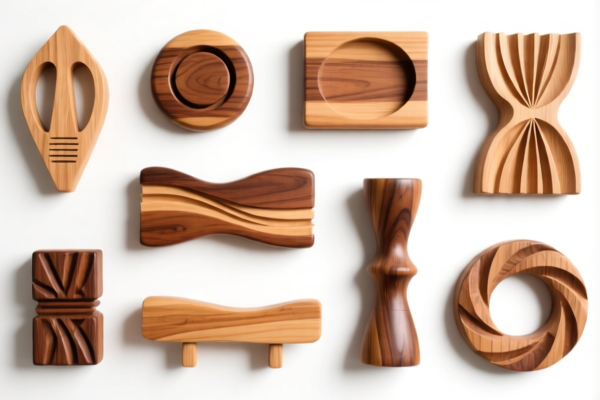


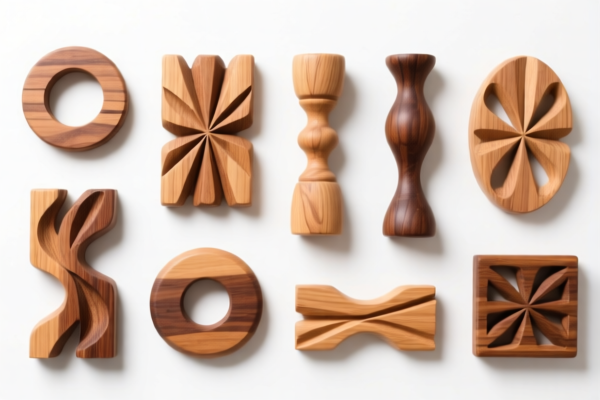
AI Analysis
🌳 Other Wood Products (木制品)
🌐 HS Code Reference & Customs Clearance Guide | 2026 Latest Tariff Analysis | Professional Clearance Strategy 📌 I. Product Definition & Classification: Do You Really Understand "Other Wood Products"?
In international trade, "Other Wood Products" is a broad catch-all category under Chapter 44 (Wood and Articles of Wood). These are finished or semi-finished wooden items that do not fall into specific chapters like furniture (Ch. 94), toys (Ch. 95), or wooden building materials like veneers (Ch. 44 specific subheadings).
Key Distinction Points: * Material: Must be primarily wood (solid, engineered, or processed). * Function: Not primarily for furniture, toys, or structural building components covered elsewhere. * Examples: Wooden cutlery, serving ware, decorative wooden items, wooden boxes (non-industrial packaging), simple wooden tools, etc.
⚠️ Critical Note: The classification heavily depends on specific use and manufacturing process. A small error in description can lead to massive tariff differences (from 13.2% to 38.3%).
📦 II. HS Code Classification Matrix (2026 Latest Tariff Reference)
Based on the provided data, here are the 5 valid HS Codes for "Other Wood Products" with their corresponding tax structures.
| HS Code | Product Description & Logic | Total Tax Rate | Key Tax Components |
|---|---|---|---|
4419.90.91.00 |
Wooden Tableware/Kitchenware Logic: "Other wooden articles, material is wood, meets classification requirements, other aspects consistent with name semantics." |
20.7% | Base: 3.2% Added: 7.5% Section 301: 10% |
4419.19.90.00 |
Wooden Tableware/Kitchenware (Other) Logic: "Other wooden articles, usage belongs to 'other' category, name matches code attributes." |
13.2% | Base: 3.2% Added: 0.0% Section 301: 10% |
4421.99.98.80 |
Other Wooden Articles (Miscellaneous) Logic: "Product name fully matches classification name; satisfies wood and other category definitions." |
38.3% | Base: 3.3% Added: 25.0% Section 301: 10% |
4421.91.98.80 |
Wooden Articles (Other/Residual) Logic: "Core material is wood products; belongs to the 'other remaining' item under this category." |
38.3% | Base: 3.3% Added: 25.0% Section 301: 10% |
4420.90.80.00 |
Wooden Articles (Decorative/Other) Logic: "Wood material matches classification; 'other' is a residual category, logically consistent." |
38.2% | Base: 3.2% Added: 25.0% Section 301: 10% |
🔍 Observation: - Codes
4421...and4420...carry a high additional tariff of 25% (likely due to broader "other" classification traps or specific US Trade Act provisions). - Codes4419...are generally lower risk if the item is clearly tableware/kitchenware, with the lowest being13.2%.
💰 III. Detailed Tax Rate Breakdown (Including Surcharges & Policies)
✅ Applicable Market: United States (US)
✅ Origin: China (CN)
✅ Effective Time: 2025/2026 Tariff Schedule
🎯 1. Low-Tier Classification: 4419.19.90.00 (Optimal if Applicable)
| Item | Details |
|---|---|
| Base Tariff | 3.2% |
| Added Tariff (Section 301) | 0.0% |
| Section 122/Other Surcharge | 10% |
| Total Effective Rate | 13.2% |
| Calculation | CIF Value × 13.2% |
| Legal Path | Base: 3.2% → Added: 0% → Surcharge: 10% |
📌 Why it's lower: This code often applies to specific wooden tableware or kitchen items that may benefit from certain exemptions or lower "added" duty brackets compared to general "other wood articles."
🎯 2. Mid-Tier Classification: 4419.90.91.00
| Item | Details |
|---|---|
| Base Tariff | 3.2% |
| Added Tariff (Section 301) | 7.5% |
| Section 122/Other Surcharge | 10% |
| Total Effective Rate | 20.7% |
| Calculation | CIF Value × 20.7% |
| Legal Path | Base: 3.2% → Added: 7.5% → Surcharge: 10% |
📌 Note: This applies to similar wood items but falls into a slightly higher "other" subcategory, triggering a 7.5% added duty.
🎯 3. High-Tier Classification: 4421... and 4420... (High Risk)
| Item | Details |
|---|---|
| Base Tariff | 3.2% - 3.3% |
| Added Tariff (Section 301) | 25.0% |
| Section 122/Other Surcharge | 10% |
| Total Effective Rate | 38.2% - 38.3% |
| Calculation | CIF Value × ~38.3% |
| Legal Path | Base: ~3.3% → Added: 25% → Surcharge: 10% |
📌 Why it's high: These codes (
4421,4420) cover "Other wooden articles" broadly. The 25% added tariff is a significant burden. Misclassifying a specific wood item as a generic "other wood article" can double your costs compared to4419.
🛠️ IV. Customs Clearance Practical Advice
✅ 1. Documentation Checklist (Must-Have)
| Document | Requirement | Purpose |
|---|---|---|
| Commercial Invoice | Must specify "Wood Material" and "End Use" (e.g., "Kitchen Utensils") | Critical for determining 4419 vs 4420/4421. |
| Product Photos | Clear images of the item, highlighting material texture and function. | Proves it is wood and not metal/plastic mix. |
| Material Declaration | Statement: "100% Wood" or "Wooden with minor glue/nails." | Avoids misclassification as composite goods. |
| Packaging List | Detailed description of contents. | Prevents "insufficient information" delays. |
| Origin Certificate | If applicable, for potential FTA benefits (though US-China tariffs apply here). | Supports origin claim. |
✅ 2. Classification Strategy & Tips
🔥 Golden Rule: "Define the Use, Not Just the Material!"
| Scenario | Recommended HS Code | Tax Rate | Why? |
|---|---|---|---|
| Wooden Spoons, Forks, Serving Bowls | 4419.90.91.00 or 4419.19.90.00 |
13.2% - 20.7% | Clearly defined as tableware. Lower added tariffs. |
| Wooden Toys, Statues, Decorative Items | 4421.99.98.80 or 4420.90.80.00 |
~38.3% | Often fall into "other" categories with high 25% surcharge. |
| Simple Wooden Boxes (Non-Packaging) | 4421.91.98.80 |
38.3% | If not for industrial packaging, it's "other." |
| Wooden Tool Handles | 4421.99.98.80 |
38.3% | Consider if it can be classified under tool parts (Ch. 82/83) for lower rates. |
⚠️ Warning:
- Do not use generic terms like "Wooden Product" in the description. Use specific terms like "Wooden Serving Spoon." - Avoid4420and4421unless necessary, as the 25% added tariff is punitive. Try to find a more specific subheading under4419(Tableware) if applicable.
✅ 3. Special Considerations
| Issue | Solution |
|---|---|
| Mixed Materials | If wood is <50% by value, it may not be Ch. 44. Check Ch. 39 or 73. |
| Varnish/Lacquer | Coated wood is still Ch. 44 if the coating doesn't alter the fundamental character. |
| Section 301 Exclusions | Check if the specific HS code has an exclusion list (rare for wood products, but worth verifying). |
| De Minimis | Not applicable for high-value shipments; even small packages are subject to tariffs. |
🌍 V. Global Market Comparison (2026)
| Market | Recommended HS Code | Est. Total Tax | Notes |
|---|---|---|---|
| 🇺🇸 USA | 4419.19.90.00 |
13.2% | Lowest rate among options. Avoid 4420/4421. |
| 🇺🇸 USA | 4421.99.98.80 |
38.3% | High cost. Only use if no other classification fits. |
| 🇪🇺 EU | 4419 |
~3-5% | EU tariffs are generally lower, but CE/FSC may be required. |
| 🇨🇳 China | 4419 |
~5-10% | Import duties to China are moderate; check VAT. |
📌 Conclusion for US Importers:
The difference between 13.2% and 38.3% is 25.1 percentage points.
- On a $10,000 shipment, this is a $2,510 difference.
- Action: Aggressively search for4419(Tableware) classification if the product can be justified as such.
📌 VI. Common Mistakes & Pitfalls
❌ Mistake 1: Declaring "Wooden Gift Set" as 4420.90.80.00
👉 Result: 38.3% tax.
👉 Fix: If it contains tableware, split the shipment or argue for 4419 components.
❌ Mistake 2: Using vague description "Wooden Item"
👉 Result: Customs officer assigns highest duty code (4421...) by default.
👉 Fix: Provide detailed product name: "Oak Wooden Salad Bowl."
❌ Mistake 3: Ignoring the 25% Added Tariff
👉 Result: Unexpected cost surge at customs.
👉 Fix: Always verify the "Added Tariff" column in your tariff lookup.
✅ Correct Declaration Example:
"Wooden Serving Spoons, Made of Bamboo, For Kitchen Use, Model XYZ"
→ HS:4419.90.91.00→ Tax: 20.7% (Better than 38.3%)📌 Pro Tip:
If the item is not tableware, try to see if it qualifies as a Tool Handle (Ch. 82/83) or Toy (Ch. 95) which might have different rates. However, if it's just a decorative wooden item,4421is likely unavoidable.
🎯 VII. Conclusion: Precision Saves Money
🎯 Remember:
🔹 "Specific is Spacious (cheaper), Generic is Expensive."
🔹 "Tableware = ~15-20%, Other = ~38%."
🔹 "Describe the Function, Not Just the Material."
📌 Final Checklist for Exporters:
1. Confirm material is 100% wood or wood-dominant.
2. Determine primary use (Tableware? Decor? Tool?).
3. Select HS Code that best matches specific use under 4419.
4. Avoid 4420/4421 unless no other option exists.
5. Provide detailed invoices to prevent customs reclassification.
📣 Immediate Action:
📞 Consult a Customs Broker for a Pre-Ruling if the product is borderline between
4419and4421.
🚀 Save 25% in tariffs by choosing the right classification!
✨ Professional Clearance Starts with Accurate Classification!
💼 Your Profit Margin Depends on It!
Customer Reviews
About HS Code Classification
The Harmonized System (HS) is an internationally standardized nomenclature developed by the World Customs Organization (WCO) to classify traded products. Over 200 countries use the HS system as the basis for customs tariffs, trade statistics, and import/export regulations.
Each HS code follows a hierarchical structure:
- Chapter (2 digits) — Broad category of goods (e.g., Chapter 84: Machinery and Mechanical Appliances)
- Heading (4 digits) — More specific grouping within the chapter
- Subheading (6 digits) — Internationally standardized breakdown, used by all WCO member countries
- National subdivisions (8-10 digits) — Country-specific extensions for further classification, such as US HTSUS 10-digit codes
Correct HS code classification is essential for smooth customs clearance, accurate duty payment, and compliance with trade regulations. Misclassification can lead to customs delays, overpayment of duties, or penalties.
When importing from CN to US, the applicable tariff rates may include:
- Most-Favored-Nation (MFN) rate — The standard duty rate applied to WTO members
- General rate — Applied to countries without trade agreements
- Trade remedy duties — Additional tariffs such as Section 301 (anti-dumping), Section 232 (national security), or countervailing duties
The information provided on this page is for reference purposes only. For official classification, please consult with your local customs authority or a licensed customs broker.