Other Wooden Kitchen Utensils
CN → US| HS Code | Tariff Rate | Origin | Destination | Doc |
|---|---|---|---|---|
| 9403608093 | 35.0% | CN | US | Official Doc |
| 4420110090 | 13.2% | CN | US | Official Doc |
| 4420908000 | 38.2% | CN | US | Official Doc |
| 9403608040 | 35.0% | CN | US | Official Doc |
| 4419901100 | 15.3% | CN | US | Official Doc |
Product Images
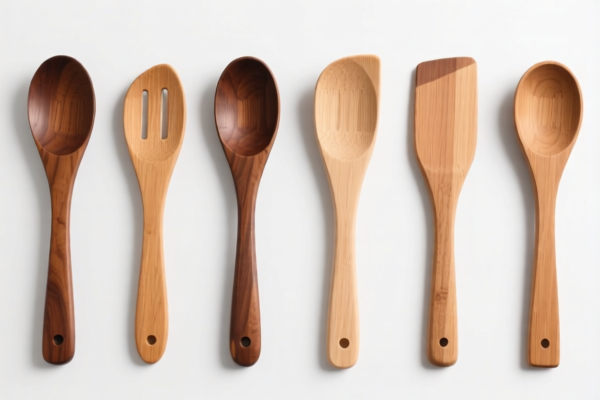
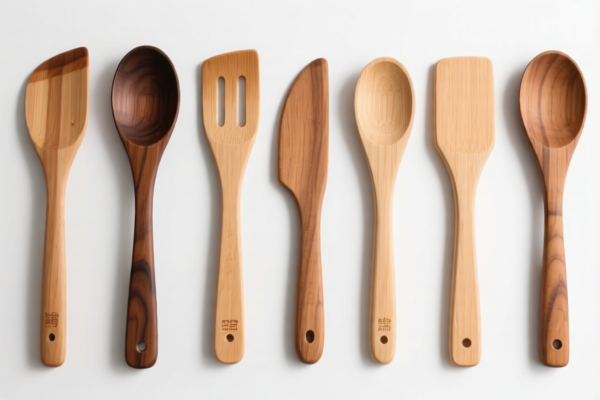
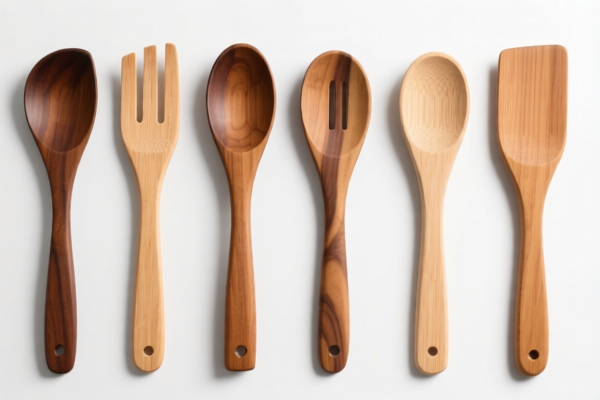
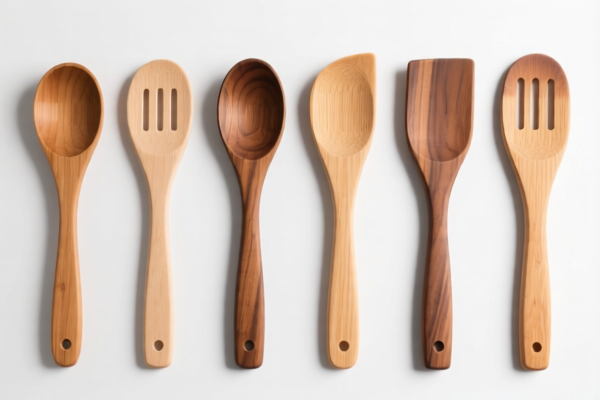
AI Analysis
🍽️ Wooden Kitchen Utensils (Other Wooden Kitchen Utensils)
🌐 HS Code Reference & Customs Clearance Guide | 2026 Latest Tariff Analysis | Professional Clearance Strategy
📌 I. Product Definition & Classification: Do You Really Know "Other Wooden Kitchen Utensils"?
"Other Wooden Kitchen Utensils" is a broad category in international trade, encompassing various wooden tools used in food preparation, serving, and storage. In customs classification, the key distinction lies in functionality and structural composition:
- Utensils for Cooking/Serving (Kitchenware): Items like spatulas, spoons, cutting boards, and salad servers that are primarily used for direct food handling. These typically fall under Chapter 44 (Wood and articles of wood).
- Furniture/Storage (Furniture): Items like racks, stands, or shelves designed to hold utensils or dishes, but not used for direct food preparation. These fall under Chapter 94 (Furniture).
- Decorative/Ornamental: Wooden items shaped like kitchenware but intended for display rather than functional use. These also fall under Chapter 44 but may have different subheadings.
⚠️ Key Distinction Point:
- If the item is functional (spoon, cutting board) → Usually 4419 or 4420;
- If the item is furniture-like (rack, stand) → Usually 9403;
- Misclassification can lead to significant tariff differences (from 13.2% to 38.2%).
📦 II. HS Code Classification Details (2026 Latest Tariff Authority Comparison)
Based on the provided data, here are the five possible HS Codes for "Other Wooden Kitchen Utensils" and their corresponding tax implications:
| HS Code | Product Description | Application Scenario | Tax Rate | Tax Details Breakdown |
|---|---|---|---|---|
4419.90.11.00 |
Wooden Kitchen Utensils (Functional) | Cutting boards, spoons, spatulas, ladles | 15.3% | Base: 5.3%, Additional: 0%, Section 122: 10% |
4420.11.00.90 |
Other Wooden Articles (Kitchenware-like) | Decorative kitchen items, non-functional wood crafts resembling utensils | 13.2% | Base: 3.2%, Additional: 0%, Section 122: 10% |
9403.60.80.93 |
Other Wooden Furniture (Storage/Racks) | Wooden utensil racks, spice racks, knife blocks (furniture category) | 35.0% | Base: 0.0%, Additional: 25.0%, Section 122: 10% |
9403.60.80.40 |
Other Wooden Furniture (Storage/Racks) | Similar to above, specific sub-category for furniture | 35.0% | Base: 0.0%, Additional: 25.0%, Section 122: 10% |
4420.90.80.00 |
Other Wooden Articles (Decorative/Ornamental) | Wooden ornaments, decorative kitchen pieces | 38.2% | Base: 3.2%, Additional: 25.0%, Section 122: 10% |
🔍 Critical Reminder:
- Functional Utensils (e.g., spatulas) should ideally be classified under 4419.90.11.00 (15.3%), which is often the most cost-effective if deemed "kitchenware."
- Furniture Items (e.g., racks, stands) fall under 9403.60.80.XX, attracting a 35.0% total tax due to the 25% Additional Duty (Section 301).
- Decorative Items under 4420 may trigger a 25% Additional Duty if classified as "ornamental," leading to 38.2%.
- Avoid Misclassification: Declaring a functional spoon as "furniture" or "decoration" to seek lower rates is risky and can lead to penalties.
💰 III. 2026 Latest Tariff Rate Explanation (Including Surtaxes & Policy Add-ons)
✅ Applicable Country: United States (US)
✅ Origin: China (CN)
✅ Effective Time: Current rates apply (Subject to Section 122 & 301 regulations)
🎯 1. 4419.90.11.00 —— Wooden Kitchen Utensils (Functional)
| Item | Content |
|---|---|
| Base Rate | 5.3% (ad valorem) |
| Section 301 Additional Duty | 0.0% (Most kitchen utensils under 4419 are exempt from the 25% tariff) |
| Section 122 Duty | 10% (Specific duty on certain goods from China) |
| Total Tax Rate | 15.3% |
| Tax Calculation | CIF Value × 15.3% |
| De Minimis Exemption | ❌ Not Applicable (Section 122 typically negates de minimis for many goods) |
| Legal Basis Path | HTSUS:4419.90.11.00 → Section 122: 10% |
📌 Explanation:
- This is the most favorable rate for functional kitchen utensils.
- No Section 301 25% surcharge applies to this specific subheading, saving significant cost compared to furniture classifications.
- Section 122 (10%) is a specific retaliatory or trade policy duty applied to certain Chinese goods.
🎯 2. 4420.11.00.90 —— Other Wooden Articles (Kitchenware-like/Decorative)
| Item | Content |
|---|---|
| Base Rate | 3.2% |
| Section 301 Additional Duty | 0.0% (Exempt from 25% surcharge) |
| Section 122 Duty | 10% |
| Total Tax Rate | 13.2% |
| Tax Calculation | CIF Value × 13.2% |
| De Minimis Exemption | ❌ Not Applicable |
| Legal Basis Path | HTSUS:4420.11.00.90 → Section 122: 10% |
📌 Note:
- This rate is lower than functional utensils (4419) because the base rate is lower (3.2% vs 5.3%).
- However, only applicable if the item is NOT strictly "kitchenware" but rather "other wooden articles" (e.g., decorative coasters, non-functional wood pieces).
- Risk: If Customs determines the item is a functional utensil, they may reclassify it to 4419.90.11.00 or even 9403, leading to back taxes.
🎯 3. 9403.60.80.93 & 9403.60.80.40 —— Other Wooden Furniture (Racks/Stands)
| Item | Content |
|---|---|
| Base Rate | 0.0% |
| Section 301 Additional Duty | +25.0% (Applicable to most furniture from China) |
| Section 122 Duty | 10% |
| Total Tax Rate | 35.0% |
| Tax Calculation | CIF Value × 35.0% |
| De Minimis Exemption | ❌ Not Applicable |
| Legal Basis Path | HTSUS:9403.60.80.XX → USITC Footnote 9903.88.01 → Section 122: 10% |
📌 Explanation:
- Base rate is 0%, but the 25% Section 301 tariff makes it expensive.
- Applies to utensil racks, spice racks, knife blocks, and storage stands.
- High Cost Alert: These items are heavily taxed. Importers should consider supply chain adjustments.
🎯 4. 4420.90.80.00 —— Other Wooden Articles (Decorative/Ornamental)
| Item | Content |
|---|---|
| Base Rate | 3.2% |
| Section 301 Additional Duty | +25.0% (Applicable to certain decorative wood articles) |
| Section 122 Duty | 10% |
| Total Tax Rate | 38.2% |
| Tax Calculation | CIF Value × 38.2% |
| De Minimis Exemption | ❌ Not Applicable |
| Legal Basis Path | HTSUS:4420.90.80.00 → USITC Footnote → Section 122: 10% |
📌 Note:
- This is the highest tax rate in the provided data.
- Applies to wooden ornaments, decorative kitchen pieces that are not functional utensils but are not furniture.
- High Risk: Importers should avoid this classification unless the item is strictly decorative and non-functional.
🛠️ IV. Customs Clearance Practical Advice (Real-World Pitfall Guide)
✅ 1. Required Documentation Checklist (Non-negotiable)
| Document | Must Provide | Description |
|---|---|---|
| ✅ Product Specifications | ✔️ | Material (e.g., bamboo, maple), dimensions, usage (functional vs. decorative) |
| ✅ Product Photos | ✔️ | Clear images showing the item in use (if functional) or as decor |
| ✅ Bill of Lading / Invoice | ✔️ | Accurate description: "Wooden Spatula" vs. "Wooden Rack" |
| ✅ Country of Origin Certificate | ✔️ | Essential for determining Section 301 applicability |
| ✅ Material Declaration | ✔️ | Confirm no prohibited wood species (e.g., endangered species under CITES) |
✅ 2. Declaration Tips (Key Mantra)
🔥 "Function First, Furniture Second, Decoration Last!"
| Scenario | Correct Declaration | Incorrect Practice |
|---|---|---|
| Wooden Spoon/Spreader | 4419.90.11.00 (15.3%) |
Declaring as "Furniture" → 35% |
| Wooden Utensil Rack | 9403.60.80.XX (35.0%) |
Declaring as "Utensil" → 15.3% (But may be flagged as misclassification) |
| Decorative Wooden Bowl (Non-functional) | 4420.90.80.00 (38.2%) |
Declaring as "Kitchenware" → 15.3% (High risk of penalty) |
| Wooden Cutting Board | 4419.90.11.00 (15.3%) |
Declaring as "Ornament" → 38.2% |
✅ 3. Special Situation Handling
| Situation | Handling Advice |
|---|---|
| Mixed Containers (Utensils + Racks) | Declare separately! Do not lump together. Racks at 35%, Utensils at 15.3%. |
| Bamboo vs. Wood | Bamboo is often classified similarly, but verify if "Bamboo" has specific exclusions. |
| Set Items (Spork + Rack) | If sold as a set, the essential character determines classification. If the rack is the main part, it may be furniture. |
| OEM Customized Items | Provide design blueprints. If designed as furniture, declare as furniture. |
🌍 V. Global Main Market Clearance Comparison (2026 Latest)
| Country/Region | Recommended HS Code | Tariff Rate | Certification Requirements | Notes |
|---|---|---|---|---|
| 🇺🇸 USA | 4419.90.11.00 |
15.3% | FDA (for food contact), FSC (optional) | 35% for Furniture; High Section 122 impact |
| 🇨🇳 China | 4419.90.11.00 |
5.0% | None | No additional surtaxes |
| 🇪🇺 EU | 4419.00.00 |
4.5% | FSC/PEFC (sustainability) | No Section 301; Green customs priority |
| 🇬🇧 UK | 4419.00.00 |
4.5% | UKCA | Post-Brexit alignment with EU |
| 🇯🇵 Japan | 4419.00.00 |
4.0% | Phytosanitary Certificate | Strict on wood pests |
📌 Conclusion:
- USA is the most expensive market due to Section 122 (10%) and potential Section 301 (25%) on furniture.
- Functional Utensils (4419) are the most tariff-efficient category in the US (15.3%).
- Furniture (9403) is heavily taxed (35%). Importers should consider supply chain diversification if exporting racks/stands to the US.
📌 VI. Common Mistakes & Pitfall Guide (Lessons Learned)
❌ Mistake 1: Declaring a Utensil Rack as a Wooden Utensil
👉 Consequence: Customs reclassifies to 9403.60.80.XX → Back taxes of 19.7% difference + penalties!
❌ Mistake 2: Declaring a Functional Cutting Board as Decorative Ornament
👉 Consequence: Tax jumps from 15.3% to 38.2% → Unnecessary cost increase!
❌ Mistake 3: Ignoring Section 122
👉 Consequence: All items in this category incur 10% additional duty. If not budgeted, cash flow issues arise.
❌ Mistake 4: Mixed Declaration (Utensils + Racks in One Line Item)
👉 Consequence: Customs may apply the highest rate (35%) to the entire shipment!
✅ Correct Practice:
"Wooden Spatula, Maple, Food-Grade, Model XYZ" →
4419.90.11.00
"Wooden Knife Block, Walnut, Model ABC" →9403.60.80.93
🎯 VII. Conclusion: Professional Declaration, Save Costs, Ensure Smooth Clearance!
🎯 Remember the Mantra:
🔹 "Utensils are Functional (4419), Racks are Furniture (9403), Decorations are Expensive (4420)"
🔹 "Section 122 is 10%, Section 301 is 25% for Furniture, 0% for Utensils"
🔹 "Declare Accurately, Avoid 35% Pitfalls!"
📌 Pro Tip:
If your wooden utensils are originating from Vietnam, Thailand, or Malaysia, you may avoid Section 301 tariffs entirely.
Consider pre-ruling (Advance Ruling) from US Customs for ambiguous items (e.g., "Is this a spoon or a decoration?").
📣 Immediate Action:
📞 Contact a licensed customs broker + Provide Product Photos + Apply for HS Code Pre-ruling
🚀 Ensure your wooden kitchen goods clear customs smoothly, efficiently, and profitably!
✨ Professional clearance starts with accurate classification!
💼 Every percentage point of tax matters!
Customer Reviews
About HS Code Classification
The Harmonized System (HS) is an internationally standardized nomenclature developed by the World Customs Organization (WCO) to classify traded products. Over 200 countries use the HS system as the basis for customs tariffs, trade statistics, and import/export regulations.
Each HS code follows a hierarchical structure:
- Chapter (2 digits) — Broad category of goods (e.g., Chapter 84: Machinery and Mechanical Appliances)
- Heading (4 digits) — More specific grouping within the chapter
- Subheading (6 digits) — Internationally standardized breakdown, used by all WCO member countries
- National subdivisions (8-10 digits) — Country-specific extensions for further classification, such as US HTSUS 10-digit codes
Correct HS code classification is essential for smooth customs clearance, accurate duty payment, and compliance with trade regulations. Misclassification can lead to customs delays, overpayment of duties, or penalties.
When importing from CN to US, the applicable tariff rates may include:
- Most-Favored-Nation (MFN) rate — The standard duty rate applied to WTO members
- General rate — Applied to countries without trade agreements
- Trade remedy duties — Additional tariffs such as Section 301 (anti-dumping), Section 232 (national security), or countervailing duties
The information provided on this page is for reference purposes only. For official classification, please consult with your local customs authority or a licensed customs broker.