Other Woven Material Products
CN → US| HS Code | Tariff Rate | Origin | Destination | Doc |
|---|---|---|---|---|
| 4602198000 | 37.3% | CN | US | Official Doc |
| 5308100000 | 35.0% | CN | US | Official Doc |
| 5308200000 | 35.0% | CN | US | Official Doc |
| 5607909000 | 41.3% | CN | US | Official Doc |
Product Images
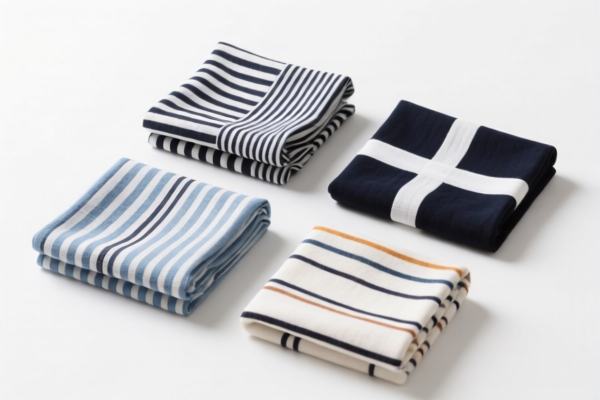
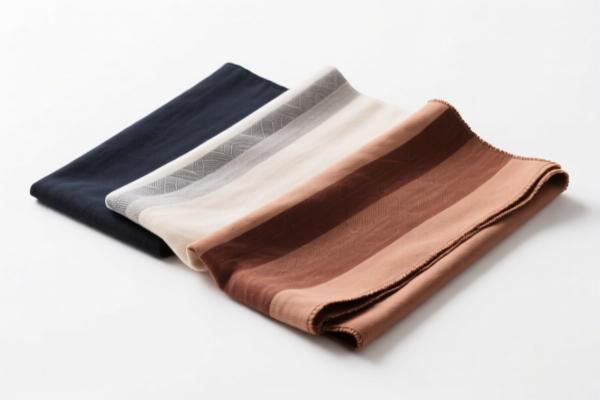
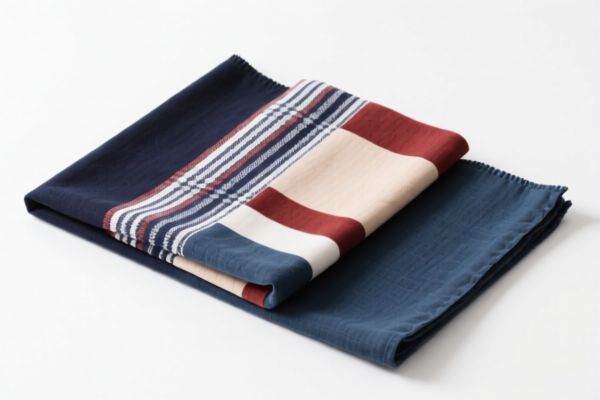
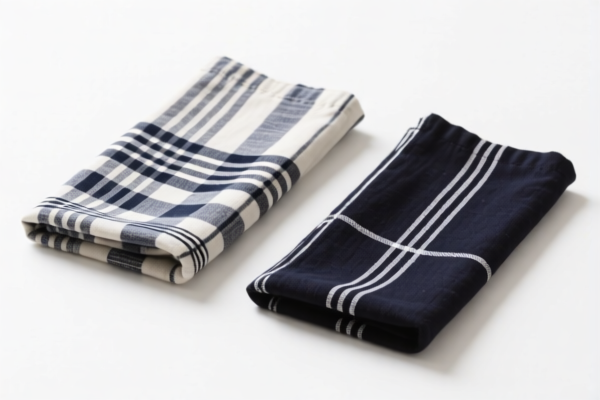
AI Analysis
🧺 Other Woven Material Products
🌐 HS Code Reference & Customs Clearance Guide | 2026 Latest Tariff Analysis | Professional Entry Strategies
📌 1. Product Definition & Classification: What Exactly Are "Other Woven Materials"?
In international trade, "Other Woven Material Products" is a broad category that typically includes woven products made from vegetable materials, plant fibers, paper yarns, or synthetic/synthetic-like fibers. These products are generally used for packaging, decoration, industrial reinforcement, or household items.
Key distinctions in classification depend on: - Material Composition: Vegetable fibers (e.g., bamboo, rattan, straw), paper-based, or synthetic/chemical fibers. - Product Form: Finished woven items (e.g., mats, baskets) vs. semi-finished materials (e.g., ropes, braids, sheets).
⚠️ Critical Distinction:
- Finished woven goods (e.g., baskets, mats) → Generally classified under Chapter 46 (Products of straw, cork, or other plaiting materials).
- Woven materials/fibers (e.g., ropes, cords, fabric strips) → Classified under Chapter 53 (Other vegetable textile fibers) or Chapter 56 (Wadding, felt, and nonwovens; special yarns; twine, cordage, rope, and cables).
📦 2. HS Code Classification Details (2026 Latest Tariff Authoritative Reference)
| HS Code | Product Description | Applicable Scenario | Material/Form |
|---|---|---|---|
4602.19.80.00 |
Other woven products of vegetable materials, in woven form and similar products (plaited goods) | Finished goods: baskets, mats, placemats, decorative woven items | ✅ Vegetative material, woven/plaited |
5308.10.00.00 |
Other vegetable textile fibers, processed, including paper yarn | Semi-finished: plant fiber strips, paper yarns for weaving | ✅ Plant fibers/paper yarn |
5308.20.00.00 |
Other vegetable textile yarns | Semi-finished: plant fiber yarns, thread-like materials | ✅ Plant fiber yarns |
5607.90.90.00 |
Other ropes, cordage, cables, and plaited bands, of other textile materials | Industrial/commercial: synthetic ropes, braided cords, cable ties | ✅ Synthetic/fibrous, rope/cable form |
🔍 Key Reminder:
- Finished woven items (e.g., baskets) must be classified under 4602.19.80.00, not fiber or yarn codes.
- Raw or semi-finished materials (e.g., fiber strips, yarns) go under 5308.xxxxxx.
- Ropes/cables go under 5607.90.90.00, regardless of whether they are plant-based or synthetic, unless specified otherwise.
💰 3. 2026 Latest Tariff Rate Breakdown (Including Surtaxes & Policy Add-ons)
✅ Applicable Country: United States (US)
✅ Origin: China (CN)
✅ Effective Date: From November 10, 2025 (and subsequent imports)
🎯 1. 4602.19.80.00 —— Other Woven Products of Vegetable Materials
| Item | Content |
|---|---|
| Base Tariff Rate | 2.3% (ad valorem) |
| USITC Surtax (301) | +25.0% |
| IEEPA Surtax (122) | +10.0% |
| Total Tariff Rate | 37.3% |
| Tax Calculation | CIF Value × 37.3% |
| De Minimis Exemption Eligible | ❌ No (deny_de_minimis) |
| Legal Basis Path | IEEPA:9903.01.25 → IEEPA:9903.01.24 → USITC:4602.19.80.00 → FOOTNOTE:9903.88.01 |
📌 Explanation:
- The 25% USITC surtax is imposed under Section 301 of the U.S. Trade Act for Chinese-origin goods.
- The 10% IEEPA surtax is an additional levy under the International Emergency Economic Powers Act targeting Chinese products.
- Total rate: 37.3% — a very high tariff that must be factored into cost planning.
🎯 2. 5308.10.00.00 —— Other Vegetable Textile Fibers (Paper Yarn, etc.)
| Item | Content |
|---|---|
| Base Tariff Rate | 0.0% |
| USITC Surtax (301) | +25.0% |
| IEEPA Surtax (122) | +10.0% |
| Total Tariff Rate | 35.0% |
| Tax Calculation | CIF Value × 35.0% |
| De Minimis Exemption Eligible | ❌ No (deny_de_minimis) |
| Legal Basis Path | IEEPA:9901.25 → IEEPA:9903.01.24 → USITC:5308.10.00.00 → FOOTNOTE:9903.88.01 |
📌 Note:
- Even though the base rate is 0%, the surtaxes push the total to 35%.
- Applies to all plant-based fibers or paper yarns used in weaving, regardless of final product form.
🎯 3. 5308.20.00.00 —— Other Vegetable Textile Yarns
| Item | Content |
|---|---|
| Base Tariff Rate | 0.0% |
| USITC Surtax (301) | +25.0% |
| IEEPA Surtax (122) | +10.0% |
| Total Tariff Rate | 35.0% |
| Tax Calculation | CIF Value × 35.0% |
| De Minimis Exemption Eligible | ❌ No (deny_de_minimis) |
| Legal Basis Path | IEEPA:9901.25 → IEEPA:9903.01.24 → USITC:5308.20.00.00 → FOOTNOTE:9903.88.01 |
📌 Note:
- Same tax structure as5308.10.00.00.
- Applies to plant-based yarns, threads, and thread-like materials.
🎯 4. 5607.90.90.00 —— Other Ropes, Cordage, Cables, and Plaited Bands
| Item | Content |
|---|---|
| Base Tariff Rate | 6.3% |
| USITC Surtax (301) | +25.0% |
| IEEPA Surtax (122) | +10.0% |
| Total Tariff Rate | 41.3% |
| Tax Calculation | CIF Value × 41.3% |
| De Minimis Exemption Eligible | ❌ No (deny_de_minimis) |
| Legal Basis Path | IEEPA:9903.01.25 → IEEPA:9903.01.24 → USITC:5607.90.90.00 → FOOTNOTE:9903.88.01 |
📌 Note:
- Highest total tariff among the four codes due to the 6.3% base rate.
- Applies to all ropes, cables, and braided bands, regardless of material (plant, synthetic, or hybrid).
🛠️ 4. Customs Clearance Practical Advice (Real-World Pitfall Avoidance Guide)
✅ 1. Documentation Checklist (All Required)
| Document | Mandatory | Description |
|---|---|---|
| ✅ Product Specifications | ✔️ | Material composition, dimensions, weight, usage |
| ✅ Material Test Report | ✔️ | Certificate of origin, fiber type, synthetic vs. natural |
| ✅ Product Photos (Clear) | ✔️ | Show woven structure, labels, and packaging |
| ✅ Commercial Invoice | ✔️ | Must specify "Woven Material" and correct HS Code |
| ✅ Packing List | ✔️ | Detail items, quantities, and weights |
| ✅ Certificate of Origin (CO) | ✔️ | If non-Chinese origin, may qualify for preferential rates |
| ✅ Third-Party Certification (if applicable) | ✔️ | e.g., REACH, RoHS, FSC (for bamboo/paper) |
✅ 2. Declaration Tips (Key Mantra)
🔥 "Material First, Form Second, Code Accurate, Tax Minimized!"
| Scenario | Correct Declaration | Wrong Practice |
|---|---|---|
| Finished woven baskets/mats | 4602.19.80.00 |
Misdeclare as "fiber" → 35% vs. 37.3% (minor diff, but legal risk) |
| Plant fiber strips for weaving | 5308.10.00.00 |
Misdeclare as "finished product" → Penalty |
| Plant yarns/threads | 5308.20.00.00 |
Misdeclare as "rope" → 41.3% instead of 35% |
| Synthetic ropes/cables | 5607.90.90.00 |
Misdeclare as "plant fiber" → False declaration |
✅ 3. Special Cases Handling
| Scenario | Handling Advice |
|---|---|
| Mixed Material Products | Declare by primary material or use most specific code. Provide composition breakdown. |
| OEM Custom Woven Goods | Provide design drawings + order confirmation to avoid "standard product" misclassification. |
| Bamboo/Rattan Products | Use 4602.19.80.00 if finished; 5308.xxxxxx if processed fibers. |
| Paper-Based Woven Items | Use 4602.19.80.00 if finished; 5308.10.00.00 if paper yarn. |
🌍 5. Global Market Customs Comparison (2026 Latest)
| Country/Region | Recommended HS Code | Tariff Rate | Certification Requirements | Notes |
|---|---|---|---|---|
| 🇺🇸 United States | Varies by product (see above) | 35%–41.3% | None specific, but must declare accurately | High surtaxes apply to Chinese origin |
| 🇨🇳 China | Varies | 2.3%–6.3% | None | No additional surtaxes |
| 🇪🇺 European Union | Varies | 0%–6.3% | REACH, CE (if applicable) | No US-style surtaxes |
| 🇦🇺 Australia | Varies | 5%–6.3% | RCM (if electrical components) | No extra surtaxes |
| 🇯🇵 Japan | Varies | 0%–6.3% | PSE (if electrical) | No extra surtaxes |
📌 Conclusion:
- The U.S. is the only market with high additional surtaxes (25% + 10%) for Chinese-origin woven materials.
- Cost planning must include these surtaxes when exporting to the U.S.
- Consider supply chain diversification (e.g., Vietnam, Thailand) to avoid surtaxes.
📌 6. Common Errors & Pitfall Avoidance (Lessons Learned)
❌ Error 1: Declaring finished woven baskets as "plant fibers"
👉 Consequence: Misclassification, potential penalty, or audit.
❌ Error 2: Declaring plant yarns as "finished products"
👉 Consequence: Incorrect tariff application,补税 (back taxes).
❌ Error 3: Not specifying material composition in the invoice
👉 Consequence: Customs clearance delay, possible detention.
❌ Error 4: Using vague terms like "woven material" without specifying form
👉 Consequence: Customs may apply highest applicable tariff (41.3%).
✅ Correct Practice:
"Bamboo Woven Basket, Handmade, 12-inch Diameter, Food-Grade Coating, Model BW-12, FSC Certified"
vs.
"Woven Material, Bamboo, 12-inch" → Too vague!
🎯 7. Conclusion: Precision Classification, Cost Efficiency, Risk Reduction
🎯 Remember Mantra:
🔹 "Material defines code, form defines rate, accuracy saves dollars!"
🔹 "HS Code determines fate, 5% difference means thousands in savings!"
📌 Tips:
- If your products are originating from Vietnam, Thailand, Mexico, or Malaysia, you may qualify for IEEPA exemption, reducing tariffs to 0%–5%.
- Consider applying for Advance Ruling from U.S. Customs and Border Protection (CBP) to pre-approve classification.
📣 Take Action Now:
📞 Contact a licensed customs broker + Provide product photos + Apply for HS Code Advance Ruling
🚀 Ensure smooth customs clearance, reduce costs, and boost profits!
✨ Professional Customs Clearance Starts with Accurate Classification!
💼 Every cent counts — get it right from the start!
Customer Reviews
About HS Code Classification
The Harmonized System (HS) is an internationally standardized nomenclature developed by the World Customs Organization (WCO) to classify traded products. Over 200 countries use the HS system as the basis for customs tariffs, trade statistics, and import/export regulations.
Each HS code follows a hierarchical structure:
- Chapter (2 digits) — Broad category of goods (e.g., Chapter 84: Machinery and Mechanical Appliances)
- Heading (4 digits) — More specific grouping within the chapter
- Subheading (6 digits) — Internationally standardized breakdown, used by all WCO member countries
- National subdivisions (8-10 digits) — Country-specific extensions for further classification, such as US HTSUS 10-digit codes
Correct HS code classification is essential for smooth customs clearance, accurate duty payment, and compliance with trade regulations. Misclassification can lead to customs delays, overpayment of duties, or penalties.
When importing from CN to US, the applicable tariff rates may include:
- Most-Favored-Nation (MFN) rate — The standard duty rate applied to WTO members
- General rate — Applied to countries without trade agreements
- Trade remedy duties — Additional tariffs such as Section 301 (anti-dumping), Section 232 (national security), or countervailing duties
The information provided on this page is for reference purposes only. For official classification, please consult with your local customs authority or a licensed customs broker.