Other Woven Rattan Baskets
CN → US| HS Code | Tariff Rate | Origin | Destination | Doc |
|---|---|---|---|---|
| 4601932000 | 41.6% | CN | US | Official Doc |
| 4602121600 | 40.0% | CN | US | Official Doc |
| 9503000090 | 10.0% | CN | US | Official Doc |
| 4602121400 | 35.0% | CN | US | Official Doc |
| 4602121600 | 40.0% | CN | US | Official Doc |
Product Images
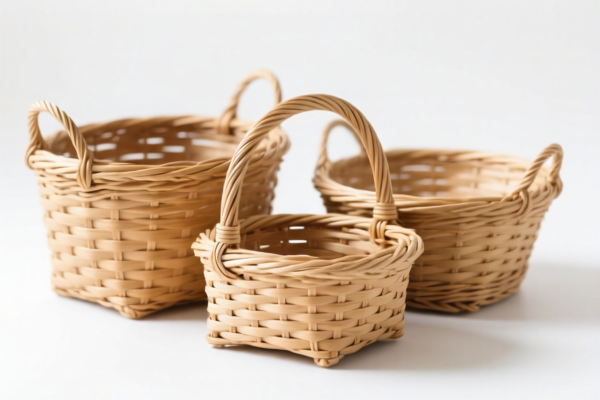
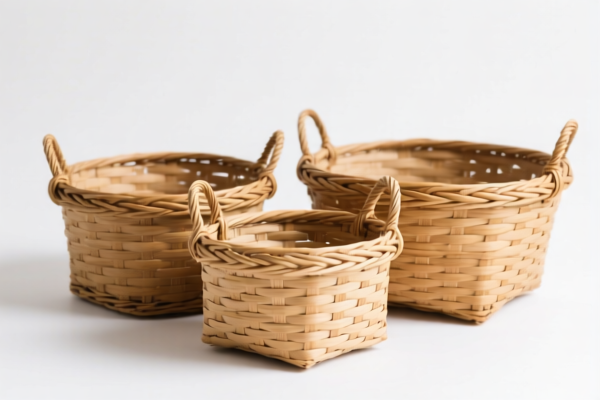
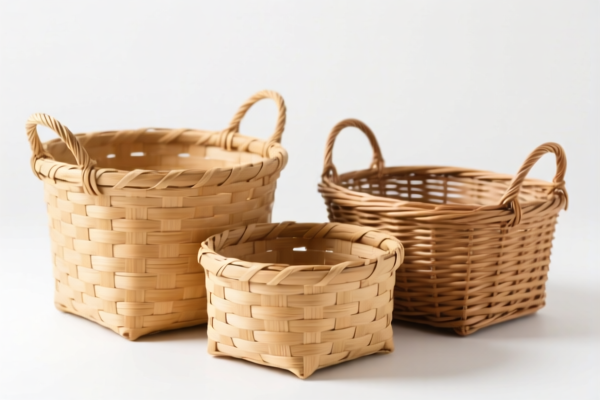
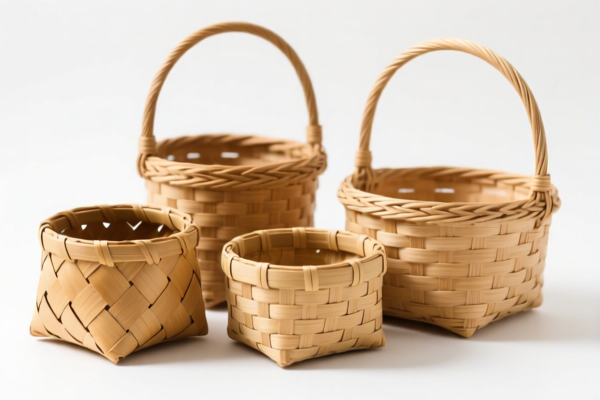
AI Analysis
🧺 Other Woven Rattan Baskets (and Plant Fiber Basketry)
🌐 HS Code Reference & Customs Clearance Guide | 2026 Latest Tariff Analysis | Strategic Entry for US Market
📌 I. Product Definition & Classification: What Exactly Are "Woven Rattan Baskets"?
"Woven Rattan Baskets" refer to containers made primarily from rattan, willow, reed, or other plant fibers, woven by hand or machine. In international trade, the classification hinges on material composition (natural fibers vs. artificial) and specific use (storage vs. decorative vs. toy).
For US Customs purposes, these items are generally categorized under Chapter 46 (Products of straw, of vegetable plaiting materials) or Chapter 95 (Toys, games, and sports requisites), depending on their form and intended use.
⚠️ Key Distinction Point:
- If the item is a strictly functional basket made of natural fibers → It falls under HS 4602 or 4601.
- If the item is primarily a toy (e.g., plastic baskets for toys, or simple play baskets) → It may fall under HS 9503.
- Crucial Note: The presence of Section 301 tariffs (25%) and Section 122 tariffs (10%) on Chinese-origin goods significantly impacts the total tax burden for standard basketry.
📦 II. HS Code Classification Details (2026 Latest Tariff Authority Comparison)
| HS Code | Product Description | Applicable Scenario | Total Tax Rate (US/CN) | Key Characteristics |
|---|---|---|---|---|
4601.93.20.00 |
Other woven plaiting materials, made of rattan | Generic woven rattan products not specifically listed elsewhere | 41.6% | Material: Rattan; Form: Woven article; Broad "Other" category. |
4602.12.16.00 |
Baskets, woven of rattan, other than baskets of heading 4601 | Specifically defined "Rattan Baskets" | 40.0% | Material: Rattan; Form: Basket; Matches "Basket" definition. |
9503.00.00.90 |
Other toys, games, and requisites | Baskets used as toys or storage for toys | 10.0% | Material: Plant fiber; Use: Toy/Play; Exempt from 301 tariffs. |
4602.12.14.00 |
Baskets, woven of willow, osier, or other similar materials | Rattan baskets that are structurally similar to willow baskets | 35.0% | Material: Rattan/Willow; Form: Basket/Bag-like; Lower base rate but high surcharge. |
4602.12.16.00 |
Baskets, woven of rattan (Re-entry) | Explicitly includes rattan material & basket form | 40.0% | Material: Rattan; Form: Basket; Definitive classification for rattan baskets. |
🔍 Priority Reminder:
-9503.00.00.90is the LOWEST TARIFF OPTION (10%) but requires the item to be classified as a TOY. If it is a storage or decorative basket, this code is incorrect and may lead to seizure or reclassification.
-4602.12.16.00is the MOST ACCURATE code for standard rattan baskets.
-4601.93.20.00is a fallback for woven rattan items that don't fit the strict "basket" definition of 4602.
💰 III. 2026 Latest Tariff Rate Breakdown (Including Surcharges & Policy Add-ons)
✅ Applicable Country: United States (US)
✅ Country of Origin: China (CN)
✅ Effective Date: November 10, 2025 onwards (including subsequent imports)
🎯 1. 4602.12.16.00 —— Baskets, Woven of Rattan (Standard Classification)
This is the most common and accurate code for rattan baskets.
| Item | Content |
|---|---|
| Base Tariff (MFN) | 5.0% |
| Section 301 Surcharge | +25.0% (USITC Footnote 9903.71.01) |
| Section 122 Surcharge | +10.0% (IEEPA, for Chinese goods) |
| Total Tax Rate | 40.0% |
| Tax Calculation | CIF Value × 40% |
| De Minimis Exemption | ❌ Not Eligible (deny_de_minimis) |
| Legal Authority Path | IEEPA:9903.01.25 → USITC:4602.12.16.00 → FOOTNOTE:9903.71.01 |
📌 Explanation:
- Base Rate 5%: Standard Most Favored Nation (MFN) rate for rattan baskets.
- 301 Tariff 25%: Applied due to trade tensions with China.
- 122 Tariff 10%: Additional surcharge under IEEPA for certain Chinese imports.
- Total 40%: This is a HIGH tariff rate. Importers must factor this into their landed cost.
🎯 2. 4601.93.20.00 —— Other Woven Rattan Products (Fallback Classification)
Use this if the item is woven rattan but not strictly a basket (e.g., rattan mats, woven panels, or irregular shapes).
| Item | Content |
|---|---|
| Base Tariff (MFN) | 6.6% |
| Section 301 Surcharge | +25.0% |
| Section 122 Surcharge | +10.0% |
| Total Tax Rate | 41.6% |
| Tax Calculation | CIF Value × 41.6% |
| De Minimis Exemption | ❌ Not Eligible |
| Legal Authority Path | IEEPA:9903.01.25 → USITC:4601.93.20.00 → FOOTNOTE:9903.71.01 |
📌 Note:
- Slightly higher than4602.12.16.00due to a higher base rate (6.6% vs. 5.0%).
- Use only if the product does not meet the legal definition of a "basket" under heading 4602.
🎯 3. 4602.12.14.00 —— Baskets of Willow or Similar Materials (Broad Basketry)
Applicable if the rattan basket is structurally similar to willow baskets and declared under this broader "basketry" subheading.
| Item | Content |
|---|---|
| Base Tariff (MFN) | 0.0% |
| Section 301 Surcharge | +25.0% |
| Section 122 Surcharge | +10.0% |
| Total Tax Rate | 35.0% |
| Tax Calculation | CIF Value × 35.0% |
| De Minimis Exemption | ❌ Not Eligible |
| Legal Authority Path | IEEPA:9903.01.25 → USITC:4602.12.14.00 → FOOTNOTE:9903.71.01 |
📌 Advantage:
- Lowest total rate among standard basket codes (35%).
- Risk: Must prove the item fits the "willow/other plant fiber" description. If customs determines it is strictly "rattan" and mandates4602.12.16.00, you may face penalties. Use only if you are confident in the material classification.
🎯 4. 9503.00.00.90 —— Toys, Games, and Requisites (Lowest Rate Strategy)
Only applicable if the basket is sold as a toy (e.g., a toy basket for dolls, or a children's play basket).
| Item | Content |
|---|---|
| Base Tariff (MFN) | 0.0% |
| Section 301 Surcharge | 0.0% (Toys are often exempt or have lower rates) |
| Section 122 Surcharge | +10.0% |
| Total Tax Rate | 10.0% |
| Tax Calculation | CIF Value × 10.0% |
| De Minimis Exemption | ❌ Not Eligible (for high-value items) |
| Legal Authority Path | IEEPA:9903.01.24 → USITC:9503.00.00.90 |
📌 CRITICAL WARNING:
- Misclassification Risk: If a standard storage basket is declared as a toy, customs will reclassify it and apply back-taxes + penalties.
- Strategy: Only use this code if the product is explicitly marketed and used as a toy.
🛠️ IV. Customs Clearance Practical Advice (Real-World Pitfall Guide)
✅ 1. Preparation Checklist (Essential Documents)
| Document | Required | Description |
|---|---|---|
| ✅ Product Specifications | ✔️ | Detailed description: Material (100% Rattan), Weave Type, Dimensions. |
| ✅ Product Photos | ✔️ | Clear images showing the item is a "Basket" or "Woven Product." |
| ✅ Commercial Invoice | ✔️ | Must accurately describe the item. Avoid vague terms like "Home Decor." Use "Woven Rattan Storage Basket." |
| ✅ Packing List | ✔️ | Item quantity, weight, and packaging details. |
| ✅ Origin Certificate | ✔️ | Proof of Chinese origin (if applicable) to confirm tariff applicability. |
| ✅ Proof of Toy Use (if using HS 9503) | ✔️ | Marketing materials, target audience info (children), packaging showing toy designation. |
✅ 2. Declaration Tips (Key Mantra)
🔥 "Material Clear, Use Specific, Code Accurate, Tariff Managed!"
| Scenario | Correct Declaration | Wrong Practice |
|---|---|---|
| Standard Rattan Basket | 4602.12.16.00 (40% Tax) |
Declaring as "Toy" → High Risk of Audit & Penalty |
| Rattan Basket (Willow-like) | 4602.12.14.00 (35% Tax) |
Declaring as "4602.12.16.00" → Overpaying Tax (if eligible) |
| Non-Basket Woven Rattan | 4601.93.20.00 (41.6% Tax) |
Declaring as "Basket" → Misclassification |
| Toy Basket | 9503.00.00.90 (10% Tax) |
Declaring as "Storage Basket" → Paying 40% unnecessarily |
✅ 3. Special Handling Cases
| Case | Handling Advice |
|---|---|
| Mixed Materials | If the basket has plastic handles or metal bases, clarify the primary material. If rattan >50%, still likely Chapter 46. |
| Customized Designs | Provide design sketches to prove the item fits the "Basket" definition under 4602. |
| Sample vs. Bulk | Samples shipped under de minimis (Section 321) may still be subject to duties if not classified correctly. |
| Rattan vs. Bamboo | Rattan is a vine, Bamboo is a grass. They fall under similar but distinct headings. Ensure accurate material declaration. |
🌍 V. Global Market Comparison (2026 Latest)
| Country/Region | Recommended HS Code | Tariff (CN Origin) | Certification | Note |
|---|---|---|---|---|
| 🇺🇸 USA | 4602.12.16.00 |
40.0% | None (General) | High tariffs due to Section 301 & 122. |
| 🇨🇳 China | 4602.12.16.00 |
5% | None | Low entry tax for domestic consumption. |
| 🇪🇺 EU | 4602.19 |
0-6.5% | FSC Certification (if wood) | No Section 301 tariffs. |
| 🇬🇧 UK | 4602.19 |
0-6.5% | None | Post-Brexit tariff structures apply. |
| 🇯🇵 Japan | 4602.12 |
0-8% | None | Competitive market. |
📌 Conclusion:
- The US market is the most expensive for rattan baskets due to aggressive tariff policies.
- Europe and Asia offer significantly lower tariff barriers.
- Strategy for US Imports: Consider shifting supply chains to Vietnam or Indonesia (if possible) to avoid Section 301 tariffs, or strictly utilize the Toy Classification (HS 9503) if the product design allows.
📌 VI. Common Errors & Pitfall Guide (Lessons Learned)
❌ Error 1: Declaring a storage basket as a "Toy" to save on taxes.
👉 Consequence: Customs audit, back-taxes of 30%+ difference, fines, and shipment delay.
❌ Error 2: Using 4601.93.20.00 for a clear basket.
👉 Consequence: Overpayment of 1.6% (41.6% vs 40.0%). Use 4602.12.16.00 for baskets.
❌ Error 3: Ignoring the "Section 122" tariff.
👉 Consequence: Underestimating landed cost. The 10% surcharge is mandatory for Chinese goods under current IEEPA rules.
❌ Error 4: Vague description "Home Decor."
👉 Consequence: Customs officers will determine the classification, likely choosing the highest duty rate.
✅ Correct Practice:
"Woven Rattan Storage Basket, Handmade, Natural Color, Dimensions: 12x12x10 inches, HS Code: 4602.12.16.00"
🎯 VII. Conclusion: Precision Classification for Cost Efficiency
🎯 Key Takeaway:
🔹 "Baskets = 40% Tax (Standard); Toys = 10% Tax (Low Risk if Eligible); Willow-like = 35% Tax (Opportunistic)."
🔹 "HS Code Dictates Profit Margin. A 5% Difference is Thousands of Dollars."
📌 Pro Tip:
If you are importing large volumes to the US, consult a Customs Broker to apply for an Advance Ruling for your specific product design. This locks in the HS Code and prevents surprise duties.
📣 Immediate Action:
📞 Contact Your Freight Forwarder + Provide Product Photos + Verify Toy Eligibility (if aiming for 10% rate)
🚀 Navigate US Customs with Confidence, Reduce Costs, and Maximize Profit!
✨ Professional Clearance Starts with Accurate Classification!
💼 Every Percentage Point Matters in Global Trade!
Customer Reviews
About HS Code Classification
The Harmonized System (HS) is an internationally standardized nomenclature developed by the World Customs Organization (WCO) to classify traded products. Over 200 countries use the HS system as the basis for customs tariffs, trade statistics, and import/export regulations.
Each HS code follows a hierarchical structure:
- Chapter (2 digits) — Broad category of goods (e.g., Chapter 84: Machinery and Mechanical Appliances)
- Heading (4 digits) — More specific grouping within the chapter
- Subheading (6 digits) — Internationally standardized breakdown, used by all WCO member countries
- National subdivisions (8-10 digits) — Country-specific extensions for further classification, such as US HTSUS 10-digit codes
Correct HS code classification is essential for smooth customs clearance, accurate duty payment, and compliance with trade regulations. Misclassification can lead to customs delays, overpayment of duties, or penalties.
When importing from CN to US, the applicable tariff rates may include:
- Most-Favored-Nation (MFN) rate — The standard duty rate applied to WTO members
- General rate — Applied to countries without trade agreements
- Trade remedy duties — Additional tariffs such as Section 301 (anti-dumping), Section 232 (national security), or countervailing duties
The information provided on this page is for reference purposes only. For official classification, please consult with your local customs authority or a licensed customs broker.