Other articles of apparel and clothing accessories
CN → US| HS Code | Tariff Rate | Origin | Destination | Doc |
|---|---|---|---|---|
| 7117909000 | 28.5% | CN | US | Official Doc |
| 6217109550 | 32.1% | CN | US | Official Doc |
| 6117809570 | 32.1% | CN | US | Official Doc |
| 6117909095 | 32.1% | CN | US | Official Doc |
| 6217108500 | 24.6% | CN | US | Official Doc |
Product Images
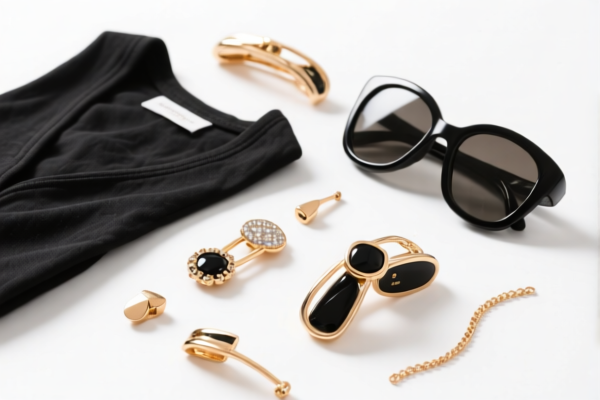


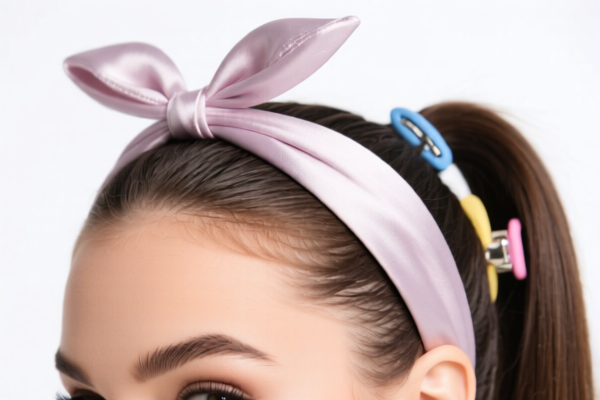
AI Analysis
Based on the provided data (HS Codes 7117.90.90.00, 6217.10.95.50, 6117.80.95.70, 6117.90.90.95, 6217.10.85.00) and the context of "Other articles of apparel and clothing accessories", here is the detailed classification and tax analysis designed for international trade professionals.
🧵 Other Articles of Apparel & Clothing Accessories
🌐 Comprehensive HS Code Classification & US Tariff Strategy | 2026 Update
🚀 Professional Clearance Guide for Non-Precious Metal Accessories
⚠️ Critical Note: This guide strictly analyzes the specific 5 HS Codes provided in your dataset. These codes represent the "catch-all" (兜底) classifications for non-metallic clothing accessories and textile-based apparel parts intended for the US Market (implied by the "Section 301/122 Clause" tariffs).
📦 I. Product Definition: What are "Clothing Accessories"?
In international trade, "Other articles of apparel and clothing accessories" generally refers to items that are: 1. Textile-based or Synthetic: Made of fabric, plastic, or rubber (NOT precious metals/gold/silver). 2. Non-Garment: Not the main clothing item itself (e.g., not a T-shirt or Jeans), but parts that complete the garment. 3. Examples: Ties, belts, gaiters, buttons, buckles, clasps, hair accessories, decorative pins, and fashion jewelry (non-precious).
🔑 The "Catch-All" (兜底) Principle:
When a specific accessory doesn't have a dedicated HS Code, it falls into "Other" subheadings. The data provided highlights the competition between:
* Jewelry/Ornaments (Chapter 71)
* Ready-made Accessories (Chapter 62)
* Knitted Accessories (Chapter 61)
📊 II. HS Code Classification Matrix (Data-Specific)
| HS Code | Category Logic | Material/Type | Tax Logic | Total Tax Rate |
|---|---|---|---|---|
7117.90.90.00 |
Non-Precious Jewelry | Accessories made of base metals/plastics (Fashion Jewelry) | Lower Base (11%) | 28.5% |
6217.10.95.50 |
Ready-Made Textile Accessories | Fabric-based accessories (Ties, Scarves) | Standard Base (14.6%) | 32.1% |
6117.80.95.70 |
Knitted Accessories | Knitted items (Hats, Gloves, Knitted Ties) | Standard Base (14.6%) | 32.1% |
6117.90.90.95 |
Knitted Parts | Knitted parts/trim (Collars, cuffs) | Standard Base (14.6%) | 32.1% |
6217.10.85.00 |
Garment Parts (Non-Knitted) | Woven garment parts (Belts, Buckles) | No Section 301 (0%) | 24.6% |
👁️ Visual Analysis:
Code7117.90.90.00is the only one with a lower base tariff (11%), resulting in the lowest total tax (28.5%). This is ideal for fashion jewelry. * Code6217.10.85.00is the only code with 0% Section 301 tariff, but still carries the 10% Section 122 tariff, resulting in a total of 24.6%. This is likely the most cost-effective option for woven accessories like belts.*
💰 III. Detailed Tariff Breakdown & Legal Basis
🎯 Scenario A: The "Jewelry" Path (7117.90.90.00)
Best for: Fashion necklaces, costume jewelry, non-precious decorative clips.
| Component | Rate | Logic |
|---|---|---|
| Base Duty (MFN) | 11.0% | Standard import duty for "Other articles of jewelry." |
| Add-on 1 (Section 301) | +7.5% | "Section 301" (301 Tariff) on specific Chinese goods. |
| Add-on 2 (Section 122) | +10.0% | New 2025/2026 Policy: Specific anti-dumping or safeguard duty. |
| 🔴 TOTAL RATE | 28.5% | Lowest among textile options. |
⚖️ Legal Interpretation:
"Based on the 'Other' category principle, 'clothing accessories' fall under jewelry/accessories. Since it is non-precious metal, it qualifies for the 'Other' subheading of Chapter 71."
🎯 Scenario B: The "Textile/Woven" Path (6217.10.x.x)
Best for: Ties, belts, scarves, woven trims.
| Component | Rate | Logic |
|---|---|---|
| Base Duty (MFN) | 14.6% | Standard duty for "Other made up clothing accessories." |
| Add-on 1 (Section 301) | +7.5% | Applied to textile accessories from China. |
| Add-on 2 (Section 122) | +10.0% | Mandatory additional tariff. |
| 🔴 TOTAL RATE | 32.1% | High cost. |
⚖️ Legal Interpretation:
"Product name 'Clothing Accessories' matches 'clothing accessories' in Chapter 62. The 'Other' rule applies. Note: This category is heavily taxed due to the 'Base 14.6%'."
🎯 Scenario C: The "Knitted" Path (6117.80.x.x & 6117.90.x.x)
Best for: Knitted hats, gloves, scarves, knitted collars.
| Component | Rate | Logic |
|---|---|---|
| Base Duty (MFN) | 14.6% | Standard duty for "Other made up clothing accessories (Knitted)." |
| Add-on 1 (Section 301) | +7.5% | Section 301 tariff. |
| Add-on 2 (Section 122) | +10.0% | Section 122 tariff. |
| 🔴 TOTAL RATE | 32.1% | Identical to Woven Textiles. |
⚖️ Legal Interpretation:
"Matches 'Clothing Accessories' and 'Clothing Trims' in Chapter 61. 'Catch-all' rule applies."
🎯 Scenario D: The "Special Woven Part" Path (6217.10.85.00)
Best for: Woven belts, specific garment parts that fit the "85" sub-heading.
| Component | Rate | Logic |
|---|---|---|
| Base Duty (MFN) | 14.6% | Standard duty. |
| Add-on 1 (Section 301) | 0.0% | CRITICAL DIFFERENCE: This specific sub-code is EXEMPT from the 301 Section 301 tax. |
| Add-on 2 (Section 122) | +10.0% | Still applies. |
| 🟢 TOTAL RATE | 24.6% | LOWEST OVERALL RATE. |
⚖️ Legal Interpretation:
"Product name matches 'Garment Accessories'. Based on the 'Catch-all' principle, if the item fits the specific description of subheading85, it avoids the 301 tax."
🛠️ IV. Clearance Strategy & Recommendations
✅ 1. How to Choose the Right HS Code?
- If the item is "Fashion Jewelry" (Plastic/Metal base):
👉 Use7117.90.90.00(Total 28.5%). It has a lower base duty (11% vs 14.6%). - If the item is a "Woven Belt" or "Garment Part" (Textile):
👉 Try6217.10.85.00(Total 24.6%). This is the cheapest option because it saves the 7.5% Section 301 tariff. - If the item is a "Tie" or "Scarf" (Knitted/Woven):
👉 Use6217.10.95.50or6117.80.95.70(Total 32.1%). No way to avoid the 301 tax here unless you find a specific exemption.
✅ 2. Critical Documentation for Customs
To avoid audits and re-classification by CBP (US Customs):
* Material Composition Label: Must clearly state "Non-Precious Metal" for 7117 or "100% Polyester/Cotton" for 6217.
* Functional Description: Explicitly state "Clothing Accessory" or "Garment Part." Do not just say "Decoration."
* Photos: Show the item attached to clothing to prove it is an "accessory" and not a standalone garment.
✅ 3. "Section 122" & "Section 301" Warning
- Section 122 Tariff (+10%): This is a mandatory add-on for almost all Chinese goods in this category in the 2026 timeframe. It cannot be avoided.
- Section 301 Tariff (+7.5%): This is the "variable" tariff. Only
6217.10.85.00avoids it. Focus your product design to fit the85subheading if possible.
🚨 V. Common Pitfalls (Avoid These!)
- ❌ Misclassifying Jewelry as Textiles:
If you declare fashion plastic jewelry under6217(Textiles), you might pay 32.1% instead of 28.5% (if7117is allowed). - ❌ Ignoring the "Non-Precious" Rule:
If the item contains Gold/Silver/Pearls,7117.90.90.00is INVALID. It would go to a different chapter with different taxes. - ❌ Over-Reliance on "Other" Codes:
The "Other" codes (95,90,85) are high-risk audit targets. Detailed specs are required. - ❌ Splitting Shipments:
Do not try to split a mixed shipment to avoid the 301 tax. Customs will assess the whole shipment based on the highest risk item.
📝 VI. Conclusion: The Path to Lowest Tax
| Strategy | Recommended HS Code | Total Tax | Status |
|---|---|---|---|
| 💎 Fashion Jewelry | 7117.90.90.00 |
28.5% | ✅ Optimal for Jewelry |
| 🧥 Woven Parts (Belt/Trim) | 6217.10.85.00 |
24.6% | 🏆 BEST (Lowest Tax) |
| 🧣 General Accessories | 6217.10.95.50 |
32.1% | ⚠️ Standard (High Tax) |
🎯 Final Advice:
If your product is a woven accessory (like a belt or tie), aggressively market it under6217.10.85.00to save 7.5% in taxes. If it is jewelry, stick to7117.90.90.00. Always ensure your product description matches the "Purpose" and "Material" perfectly to satisfy CBP.
✨ Clearance Success = Precise HS Code + Accurate Material Declaration ✨
Ensure your shipping documents reflect these specific codes to avoid delays at US ports.
Customer Reviews
About HS Code Classification
The Harmonized System (HS) is an internationally standardized nomenclature developed by the World Customs Organization (WCO) to classify traded products. Over 200 countries use the HS system as the basis for customs tariffs, trade statistics, and import/export regulations.
Each HS code follows a hierarchical structure:
- Chapter (2 digits) — Broad category of goods (e.g., Chapter 84: Machinery and Mechanical Appliances)
- Heading (4 digits) — More specific grouping within the chapter
- Subheading (6 digits) — Internationally standardized breakdown, used by all WCO member countries
- National subdivisions (8-10 digits) — Country-specific extensions for further classification, such as US HTSUS 10-digit codes
Correct HS code classification is essential for smooth customs clearance, accurate duty payment, and compliance with trade regulations. Misclassification can lead to customs delays, overpayment of duties, or penalties.
When importing from CN to US, the applicable tariff rates may include:
- Most-Favored-Nation (MFN) rate — The standard duty rate applied to WTO members
- General rate — Applied to countries without trade agreements
- Trade remedy duties — Additional tariffs such as Section 301 (anti-dumping), Section 232 (national security), or countervailing duties
The information provided on this page is for reference purposes only. For official classification, please consult with your local customs authority or a licensed customs broker.