Other braided carpets
CN → USProduct Images
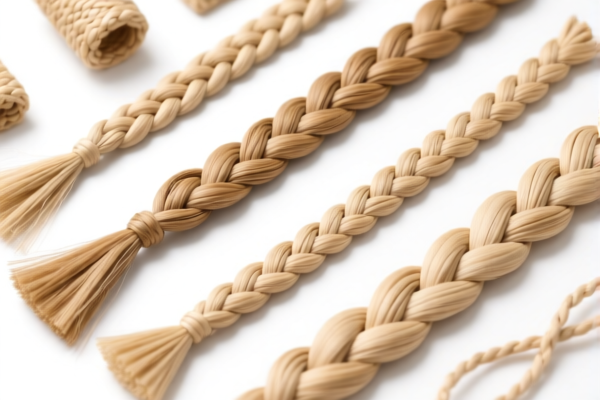
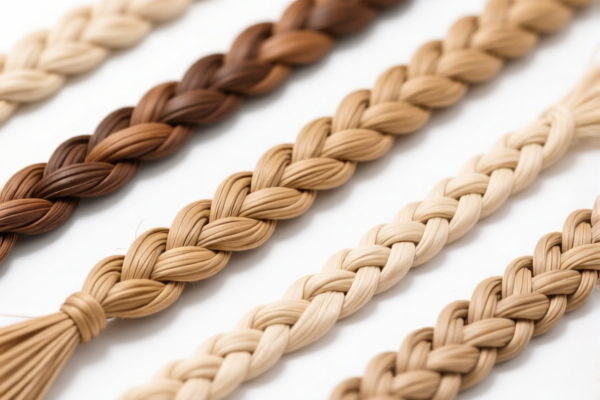
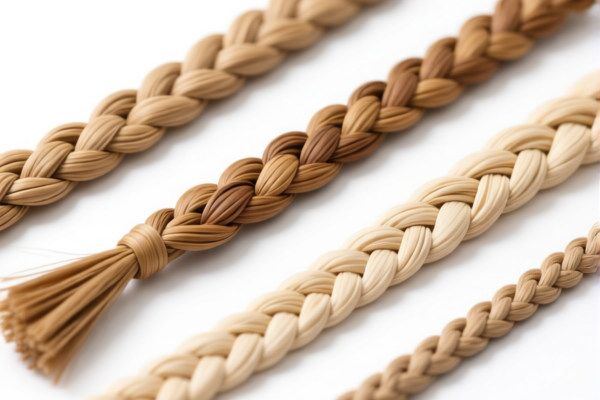
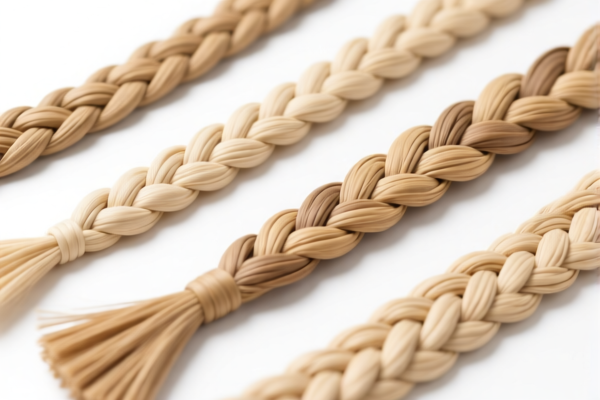
AI Analysis
🧶 Other Braided Carpets & Rugs
🌐 HS Code Reference & Customs Clearance Guide | 2026 Latest Tariff Analysis | Professional Border Strategy
📌 I. Product Definition & Classification: What Are "Other Braided Carpets"?
Braided carpets are a distinctive category of textile flooring made by braiding three or more strands of yarn, fabric, or paper, then sewing or locking the braid into a continuous pattern. Unlike woven or knitted rugs, braided carpets are known for their durability, round/oval/rectangular shapes, and rustic aesthetic.
In international trade, "Other Braided Carpets" refers to those not covered under specific headings for knotted carpets, tufted carpets, or felted rugs. They fall primarily under Chapter 57 (Carpets and other textile floor coverings).
⚠️ Key Distinction:
- Braided vs. Knotted: Knotted carpets (e.g., Persian rugs) use individual knots tied to a warp; braided carpets use continuous strands interlaced.
- Braided vs. Tufted: Tufted carpets are made by inserting yarn into a backing fabric; braided carpets are constructed entirely from the braid itself.
- Material Matters: The HS code often depends on whether the braid is made of synthetic fibers (nylon, polyester, acrylic) or natural fibers (jute, sisal, cotton, wool).
📦 II. HS Code Classification Details (2026 Latest Tariff Authority对照)
The classification of braided carpets hinges on material composition and construction method. Below are the primary HS codes applicable in 2026:
| HS Code | Product Description | Material Composition | Applicable Scenario |
|---|---|---|---|
5703.90.00.00 |
Other carpets & other textile floor coverings, woven, tufted or not, of synthetic fibers | Synthetic (polyester, nylon, acrylic) | Most common household braided rugs (synthetic yarn) |
5702.39.00.00 |
Woven carpets of other textile materials, not made up: of other textile materials | Natural fibers (jute, sisal, coir, cotton) | Eco-friendly braided jute or sisal runners |
5703.10.00.00 |
Carpets, of wool or fine animal hair | Wool or fine animal hair | Premium wool braided rugs |
5702.99.00.00 |
Other woven carpets of other textile materials | Mixed or unspecified materials | Niche braided carpets using mixed fibers |
6307.90.98.00 |
Other made-up textile articles | Non-floor covering (e.g., braided mats for tables) | Braided placemats, table runners, craft items |
🔍 Critical Reminder:
- If the product is clearly intended as floor covering, it must be classified under Chapter 57.
- If it is a mat, runner, or decorative item not designed for foot traffic, it may fall under 6307 (other made-up textile articles), which typically has lower tariffs.
- Misclassification Risk: Declaring a synthetic braided floor rug as a "textile mat" to avoid tariffs can lead to severe penalties and seizure.
💰 III. 2026 Latest Tariff Rate Breakdown (Including Additional Taxes & Policy Surcharges)
✅ Applicable Country: United States (US)
✅ Origin: China (CN)
✅ Effective Date: Post-2025 (Current 2026 Tariff Structure)
🎯 1. 5703.90.00.00 — Synthetic Fiber Braided Carpets (Floor Covering)
| Item | Details |
|---|---|
| Base Tariff Rate | 8% (ad valorem) |
| USITC Additional Duty (Section 301) | +25% |
| IEEPA Additional Duty (China-specific) | +10% (effective Nov 2025 onward) |
| Total Tariff Rate | 43% |
| Calculation Basis | CIF Value × 43% |
| De Minimis Exemption | ❌ Not Eligible (deny_de_minimis) |
| Legal Reference Path | IEEPA:9903.01.25 → USITC:5703.90.00.00 → FOOTNOTE:9903.88.01 |
📌 Explanation:
- Synthetic textile floor coverings from China are heavily impacted by both Section 301 and IEEPA duties.
- 43% total duty is significant and must be factored into cost structures.
🎯 2. 5702.39.00.00 — Natural Fiber Braided Carpets (e.g., Jute, Sisal)
| Item | Details |
|---|---|
| Base Tariff Rate | 7% (ad valorem) |
| USITC Additional Duty (Section 301) | +25% |
| IEEPA Additional Duty (China-specific) | +10% |
| Total Tariff Rate | 42% |
| Calculation Basis | CIF Value × 42% |
| De Minimis Exemption | ❌ Not Eligible |
| Legal Reference Path | IEEPA:9903.01.24 → USITC:5702.39.00.00 → FOOTNOTE:9903.88.01 |
📌 Note:
- Natural fiber carpets from China face similar high tariffs due to the broad scope of Section 301 tariffs on textile products.
- Consider sourcing from Vietnam or India to mitigate these additional duties.
🎯 3. 6307.90.98.00 — Other Made-up Textile Articles (Non-Floor)
| Item | Details |
|---|---|
| Base Tariff Rate | 6% |
| USITC Additional Duty (Section 301) | +10% (Note: Some 6307 items are excluded from 25% if not strictly "floor coverings") |
| IEEPA Additional Duty | +10% |
| Total Tariff Rate | 26% (if successfully classified) |
| Calculation Basis | CIF Value × 26% |
| De Minimis Exemption | ❌ Not Eligible (but lower overall rate) |
📌 Strategic Insight:
- If the product is not intended for floor use (e.g., braided table runners, decorative mats), classify under 6307.
- This can reduce total duty from ~42–43% to 26%, offering significant savings.
- Warning: Customs may challenge this classification if the item is marketed as a "rug" or "floor covering." Provide clear product imagery and marketing descriptions to support non-floor use.
🛠️ IV. Customs Clearance Practical Advice (Pitfall Avoidance Guide)
✅ 1. Required Documentation Checklist
| Document | Mandatory? | Description |
|---|---|---|
| ✅ Product Specification Sheet | ✔️ | Include dimensions, material composition (e.g., 100% polyester, 50% cotton/50% jute), braid width |
| ✅ Product Photos | ✔️ | Show full product, close-up of braid texture, and any labels |
| ✅ Commercial Invoice | ✔️ | Must clearly state "Braided Carpet" and specify end-use (floor vs. decorative) |
| ✅ Packing List | ✔️ | Include net/gross weight, number of pieces, and packaging type |
| ✅ Certificate of Origin (CO) | ✔️ | Required for tariff calculation and potential FTZ exemptions |
| ✅ Lab Test Report | ✔️ | Fiber composition analysis from an accredited lab (e.g., SGS, Intertek) |
✅ 2. Declaration Tips (Key Mnemonic)
🔥 "Material Determines Code, End-Use Determines Duty!"
| Scenario | Correct Declaration | Common Mistake |
|---|---|---|
| Synthetic braided floor rug | 5703.90.00.00 |
Misdeclaring as 6307 → Penalty |
| Jute braided floor mat | 5702.39.00.00 |
Misdeclaring as 5703 → Wrong fiber tax |
| Braided table runner | 6307.90.98.00 |
Declaring as 5702 → Higher duty |
| Mixed fiber braided rug | 5703.90.00.00 (if synthetic predominant) |
Ambiguous material → Customs audit |
✅ 3. Special Handling Cases
| Case | Handling Advice |
|---|---|
| OEM Custom Designs | Provide design templates to prove non-standard nature; avoid generic descriptions |
| Eco-Friendly Certification | If claiming "organic" or "sustainable," provide GOTS or OEKO-TEX certificates to support marketing, but note this does not affect HS code |
| Bundle Sales (Rug + Pad) | Declare separately if the rug pad is a different material (e.g., felt); otherwise, declare as a set under the rug’s code |
| Small Samples for Review | If value < $800, De Minimis may not apply due to Section 301/IEEPA restrictions on Chinese goods |
🌍 V. Global Market Comparison (2026 Latest)
| Country/Region | Recommended HS Code | Tariff Rate (China Origin) | Certification Requirements | Notes |
|---|---|---|---|---|
| 🇺🇸 USA | 5703.90.00.00 |
43% (Synthetic) | CPC (Children’s Product) if for kids; GREENGUARD for low emissions | High duties; consider Vietnam sourcing |
| 🇨🇳 China | 5703.90.00.00 |
8–10% | CCC (if applicable) | Low export tax; domestic consumption is high |
| 🇪🇺 EU | 5703.90.00.00 |
6.5% (Base) + Potential CBAM? | CE (if applicable); REACH compliance | No additional punitive tariffs; focus on sustainability |
| 🇬🇧 UK | 5703.90.00.00 |
6.5% | UKCA Mark | Post-Brexit rules align with EU for textiles |
| 🇦🇺 Australia | 5703.90.00.00 |
5% | EESS (Energy Efficiency) | Low base rate; no major surcharges |
📌 Conclusion:
- USA has the highest tariffs due to Section 301 and IEEPA.
- EU and Australia offer more favorable rates.
- Consider supply chain diversification to countries like Vietnam, India, or Bangladesh to reduce duty burden for US-bound shipments.
📌 VI. Common Mistakes & Pitfall Avoidance (Lessons Learned)
❌ Mistake 1: Classifying a synthetic braided rug as 6307 (textile article)
👉 Consequence: Customs reclassification → Back taxes + 20% penalty.
✅ Fix: Always verify end-use. If it’s for floors, use Chapter 57.
❌ Mistake 2: Ignoring fiber composition
👉 Consequence: Wrong HS code → Incorrect duty calculation.
✅ Fix: Provide a lab test report confirming fiber content.
❌ Mistake 3: Not specifying "Braided" in the description
👉 Consequence: Customs may classify as generic "Woven Carpet" → Different duty rate.
✅ Fix: Use precise terminology: "Braided Rug, 100% Polyester, Rectangular."
❌ Mistake 4: Assuming De Minimis applies to Chinese goods
👉 Consequence: Shipment held at border → Delays and storage fees.
✅ Fix: Prepare full documentation even for small shipments; remember Section 301/IEEPA exceptions.
🎯 VII. Conclusion: Strategic Sourcing & Compliance
🎯 Remember the Rules:
🔹 "Floor use = Chapter 57; Decorative = Chapter 63."
🔹 "Chinese origin = High US duties; Source wisely."
🔹 "Material accuracy = Tariff accuracy."
📌 Pro Tip:
If you are exporting braided carpets to the US, explore third-country sourcing (Vietnam, India, Bangladesh) to benefit from lower or zero additional tariffs under US trade policy.
For EU markets, focus on eco-certifications (GOTS, OEKO-TEX) to enhance marketability, as tariffs are already moderate.
📣 Immediate Action:
📞 Consult a licensed customs broker for Advance Ruling if your product has mixed materials or ambiguous use.
🚀 Optimize your supply chain to reduce duty burden and ensure smooth customs clearance.
✨ Professional Classification, Cost Efficiency, and Compliance!
💼 Every tax dollar saved is profit earned!
Customer Reviews
About HS Code Classification
The Harmonized System (HS) is an internationally standardized nomenclature developed by the World Customs Organization (WCO) to classify traded products. Over 200 countries use the HS system as the basis for customs tariffs, trade statistics, and import/export regulations.
Each HS code follows a hierarchical structure:
- Chapter (2 digits) — Broad category of goods (e.g., Chapter 84: Machinery and Mechanical Appliances)
- Heading (4 digits) — More specific grouping within the chapter
- Subheading (6 digits) — Internationally standardized breakdown, used by all WCO member countries
- National subdivisions (8-10 digits) — Country-specific extensions for further classification, such as US HTSUS 10-digit codes
Correct HS code classification is essential for smooth customs clearance, accurate duty payment, and compliance with trade regulations. Misclassification can lead to customs delays, overpayment of duties, or penalties.
When importing from CN to US, the applicable tariff rates may include:
- Most-Favored-Nation (MFN) rate — The standard duty rate applied to WTO members
- General rate — Applied to countries without trade agreements
- Trade remedy duties — Additional tariffs such as Section 301 (anti-dumping), Section 232 (national security), or countervailing duties
The information provided on this page is for reference purposes only. For official classification, please consult with your local customs authority or a licensed customs broker.