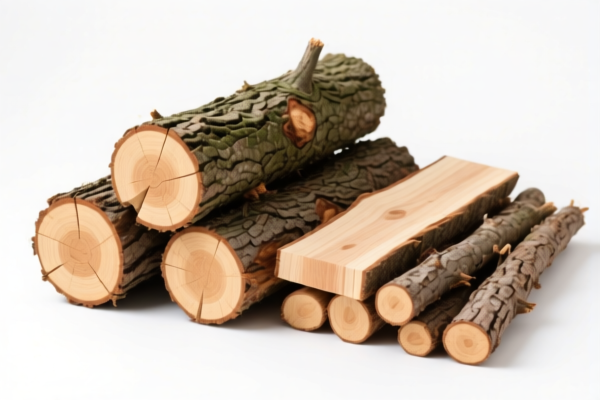
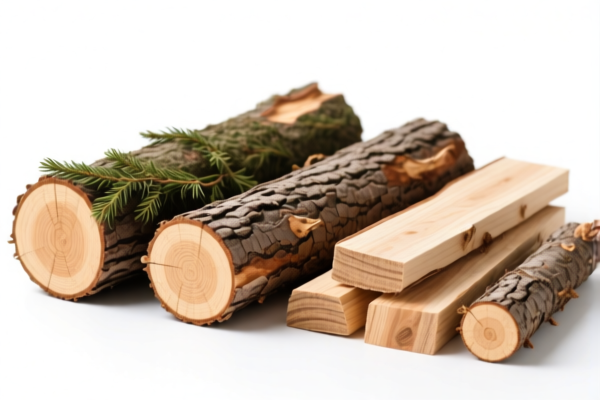
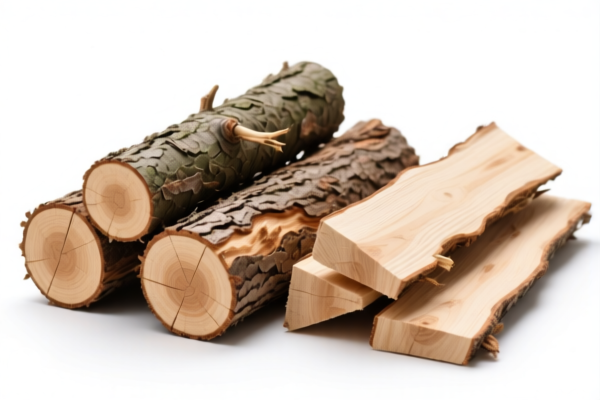
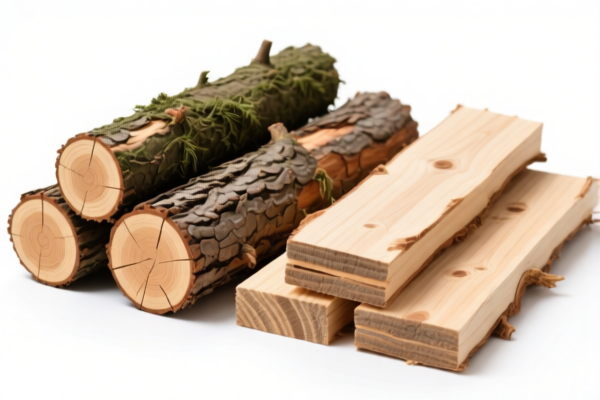
Other coniferous logs, bark on
CN → US| HS Code | Tariff Rate | Origin | Destination | Doc |
|---|---|---|---|---|
| 4407190093 | 35.0% | CN | US | Official Doc |
| 4407190092 | 35.0% | CN | US | Official Doc |
| 4403220165 | 35.0% | CN | US | Official Doc |
| 4403260164 | 35.0% | CN | US | Official Doc |
| 4401110000 | 35.0% | CN | US | Official Doc |
Product Images
AI Analysis
🪵 Coniferous Logs (Bark On) – HS Code Classification & US Customs Clearance Guide (2026)
🌐 HS Code Reference & Customs Clearance Strategy | 2026 Latest Tariff Breakdown | Professional Clearance Tactics
📌 I. Product Definition & Classification: What Exactly Are "Coniferous Logs"?
"Coniferous logs" refer to timber harvested from coniferous trees (such as pine, spruce, fir, etc.) that has been stripped of its branches but retains its bark. In international trade, these raw materials are primarily used for furniture manufacturing, construction, or fuel. Due to recent trade policies, importing these logs from China to the United States involves significant additional tariffs.
⚠️ Key Distinction Point:
- If the wood is stripped of bark (debarked) or significantly processed (sawn, planed), it may fall under different HS codes (e.g., 4403.42).
- If the wood is sawn or chipped rather than being in "log" form, it falls under 4407 or 4401.
- This guide strictly covers logs with bark retained, as specified in your input.
📦 II. HS Code Classification Details (2026 Latest Tariff Authority Mapping)
Based on the provided <DATA>, here are the specific HS codes for "Other coniferous logs, bark on," primarily targeting the furniture sector.
| HS Code | Product Description | Applicable Scenario | Tax Rate (Total) |
|---|---|---|---|
4407.19.00.93 |
Other furniture-grade coniferous logs (Pine species, unprocessed, bark on) | Logs specifically intended for high-end furniture | 35.0% |
4407.19.00.92 |
Other furniture-grade coniferous logs (General other category, bark on) | Logs for general furniture use, not specifically pine | 35.0% |
4403.22.01.65 |
Other coniferous logs (Fallback/General category, bark on) | Logs used for furniture, classified as a "catch-all" category | 35.0% |
4403.26.01.64 |
Other coniferous logs (Fallback logic, bark on) | Logs meeting general definition of coniferous logs | 35.0% |
4401.11.00.00 |
Other coniferous logs (Used as Fuel/Firewood) | Logs intended for burning/fuel, not for construction/furniture | 35.0% |
🔍 Critical Note:
- Although the HS codes differ (4407vs4403vs4401), the total tax rate is identical (35%) for all listed items under current US trade rules for Chinese-origin goods.
- The distinction lies in customs documentation and intended use, which affects inspection procedures and legal compliance.
💰 III. 2026 Latest Tariff Rate Breakdown (Including Surcharges)
✅ Applicable Country: United States (US)
✅ Origin: China (CN)
✅ Effective Time: Current (Post-2025 Trade Measures)
All listed HS codes for Chinese-origin coniferous logs attract the same total tariff burden due to the combination of base rates and punitive tariffs.
🎯 Common Tax Structure for All Listed HS Codes
| Item | Content |
|---|---|
| Base Tariff Rate | 0.0% (ad valorem) |
| Section 301 Additional Tariff | +25.0% (USITC Footnote 9903.88.01) |
| Section 122 Tariff | +10.0% (Specific statutory provision for certain agricultural/timber products) |
| Total Tariff Rate | 35.0% |
| Tax Calculation | CIF Value × 35% |
| De Minimis Exemption | ❌ Not Applicable (denied for these goods) |
| Legal Basis Path | Section 301: 19 USC 1628 → Section 122 → USITC Tariff Schedules |
📌 Explanation:
- "Base Tariff 0%": Coniferous logs generally enjoy a low base duty.
- "Section 301 25%": This is the primary punitive tariff imposed on a wide range of Chinese goods, including timber products, to address trade imbalances.
- "Section 122 10%": A specific tariff applicable to certain imported goods, often used for balancing agricultural interests or specific strategic materials.
- Total 35%: This is a high-cost entry barrier. Importers must factor this into their landed cost calculations immediately.
🛠️ IV. Customs Clearance Practical Advice (Avoiding Pitfalls)
✅ 1. Essential Documentation Checklist (Mandatory)
| Document | Required? | Notes |
|---|---|---|
| ✅ Commercial Invoice | ✔️ | Must clearly state "Coniferous Logs, Bark On," species (e.g., Pine, Spruce), quantity, and HS Code. |
| ✅ Packing List | ✔️ | Detail weight (gross/net) and dimensions. Logs are often measured in CBM (cubic meters). |
| ✅ Phytosanitary Certificate | ✔️ | CRITICAL: Must be issued by the country of origin. Proves no pests/diseases. Without this, goods will be rejected. |
| ✅ Fumigation Certificate | ✔️ | Often required in conjunction with the Phytosanitary Certificate. |
| ✅ Bill of Lading (B/L) | ✔️ | Ensure "Shipper" and "Consignee" details match invoice exactly. |
| ✅ Proof of Intended Use | ✔️ | For 4407 codes, declare "For Furniture Manufacturing" to avoid misclassification as fuel (4401). |
✅ 2. Declaration Tips (Key Mantras)
🔥 “Bark On = Logs; Species Matters; Use Declared Clear!”
| Scenario | Correct Declaration | Wrong Practice |
|---|---|---|
| Logs for Furniture | HS 4407.19.00.93 + "Furniture Grade" |
Misdeclare as "Firewood" → Risk of penalty for false declaration |
| General Timber Logs | HS 4403.22.01.65 + "Coniferous Logs" |
Vague description "Wood" → Delays for inspection |
| Fuel Logs | HS 4401.11.00.00 + "Fuel/Biofuel" |
Declare as "Furniture logs" → Potential fraud investigation |
| De-barked Logs | NOT COVERED in this list | Use 4403.42 instead → Wrong HS code = Customs hold |
✅ 3. Special Handling Advice
| Situation | Recommendation |
|---|---|
| Mixed Species | Declare the principal species. If mixed, ensure the dominant type is declared accurately. |
| High Moisture Content | Ensure logs are not too green (freshly cut). Excessive moisture can lead to rejection or additional drying fees. |
| Inspection Risk | Logs are subject to phytosanitary inspections. Be prepared for port delays. Pre-clearance is recommended. |
| Section 122 Compliance | Ensure your supplier provides all necessary country-of-origin documentation to justify the 10% surcharge applicability. |
🌍 V. Global Market Comparison (2026 Context)
| Country/Region | Recommended HS Code | Tariff (China Origin) | Certification | Notes |
|---|---|---|---|---|
| 🇺🇸 USA | 4407.19.00.93 / 4403.22.01.65 |
35% | Phytosanitary + Fumigation | High barrier; Section 301 + 122 |
| 🇨🇳 China | 4403.11.00 (Import) |
0-10% | CIQ Inspection | Lower barrier for domestic use |
| 🇪🇺 EU | 4403.10.00 |
0-3% | FSC/PEFC (Sustainability) | Strict sustainability documentation required |
| 🇯🇵 Japan | 4403.10.00 |
0-3% | ISPM 15 (if packaging) | High quality standards for logs |
📌 Conclusion:
- The US market is the most expensive due to the 35% combined tariff.
- Phytosanitary compliance is the biggest operational hurdle, regardless of cost.
📌 VI. Common Mistakes & Pitfalls (Lessons Learned)
❌ Mistake 1: Declaring "Furniture Logs" but using them for Fuel
👉 Consequence: Customs may audit for tax evasion if duties differ (though here they are similar, it violates trade law integrity).
❌ Mistake 2: Missing Phytosanitary Certificate
👉 Consequence: Immediate rejection or destruction of goods at the port. No exception.
❌ Mistake 3: Ignoring Section 122 Specifics
👉 Consequence: If goods don't meet Section 122 criteria, you might face questions from CBP, leading to delays, even if the rate ends up being the same.
❌ Mistake 4: Using Generic Descriptions ("Timber")
👉 Consequence: CBP may classify under a higher duty or restricted category (e.g., endangered species under CITES).
✅ Correct Approach:
"Coniferous Logs, Bark On, Species: Pinus sylvestris, Quantity: 100 CBM, Use: Furniture Manufacturing, Phytosanitary Cert. No: XXX, Fumigated."
🎯 VII. Conclusion: Professional Clearance Saves Time and Money
🎯 Remember the Mantra:
🔹 "Logs with Bark = HS 4403/4407; 35% Tax is Fixed; Phyto Cert is Key!"
🔹 "HS Code Determines Risk; Tax Rate Determines Cost; Documentation Determines Speed!"
📌 Tips:
- If your logs are from non-Chinese countries (e.g., Russia, Canada, USA domestic), these Section 301/122 tariffs do not apply, and rates drop significantly.
- Consider applying for a Customs Ruling (Advance Ruling) if you have complex mixed shipments.
- Work with a licensed customs broker who specializes in agricultural/timber imports to handle phytosanitary clearance.
📣 Immediate Action:
📞 Verify Phytosanitary Status + Confirm HS Code + Calculate 35% Landed Cost
🚀 Ensure your supply chain accounts for high tariffs and strict biosecurity checks.
✨ Professional clearance starts with accurate classification!
💼 Every percent counts in global trade!
Customer Reviews
About HS Code Classification
The Harmonized System (HS) is an internationally standardized nomenclature developed by the World Customs Organization (WCO) to classify traded products. Over 200 countries use the HS system as the basis for customs tariffs, trade statistics, and import/export regulations.
Each HS code follows a hierarchical structure:
- Chapter (2 digits) — Broad category of goods (e.g., Chapter 84: Machinery and Mechanical Appliances)
- Heading (4 digits) — More specific grouping within the chapter
- Subheading (6 digits) — Internationally standardized breakdown, used by all WCO member countries
- National subdivisions (8-10 digits) — Country-specific extensions for further classification, such as US HTSUS 10-digit codes
Correct HS code classification is essential for smooth customs clearance, accurate duty payment, and compliance with trade regulations. Misclassification can lead to customs delays, overpayment of duties, or penalties.
When importing from CN to US, the applicable tariff rates may include:
- Most-Favored-Nation (MFN) rate — The standard duty rate applied to WTO members
- General rate — Applied to countries without trade agreements
- Trade remedy duties — Additional tariffs such as Section 301 (anti-dumping), Section 232 (national security), or countervailing duties
The information provided on this page is for reference purposes only. For official classification, please consult with your local customs authority or a licensed customs broker.