Other coniferous rough timber
CN → US| HS Code | Tariff Rate | Origin | Destination | Doc |
|---|---|---|---|---|
| 4407190066 | 35.0% | CN | US | Official Doc |
| 4407190067 | 35.0% | CN | US | Official Doc |
| 4403990128 | 35.0% | CN | US | Official Doc |
| 4407190066 | 35.0% | CN | US | Official Doc |
| 4407190067 | 35.0% | CN | US | Official Doc |
Product Images
AI Analysis
🌲 Other Coniferous Rough Timber (Larch & Similar Species)
🌐 HS Code Reference & Customs Clearance Guide | 2026 Latest Tariff Analysis | Professional Clearance Strategy
📌 I. Product Definition & Classification: What is "Other Coniferous Rough Timber"?
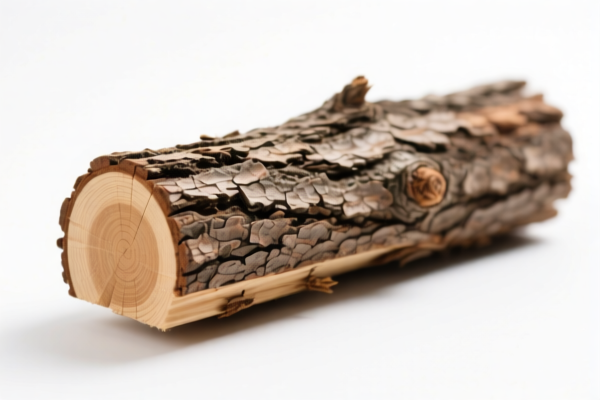
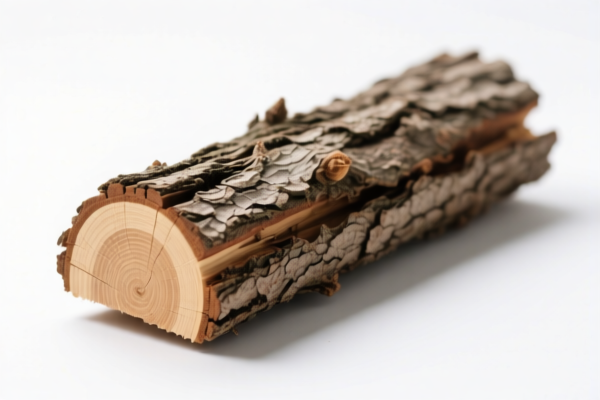
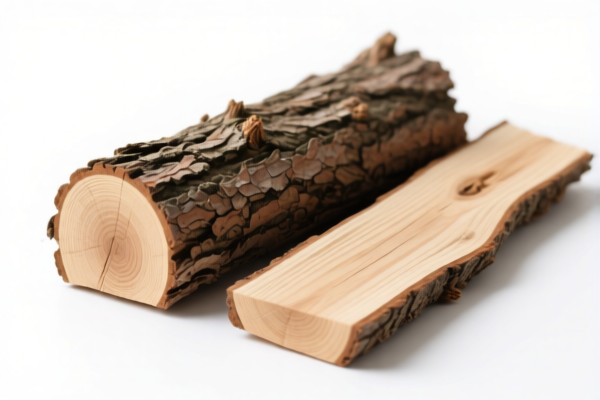
In international trade, "Other Coniferous Rough Timber" refers to processed wood from coniferous trees (gymnosperms) that has been sawn but not planed, sanded, or joined longitudinally. It represents the intermediate stage between raw logs and finished lumber.
Key Characteristics:
1. Material Source: Must be Coniferous (e.g., Larch/Pine/Spruce/Fir). In the provided data, Larch (落叶松) is the primary example.
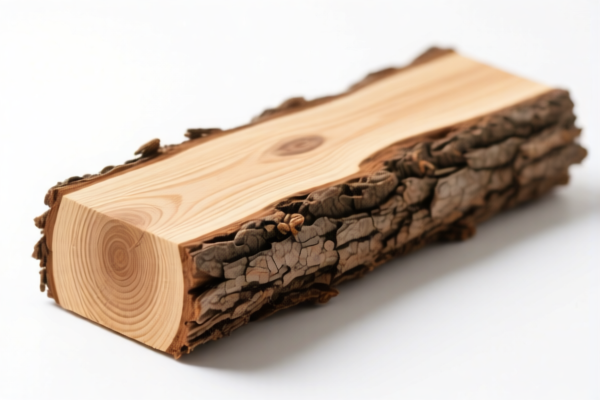
2. Processing State: Rough Sawn (粗锯). It retains the natural shape of the log on at least one side and has not been smoothed (planed) or machined into precise profiles.
3. Exclusions: It excludes logs/piles (4403) and processed/planed timber (4409 or 4407 finer categories).
⚠️ Key Distinction Point:
- If the wood is still in Log/Pile/Pole form (round, un-sawn or minimally processed) → It falls under 4403.99.01.28 (Logs/Piles).
- If the wood is Sawn but retains rough surfaces (not planed/smooth) → It falls under 4407.19.00.66 / 4407.19.00.67 (Rough Sawn Timber).
📦 II. HS Code Classification Details (2026 Tariff Alignment)
Based on the provided dataset, there are three primary classifications depending on the physical form (Log vs. Sawn).
| HS Code | Product Description | Key Features | Tax Category |
|---|---|---|---|
4403.99.01.28 |
Larch Logs, Piles, and Posts | Raw wood, round logs, or short piles/posts; Not yet rough-sawn into planks/boards. | Logs/Poles |
4407.19.00.66 |
Other Coniferous Rough Sawn Timber | Sawn Larch timber; rough surfaces; Not planed or sanded. | Rough Sawn |
4407.19.00.67 |
Other Coniferous Rough Sawn Timber | Sawn Larch timber; rough surfaces; Not planed or sanded (alternative code for similar classification). | Rough Sawn |
🔍 Important Note:
- Codes4407.19.00.66and4407.19.00.67are functionally similar for Rough Sawn Larch. The distinction often lies in specific dimensional standards or sub-type declarations in local customs systems. - Larch (落叶松) is explicitly identified as the material in all entries.
💰 III. 2026 Latest Tariff Rate Breakdown (Including Surcharges)
✅ Applicable Region: United States (US)
✅ Origin: China (CN) (Implied by the 122 Clause and Section 301 context)
✅ Total Effective Tax Rate: 35.0%
🎯 1. All Listed HS Codes (4403.99.01.28, 4407.19.00.66, 4407.19.00.67)
| Item | Detail |
|---|---|
| Base Tariff (MFN) | 0.0% |
| Section 301 Additional Tariff | +25.0% |
| Section 122 Tariff (USMCA/Trade Act) | +10.0% |
| Total Combined Rate | 35.0% |
| Calculation Basis | CIF Value × 35% |
| De Minimis Exemption | ❌ Not Applicable (High-value raw materials typically excluded or subject to strict scrutiny) |
| Legal Basis Path | USITC:4403.99.01.28 → USITC:4407.19.00.66 → FOOTNOTE:301 → SECTION:122 |
📌 Explanation of Tariff Components:
- Base Tariff (0.0%): Coniferous rough timber often enters at 0% under standard MFN rates.
- Section 301 Tariff (+25%): Imposed on Chinese-origin goods to address unfair trade practices. This is the bulk of the duty.
- Section 122 Tariff (+10%): Applied under Section 122 of the Trade Expansion Act of 1962, often used for national security or balance-of-payments reasons.
- Total: A flat 35% duty applies to all listed Larch products, regardless of whether they are logs or rough-sawn.
🛠️ IV. Customs Clearance Practical Advice (Battle-Tested Guide)
✅ 1. Required Documentation Checklist
| Document | Must Provide | Notes |
|---|---|---|
| ✅ Commercial Invoice | ✔️ | Must clearly state "Larch Wood" and "Rough Sawn" or "Logs". |
| ✅ Packing List | ✔️ | Detail dimensions, volume (CBM), and weight. |
| ✅ Phytosanitary Certificate | ✔️ | Critical for wood products. Must confirm freedom from pests (ISPM 15 compliant). |
| ✅ Fumigation Certificate | ✔️ | If ISPM 15 stamp is not visible on packaging. |
| ✅ Bill of Lading/Air Waybill | ✔️ | Standard shipping documents. |
| ✅ Species Declaration | ✔️ | Explicitly state Larch (落叶松) to match HS Code. |
✅ 2. Declaration Tips (Key Mantra)
🔥 "Log vs. Sawn: Know Your Form, Avoid Rejection!"
| Scenario | Correct HS Code | Common Mistake |
|---|---|---|
| Round Logs/Piles (Un-sawn or minimally processed) | 4403.99.01.28 |
Misdeclaring as "Timber" → Risk of penalty for wrong classification. |
| Rough Planks/Beams (Sawn, but rough surface) | 4407.19.00.66 or .67 |
Misdeclaring as "Planed Timber" → Wrong HS Code, potential delay. |
| Planed/Smooth Timber | Not in this dataset (Likely 4407 finer categories) |
Do not use 4407.19 codes for planed wood. |
✅ 3. Special Handling & Pitfalls
| Situation | Advice |
|---|---|
| Moisture Content | Ensure wood is dry enough to prevent mold during transit, but not overly dried if specified as "green timber." |
| Packaging | Use heat-treated pallets (ISPM 15). If wood packaging shows pest marks, customs may reject or fumigate at your cost. |
| Valuation | Declare accurate CIF value. The 35% tax is significant; under-declaring risks heavy fines. |
| Material Consistency | Ensure all cargo matches "Larch." Mixed species may require separate declarations or rejection of non-compliant parts. |
🌍 V. Global Market Comparison (2026)
| Country/Region | Recommended HS Code | Tariff (China Origin) | Key Requirement | Note |
|---|---|---|---|---|
| 🇺🇸 USA | 4407.19.00.66/67 or 4403.99.01.28 |
35% (0% + 25% + 10%) | Phytosanitary Cert | High duty; strict biosecurity. |
| 🇨🇳 China | 4407 / 4403 |
Varies (Import Duty) | ISPM 15 | Standard import procedures. |
| 🇪🇺 EU | 4407 / 4403 |
0% - 4% | FLEGT License (if applicable) | Lower base tariff, but strict sustainability rules. |
| 🇨🇦 Canada | 4407 / 4403 |
0% (If under CUSMA) | CUSMA Certificate | Potential duty-free if originating in North America. |
📌 Conclusion:
- The USA imposes the highest barrier (35%) due to layered tariffs (Section 301 + Section 122).
- Phytosanitary compliance is as critical as the tariff itself; missing certificates lead to immediate rejection.
📌 VI. Common Errors & Pitfall Avoidance
❌ Error 1: Declaring Rough Sawn Larch as Planed Timber
👉 Consequence: Wrong HS Code, potential audit, and delayed clearance.
❌ Error 2: Missing Phytosanitary Certificate
👉 Consequence: Cargo held at port, fumigation costs, or return shipment.
❌ Error 3: Confusing Logs (4403) with Rough Timber (4407)
👉 Consequence: While tax rate is same (35%), misclassification can lead to questions about origin and processing stage. Be precise in description.
✅ Correct Practice:
"Larch Wood, Rough Sawn Planks, Heat-Treated Pallets, Phytosanitary Certificate Attached, Model: RAW-LARCH-01"
🎯 VII. Conclusion: Professional Clearance for Wood Products
🎯 Remember the Mantra:
🔹 "Log vs. Sawn: Check the Surface."
🔹 "35% is the Price for China Origin."
🔹 "No Phytosanitary Cert = No Entry."
📌 Pro Tip:
- For Larch (落叶松), ensure the species name is clearly stated in English as "Larch" to avoid confusion with other conifers.
- Given the 35% total duty, consider supply chain optimization or pre-classification rulings if importing large volumes.
📣 Immediate Action:
📞 Verify Phytosanitary Status before shipment.
📄 Confirm Rough vs. Planed state with supplier.
💰 Budget for 35% Duty + Insurance + Freight.
✨ Precise Classification Saves Money!
💼 Every Percent of Duty Counts in Bulk Commodity Trade!
Customer Reviews
About HS Code Classification
The Harmonized System (HS) is an internationally standardized nomenclature developed by the World Customs Organization (WCO) to classify traded products. Over 200 countries use the HS system as the basis for customs tariffs, trade statistics, and import/export regulations.
Each HS code follows a hierarchical structure:
- Chapter (2 digits) — Broad category of goods (e.g., Chapter 84: Machinery and Mechanical Appliances)
- Heading (4 digits) — More specific grouping within the chapter
- Subheading (6 digits) — Internationally standardized breakdown, used by all WCO member countries
- National subdivisions (8-10 digits) — Country-specific extensions for further classification, such as US HTSUS 10-digit codes
Correct HS code classification is essential for smooth customs clearance, accurate duty payment, and compliance with trade regulations. Misclassification can lead to customs delays, overpayment of duties, or penalties.
When importing from CN to US, the applicable tariff rates may include:
- Most-Favored-Nation (MFN) rate — The standard duty rate applied to WTO members
- General rate — Applied to countries without trade agreements
- Trade remedy duties — Additional tariffs such as Section 301 (anti-dumping), Section 232 (national security), or countervailing duties
The information provided on this page is for reference purposes only. For official classification, please consult with your local customs authority or a licensed customs broker.