Other coniferous timber for decking
CN → US| HS Code | Tariff Rate | Origin | Destination | Doc |
|---|---|---|---|---|
| 4407190066 | 35.0% | CN | US | Official Doc |
| 4407190092 | 35.0% | CN | US | Official Doc |
Product Images
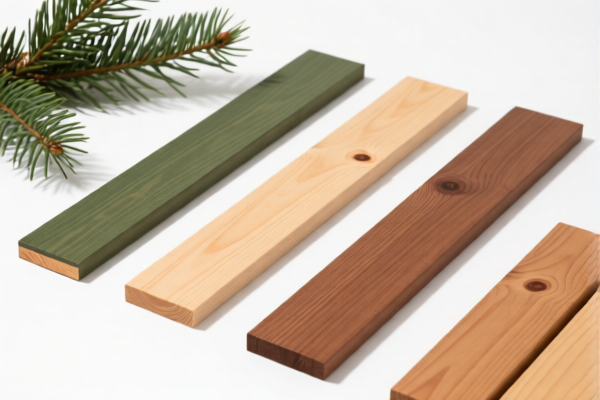
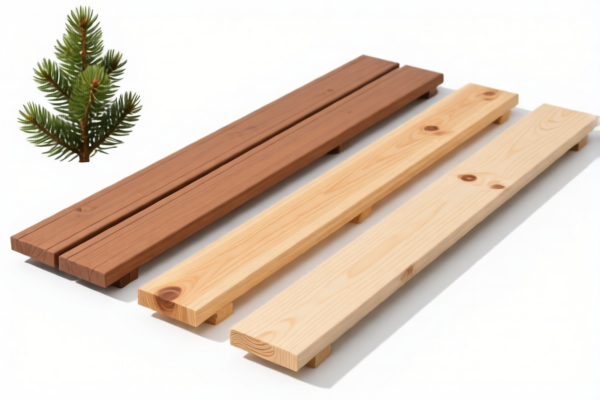
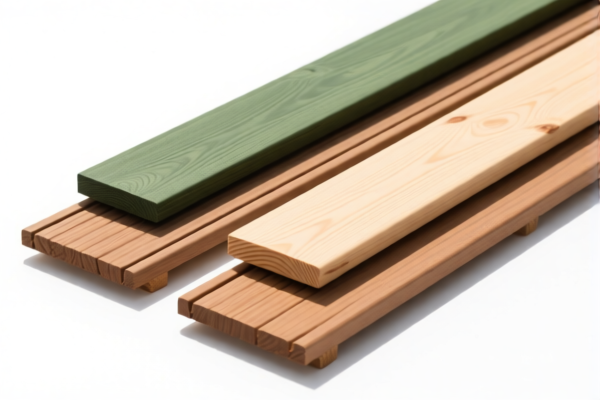
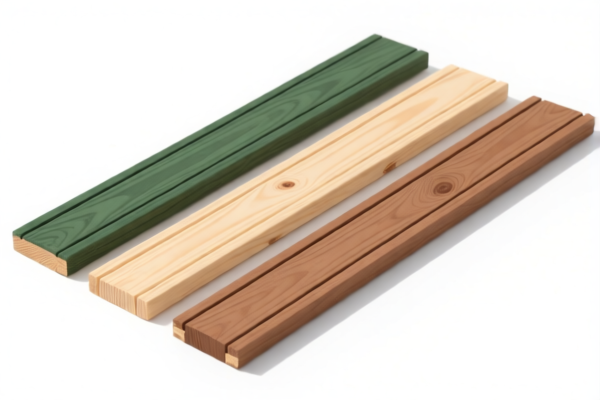
AI Analysis
🪵 Other Coniferous Timber for Decking
🌐 HS Code Reference & Clearance Guide | 2026 Latest Tariff Analysis | Professional Customs Clearance Strategy
📌 I. Product Definition & Classification: Do You Really Understand "Coniferous Timber"?
"Other coniferous timber for decking" refers to wood processed from coniferous species (such as larch, pine, spruce, etc.), typically sawn, chipped, planed, sanded, or end-jointed, with a thickness exceeding 6mm. In international trade, these products are primarily used for outdoor decking, landscaping, and construction.
In the Harmonized System (HS), coniferous timber is classified under Chapter 44, specifically heading 4407. The classification depends on: - Tree Species: e.g., Larch (Larix spp.), Pine (Pinus spp.), Spruce (Picea spp.), etc. - Processing Level: Rough, planed, sanded, or end-jointed. - Thickness: Must exceed 6mm to be classified under 4407.
⚠️ Key Distinction Points:
- Rough Timber: Not further processed than sawn or chipped lengthwise → Generally classified under 4407.19 (Other).
- Treated Timber: If chemically treated or impregnated, it may fall under different subheadings.
- Thickness: If ≤ 6mm, it is not classified under 4407 but under other headings (e.g., 4408, 4409, or 4412 depending on processing).
📦 II. HS Code Classification Details (2026 Latest Tariff Authority Comparison)
Based on the provided , two specific HS codes apply to "other coniferous timber for decking" that are not treated and rough:
| HS Code | Product Description | Application Scenario | Treatment Status |
|---|---|---|---|
4407.19.00.66 |
Larch (Larix spp.), rough, not treated | Outdoor decking, landscaping, furniture parts using Larch | ❌ Not Treated |
4407.19.00.92 |
Other coniferous timber (e.g., Pine, Spruce, Fir), rough, not treated | General coniferous decking materials excluding Larch | ❌ Not Treated |
🔍 Important Note:
- Both codes apply to rough timber, meaning it has not been planed, sanded, or end-jointed beyond basic sawing/chipping.
- If the timber is planed, sanded, or end-jointed, it may still fall under 4407 but could have different sub-codes depending on national tariff schedules. However, per , only the "Rough" versions are listed.
- Larch has its own specific code (4407.19.00.66), while other coniferous species fall under4407.19.00.92.
💰 III. 2026 Latest Tariff Rate Breakdown (Including Additional Taxes & Policy Additions)
✅ Applicable Country: United States (US)
✅ Country of Origin: China (CN)
✅ Effective Date: Current tariff structure applies
🎯 1. 4407.19.00.66 —— Larch (Larix spp.), Rough, Not Treated
| Item | Content |
|---|---|
| Base Tariff Rate | 0.0% (ad valorem) |
| Additional Tariff | +25.0% (Section 301 Tariff / Trade Remedy) |
| Total Tax Rate | 25.0% |
| Tax Calculation | CIF Value × 25% |
| De Minimis Exemption | ❌ Not Eligible (For shipments from China to US under Section 301) |
| Legal Basis Path | USITC:4407.19.00.66 → FOOTNOTE:301 |
📌 Explanation:
- The base tariff for coniferous timber is generally low or zero.
- However, due to Section 301 tariffs imposed on Chinese-origin goods, an additional 25% is applied.
- This results in a total effective duty of 25%, which significantly impacts import costs.
- There is no de minimis exemption for these goods when entering the US from China.
🎯 2. 4407.19.00.92 —— Other Coniferous Timber (e.g., Pine, Spruce), Rough, Not Treated
| Item | Content |
|---|---|
| Base Tariff Rate | 0.0% (ad valorem) |
| Additional Tariff | +25.0% (Section 301 Tariff / Trade Remedy) |
| Total Tax Rate | 25.0% |
| Tax Calculation | CIF Value × 25% |
| De Minimis Exemption | ❌ Not Eligible |
| Legal Basis Path | USITC:4407.19.00.92 → FOOTNOTE:301 |
📌 Note:
- Identical tax treatment as Larch (4407.19.00.66).
- Applies to all other coniferous species not explicitly listed (e.g., Pine, Spruce, Fir, Hemlock).
- If the timber is treated (e.g., pressure-treated for rot resistance), it may be classified differently, but per , only not treated rough timber is covered here.
🛠️ IV. Clearance Practical Advice (Real-World Pitfall Avoidance Guide)
✅ 1. Document Preparation Checklist (All Must Be Provided)
| Document | Required | Notes |
|---|---|---|
| ✅ Commercial Invoice | ✔️ | Must clearly state "Coniferous Timber, Rough, Not Treated" |
| ✅ Packing List | ✔️ | Detail dimensions, quantity, and weight per package |
| ✅ Bill of Lading/Air Waybill | ✔️ | Confirm origin and consignment details |
| ✅ Certificate of Origin (CO) | ✔️ | Proves Chinese origin; may be required for Section 301 enforcement |
| ✅ Phytosanitary Certificate | ✔️ | Required for wood products to prevent pest introduction |
| ✅ Fumigation Certificate | ✔️ | Often required for untreated wood entering the US |
| ✅ Product Photos | ✔️ | Show rough surface, thickness, and species labeling (if applicable) |
✅ 2. Declaration Tips (Key Mnemonics)
🔥 “Rough & Untreated, 25% Tax Waits. Specify Species Clearly to Avoid Delays!”
| Scenario | Correct Declaration | Wrong Practice |
|---|---|---|
| Larch decking boards | 4407.19.00.66 |
Misclassify as Pine → Potential audit |
| Pine/Spruce decking | 4407.19.00.92 |
Misclassify as Larch → Incorrect tax application |
| Treated timber | Not covered in | Declaring as "Rough" when treated → Misclassification penalty |
| Thickness ≤ 6mm | Not classified under 4407 | Declaring as 4407 → Rejection or reclassification |
✅ 3. Special Cases Handling
| Scenario | Handling Advice |
|---|---|
| Mixed Species | Separate shipments by species if possible. If mixed, declare as "Other Coniferous" (4407.19.00.92) to avoid disputes. |
| Treated Wood | If wood is pressure-treated, fire-retardant, or stained, it does not qualify as "not treated." Seek correct HTS code (may differ). |
| End-Jointed or Sanded | If further processed beyond "rough," verify if still eligible under 4407. Some national schedules have specific codes for planed/sanded timber. |
| Origin Shift | If timber is sourced from Vietnam, Thailand, or Canada, Section 301 tariffs do NOT apply. Apply for preferential treatment if under FTAs. |
🌍 V. Global Market Clearance Comparison (2026 Latest)
| Country/Region | Recommended HS Code | Tariff Rate | Certification Requirements | Notes |
|---|---|---|---|---|
| 🇺🇸 USA | 4407.19.00.66 / 4407.19.00.92 |
25% (China origin) | Phytosanitary + Fumigation | High tariff due to Section 301 |
| 🇨🇳 China | 4407.19.00.66 / 4407.19.00.92 |
5–10% | N/A | Lower tariff for imports |
| 🇪🇺 EU | 4407.19 |
0–5% (if EUTR compliant) | EUTR + Fumigation | Strict wood legality rules |
| 🇦🇺 Australia | 4407.19 |
5% | Biosecurity Permit | Quarantine inspections mandatory |
| 🇯🇵 Japan | 4407.19 |
0–3% | ISM Certification | Low tariff, strict quality checks |
📌 Conclusion:
- USA imposes the highest tariff (25%) on Chinese-origin rough coniferous timber due to Section 301.
- EU and Australia have strict phytosanitary and legality requirements but lower tariffs.
- China offers lower import duties but may have export restrictions.
📌 VI. Common Mistakes & Pitfall Avoidance (Lessons Learned the Hard Way)
❌ Mistake 1: Declaring "Treated Timber" as "Not Treated"
👉 Consequence: Misclassification → Penalties + Retroactive Duties
❌ Mistake 2: Ignoring Phytosanitary Requirements
👉 Consequence: Cargo detained or destroyed at US customs
❌ Mistake 3: Misidentifying Species (e.g., Larch vs. Pine)
👉 Consequence: Customs audit → Delays + Potential fines
❌ Mistake 4: Assuming All Wood Qualifies for De Minimis
👉 Consequence: Section 301 taxes still apply → Unexpected 25% charge
✅ Correct Approach:
"Coniferous Timber, Rough, Not Treated, Species: Larch/Pine, Thickness: >6mm, Fumigated, Phytosanitary Certified, Origin: China"
🎯 VII. Conclusion: Precision Classification Saves Money!
🎯 Remember the Mantra:
🔹 "Rough & Untreated, 25% Tax Waits. Specify Species, Certify Clean, Avoid Delights!"
🔹 "HS Code Dictates Duty, 25% Is Real, Misdeclare, Pay the Deal!"
📌 Pro Tip:
- If your timber originates from Vietnam, Thailand, Canada, or Europe, it may qualify for lower or zero tariffs.
- Consider pre-classification rulings with US CBP for high-volume imports.
- Always ensure phytosanitary and fumigation certificates are up-to-date to avoid cargo hold-ups.
📣 Immediate Action Required:
📞 Engage a licensed customs broker + Provide product specs + Apply for HS Code Pre-Ruling
🚀 Ensure your timber clears smoothly, avoids penalties, and maximizes profit!
✨ Professional Clearance Starts with Accurate Classification!
💼 Every Percent Counts in Global Trade!
Customer Reviews
About HS Code Classification
The Harmonized System (HS) is an internationally standardized nomenclature developed by the World Customs Organization (WCO) to classify traded products. Over 200 countries use the HS system as the basis for customs tariffs, trade statistics, and import/export regulations.
Each HS code follows a hierarchical structure:
- Chapter (2 digits) — Broad category of goods (e.g., Chapter 84: Machinery and Mechanical Appliances)
- Heading (4 digits) — More specific grouping within the chapter
- Subheading (6 digits) — Internationally standardized breakdown, used by all WCO member countries
- National subdivisions (8-10 digits) — Country-specific extensions for further classification, such as US HTSUS 10-digit codes
Correct HS code classification is essential for smooth customs clearance, accurate duty payment, and compliance with trade regulations. Misclassification can lead to customs delays, overpayment of duties, or penalties.
When importing from CN to US, the applicable tariff rates may include:
- Most-Favored-Nation (MFN) rate — The standard duty rate applied to WTO members
- General rate — Applied to countries without trade agreements
- Trade remedy duties — Additional tariffs such as Section 301 (anti-dumping), Section 232 (national security), or countervailing duties
The information provided on this page is for reference purposes only. For official classification, please consult with your local customs authority or a licensed customs broker.