Other coniferous timber for furniture components
CN → US| HS Code | Tariff Rate | Origin | Destination | Doc |
|---|---|---|---|---|
| 4407190092 | 35.0% | CN | US | Official Doc |
| 4407190093 | 35.0% | CN | US | Official Doc |
| 4403260164 | 35.0% | CN | US | Official Doc |
| 4401110000 | 35.0% | CN | US | Official Doc |
| 4403220165 | 35.0% | CN | US | Official Doc |
Product Images
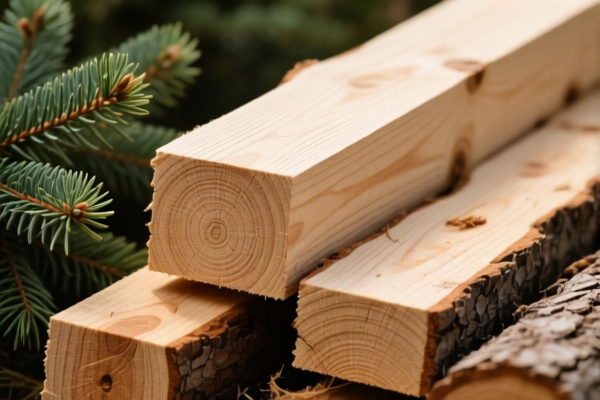
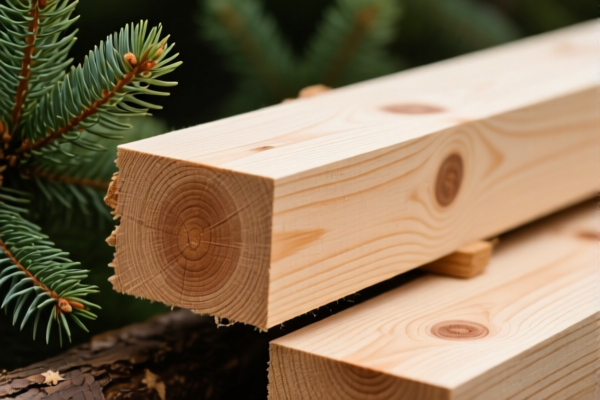
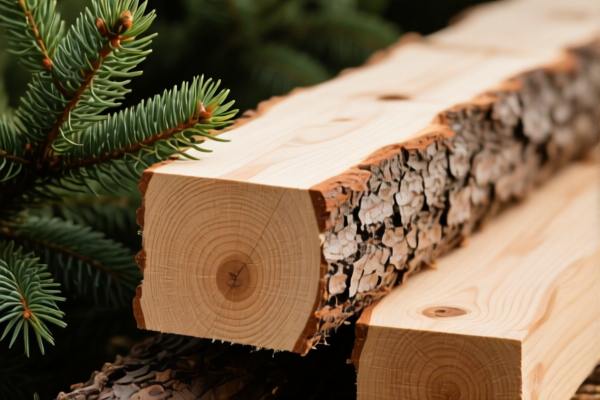
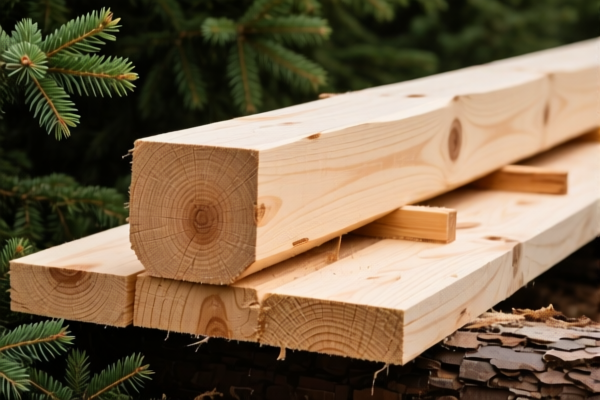
AI Analysis
🌲 Other Coniferous Timber for Furniture Components
🌐 HS Code Reference & Clearance Guide | 2026 Latest Tariff Analysis | Professional Custom Clearance Strategy
📌 I. Product Definition and Classification: Do You Really Understand "Coniferous Timber for Furniture"?
Coniferous Timber (Softwood) is a critical raw material in the furniture manufacturing industry. In international trade, it is strictly categorized based on its processing state, species, and intended use.
When the prompt specifies "Other coniferous timber for furniture components", it refers to: 1. Material: Coniferous wood (e.g., Pine, Spruce, Fir, Cypress). 2. Form: Raw logs or rough sawn timber (not yet processed into finished furniture parts). 3. Purpose: Specifically designated for furniture components (as opposed to fuel, paper pulp, or construction). 4. Classification: Falls under "Other" categories, implying it does not fit specific high-value species codes (like Redwood) or specific processing states (like planed wood).
⚠️ Key Distinction Point: - If it is chipped or for fuel →归入 4401.11.00.00 (Fuel wood). - If it is sawn/veneer but for furniture →归入 4407.19.00.92 / .93 (Sawn wood). - If it is rough logs for furniture →归入 4403.26.01.64 / 4403.22.01.65 (Logs).
📦 II. HS Code Classification Details (2026 Latest Tariff Authority Comparison)
| HS Code | Product Description | Application Scenario | Key Characteristic |
|---|---|---|---|
4407.19.00.92 |
Other sawn wood of coniferous wood, for furniture | Sawn planks, beams, or boards specifically cut for furniture assembly | ✅ Processed (Sawn) |
4407.19.00.93 |
Other sawn wood of coniferous wood, for furniture | Alternative code for other sawn coniferous timber for furniture | ✅ Processed (Sawn) |
4403.26.01.64 |
Other coniferous logs, for furniture | Rough logs (not debarked or merely squared) intended for furniture | ✅ Raw (Logs) |
4401.11.00.00 |
Fuel wood, of coniferous species | Logs or wood chips primarily used for fuel, not furniture | ❌ Not for furniture |
4403.22.01.65 |
Other logs of coniferous wood, for furniture | General rough logs for furniture components, non-specific species | ✅ Raw (Logs) |
🔍 Critical Reminder: - "For Furniture" is the key descriptor. If the timber is declared as "for fuel" or "for pulp," it will be misclassified. - Logs (
4403) vs. Sawn Wood (4407): The level of processing determines the code. Rough logs go to4403; sawn/planned boards go to4407. - "Other": These codes apply to common coniferous species (Pine, Spruce, etc.). Rare species may have different codes.
💰 III. 2026 Latest Tariff Rate Breakdown (Including Additional Taxes, Policy Surcharges)
✅ Applicable Country: United States (US) ✅ Origin: China (CN) ✅ Effective Date: November 10, 2025 onwards (including subsequent imports)
🎯 1. 4407.19.00.92 & 4407.19.00.93 —— Sawn Coniferous Wood for Furniture
| Item | Content |
|---|---|
| Base Tariff | 0.0% (ad valorem) |
| USITC Surcharge | +25.0% (Under USITC Footnote for Section 301) |
| Section 122 Tariff | +10.0% (Under Section 122 provisions for specific wood products) |
| Total Tariff Rate | 35.0% |
| Tax Calculation | CIF Value × 35% |
| De Minimis Exemption | ❌ Not Applicable (deny_de_minimis) |
| Legal Basis Path | Base: 0.0% → Surcharge: 25.0% → Section 122: 10.0% |
📌 Explanation: - "Base Tariff 0%": Standard most-favored-nation (MFN) rate for these wood products. - "Surcharge 25%": Part of the ongoing trade war tariffs (Section 301) on Chinese wood products. - "Section 122 Tariff 10%": A specific additional tariff applied to certain timber imports under Section 122 of the Trade Expansion Act. - Total 35%: This is a high-cost tariff category. Importers must factor this into pricing.
🎯 2. 4403.26.01.64 & 4403.22.01.65 —— Coniferous Logs for Furniture
| Item | Content |
|---|---|
| Base Tariff | 0.0% |
| USITC Surcharge | +25.0% |
| Section 122 Tariff | +10.0% |
| Total Tariff Rate | 35.0% |
| Tax Calculation | CIF Value × 35% |
| De Minimis Exemption | ❌ Not Applicable |
| Legal Basis Path | Base: 0.0% → Surcharge: 25.0% → Section 122: 10.0% |
📌 Note: - Raw logs for furniture components face the same total tariff (35%) as sawn wood. - There is no tariff advantage for importing logs vs. sawn wood in this specific context due to the combined surcharges.
🎯 3. 4401.11.00.00 —— Coniferous Fuel Wood
| Item | Content |
|---|---|
| Base Tariff | 0.0% |
| USITC Surcharge | +25.0% |
| Section 122 Tariff | +10.0% |
| Total Tariff Rate | 35.0% |
| Tax Calculation | CIF Value × 35% |
| De Minimis Exemption | ❌ Not Applicable |
| Legal Basis Path | Base: 0.0% → Surcharge: 25.0% → Section 122: 10.0% |
📌 Warning: - If you are importing timber for furniture, do NOT declare it as "Fuel Wood" (
4401.11.00.00). - Misclassification Risk: If customs determines the wood is for furniture, you will face back taxes, penalties, and potential seizure. The tariff is the same (35%), but the legal risk is severe.
🛠️ IV. Customs Clearance Practical Advice (Battlefield Pit Avoidance Guide)
✅ 1. Required Documentation List (Non-negotiable)
| Document | Mandatory | Description |
|---|---|---|
| ✅ Product Specification Sheet | ✔️ | Must specify: Species (e.g., Pine), Form (Log/Sawn), Intended Use (Furniture). |
| ✅ Phytosanitary Certificate | ✔️ | Issued by the country of origin. Crucial for wood products to prevent pest control issues. |
| ✅ Commercial Invoice | ✔️ | Must clearly state: "Coniferous Timber for Furniture Components". Avoid vague terms like "Wood". |
| ✅ Packing List | ✔️ | Detail dimensions, volume, and weight. |
| ✅ Lumber Grading Report | ✔️ | For 4407 codes, proof of quality/grade may be required. |
| ✅ Proof of End-Use | ✔️ | Contracts or purchase orders showing the wood is destined for furniture manufacturing. |
✅ 2. Declaration Tips (Key Mantras)
🔥 "Log vs. Sawn, Fuel vs. Furniture, Name Precisely, Risk Disperses!"
| Scenario | Correct Declaration | Wrong Practice |
|---|---|---|
| Rough Logs for Furniture | 4403.26.01.64 or 4403.22.01.65 |
Declare as "Sawn Wood" → Higher inspection rate |
| Sawn Planks for Furniture | 4407.19.00.92 or .93 |
Declare as "Logs" → Misclassification |
| Wood for Burning | 4401.11.00.00 |
Declare as "Furniture Wood" → Unjustified penalty |
| Mixed Shipment | Separate codes per item | Mixed declaration → Delay and audit |
✅ 3. Special Situation Handling
| Situation | Handling Advice |
|---|---|
| Treated Wood | If wood is chemically treated (e.g., for outdoor furniture), ensure treatment method is documented to avoid rejection under ISPM 15 rules. |
| Green Logs vs. Seasoned Logs | "Green" (high moisture) logs may have different inspection requirements. Specify moisture content if necessary. |
| Section 122 Compliance | Ensure the importer ID and product details match the Section 122 list exactly. Any discrepancy can lead to fines. |
| USDA Inspection | Coniferous wood is subject to strict USDA APHIS inspection. Ensure packaging is clean and free of soil. |
🌍 V. Global Market Comparison (2026 Latest)
| Country/Region | Recommended HS Code | Tariff (China Origin) | Certification Requirement | Remarks |
|---|---|---|---|---|
| 🇺🇸 USA | 4403.26.01.64 / 4407.19.00.92 |
35.0% | USDA + ISPM 15 | High tariffs due to Section 301 & 122 |
| 🇨🇳 China | 4403.26.01.64 / 4407.19.00.92 |
0-5% | N/A | Low tariff, but import restrictions may apply |
| 🇪🇺 EU | 4403.22.00.00 / 4407.10.00 |
0% (If FLEGT verified) | FLEGT + EUTR | Strict anti-deforestation laws |
| 🇬🇧 UK | 4403.22.00.00 / 4407.10.00 |
0% | UK Tree Seed and Plant Regulations | Post-Brexit regulations apply |
📌 Conclusion: - USA is the most challenging market due to the 35% combined tariff. - EU/UK have strict deforestation regulations (EUTR/UKTR). Ensure your timber is legally sourced with full traceability. - China is a major importer/exporter of processed timber, but raw logs may face quarantine restrictions.
📌 VI. Common Mistakes & Pitfall Guide (Blood-Teaching Lessons)
❌ Mistake 1: Declaring "Furniture Wood" as "Fuel Wood" to avoid scrutiny 👉 Consequence: If discovered, penalties, back taxes, and potential shipment seizure. The tariff is the same (35%), so there is no benefit, only risk.
❌ Mistake 2: Ignoring ISPM 15 for wood packaging 👉 Consequence: Rejection at customs if pallets/crates are not heat-treated and marked. This delays the entire shipment.
❌ Mistake 3: Vague Description: "Wooden Planks"
👉 Consequence: Customs cannot determine if it is 4403 (Logs) or 4407 (Sawn). Leads to inspection delays and potential misclassification.
❌ Mistake 4: Forgetting Section 122 declaration 👉 Consequence: If the wood falls under Section 122 (which many timber products do), failing to declare it correctly can lead to additional fines beyond the tariff.
✅ Correct Approach:
"Coniferous Sawn Timber (Pine), for Furniture Components, Heat-Treated, ISPM 15 Compliant, HS Code 4407.19.00.92"
🎯 VII. Conclusion: Professional Declaration, Time-Saving, Cost-Efficient!
🎯 Remember the Mantra:
🔹 "Logs vs. Sawn, Fuel vs. Furniture, Name Precisely, Risk Disperses!" 🔹 "35% is the Standard, 0% is a Trap, Declare Accurately, Sleep Well!"
📌 Pro Tip: - For US Imports: Pre-arrange customs bond coverage for the 35% tariff. - Consider Advance Rulings: If your wood product is unique, apply for an Advance Ruling from US CBP to confirm the HS Code and tariff rate before shipping. - Supply Chain Diversification: If tariffs are prohibitive, consider sourcing from non-China origins (e.g., Canada, Russia, Southeast Asia) to avoid Section 301 and Section 122 surcharges.
📣 Immediate Action:
📞 Contact a licensed customs broker + Provide product specs + Verify ISPM 15 compliance 🚀 Ensure your timber clears customs smoothly, efficiently, and profitably!
✨ Professional Clearance Starts with Accurate Classification! 💼 Every Percent of Tariff Matters!
Customer Reviews
About HS Code Classification
The Harmonized System (HS) is an internationally standardized nomenclature developed by the World Customs Organization (WCO) to classify traded products. Over 200 countries use the HS system as the basis for customs tariffs, trade statistics, and import/export regulations.
Each HS code follows a hierarchical structure:
- Chapter (2 digits) — Broad category of goods (e.g., Chapter 84: Machinery and Mechanical Appliances)
- Heading (4 digits) — More specific grouping within the chapter
- Subheading (6 digits) — Internationally standardized breakdown, used by all WCO member countries
- National subdivisions (8-10 digits) — Country-specific extensions for further classification, such as US HTSUS 10-digit codes
Correct HS code classification is essential for smooth customs clearance, accurate duty payment, and compliance with trade regulations. Misclassification can lead to customs delays, overpayment of duties, or penalties.
When importing from CN to US, the applicable tariff rates may include:
- Most-Favored-Nation (MFN) rate — The standard duty rate applied to WTO members
- General rate — Applied to countries without trade agreements
- Trade remedy duties — Additional tariffs such as Section 301 (anti-dumping), Section 232 (national security), or countervailing duties
The information provided on this page is for reference purposes only. For official classification, please consult with your local customs authority or a licensed customs broker.