Other coniferous timber for planks
CN → US| HS Code | Tariff Rate | Origin | Destination | Doc |
|---|---|---|---|---|
| 4418810000 | 38.2% | CN | US | Official Doc |
| 4418300100 | 38.2% | CN | US | Official Doc |
| 4409101060 | 35.0% | CN | US | Official Doc |
| 4407190066 | 35.0% | CN | US | Official Doc |
| 4407190001 | 35.0% | CN | US | Official Doc |
Product Images
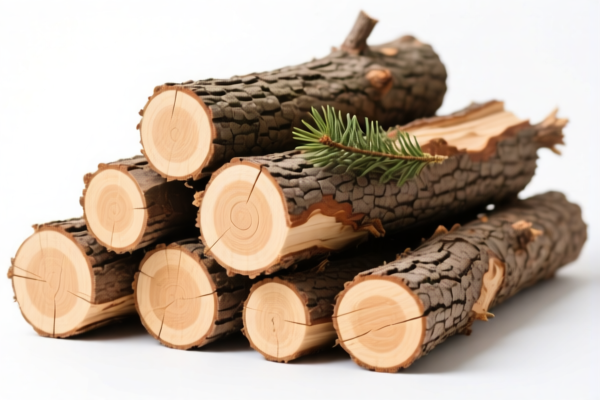
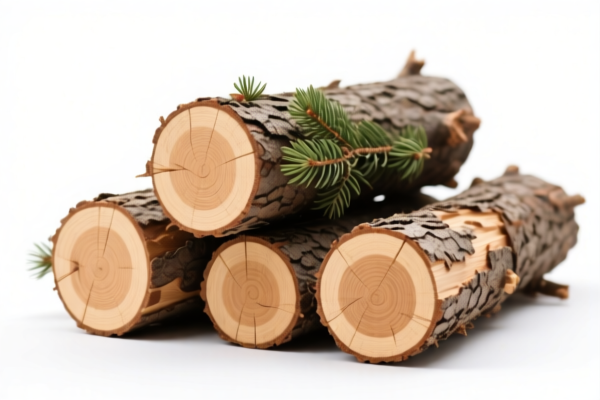
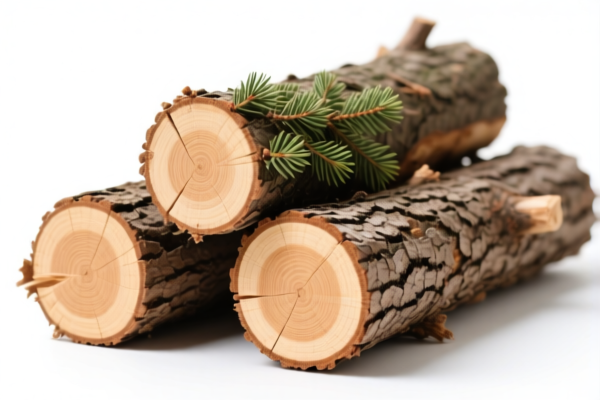
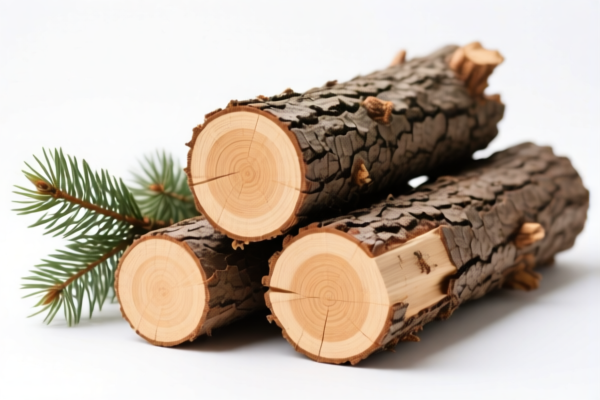
AI Analysis
🌲 Coniferous Timber for Planks (Other)
🌐 HS Code Reference & Customs Clearance Guide | 2026 Latest Tariff Analysis | Professional Clearance Strategy
📌 I. Product Definition & Classification: What is "Other Coniferous Timber for Planks"?
"Other coniferous timber for planks" refers to sawn wood from coniferous species (such as pine, spruce, fir, etc.) that does not fall under standard dimension lumber or specific structural profiles. In international trade, this category is highly sensitive to processing depth and intended end-use. It is primarily divided into:
Engineered/Structural Components: Sawn timber specifically shaped or matched for construction frameworks (beams, columns, structural parts).
General Sawn Timber/Other: Sawn timber of coniferous species that does not fit standard dimensional lumber or specific structural descriptions (e.g., planks for general carpentry, packaging, or non-structural use).
⚠️ Key Distinction Point:
- If the timber is specifically matched for structural engineering purposes (beams, columns, frames) → It falls under Chapter 4418 (Construction Timber).
- If the timber is merely sawn, planed, or shaped for general use (planks, boards) without specific structural profiling → It falls under Chapter 4407 (Wood Sawnt or Chipped Thinly) or 4409 (Wood Continuously Shaped).
📦 II. HS Code Classification Details (2026 Latest Tariff Authority Match)
Based on the provided data, here are the precise HS Codes and their corresponding tax structures for "Other Coniferous Timber for Planks":
| HS Code | Product Description | Intended Use / Attribute | Tax Rate (Total) |
|---|---|---|---|
| 4418.81.00.00 | Coniferous timber construction, matching wood material with engineering structural timber product uses | Specific structural components, engineered wood for building frameworks | 38.2% |
| 4418.30.01.00 | Coniferous timber construction, matching wood material with construction attributes other than columns/beams | Non-structural construction parts (e.g., wall studs, sheathing) | 38.2% |
| 4409.10.10.60 | Coniferous timber construction, matching coniferous material with other categories | Continuously shaped wood (tongue/groove, etc.) for general use | 35.0% |
| 4407.19.00.66 | Coniferous timber construction, matching coniferous wood material consistent with other class descriptions | General sawn coniferous timber (not dimension lumber) | 35.0% |
| 4407.19.00.01 | Coniferous timber construction, matching coniferous wood material consistent with other categories | General sawn coniferous timber (standard planks/boards) | 35.0% |
🔍 Key Reminder:
- Structural vs. General Use: The difference between 38.2% and 35.0% often hinges on whether the timber is declared as "construction timber for engineering purposes" (4418) or "general sawn timber" (4407/4409).
- Material Match: All entries are Coniferous (pine, spruce, fir, etc.). Deciduous timber is excluded.
💰 III. 2026 Latest Tariff Rate Details (Including Surcharges & Policy Add-ons)
✅ Applicable Country: USA (US)
✅ Origin: China (CN)
✅ Effective Date: 2025 November 10 (and subsequent imports)
🎯 1. HS Codes 4418.81.00.00 & 4418.30.01.00 —— Coniferous Construction Timber
| Item | Content |
|---|---|
| Base Tariff | 3.2% (Ad Valorem) |
| Section 301 Surcharge | +25.0% (Added Tariff for Chinese Origin) |
| Section 122 Tariff | +10.0% (Specific surcharge for certain wood products) |
| Total Tariff Rate | 38.2% |
| Tax Calculation | CIF Value × 38.2% |
| De Minimis Exemption | ❌ NOT Eligible (Deny De Minimis) |
| Legal Basis Path | Base Tariff: 3.2% + Section 301: 25.0% + Section 122: 10.0% |
📌 Explanation:
- The 3.2% is the standard Most Favored Nation (MFN) base tariff.
- The 25.0% is the Section 301 retaliatory tariff on Chinese goods.
- The 10.0% is the Section 122 tariff, specifically targeting certain wood products.
- Total 38.2% is extremely high. Proper classification is critical to avoid overpayment or underpayment penalties.
🎯 2. HS Codes 4409.10.10.60, 4407.19.00.66, 4407.19.00.01 —— General Coniferous Sawn/Continuously Shaped Timber
| Item | Content |
|---|---|
| Base Tariff | 0.0% (Ad Valorem) |
| Section 301 Surcharge | +25.0% (Added Tariff for Chinese Origin) |
| Section 122 Tariff | +10.0% (Specific surcharge for certain wood products) |
| Total Tariff Rate | 35.0% |
| Tax Calculation | CIF Value × 35.0% |
| De Minimis Exemption | ❌ NOT Eligible (Deny De Minimis) |
| Legal Basis Path | Base Tariff: 0.0% + Section 301: 25.0% + Section 122: 10.0% |
📌 Note:
- These codes have a 0% base tariff, but the 35% total is still very high due to surcharges.
- 4409 refers to continuously shaped wood (e.g., tongue-and-groove, tongued, grooved, chamfered, V-jointed, center-v Grooved, bead-edged, rounded, or beaded).
- 4407 refers to wood sawn or chipped lengthwise, sliced or peeled, whether or not planed, sanded, or end-jointed.
🛠️ IV. Customs Clearance Practical Advice (Practical Pitfall Avoidance Guide)
✅ 1. Required Documentation Checklist (All are Mandatory)
| Document | Must Provide | Description |
|---|---|---|
| ✅ Product Specification Sheet | ✔️ | Includes species (e.g., SPF, Douglas Fir), dimensions, moisture content, grade. |
| ✅ Commercial Invoice | ✔️ | Must clearly state "Coniferous Timber" and end-use (Structural vs. General). |
| ✅ Packing List | ✔️ | Detailed list of quantities, weights, and carton numbers. |
| ✅ Phytosanitary Certificate | ✔️ | Crucial for wood products to prove treatment against pests. |
| ✅ Treatment Certificate | ✔️ | Proof of heat treatment or fumigation (ISPM 15 standard). |
| ✅ Bill of Lading / Air Waybill | ✔️ | Standard transport document. |
| ✅ Country of Origin Certificate | ✔️ | To prove Chinese origin (which triggers the surcharges). |
✅ 2. Declaration Tips (Key Mantra)
🔥 "Classify by Use, Describe by Species, Declare Treatment Clearly!"
| Scenario | Correct Declaration Approach | Incorrect Action |
|---|---|---|
| Structural Beams/Columns | Use 4418.xx.xx (Construction Timber) | Declare as "General Wood Planks" → Risk of Misclassification |
| General Sawn Boards/Planks | Use 4407.19.xx or 4409.10.xx | Declare as "Structural Timber" → Unjustified Higher Base Rate |
| Continuously Shaped (T&G) | Use 4409.10.10.60 | Declare as simple "Sawn Timber" → Wrong HS Code |
| Untreated Wood | ❌ Do Not Import | Must have Phytosanitary Certificate |
✅ 3. Special Handling for Wood Products
| Scenario | Handling Advice |
|---|---|
| Moisture Content | Ensure moisture content is within agreed specifications (usually 15-19%) to prevent rejection for damage. |
| Pest Treatment | Wood must be heat-treated or fumigated. Lack of ISPM 15 marking leads to rejection/destruction. |
| Species Identification | Clearly identify the genus (e.g., Pinus, Picea, Abies). Generic "Coniferous" is insufficient for detailed inspection. |
| Structural Grade | If declaring as structural (4418), provide grade certificates (e.g., No. 2, Select). |
🌍 V. Global Market Customs Comparison (2026 Latest)
| Country/Region | Recommended HS Code | Tariff (China Origin) | Certification Requirements | Notes |
|---|---|---|---|---|
| 🇺🇸 USA | 4407.19.00.01 / 4418.81.00.00 |
35.0% - 38.2% | Phytosanitary + ISPM 15 | High tariffs due to Section 301 & 122. |
| 🇨🇳 China | 4407 / 4409 / 4418 |
0% - 5% (Import) | N/A | China is a major exporter; import tariffs vary. |
| 🇪🇺 EU | 4407 / 4409 |
Varies (often 0-6.5%) | Fumigation/Heat Treatment | CBAM may apply indirectly; strict wood regulations. |
| 🇬🇧 UK | 4407 / 4409 |
Varies | Phytosanitary | Post-Brexit rules apply. |
| 🇨🇦 Canada | 4407 / 4409 |
Varies (NAFTA/USMCA may apply) | Phytosanitary | USMCA benefits if Canadian origin. |
📌 Conclusion:
- USA is the most challenging market due to the 35-38% total tariff.
- Phytosanitary compliance is non-negotiable for wood products globally.
- Accurate HS classification (Structural vs. General) is critical for cost management.
📌 VI. Common Errors & Pitfall Avoidance Guide (Lessons Learned)
❌ Error 1: Declaring "Structural Timber" as "General Sawn Wood" to save on base rate
👉 Consequence: If inspected and found to be structural, penalties and back-taxes apply.
❌ Error 2: Missing Phytosanitary Certificate
👉 Consequence: Rejection or Destruction of cargo at US port.
❌ Error 3: Ignoring Section 122 Tariff
👉 Consequence: Under-declaration of tax → Fines and Audit.
❌ Error 4: Vague Description ("Wood Planks")
👉 Consequence: Customs delay for further inspection → Storage Fees.
✅ Correct Practice:
"Coniferous Timber, Spruce-Pine-Fir (SPF), Sawn, Heat-Treated (ISPM 15), Grade No. 2, For Structural Framing, HS 4418.81.00.00"
🎯 VII. Conclusion: Professional Declaration, Save Time & Cost!
🎯 Remember the Mantra:
🔹 "Structural = 4418 (38.2%), General = 4407/4409 (35.0%)"
🔹 "Phytosanitary is Key, Treatments are Mandatory"
🔹 "Declare Clearly, Avoid Delays"
📌 Pro Tip:
- If your timber is not for structural use, ensure it is not processed into specific structural shapes to avoid being classified under 4418.
- Pre-classification Ruling: Consider applying for an Advance Ruling from US Customs (CBP) if the end-use is ambiguous.
📣 Immediate Action:
📞 Contact a professional customs broker + Provide Species & Treatment Details + Apply for Pre-shipment Inspection
🚀 Ensure your timber cleares customs smoothly, avoids destruction, and minimizes tariff risks!
✨ Professional Customs Clearance Starts with Accurate Classification!
💼 Every Cent of Cost Matters!
Customer Reviews
About HS Code Classification
The Harmonized System (HS) is an internationally standardized nomenclature developed by the World Customs Organization (WCO) to classify traded products. Over 200 countries use the HS system as the basis for customs tariffs, trade statistics, and import/export regulations.
Each HS code follows a hierarchical structure:
- Chapter (2 digits) — Broad category of goods (e.g., Chapter 84: Machinery and Mechanical Appliances)
- Heading (4 digits) — More specific grouping within the chapter
- Subheading (6 digits) — Internationally standardized breakdown, used by all WCO member countries
- National subdivisions (8-10 digits) — Country-specific extensions for further classification, such as US HTSUS 10-digit codes
Correct HS code classification is essential for smooth customs clearance, accurate duty payment, and compliance with trade regulations. Misclassification can lead to customs delays, overpayment of duties, or penalties.
When importing from CN to US, the applicable tariff rates may include:
- Most-Favored-Nation (MFN) rate — The standard duty rate applied to WTO members
- General rate — Applied to countries without trade agreements
- Trade remedy duties — Additional tariffs such as Section 301 (anti-dumping), Section 232 (national security), or countervailing duties
The information provided on this page is for reference purposes only. For official classification, please consult with your local customs authority or a licensed customs broker.