Other coniferous wood in the rough, non structural use
CN → US| HS Code | Tariff Rate | Origin | Destination | Doc |
|---|---|---|---|---|
| 4403240104 | 35.0% | CN | US | Official Doc |
| 4403260108 | 35.0% | CN | US | Official Doc |
| 4403260165 | 35.0% | CN | US | Official Doc |
| 4403260108 | 35.0% | CN | US | Official Doc |
| 4403210130 | 35.0% | CN | US | Official Doc |
Product Images
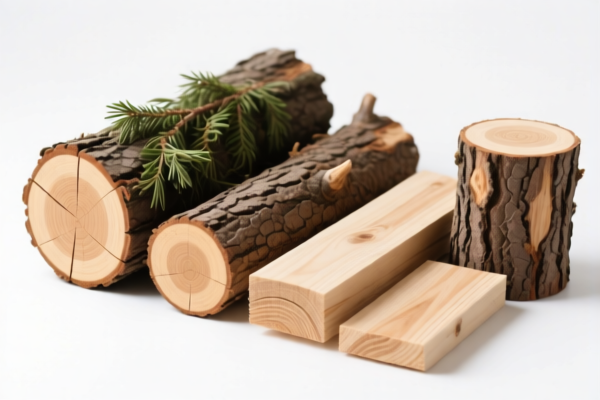
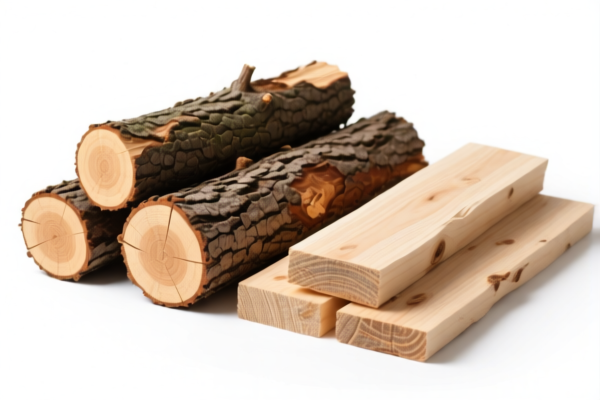
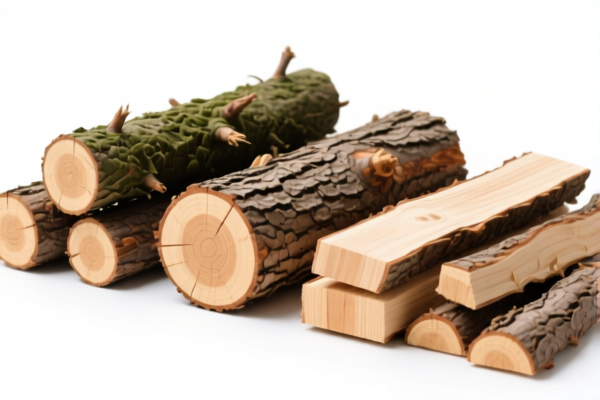
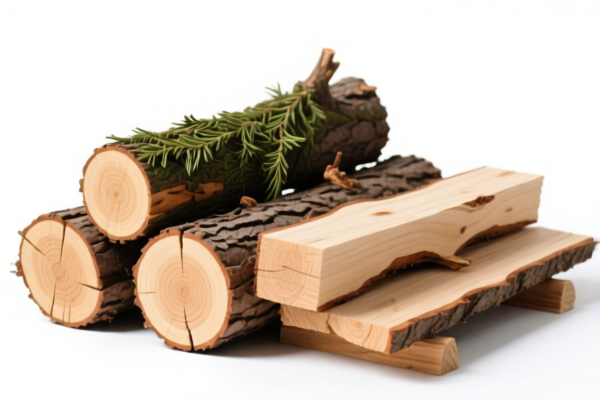
AI Analysis
🌲 Other Coniferous Wood in the Rough (Non-Structural Use)
🌐 HS Code Reference & Customs Clearance Guide | 2026 Latest Tariff Analysis | Professional Clearance Strategy
📌 1. Product Definition and Classification: What is "Other Coniferous Wood in the Rough"?
Coniferous wood in the rough refers to wood that has been stripped of its bark and sapwood, or roughly squared, but has not been sawn, chipped, or otherwise worked beyond what is necessary to facilitate transport or loading. In the context of non-structural use, these logs or timber pieces are typically intended for: * Paper pulp manufacturing * Industrial processing (e.g., chipboard, plywood veneer) * Fuel biomass * General carpentry where structural load-bearing specifications are not the primary constraint
⚠️ Key Distinction:
- If the wood is sawn to specific dimensions for construction → It may fall under different HS codes (e.g., 4403.40+).
- If the wood is chemically treated or preserved → Additional regulations apply.
- "Rough" implies no precision milling; it retains its natural cylindrical or semi-cylindrical shape, or has been simply debarked.
📦 2. HS Code Classification Details (2026 Latest Tariff Authority Match)
Based on the provided data, the product is classified under 4403.21 or 4403.24/26 variants, specifically targeting unprocessed coniferous timber. The following HS codes are derived from the provided dataset:
| HS Code | Product Description | Matching Criteria | Key Characteristics |
|---|---|---|---|
4403.21.01.30 |
Untreated coniferous logs for fine woodworking | Matches coniferous material in log form | 🟢 Best Fit for fine woodworking or general non-structural use in log form |
4403.24.01.04 |
Bulk unprocessed coniferous timber | Matches coniferous material in coarse/raw form | 🟡 Bulk/Industrial use, rough shape |
4403.26.01.08 |
Bulk unprocessed coniferous logs | Matches coniferous material in log/rough form | 🟡 Standard log form for transport |
4403.26.01.65 |
Other unprocessed coniferous logs | Matches coniferous material in rough/log form | 🟡 General category for unprocessed logs |
4403.26.01.08 |
Other unprocessed coniferous logs (Other Category) | Matches coniferous material in log form | 🔵 Catch-all for non-specified coniferous logs |
🔍 Critical Note:
- All listed codes share the same tax structure (35.0% total).
- The distinction between them lies in specific sub-categories (e.g., specific wood species, exact degree of roughness, or intended end-use like "fine woodworking" vs. "bulk").
- Non-structural use does not automatically lower the tariff; classification is based on physical form (rough/log) and species (coniferous).
💰 3. 2026 Latest Tariff Rate Breakdown (Including Surtaxes & Policy Surcharges)
✅ Applicable Country: United States (US)
✅ Origin: China (CN)
✅ Effective Time: Current (as per data provided)
🎯 1. All Listed HS Codes (4403.21.01.30, 4403.24.01.04, 4403.26.01.08, 4403.26.01.65)
| Item | Content |
|---|---|
| Base Duty Rate | 0.0% (Ad Valorem) |
| Section 301 Surtax | +25.0% (Additional Tariff) |
| Section 122 Tariff | +10.0% (Specific Provision Surtax) |
| Total Tax Rate | 35.0% |
| Tax Calculation | CIF Value × 35% |
| De Minimis Exemption | ❌ Not Applicable (Wood products generally excluded) |
| Legal Basis Path | Section 301 → Section 122 → USITC 4403.2x.x |
📌 Explanation:
- Base Duty (0%): Standard MFN (Most Favored Nation) rate for wood logs.
- Section 301 (25%): Applied due to the "China Trade Remedies" under US Trade Act Section 301.
- Section 122 (10%): Additional surtax for specific strategic or sensitive goods, often applied to raw materials.
- Total 35%: A significant cost burden. No exemptions are available for standard non-structural use.
🛠️ 4. Customs Clearance Practical Advice (Real-World Pitfall Guide)
✅ 1. Required Documentation Checklist (Non-Negotiable)
| Document | Must Provide | Explanation |
|---|---|---|
| ✅ Phytosanitary Certificate | ✔️ Critical | Required to prevent pest introduction. Must be issued by origin country's agricultural authority. |
| ✅ Commercial Invoice | ✔️ | Must specify: Wood species, form (log/rough), volume (board feet/cubic meters), value. |
| ✅ Bill of Lading (B/L) | ✔️ | Confirm container type (reefer if needed, but usually dry). |
| ✅ Fumigation Certificate | ✔️ | If wood is not ISPM 15 compliant, fumigation proof is mandatory. |
| ✅ Packing List | ✔️ | Detail number of logs, total weight, and dimensions. |
| ✅ End-Use Declaration | ✔️ | State "Non-Structural Use" (e.g., pulp, processing) to avoid structural wood regulations. |
✅ 2. Declaration Tips (Key Mantra)
🔥 "Species Clear, Form Rough, Fumigated, No Structural Claims!"
| Scenario | Correct Declaration | Incorrect Action |
|---|---|---|
| Raw Logs for Pulp | 4403.26.01.08 – "Untreated Coniferous Logs, for Pulp" |
Declare as "Timber for Construction" → Higher scrutiny |
| Debarked Logs | 4403.24.01.04 – "Rough Coniferous Timber, Debarked" |
Claim "Sawn Timber" → Wrong HS Code, penalty |
| With Bark | 4403.10 (Not in data, but related) |
If bark is removed, do not claim "with bark" |
| Treated Wood | Must declare chemical treatment | Undeclared treatment → Seizure & Fine |
✅ 3. Special Handling Cases
| Situation | Handling Advice |
|---|---|
| ISPM 15 Compliance | Ensure all wood packaging (pallets, crates) is heat-treated and stamped. Raw logs must meet phytosanitary rules. |
| Species Identification | Provide detailed botanical name (e.g., Pinus sylvestris). Misidentification leads to delays. |
| Moisture Content | Declare if high moisture (risk of mold during transit). |
| Origin Proof | Provide Certificate of Origin to avoid disputes on Section 301 applicability. |
🌍 5. Global Market Comparison (2026 Latest)
| Country/Region | Recommended HS Code | Duty Rate | Certification | Notes |
|---|---|---|---|---|
| 🇺🇸 United States | 4403.26.01.08 etc. |
35.0% | Phytosanitary + ISPM 15 | High tariff due to 301/122 |
| 🇨🇳 China | 4403.21.01.30 |
~0-5% | Phytosanitary | Low duty, strict IPPC checks |
| 🇪🇺 European Union | 4403.26 |
~0-10% | EUTR (EU Timber Regulation) | Requires Due Diligence Statement |
| 🇦🇺 Australia | 4403.26 |
~0-5% | Biosecurity Clearance | Strict quarantine for wood pests |
| 🇯🇵 Japan | 4403.26 |
~0-5% | Phytosanitary | High quality standards for logs |
📌 Conclusion:
- The US imposes the highest burden (35%) due to trade policies.
- EU and Australia focus on phytosanitary and sustainability (EUTR) rather than high tariffs.
- Non-structural use does not exempt you from phyto requirements.
📌 6. Common Errors & Pitfall Guide (Lessons Learned)
❌ Error 1: Declaring "Rough Logs" as "Sawn Timber"
👉 Consequence: HS Code mismatch → 10-25% penalty + Delay
❌ Error 2: No Phytosanitary Certificate
👉 Consequence: Seizure & Destruction at US port → Total Loss
❌ Error 3: Undeclared Bark or Sapwood
👉 Consequence: If bark is present, different HS code may apply → Recalculation + Fine
❌ Error 4: Ignoring Section 122 Tariff
👉 Consequence: Underpayment by 10% → Back taxes + Interest
✅ Correct Practice:
"Coniferous Logs, Untreated, Rough Form, For Pulp Processing, Botanical Name: Pinus spp., Fumigated, ISPM 15 Compliant Packaging, Origin: China"
🎯 7. Conclusion: Precise Declaration, Cost Control, Smooth Clearance!
🎯 Remember the Mantra:
🔹 "Species, Form, Phyto – The Holy Trinity of Wood Clearance!"
🔹 "35% Tax in US, No Exemption, Prepare Early!"
📌 Pro Tip:
- If shipping to the US, pre-clearance with a licensed customs broker is mandatory.
- Consider origin diversification (e.g., Canada, Russia) if tariffs are prohibitive, but check their trade status too.
- Always verify the specific sub-code (01.30 vs 01.08) based on exact wood species and degree of roughness.
📣 Immediate Action:
📞 Engage a Licensed Customs Broker + Provide Phytosanitary Certificate + Submit Pre-Import Notification
🚀 Ensure your wood, cleared efficiently, tax-compliant, and risk-free!
✨ Professional clearance starts with precise classification!
💼 Your cost savings begin with accurate HS coding!
Customer Reviews
About HS Code Classification
The Harmonized System (HS) is an internationally standardized nomenclature developed by the World Customs Organization (WCO) to classify traded products. Over 200 countries use the HS system as the basis for customs tariffs, trade statistics, and import/export regulations.
Each HS code follows a hierarchical structure:
- Chapter (2 digits) — Broad category of goods (e.g., Chapter 84: Machinery and Mechanical Appliances)
- Heading (4 digits) — More specific grouping within the chapter
- Subheading (6 digits) — Internationally standardized breakdown, used by all WCO member countries
- National subdivisions (8-10 digits) — Country-specific extensions for further classification, such as US HTSUS 10-digit codes
Correct HS code classification is essential for smooth customs clearance, accurate duty payment, and compliance with trade regulations. Misclassification can lead to customs delays, overpayment of duties, or penalties.
When importing from CN to US, the applicable tariff rates may include:
- Most-Favored-Nation (MFN) rate — The standard duty rate applied to WTO members
- General rate — Applied to countries without trade agreements
- Trade remedy duties — Additional tariffs such as Section 301 (anti-dumping), Section 232 (national security), or countervailing duties
The information provided on this page is for reference purposes only. For official classification, please consult with your local customs authority or a licensed customs broker.