Other construction braided material
CN → US| HS Code | Tariff Rate | Origin | Destination | Doc |
|---|---|---|---|---|
| 5308200000 | 35.0% | CN | US | Official Doc |
| 5308100000 | 35.0% | CN | US | Official Doc |
| 5607909000 | 41.3% | CN | US | Official Doc |
| 5607504000 | 38.6% | CN | US | Official Doc |
| 4601999000 | 38.3% | CN | US | Official Doc |
Product Images
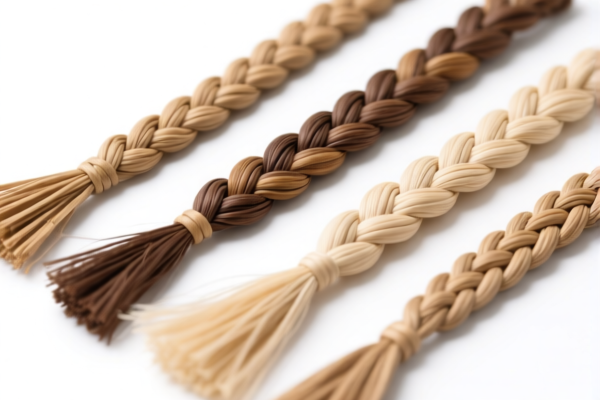
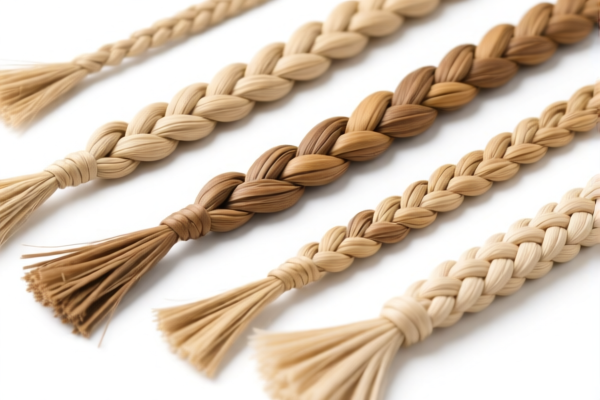
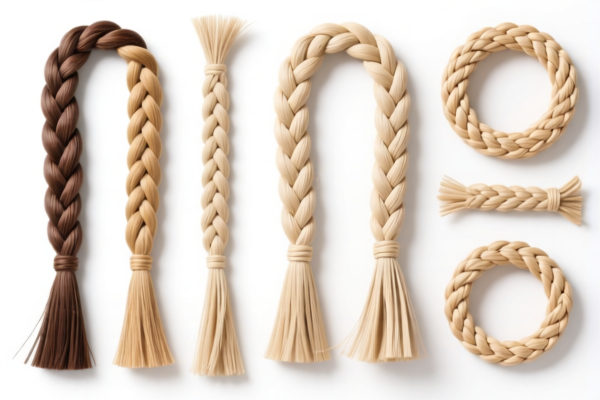
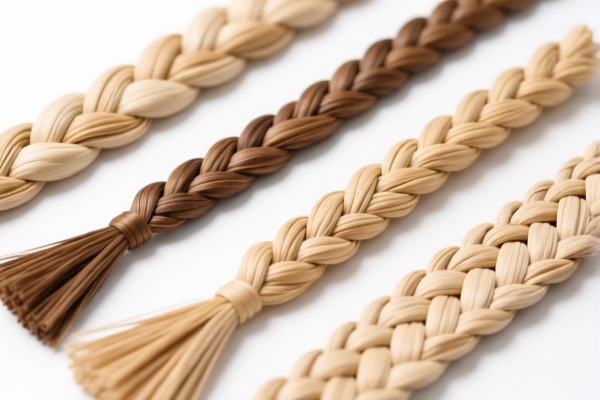
AI Analysis
🧶 Construction Braided Material: The Ultimate Classification & Tax Strategy Guide (2026)
🌐 HS Code Reference & Customs Clearance Guide | 2026 Latest Tariff Analysis | Professional Customs Strategy
📌 I. Product Definition: What is "Other Construction Braided Material"?
"Braided material" in construction refers to versatile woven structures used for reinforcement, binding, fencing, or decoration. Because "braided" is a morphological characteristic (how it's made) rather than a functional one, classification hinges entirely on the raw material (natural fiber, paper, synthetic, etc.).
⚠️ Critical Distinction:
- If it is natural plant fiber (jute, hemp, straw, paper yarn) → Chapters 53 or 46
- If it is rope/cable structure (twisted/braided strands for strength) → Chapter 56
- If it is a generic "other"编织 mat not fitting specific rope/fiber categories → Chapter 46
📦 II. HS Code Classification Details (2026 Tariff Authority Alignment)
| HS Code | Product Description | Basis for Classification | Tax Rate (Total) |
|---|---|---|---|
5308.20.00.00 |
Other spun yarn of vegetable textile fibers | Braided shape implies vegetable fiber/yarn. Fits "Other plant textile fibers or yarns." | 35.0% |
5308.10.00.00 |
Spun yarn of paper textile fibers | Usage/common sense suggests plant fiber or paper yarn. Fits "Other plant textile fibers or paper yarns." | 35.0% |
5607.90.90.00 |
Other ropes, cables, and plaited bands | "Braided" form matches ropes/cables category. Implies fiber or synthetic material. | 41.3% |
5607.50.40.00 |
Ropes, cables, and plaited bands of synthetic fibers | "Plaited or braided" form. Explicitly synthetic fiber ropes/lines. | 38.6% |
4601.99.90.00 |
Other woven materials of plaiting materials | Matches the "made of braided materials" attribute. Falls under the "Other" fallback category for woven plaiting goods. | 38.3% |
🔍 Key Insight:
- Natural/Paper Fibers →5308.xx(Lower base duty, but high total due to tariffs)
- Synthetic/Rope Structures →5607.xx(Higher base duty, variable total)
- Plaited Mats/Mats →4601.99(Fallback for general braided weaving)
💰 III. 2026 Latest Tariff Rate Breakdown (Including Additional Taxes & Policies)
✅ Applicable Country: United States (US)
✅ Origin: China (CN)
✅ Effective Date: From November 10, 2025 onwards
🎯 1. 5308.20.00.00 & 5308.10.00.00 — Plant Fibers / Paper Yarn
| Item | Content |
|---|---|
| Base Duty | 0.0% (ad valorem) |
| Section 301 Additional Duty | +25.0% |
| Section 122 Duty | +10.0% |
| Total Rate | 35.0% |
| Calculation | CIF Value × 35% |
| De Minimis Exemption | ❌ Not Eligible (deny_de_minimis) |
| Legal Basis Path | USITC:5308.20.00.00 → FOOTNOTE:301 → IEEPA:122 |
📌 Explanation:
- Base 0%: Plant fibers often have low base duties.
- 301 Section (+25%): Standard US-China trade war tariff.
- Section 122 (+10%): Additional national security/economic tariff applied to specific Chinese imports.
- Total 35%: Significant cost impact. Must be included in landed cost calculations.
🎯 2. 5607.90.90.00 — Other Ropes/Cables (Mixed/Synthetic)
| Item | Content |
|---|---|
| Base Duty | 6.3% |
| Section 301 Additional Duty | +25.0% |
| Section 122 Duty | +10.0% |
| Total Rate | 41.3% |
| Calculation | CIF Value × 41.3% |
| De Minimis Exemption | ❌ Not Eligible |
| Legal Basis Path | USITC:5607.90.90.00 → FOOTNOTE:301 → IEEPA:122 |
📌 Note:
- Higher base duty (6.3%) makes this the most expensive classification.
- If the material is clearly synthetic rope,5607.50.40.00may apply instead.
🎯 3. 5607.50.40.00 — Synthetic Fiber Ropes/Braids
| Item | Content |
|---|---|
| Base Duty | 3.6% |
| Section 301 Additional Duty | +25.0% |
| Section 122 Duty | +10.0% |
| Total Rate | 38.6% |
| Calculation | CIF Value × 38.6% |
| De Minimis Exemption | ❌ Not Eligible |
| Legal Basis Path | USITC:5607.50.40.00 → FOOTNOTE:301 → IEEPA:122 |
📌 Optimization Tip:
- If your product is synthetic, classify under5607.50.40.00(38.6%) instead of5607.90.90.00(41.3%) to save 2.7%.
🎯 4. 4601.99.90.00 — Other Woven Plaiting Materials
| Item | Content |
|---|---|
| Base Duty | 3.3% |
| Section 301 Additional Duty | +25.0% |
| Section 122 Duty | +10.0% |
| Total Rate | 38.3% |
| Calculation | CIF Value × 38.3% |
| De Minimis Exemption | ❌ Not Eligible |
| Legal Basis Path | USITC:4601.99.90.00 → FOOTNOTE:301 → IEEPA:122 |
📌 Fallback Category:
- Use this only if the product is a matted/plaited sheet (e.g., bamboo mats, straw weaving) and not a rope or yarn.
- Slightly cheaper than synthetic ropes but more expensive than plant fibers.
🛠️ IV. Customs Clearance Practical Advice (Pitfall Avoidance Guide)
✅ 1. Required Documentation Checklist
| Document | Mandatory? | Description |
|---|---|---|
| ✅ Product Specifications | ✔️ | Material composition (e.g., "100% Hemp," "Nylon Braided"). |
| ✅ Material Composition Test | ✔️ | Lab report proving natural vs. synthetic content. |
| ✅ Product Photos | ✔️ | Close-up of braid structure, ends, and packaging. |
| ✅ Commercial Invoice | ✔️ | Clearly state "Braided Rope" or "Plaited Mat" with HS Code. |
| ✅ Packing List | ✔️ | Weight and dimensions. |
| ✅ Origin Certificate | ✔️ | If not Chinese origin, to claim lower/base rates. |
✅ 2. Declaration Strategy (Key Mantra)
🔥 "Material First, Form Second. Don't Guess, Prove It!"
| Scenario | Correct Declaration | Wrong Action | Consequence |
|---|---|---|---|
| Hemp/Jute Braided Rope | 5308.20.00.00 |
Misdeclare as 5607 (Synthetic) |
Under-declaration penalty + Back taxes |
| Nylon Braided Line | 5607.50.40.00 |
Misdeclare as 5308 (Plant) |
Over-declaration or misclassification fine |
| Bamboo Straw Mat | 4601.99.90.00 |
Declare as "Textile" | Rejection or inspection delay |
| Paper Yarn Braiding | 5308.10.00.00 |
Declare as "Plastic" | Customs seizure |
✅ 3. Special Cases Handling
| Situation | Handling Advice |
|---|---|
| Mixed Materials | If blend >50% plant, use 5308. If >50% synthetic, use 5607. |
| Treated Materials | If coated with rubber/plastic, may shift to Chapter 39 or 40. Provide coating details. |
| OEM Custom Braids | Provide design drawings + material specs to avoid "undefined" status. |
| Sample Imports | Still subject to full tariffs. No de minimis exemption for commercial samples from China. |
🌍 V. Global Market Comparison (2026 Latest)
| Country/Region | Recommended HS Code | Duty Rate | Certification | Notes |
|---|---|---|---|---|
| 🇺🇸 USA | 5308.20.00.00 |
35.0% | None specific | High tariffs due to 301 + 122 |
| 🇨🇳 China | 5308.20.00.00 |
5-10% | GB Standards | Lower base duty, no US-style add-ons |
| 🇪🇺 EU | 5308.20.00.00 |
0-5% | CE (if applicable) | No 301/122 equivalent |
| 🇦🇺 Australia | 5308.20.00.00 |
5% | ACMA (if electronic) | Standard FTA rates may apply |
📌 Conclusion:
- USA is the only major market with punitive additional tariffs (301 + 122).
- Total landed cost for Chinese braided materials in the US ranges from 35% to 41.3%.
- Supply chain diversification (Vietnam, India, Thailand) may offer significant tariff advantages.
📌 VI. Common Mistakes & Pitfalls (Blood-Lesson Guide)
❌ Mistake 1: Assuming all "braided" items are ropes.
👉 Consequence: Using 5607 (41.3%) for a plant-fiber mat (4601.99, 38.3%) → Overpaying 3%.
❌ Mistake 2: Declaring "Textile Braided Cord" without material spec.
👉 Consequence: Customs flags for inspection → Delay + Storage Fees.
❌ Mistake 3: Using "Braided Material" as final description.
👉 Consequence: Rejection for lack of specificity. Must specify: "Hemp Braided Rope" or "Nylon Braided Cable."
❌ Mistake 4: Ignoring Section 122 (10%).
👉 Consequence: Budget miscalculation. Total tax is NOT just 301 (25%) + Base.
✅ Correct Approach:
"Hemp Braided Rope, 10mm diameter, for construction tying. Material: 100% Natural Jute/Hemp. HS: 5308.20.00.00."
🎯 VII. Conclusion: Precise Classification Saves Money!
🎯 Remember the Mantra:
🔹 "Material Determines Chapter. Form Determines Heading. Tax Determines Bottom Line!"
🔹 "Plant Fibers 35%, Synthetics 38.6%, Mixed Ropes 41.3%. Choose Wisely!"
📌 Pro Tip:
If your braided material is originating from Vietnam, India, or Thailand, you may qualify for lower base duties or FTAs (Free Trade Agreements), potentially reducing the total burden despite the 301 tariff (if rules of origin are met).
Recommendation: Apply for a Pre-Ruling (Advance Ruling) with CBP before shipment to confirm the exact HS Code and tax liability.
📣 Immediate Action:
📞 Contact a licensed customs broker + Provide material test reports + File for HS Code Pre-Ruling
🚀 Ensure smooth customs clearance, accurate tax prediction, and maximized profit margins!
✨ Professional Customs Clearance Starts with Precise Classification!
💼 Every percentage point of duty matters in the low-margin construction trade!
Customer Reviews
About HS Code Classification
The Harmonized System (HS) is an internationally standardized nomenclature developed by the World Customs Organization (WCO) to classify traded products. Over 200 countries use the HS system as the basis for customs tariffs, trade statistics, and import/export regulations.
Each HS code follows a hierarchical structure:
- Chapter (2 digits) — Broad category of goods (e.g., Chapter 84: Machinery and Mechanical Appliances)
- Heading (4 digits) — More specific grouping within the chapter
- Subheading (6 digits) — Internationally standardized breakdown, used by all WCO member countries
- National subdivisions (8-10 digits) — Country-specific extensions for further classification, such as US HTSUS 10-digit codes
Correct HS code classification is essential for smooth customs clearance, accurate duty payment, and compliance with trade regulations. Misclassification can lead to customs delays, overpayment of duties, or penalties.
When importing from CN to US, the applicable tariff rates may include:
- Most-Favored-Nation (MFN) rate — The standard duty rate applied to WTO members
- General rate — Applied to countries without trade agreements
- Trade remedy duties — Additional tariffs such as Section 301 (anti-dumping), Section 232 (national security), or countervailing duties
The information provided on this page is for reference purposes only. For official classification, please consult with your local customs authority or a licensed customs broker.