Other plastic conductive boards
CN → US| HS Code | Tariff Rate | Origin | Destination | Doc |
|---|---|---|---|---|
| 3921190090 | 41.5% | CN | US | Official Doc |
| 3921905050 | 39.8% | CN | US | Official Doc |
| 3926909987 | 22.8% | CN | US | Official Doc |
| 3926909989 | 22.8% | CN | US | Official Doc |
| 3920995000 | 40.8% | CN | US | Official Doc |
Product Images

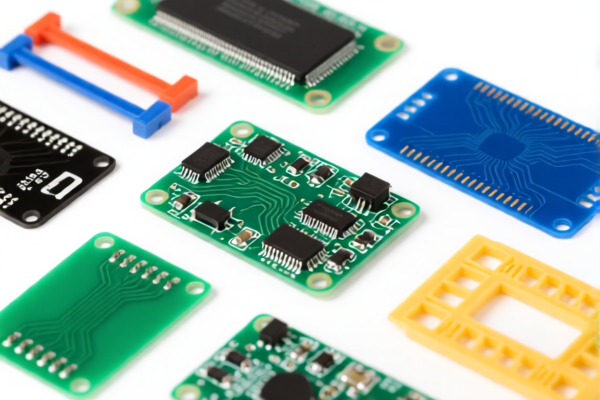
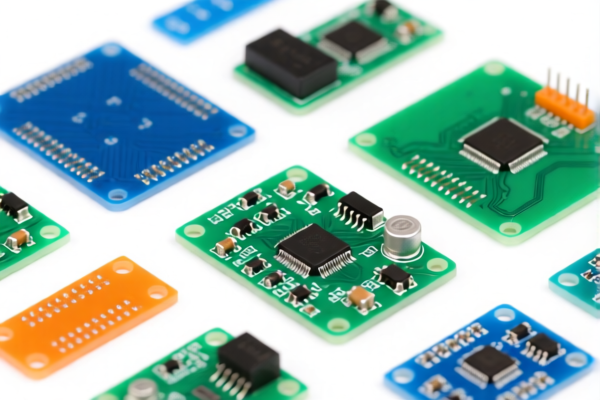

AI Analysis
🧱 Conductive Plastic Boards: The High-Tax Trap | 2026 Customs Clearance Strategy
🌐 HS Code Reference & Clearance Guide | Latest 2026 Tariff Analysis | Professional Compliance Strategy
📌 I. Product Definition & Classification: What Are "Other Plastic Conductive Boards"?
Conductive plastic boards are specialized materials combining polymer matrices with conductive fillers (carbon, metal, or conductive polymers). In international trade, they are often misclassified due to the ambiguity between "plastic sheets" and "plastic articles."
Key Distinction:
- Plastic Sheets/Foils (Chapter 39.01-39.14): Raw or semi-finished forms, flat or rolled, primarily defined by material and shape.
- Plastic Articles (Chapter 39.26): Finished or semi-finished items that have undergone significant processing, often defined by function or specific use, falling under "Other" categories.
⚠️ Critical Alert:
The term "Conductive" does not automatically move the product to Chapter 85 (Electrical Machinery). If the primary characteristic remains "plastic," it stays in Chapter 39, but the specific HS code determines whether you face ~23% or ~40-42% in US import duties.
📦 II. HS Code Classification Details (2026 Latest Tariff Reference)
Based on the provided data, five potential HS codes apply. The difference lies in the specific subheading for "Plastic Sheets" vs. "Other Plastic Articles."
| HS Code | Product Description | Classification Logic | Total Tax Rate |
|---|---|---|---|
3921.19.00.90 |
Other plates, sheets, film, foil, and strip, of plastics | Shape-Based: Explicitly covers "Plastic" + "Board/Sheet" form. No material/shape conflict. | 41.5% |
3921.90.50.50 |
Other plates, sheets, film, foil, and strip, of plastics | Shape-Based: Matches "Plastic" material + "Board" form. Falls under "Other" within the sheet category. | 39.8% |
3920.99.50.00 |
Other plates, sheets, film, foil, and strip, of plastics (non-cellular) | Shape-Based: "Plastic" material + "Board" form. "Other" matches the generic subcategory. | 40.8% |
3926.90.99.87 |
Other articles of plastics and articles of other materials of heading 39.01 to 39.14 | Article-Based: "Plastic" material + "Board" form fits under "Other" articles. No material/shape conflict. Best for non-sheet-specific uses. | 22.8% |
3926.90.99.89 |
Other articles of plastics and articles of other materials of heading 39.01 to 39.14 | Article-Based: "Plastic" material + "Board" form. Fits "Other" category. Generic catch-all for plastic items. | 22.8% |
🔍 Key Insight:
- Codes3921.xxxxand3920.99are stricter on "Sheet/Plate" morphology. They incur higher tariffs (~40%) due to higher base duties and 122/301 clauses.
- Codes3926.90are broader "Article" categories. They benefit from lower base tariffs, resulting in a significantly lower total rate of 22.8%.
- Strategic Choice: If the board is a finished component (e.g., EMI shielding plate, insulating base),3926is preferable. If it is a raw semi-finished sheet,3921/3920is mandatory.
💰 III. 2026 Latest Tariff Rate Breakdown (Including Surtaxes)
✅ Applicable Country: United States (US)
✅ Origin: China (CN)
✅ Effective Date: November 10, 2025 onwards
🎯 1. Low-Tax Option: 3926.90.99.87 & 3926.90.99.89
Best for: Finished plastic components, EMI shields, specialized industrial parts.
| Item | Detail |
|---|---|
| Base Tariff | 5.3% (MFN Rate) |
| Section 301 Surtax | +7.5% |
| Section 122 Surtax | +10% (Specific to certain Chinese imports) |
| Total Effective Rate | 22.8% |
| Tax Calculation | CIF Value × 22.8% |
| De Minimis Eligibility | ❌ Not Eligible (Value exceeds $800 threshold for this category) |
| Legal Basis Path | USITC:3926.90.99.87 → Section 301 Footnote → Section 122 |
📌 Explanation:
- The base rate (5.3%) is significantly lower than Chapter 39.01-39.14 codes.
- Section 301 (7.5%) is the standard penalty for Chinese plastic articles.
- Section 122 (10%) is an additional surcharge.
- Total 22.8% is the most cost-effective route if the product qualifies as an "Article" rather than a raw "Sheet."
🎯 2. High-Tax Option: 3921.19.00.90
Best for: Raw plastic sheets/plates, unfinished semi-finished goods.
| Item | Detail |
|---|---|
| Base Tariff | 6.5% |
| Section 301 Surtax | +25.0% |
| Section 122 Surtax | +10% |
| Total Effective Rate | 41.5% |
| Tax Calculation | CIF Value × 41.5% |
| De Minimis Eligibility | ❌ Not Eligible |
| Legal Basis Path | USITC:3921.19.00.90 → Section 301 → Section 122 |
📌 Explanation:
- The base rate (6.5%) is higher than3926.
- Section 301 Surtax is 25% (the maximum tier for many plastics).
- Total 41.5% is nearly double the cost of the3926option.
- Risk: Misclassifying a finished article as a raw sheet can lead to penalties if customs determines the product has undergone "substantial transformation."
🎯 3. High-Tax Option: 3921.90.50.50
Best for: Other plastic sheets/plates not elsewhere specified.
| Item | Detail |
|---|---|
| Base Tariff | 4.8% |
| Section 301 Surtax | +25.0% |
| Section 122 Surtax | +10% |
| Total Effective Rate | 39.8% |
| Tax Calculation | CIF Value × 39.8% |
| De Minimis Eligibility | ❌ Not Eligible |
📌 Explanation:
- Slightly lower base rate (4.8%) than3921.19, but the 25% Section 301 surtax keeps the total high at 39.8%.
🎯 4. High-Tax Option: 3920.99.50.00
Best for: Non-cellular plastic plates, sheets, etc.
| Item | Detail |
|---|---|
| Base Tariff | 5.8% |
| Section 301 Surtax | +25.0% |
| Section 122 Surtax | +10% |
| Total Effective Rate | 40.8% |
| Tax Calculation | CIF Value × 40.8% |
| De Minimis Eligibility | ❌ Not Eligible |
📌 Explanation:
- Standard tariff for non-cellular plastics. The 25% Section 301 surtax is the key driver of the high cost.
🛠️ IV. Customs Clearance Practical Advice (Risk Avoidance Guide)
✅ 1. Document Preparation Checklist (Essential)
| Document | Required | Purpose |
|---|---|---|
| ✅ Product Specification Sheet | ✔️ | Detail material composition (e.g., "Polycarbonate + Carbon Fiber"), conductive properties (surface resistance), and dimensions. |
| ✅ Technical Data Sheet (TDS) | ✔️ | Prove whether the product is a "raw sheet" or a "finished article" (e.g., drilled holes, cut to shape, coated). |
| ✅ Product Photos (Clear & Detailed) | ✔️ | Show edges, packaging, and any labeling. Distinguish between rolls/sheets and finished parts. |
| ✅ Commercial Invoice | ✔️ | Clearly state "Plastic Conductive Board" and describe the use (e.g., "for EMI shielding in electronics" vs. "raw material for fabrication"). |
| ✅ Packing List | ✔️ | Confirm no hidden accessories that might change classification. |
| ✅ Certificate of Origin | ✔️ | Mandatory for China-origin goods to assess Section 301 liability. |
✅ 2. Declaration Strategy (Key Tips)
🔥 Motto: "Form Defines Tariff, Function Supports Article!"
| Scenario | Recommended HS Code | Reasoning |
|---|---|---|
| Raw Plastic Sheet/Plate (Flat, uncut, or standard sizes) | 3921.19.00.90 or 3920.99.50.00 |
Classified as "Plastic Sheets." High tax (39-42%). |
| Finished Conductive Part (Cut, shaped, with holes, or specific industrial use) | 3926.90.99.87 or 3926.90.99.89 |
Classified as "Other Plastic Articles." Lower tax (22.8%). |
| Conductive Plastic Foam | ❌ Avoid 3920/3921 |
Use 3921.10 if cellular. Data does not cover foam, but ensure you don't misdeclare foam as solid sheet. |
| Electrical Component (Fully assembled circuit board) | ❌ Not Chapter 39 | May fall under 8534 (Printed circuits) or 8537 (Boards for electric control). Check if it has components mounted. |
📌 Critical Warning:
- If you declare a finished component as3926.90but customs determines it is essentially a raw sheet (e.g., only cut to size, no further processing), you may face misclassification penalties and owe the difference (41.5% - 22.8% = 18.7% back taxes).
- Justification is Key: For3926, emphasize "substantial transformation" (e.g., coating, drilling, molding, specific industrial application).
✅ 3. Special Cases & Troubleshooting
| Situation | Handling Advice |
|---|---|
| OEM Custom Shapes | Provide design drawings showing the shape is not a standard sheet. This supports 3926 classification. |
| Multiple Layers/Laminates | If conductive layer is just a coating on a plastic sheet, 3921 is still likely. If it's a composite material article, 3926 may apply. |
| EMI Shielding Boards | Clearly state "EMI Shielding" on invoice. If it's a finished part for a specific device, 3926 is stronger. |
| High Surface Conductivity | Conductivity itself does not change HS Code. It remains a plastic article. Do not claim Chapter 85 unless it's a functioning circuit. |
🌍 V. Global Market Comparison (2026 Latest)
| Country/Region | Recommended HS Code | Tariff Rate (China Origin) | Key Certification | Notes |
|---|---|---|---|---|
| 🇺🇸 USA | 3926.90.99.87 |
22.8% | None specific | Best Option: Avoids 25% Section 301 surtax tier. |
| 🇺🇸 USA | 3921.19.00.90 |
41.5% | None specific | Avoid if possible: High Section 301 surtax. |
| 🇪🇺 EU | 3926.90.99 |
~6% + VAT | REACH, RoHS | No Section 301/122. Lower base duties. |
| 🇨🇳 China | 3926.90.99 |
~5% | None | Domestic trade. |
| 🇬🇧 UK | 3926.90.99 |
~6% + VAT | UKCA | Post-Brexit standards apply. |
📌 Conclusion:
- USA is the critical market due to Section 301 and 122 surcharges.
- Choosing3926over3921/3920saves ~18% in duty.
- EU/UK have no such surcharges, so classification matters less for cost, but more for regulatory compliance (REACH).
📌 VI. Common Mistakes & Pitfalls (Lessons Learned)
❌ Mistake 1: Declaring finished conductive parts as raw plastic sheets (3921)
👉 Consequence: Paying 41.5% instead of 22.8%. Wasted cost.
❌ Mistake 2: Declaring raw plastic sheets as finished articles (3926)
👉 Consequence: Customs audit → Misclassification penalty + Back taxes (18.7%) + Delay. High Risk.
❌ Mistake 3: Using "Conductive Board" without specifying material
👉 Consequence: Customs may classify under 8534 (Printed Circuits) if they suspect components, leading to different duties and additional scrutiny.
❌ Mistake 4: Ignoring Section 122
👉 Consequence: All five HS codes in the data include a 10% Section 122 surcharge. Failing to account for this leads to underpayment.
✅ Correct Practice:
"Conductive Plastic Board, Finished Component, EMI Shielding Application, Model XYZ, Made in China"
- Use3926.90.99.87if it is a finished part.
- Use3921.19.00.90if it is a raw sheet.
- Provide technical data to support the "Article" vs. "Sheet" distinction.
🎯 VII. Conclusion: Precise Classification Saves 18%+
🎯 Remember the Rule:
🔹 "Raw Sheet = 3921/3920 (40%+ Tax)"
🔹 "Finished Article = 3926 (22.8% Tax)"
🔹 "Shape + Processing = Key to Lower Duty!"
📌 Pro Tip:
If your product is 100% raw plastic sheet with conductive properties, you must use 3921 or 3920. Do not force 3926.
If you have any additional processing (cutting, drilling, coating, molding) that creates a "part" or "article," lean towards 3926 with strong documentation.
Consider applying for an Advance Ruling (PB1) with US Customs and Border Protection (CBP) to lock in the 22.8% rate legally.
📣 Immediate Action:
📞 Consult a licensed customs broker + Provide Technical Data Sheets + Apply for CBP Advance Ruling if value is significant.
🚀 Optimize your supply chain costs by choosing the correct HS Code from day one!
✨ Professional Clearance Starts with Accurate Classification!
💼 Every 1% of tax saved is pure profit!
Customer Reviews
About HS Code Classification
The Harmonized System (HS) is an internationally standardized nomenclature developed by the World Customs Organization (WCO) to classify traded products. Over 200 countries use the HS system as the basis for customs tariffs, trade statistics, and import/export regulations.
Each HS code follows a hierarchical structure:
- Chapter (2 digits) — Broad category of goods (e.g., Chapter 84: Machinery and Mechanical Appliances)
- Heading (4 digits) — More specific grouping within the chapter
- Subheading (6 digits) — Internationally standardized breakdown, used by all WCO member countries
- National subdivisions (8-10 digits) — Country-specific extensions for further classification, such as US HTSUS 10-digit codes
Correct HS code classification is essential for smooth customs clearance, accurate duty payment, and compliance with trade regulations. Misclassification can lead to customs delays, overpayment of duties, or penalties.
When importing from CN to US, the applicable tariff rates may include:
- Most-Favored-Nation (MFN) rate — The standard duty rate applied to WTO members
- General rate — Applied to countries without trade agreements
- Trade remedy duties — Additional tariffs such as Section 301 (anti-dumping), Section 232 (national security), or countervailing duties
The information provided on this page is for reference purposes only. For official classification, please consult with your local customs authority or a licensed customs broker.