Other plastic decorative boards
CN → US| HS Code | Tariff Rate | Origin | Destination | Doc |
|---|---|---|---|---|
| 3921190090 | 41.5% | CN | US | Official Doc |
| 3921905050 | 39.8% | CN | US | Official Doc |
| 3926909987 | 22.8% | CN | US | Official Doc |
| 3926909989 | 22.8% | CN | US | Official Doc |
| 3920995000 | 40.8% | CN | US | Official Doc |
Product Images
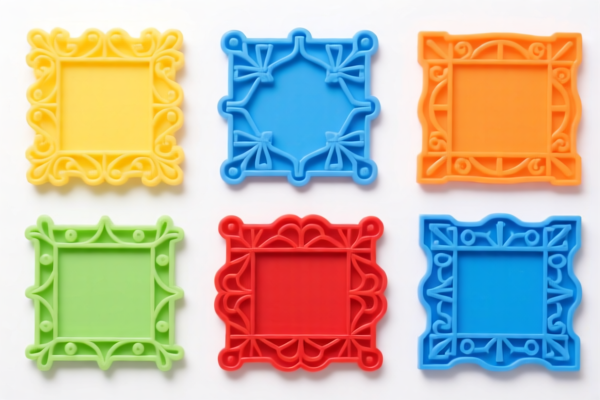

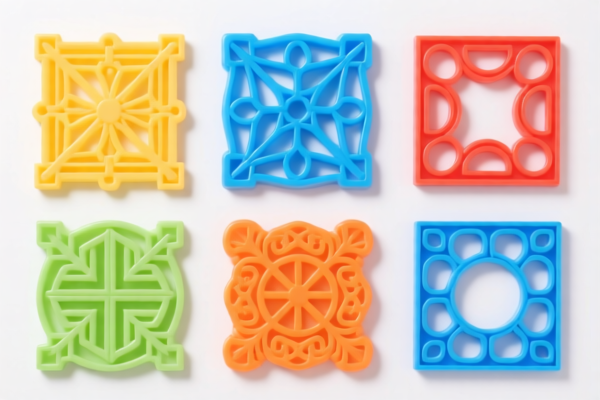
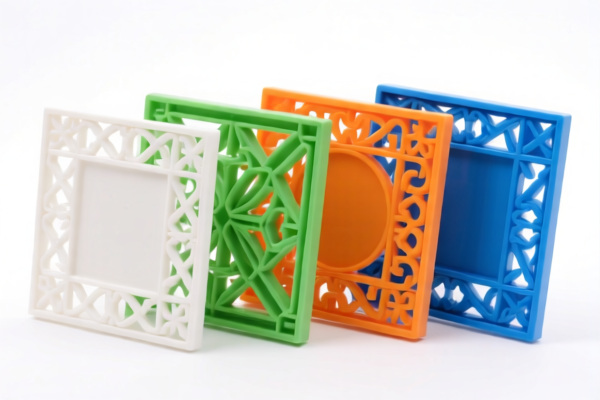
AI Analysis
🎨 Other Plastic Decorative Boards (Other Plastic Decorative Boards)
🌐 HS Code Reference & Customs Clearance Guide | 2026 Latest Tariff Analysis | Professional Level Strategy
📌 Part 1: Product Definition & Classification: Do You Really Understand "Decorative Boards"?
Other plastic decorative boards are versatile materials used in interior design, furniture, signage, and packaging. In international trade, they are categorized primarily by their material composition (Plastic) and form (Plates, Sheets, Films, Foils, or Strips).
The classification hinges on whether the product is considered a basic plastic plate/sheet (Chapter 39, heading 3920 or 3921) or a finished article of plastic (Chapter 39, heading 3926).
⚠️ Key Distinction Point:
- If the item is a raw or semi-finished plate/sheet (even if decorated) intended for further processing → Likely 3920.xxxx or 3921.xxxx.
- If the item is a finished article (e.g., pre-cut panels, composite boards with specific structural functions beyond just being a sheet) → Likely 3926.90.
📦 Part 2: HS Code Classification Details (2026 Latest Tariff Authority Comparison)
Based on the provided data, here are the applicable HS Codes for "Other Plastic Decorative Boards":
| HS Code | Product Description | Applicability Scenario | Material/Form Conflict? |
|---|---|---|---|
3921.19.00.90 |
Other plates, sheets, film, foil and strip, of plastics | Matches "Plastic" material and "Board/Plate" form. No conflict in material or form. | ❌ None |
3921.90.50.50 |
Other plates, sheets, film, foil and strip, of plastics | Matches "Plastic" material and "Board/Plate" form. Belongs to the "Other" category. | ❌ None |
3920.99.50.00 |
Other plates, sheets, film, foil and strip, of plastics | Material is "Plastic", form fits "Plate". "Other" matches the code's "Other" category. | ❌ None |
3920.99.20.00 |
Other plates, sheets, film, foil and strip, of plastics | "Two-color board" is a type of plate/sheet. Falls under "Other". No material conflict. | ❌ None |
3926.90.99.87 |
Other articles of plastics and articles of other materials of heading 3901 to 3914 | Material fits plastic attributes; form is "Other" plate under the residual category. No conflict. | ❌ None |
3926.90.99.89 |
Other articles of plastics and articles of other materials of heading 3901 to 3914 | Material explicitly "Plastic". Form is "Other" article. No material or form conflict. | ❌ None |
🔍 Key Reminder:
- 3920/3921 Codes: Generally apply to non-cellular plastics in the form of plates, sheets, etc.
- 3926.90 Codes: Apply to finished articles or items that don't fit neatly into the specific "plate/sheet" definitions of 3920/3921, often serving as a "Residual" (n.e.s.) category.
- Tax Implications: The distinction significantly impacts the Total Tax Rate due to different base tariffs and additional duties.
💰 Part 3: 2026 Latest Tariff Rate Breakdown (Including Additional Taxes & Policy Surcharges)
✅ Applicable Country: United States (US)
✅ Origin: China (CN)
✅ Effective Date: Ongoing (includes Section 301 and IEEPA surcharges)
🎯 1. High-Tax Category: Plates/Sheets (Heading 3920/3921)
These codes typically attract higher additional tariffs due to broader coverage of plastic imports.
📌 A. 3921.19.00.90
| Item | Content |
|---|---|
| Base Tariff | 6.5% |
| Section 301 Surcharge | +25.0% |
| 122 Section Surcharge | +10.0% |
| Total Tax Rate | 41.5% |
| Tax Calculation | CIF Value × 41.5% |
| Legal Basis | Base Tariff + Section 301 + IEEPA Section 122 |
📌 Explanation:
- This is a high-tax bracket classification.
- The 25% Section 301 duty is standard for many Chinese plastic products.
- The 10% IEEPA Section 122 duty applies to specific imported goods.
- Total Cost Impact: High. Ensure precise documentation to avoid misclassification penalties.
📌 B. 3921.90.50.50
| Item | Content |
|---|---|
| Base Tariff | 4.8% |
| Section 301 Surcharge | +25.0% |
| 122 Section Surcharge | +10.0% |
| Total Tax Rate | 39.8% |
| Tax Calculation | CIF Value × 39.8% |
| Legal Basis | Base Tariff + Section 301 + IEEPA Section 122 |
📌 C. 3920.99.50.00
| Item | Content |
|---|---|
| Base Tariff | 5.8% |
| Section 301 Surcharge | +25.0% |
| 122 Section Surcharge | +10.0% |
| Total Tax Rate | 40.8% |
| Tax Calculation | CIF Value × 40.8% |
| Legal Basis | Base Tariff + Section 301 + IEEPA Section 122 |
📌 D. 3920.99.20.00
| Item | Content |
|---|---|
| Base Tariff | 4.2% |
| Section 301 Surcharge | +25.0% |
| 122 Section Surcharge | +10.0% |
| Total Tax Rate | 39.2% |
| Tax Calculation | CIF Value × 39.2% |
| Legal Basis | Base Tariff + Section 301 + IEEPA Section 122 |
📌 Note:
- All codes in the 3920/3921 group incur the 25% Section 301 and 10% IEEPA 122 surcharges.
- The difference lies in the Base Tariff (ranging from 4.2% to 6.5%).
🎯 2. Lower-Tax Category: Other Articles (Heading 3926)
These codes are often used for more specific or finished plastic articles, resulting in lower additional surcharges.
📌 E. 3926.90.99.87
| Item | Content |
|---|---|
| Base Tariff | 5.3% |
| Section 301 Surcharge | +7.5% |
| 122 Section Surcharge | +10.0% |
| Total Tax Rate | 22.8% |
| Tax Calculation | CIF Value × 22.8% |
| Legal Basis | Base Tariff + Section 301 (Reduced) + IEEPA Section 122 |
📌 F. 3926.90.99.89
| Item | Content |
|---|---|
| Base Tariff | 5.3% |
| Section 301 Surcharge | +7.5% |
| 122 Section Surcharge | +10.0% |
| Total Tax Rate | 22.8% |
| Tax Calculation | CIF Value × 22.8% |
| Legal Basis | Base Tariff + Section 301 (Reduced) + IEEPA Section 122 |
📌 Critical Advantage:
- Tax Savings: Only 22.8% vs. ~40% for 3920/3921 codes.
- Reason: The Section 301 Surcharge is only 7.5% instead of 25%.
- Condition: Must convincingly argue that the product is an "Other Article" rather than a simple "Plate/Sheet."
🛠️ Part 4: Customs Clearance Practical Advice (Real-World Pitfall Guide)
✅ 1. Required Documentation Checklist (Non-negotiable)
| Document | Must Provide | Description |
|---|---|---|
| ✅ Product Specifications | ✔️ | Include dimensions, thickness, material composition (e.g., PVC, Acrylic, PE), and decorative finish details. |
| ✅ Technical Drawings | ✔️ | Clarify if the item is a raw sheet or a finished panel. |
| ✅ Product Photos | ✔️ | Clear images showing the board, edges, and any branding/packaging. |
| ✅ Commercial Invoice | ✔️ | Must accurately describe the product as "Plastic Decorative Board" or "Plastic Plate/Sheet." |
| ✅ Packing List | ✔️ | Detail weights and dimensions. |
| ✅ Country of Origin Certificate | ✔️ | Required for tariff calculation and potential exemptions. |
✅ 2. Declaration Tips (Key Mantra)
🔥 “Define Form Clearly, Choose Code Wisely, Save 15-20% in Taxes!”
| Scenario | Correct Declaration | Wrong Practice |
|---|---|---|
| Raw/Plain Plastic Sheets | 3920.xxxx or 3921.xxxx |
Misdeclare as "Article" → Risk of audit & penalty |
| Decorated/Printed Boards (Still Sheet-like) | 3920.xxxx or 3921.xxxx |
Misdeclare as 3926 → High risk of misclassification |
| Finished Panels/Composite Boards | 3926.90.99.87/89 |
Misdeclare as simple sheet → Overpaying taxes |
| "Two-Color Boards" | 3920.99.20.00 (as per data) |
Ignore specific subheading → Higher base rate |
📌 Note on
3920.99.20.00: The data explicitly links "Two-color boards" (a common decorative plastic product) to this code. Ensure your product matches this specific type.
✅ 3. Special Case Handling
| Situation | Handling Advice |
|---|---|
| OEM Custom Decorative Boards | Provide design files and customer specifications to justify the "Decorative" nature. |
| Composite Materials | If the board contains non-plastic layers, consult classification rules for composite goods. |
| Small Samples vs. Bulk | Ensure the HS Code reflects the commercial nature of the shipment. |
| Claiming Lower Tax (22.8%) | Only use 3926.90.99.87/89 if the product can be classified as an "Article" rather than a simple "Plate/Sheet." Be prepared to justify with technical docs. |
🌍 Part 5: Global Market Comparison (2026 Latest)
| Country/Region | Recommended HS Code | Tariff (China Origin) | Certification Requirements | Remarks |
|---|---|---|---|---|
| 🇺🇸 USA | 3920/3921 or 3926 |
22.8% - 41.5% | FTC, CPSC (if applicable) | High surcharges. Code choice is critical. |
| 🇨🇳 China | 3920 or 3926 |
5% - 6.5% | CCC (if applicable) | No Section 301. Standard rates apply. |
| 🇪🇺 EU | 3920 or 3926 |
0% - 6.5% | REACH, RoHS | No additional surcharges. |
| 🇬🇧 UK | 3920 or 3926 |
0% - 6.5% | UKCA | Post-Brexit rules apply. |
| 🇦🇺 Australia | 3920 or 3926 |
5% - 10% | ARA | No Section 301. |
📌 Conclusion:
- The USA is the most challenging market due to Section 301 and IEEPA surcharges.
- Tax Savings Potential: Choosing3926over3920/3921can save ~17-19% in total tax.
- China, EU, UK, Australia do not apply the 25% Section 301 duty.
📌 Part 6: Common Errors & Pitfall Guide (Blood Lessons)
❌ Error 1: Declaring a simple plastic sheet as 3926 (Article) to avoid taxes
👉 Consequence: Customs may reclassify it to 3920/3921, leading to back taxes, penalties, and shipment delays.
❌ Error 2: Ignoring the "122 Section" 10% surcharge
👉 Consequence: Underestimating total landed cost by 10%.
❌ Error 3: Mislabeling "Two-Color Boards" as generic plastic sheets
👉 Consequence: Missing the specific 3920.99.20.00 code, which may have a lower base rate (4.2%) than other 3920/3921 options.
❌ Error 4: Failing to provide technical specs
👉 Consequence: Customs cannot verify if it's a "plate" or an "article," leading to audits.
✅ Correct Approach:
"Plastic Decorative Board, PVC/Acrylic, [Thickness]mm, Decorated [Pattern/Color], For Interior Use. HS Code: [Select based on form]."
🎯 Part 7: Conclusion: Professional Declaration, Cost Efficiency!
🎯 Remember the Mantra:
🔹 "Sheet vs. Article: Choose Wisely!"
🔹 "3920/3921: ~40% Tax. 3926: ~23% Tax."
🔹 "Documentation is Key: Avoid Misclassification!"
📌 Tips:
- If your product is a finished decorative panel with specific functions, consider
3926.90.99.87/89for tax savings.- If it's a raw or semi-finished sheet, stick to
3920or3921to comply with regulations.- Always consult with a licensed customs broker for a Pre-Ruling if unsure.
📣 Immediate Action:
📞 Contact a professional customs broker + Provide Product Specs + Apply for HS Code Pre-Ruling
🚀 Ensure Smooth Clearance, Maximize Profit, Stay Compliant!
✨ Professional Clearance Starts with Accurate Classification!
💼 Every Cent Counts in International Trade!
Customer Reviews
About HS Code Classification
The Harmonized System (HS) is an internationally standardized nomenclature developed by the World Customs Organization (WCO) to classify traded products. Over 200 countries use the HS system as the basis for customs tariffs, trade statistics, and import/export regulations.
Each HS code follows a hierarchical structure:
- Chapter (2 digits) — Broad category of goods (e.g., Chapter 84: Machinery and Mechanical Appliances)
- Heading (4 digits) — More specific grouping within the chapter
- Subheading (6 digits) — Internationally standardized breakdown, used by all WCO member countries
- National subdivisions (8-10 digits) — Country-specific extensions for further classification, such as US HTSUS 10-digit codes
Correct HS code classification is essential for smooth customs clearance, accurate duty payment, and compliance with trade regulations. Misclassification can lead to customs delays, overpayment of duties, or penalties.
When importing from CN to US, the applicable tariff rates may include:
- Most-Favored-Nation (MFN) rate — The standard duty rate applied to WTO members
- General rate — Applied to countries without trade agreements
- Trade remedy duties — Additional tariffs such as Section 301 (anti-dumping), Section 232 (national security), or countervailing duties
The information provided on this page is for reference purposes only. For official classification, please consult with your local customs authority or a licensed customs broker.