Other plastic exterior panels
CN → US| HS Code | Tariff Rate | Origin | Destination | Doc |
|---|---|---|---|---|
| 3926909989 | 22.8% | CN | US | Official Doc |
| 3920995000 | 40.8% | CN | US | Official Doc |
| 3920992000 | 39.2% | CN | US | Official Doc |
| 3921190090 | 41.5% | CN | US | Official Doc |
| 3921905050 | 39.8% | CN | US | Official Doc |
Product Images
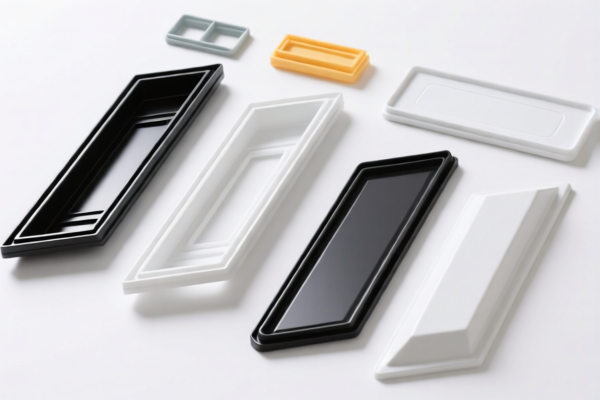
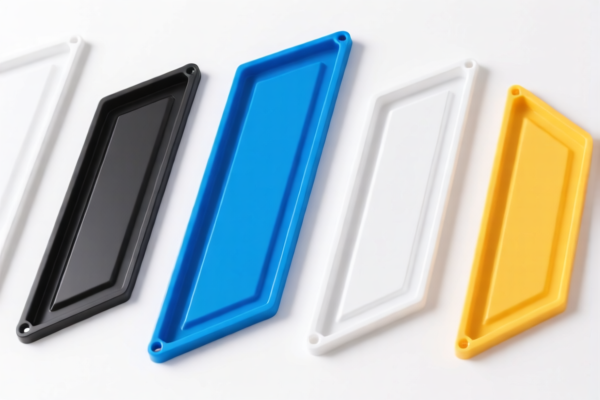
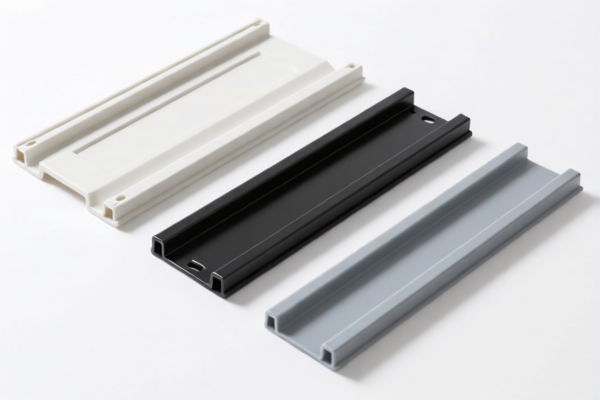
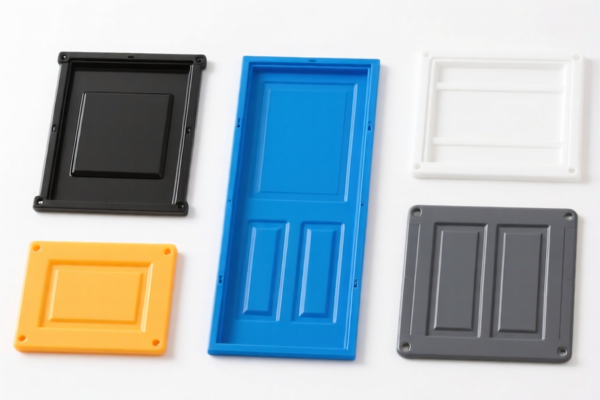
AI Analysis
🧱 Other Plastic Exterior Panels (Dual-Colored Plastic Sheets/Plates)
🌐 HS Code Reference & Clearance Guide | 2026 Latest Tariff Analysis | Professional Customs Strategy
📌 I. Product Definition & Classification: What Exactly Are "Other Plastic Exterior Panels"?
"Other plastic exterior panels" (specifically dual-colored plastic boards/sheets) refer to flat plastic materials composed of two distinct color layers. These are primarily used in construction (façades, cladding), signage, and interior decoration. In international trade, the key to classification lies not just in the material (Plastic), but in the physical form (Board, Sheet, Film, Foil, etc.) and manufacturing process.
⚠️ Critical Distinction:
- If the product is a rigid board or sheet used for structural or semi-structural exterior cladding → It typically falls under Chapter 39.20 or 39.21.
- If it is a flexible film or foil → It may fall under different sub-headings, but for exterior panels, rigid forms (3920/3921) are the standard.
- "Dual-Colored" implies a layered structure (co-extruded or laminated), which affects the specific subheading within the "Plastics and articles thereof" chapter.
📦 II. HS Code Classification Details (2026 Latest Tariff Authority Comparison)
Based on the provided data, the classification depends on the specific form of the plastic panel. Here is the authoritative breakdown:
| HS Code | Product Description | Physical Form | Application Scenario | Key Identifier |
|---|---|---|---|---|
3926.90.99.89 |
Other plastic goods | Other plastic products | General plastic panels not specifically listed elsewhere | ✅ "Other plastic products" (Catch-all) |
3920.99.50.00 |
Other plates, sheets, film, foil and bar, of plastics | Plate (Board) | Rigid exterior cladding panels, solid core boards | ✅ "Plate/Board" (Rigid) |
3920.99.20.00 |
Other plates, sheets, film, foil and bar, of plastics | Plate, Sheet, Film | Thicker sheets used for signage or semi-rigid cladding | ✅ "Plate/Sheet/Film" |
3921.19.00.90 |
Other plates, sheets, film, foil and bar, of plastics | Plate, Sheet, Film, Foil | Composite plastic plates, possibly with bonding layers | ✅ "Plate/Sheet/Film/Foil" |
3921.90.50.50 |
Other plates, sheets, film, foil and strip, of plastics | Plastic Plate, Sheet, Film, Foil, Strip | Multi-layer laminated plastic sheets, specialized exterior films | ✅ "Plate/Sheet/Film/Foil/Strip" |
🔍 Key Insight:
- 3920 covers plates, sheets, film, foil, and strip, unworked or merely surface-worked (e.g., printed, embossed). Dual-colored panels are often considered "unworked" in terms of further transformation into a specific article. - 3921 covers plates, sheets, film, foil, and strip, bonded by lamination, aggregation, etc. If the dual-color layer is achieved via complex bonding with other materials, 3921 might be more accurate. - 3926 is a residual category for "other articles of plastics." It is used when the product does not fit the specific definitions of 3920/3921 (e.g., if it’s a finished panel with edges pre-fabricated).
💰 III. 2026 Latest Tariff Rate Breakdown (Including Surcharges & Policy Add-ons)
✅ Applicable Country: United States (US)
✅ Country of Origin: China (CN)
✅ Effective Date: Post-2025 (Includes all subsequent imports)
🎯 1. 3926.90.99.89 —— Other Plastic Products (Catch-All)
| Item | Content |
|---|---|
| Base Tariff | 5.3% (ad valorem) |
| Section 301 Surcharge | +7.5% (USITC Footnote) |
| Section 122 Tariff | +10% (Specific trade action) |
| Total Tariff | 22.8% |
| Tax Calculation | CIF Value × 22.8% |
| De Minimis Eligibility | ❌ No (Likely subject to high scrutiny) |
| Legal Basis | USMCA/USITC Base Rate → Section 301 → Section 122 |
📌 Explanation:
- This is the lowest tariff option among the listed codes.
- It applies if the product is considered a "general plastic good" rather than a specific plate/sheet type.
- Risk: Customs may challenge this if the product clearly fits the definition of a "plate" (3920/3921).
🎯 2. 3920.99.50.00 —— Plastic Plates/Boards
| Item | Content |
|---|---|
| Base Tariff | 5.8% |
| Section 301 Surcharge | +25.0% (USITC Footnote 9903.88.01) |
| Section 122 Tariff | +10% |
| Total Tariff | 40.8% |
| Tax Calculation | CIF Value × 40.8% |
| De Minimis Eligibility | ❌ No |
| Legal Basis | USMCA/USITC Base Rate → Section 301 (High Tier) → Section 122 |
📌 Explanation:
- This is a high-risk code due to the 25% Section 301 surcharge.
- Applies to rigid plastic plates/boards. If your product is a thick exterior cladding panel, this is likely the correct code.
🎯 3. 3920.99.20.00 —— Plastic Plates/Sheets/Films
| Item | Content |
|---|---|
| Base Tariff | 4.2% |
| Section 301 Surcharge | +25.0% |
| Section 122 Tariff | +10% |
| Total Tariff | 39.2% |
| Tax Calculation | CIF Value × 39.2% |
| De Minimis Eligibility | ❌ No |
| Legal Basis | USMCA/USITC Base Rate → Section 301 → Section 122 |
📌 Explanation:
- Slightly lower total tariff than3920.99.50.00due to a lower base rate (4.2% vs 5.8%), but still suffers the 25% Section 301 surcharge.
🎯 4. 3921.19.00.90 —— Bonded Plastic Plates/Sheets
| Item | Content |
|---|---|
| Base Tariff | 6.5% |
| Section 301 Surcharge | +25.0% |
| Section 122 Tariff | +10% |
| Total Tariff | 41.5% |
| Tax Calculation | CIF Value × 41.5% |
| De Minimis Eligibility | ❌ No |
| Legal Basis | USMCA/USITC Base Rate → Section 301 → Section 122 |
📌 Explanation:
- Highest base rate (6.5%) plus the 25% Section 301 surcharge.
- Applies if the dual-color nature is due to bonding/lamination processes that classify it as a "composite plastic article" under Chapter 39.21.
🎯 5. 3921.90.50.50 —— Other Plastic Plates/Sheets/Films
| Item | Content |
|---|---|
| Base Tariff | 4.8% |
| Section 301 Surcharge | +25.0% |
| Section 122 Tariff | +10% |
| Total Tariff | 39.8% |
| Tax Calculation | CIF Value × 39.8% |
| De Minimis Eligibility | ❌ No |
| Legal Basis | USMCA/USITC Base Rate → Section 301 → Section 122 |
📌 Explanation:
- Another high-tariff option due to the 25% Section 301 surcharge.
- Use this for specialized plastic strips/films that don’t fit other specific 3921 subheadings.
🛠️ IV. Clearance Practical Advice (Pitfall Avoidance Guide)
✅ 1. Preparation Checklist (Mandatory)
| Document | Required | Notes |
|---|---|---|
| ✅ Product Specifications | ✔️ | Must specify dimensions, thickness, color layers, and material composition (e.g., PVC, PMMA, PC). |
| ✅ Photos & Structure Diagrams | ✔️ | Show the cross-section to prove it is a "dual-colored" layered structure. |
| ✅ Commercial Invoice | ✔️ | Clearly describe as "Dual-Colored Plastic Exterior Panel" with HS Code. |
| ✅ Bill of Lading | ✔️ | Ensure packaging details match the invoice. |
| ✅ Material Safety Data Sheet (MSDS) | ✔️ | If applicable, to prove non-hazardous nature. |
| ✅ Origin Certificate | ✔️ | To confirm origin (China) for surcharge calculation. |
✅ 2. Declaration Strategy (Key Mnemonic)
🔥 "Rigid Board? Check 3920. Bonded? Check 3921. General? Check 3926. Avoid the 25%!"
| Situation | Correct Declaration | Error Consequence |
|---|---|---|
| Rigid exterior cladding board | 3920.99.50.00 or 3921.19.00.90 |
Misclassifying as 3926 → Risk of audit & back taxes if deemed inaccurate. |
| Thin plastic film for wrapping | 3920.99.20.00 |
Misclassifying as 3926 → Higher tariff risk if film definition is met. |
| General plastic panel (non-standard) | 3926.90.99.89 |
✅ Best for cost-saving (22.8%) if legally justifiable. |
| Finished window frame component | Not 3926 |
Must be classified as part of the frame (e.g., 7610 for aluminum frames), not raw plastic. |
✅ 3. Special Case Handling
| Scenario | Handling Advice |
|---|---|
| Dual-color via painting | May still fall under 3920 (surface-worked), not 3921 (bonded). This can lower the base tariff. |
| Dual-color via co-extrusion | Often classified under 3920 or 3921 depending on layer bonding. Consult technical documents. |
| OEM Custom Panels | Provide customer drawings to prove it’s a "general plastic product" to argue for 3926. |
| High-End Architectural Panels | If marketed as "decorative," ensure description highlights aesthetic features to support 3926 classification. |
🌍 V. Global Market Clearance Comparison (2026 Latest)
| Country/Region | Recommended HS Code | Tariff (China Origin) | Certification | Notes |
|---|---|---|---|---|
| 🇺🇸 USA | 3926.90.99.89 |
22.8% (Lowest) | None specific | Avoid 3920/3921 unless necessary due to 25% surcharge. |
| 🇨🇳 China | 3926.90.99.89 |
5.3% | None | No additional surcharges. |
| 🇪🇺 EU | 3926.90.99 |
0% - 4.5% | REACH, RoHS | No Section 301 equivalent. Lower base rates. |
| 🇦🇺 Australia | 3926.90.99 |
5% | None | No additional surcharges. |
| 🇯🇵 Japan | 3926.90.99 |
0% - 6% | PSE (if electrical) | No additional surcharges. |
📌 Conclusion:
- USA is the only market with high additional tariffs (Section 301 + Section 122).
- Strategic Recommendation: For exports to the US, argue for3926.90.99.89("Other plastic products") to reduce the total tariff from ~40% to 22.8%, provided the product does not strictly fit the definition of a "plate" or "bonded sheet" under 3920/3921.
📌 VI. Common Mistakes & Pitfall Guide (Lessons Learned)
❌ Mistake 1: Classifying rigid exterior panels as 3926 without justification.
👉 Consequence: Customs may reclassify to 3920/3921 → Back taxes + Penalties.
✅ Fix: Provide technical specs showing it’s a "general plastic article" or "decorative item" not fitting plate definitions.
❌ Mistake 2: Ignoring the Section 122 Tariff (+10%).
👉 Consequence: Underpaying duties → Seizure.
✅ Fix: Always include Section 122 in tariff calculations for Chinese imports.
❌ Mistake 3: Mislabeling "Dual-Colored" as "Painted."
👉 Consequence: If it’s actually co-extruded (layered), it may be classified differently than painted.
✅ Fix: Be transparent about manufacturing process (Co-extrusion vs. Painting).
❌ Mistake 4: Using vague descriptions like "Plastic Sheet."
👉 Consequence: Ambiguity leads to manual review and delays.
✅ Fix: Use precise terms: "Dual-Colored Rigid Plastic Exterior Cladding Panel, PVC-based."
🎯 VII. Conclusion: Professional Declaration, Save Costs!
🎯 Remember the Mnemonic:
🔹 "Rigid Board? 3920. Bonded? 3921. General? 3926. Avoid the 25%!"
🔹 "HS Code decides fate. 22.8% vs 41.5% is a huge difference!"
📌 Pro Tip:
If your dual-colored plastic panels are exported to the US, consider applying for an Advance Ruling (HS Code Pre-decision) from US Customs and Border Protection (CBP) to confirm eligibility for 3926.90.99.89. This can save ~17% in tariffs compared to 3920/3921 codes.
📣 Immediate Action:
📞 Contact a licensed customs broker + Provide product cross-section images + Request HS Code Pre-ruling.
🚀 Clear your plastic panels smoothly, reduce costs, and boost profits!
✨ Professional clearance starts with accurate classification!
💼 Every penny saved is profit earned!
Customer Reviews
About HS Code Classification
The Harmonized System (HS) is an internationally standardized nomenclature developed by the World Customs Organization (WCO) to classify traded products. Over 200 countries use the HS system as the basis for customs tariffs, trade statistics, and import/export regulations.
Each HS code follows a hierarchical structure:
- Chapter (2 digits) — Broad category of goods (e.g., Chapter 84: Machinery and Mechanical Appliances)
- Heading (4 digits) — More specific grouping within the chapter
- Subheading (6 digits) — Internationally standardized breakdown, used by all WCO member countries
- National subdivisions (8-10 digits) — Country-specific extensions for further classification, such as US HTSUS 10-digit codes
Correct HS code classification is essential for smooth customs clearance, accurate duty payment, and compliance with trade regulations. Misclassification can lead to customs delays, overpayment of duties, or penalties.
When importing from CN to US, the applicable tariff rates may include:
- Most-Favored-Nation (MFN) rate — The standard duty rate applied to WTO members
- General rate — Applied to countries without trade agreements
- Trade remedy duties — Additional tariffs such as Section 301 (anti-dumping), Section 232 (national security), or countervailing duties
The information provided on this page is for reference purposes only. For official classification, please consult with your local customs authority or a licensed customs broker.