Other plastic films (Decorative use)
CN → US| HS Code | Tariff Rate | Origin | Destination | Doc |
|---|---|---|---|---|
| 3919905060 | 40.8% | CN | US | Official Doc |
| 3919905040 | 40.8% | CN | US | Official Doc |
| 3920991000 | 41.0% | CN | US | Official Doc |
| 3920992000 | 39.2% | CN | US | Official Doc |
| 3921905010 | 39.8% | CN | US | Official Doc |
Product Images



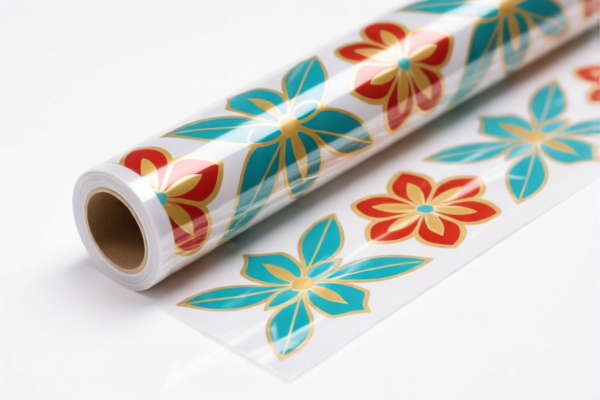
AI Analysis
🎨 Decorative Plastic Films (Other Plastic Films)
🌐 HS Code Reference & Clearance Guide | 2026 Latest Tariff Analysis | Professional Clearance Strategy
📌 1. Product Definition & Classification: Do You Really Understand "Decorative Plastic Films"?
Decorative plastic films are versatile materials used for surface finishing, packaging, branding, and aesthetic enhancement in various industries (furniture, automotive, electronics, retail). In international trade, they are primarily classified under Chapter 39 (Plastics and Articles Thereof), specifically falling into headings 3919 (Self-adhesive plates, sheets, film, foil, tape, strip, and other flat shapes, of plastics) and 3920/3921 (Other plates, sheets, film, foil, and strip, of plastics).
The distinction between these codes depends on: - Self-adhesive property: Is it backed with an adhesive? (Heading 3919) - Layering/Lamination: Is it a single layer or multiple layers bonded together? (Heading 3920 vs. 3921) - Material Composition: What is the base plastic polymer?
⚠️ Key Distinction Points:
- If the film is self-adhesive (has a pressure-sensitive backing), it generally falls under 3919.
- If it is non-adhesive and consists of a single type of plastic, it falls under 3920.
- If it is laminated (composed of multiple layers of different plastics bonded together), it falls under 3921.
- Misclassification Risk: Declaring a laminated film as single-layer can lead to significant tariff differences and customs penalties.
📦 2. HS Code Classification Details (2026 Latest Tariff Authoritative Comparison)
| HS Code | Product Description | Application Scenario | Key Feature | Total Tax Rate |
|---|---|---|---|---|
3919.90.50.60 |
Self-adhesive plastic films, other | General decorative applications, labels, wall coverings | Self-adhesive, non-specific | 40.8% |
3919.90.50.40 |
Self-adhesive plastic films, other (other category) | Niche decorative uses, specialty tapes | Self-adhesive, miscellaneous | 40.8% |
3920.99.10.00 |
Other plates, sheets, film, foil, and strip of plastics | Non-adhesive decorative films, single-layer | Single material, non-adhesive | 41.0% |
3920.99.20.00 |
Other plates, sheets, film, foil, and strip of plastics (non-cellular, non-reinforced) | Flexible decorative sheets, single-layer films | Flexible, non-cellular, non-reinforced | 39.2% |
3921.90.50.10 |
Other plates, sheets, film, foil, and strip of plastics (laminated) | Laminated decorative films, composite materials | Multi-layer laminated structure | 39.8% |
🔍 Important Reminder:
- Self-adhesive films (3919) are often treated similarly in terms of total tax impact due to the high additional duties, regardless of the specific sub-heading.
- Single-layer non-adhesive films (3920) vary significantly in tax rate depending on whether they are cellular, reinforced, or simple flexible sheets.3920.99.20.00offers a lower total tax rate (39.2%) compared to3920.99.10.00(41.0%).
- Laminated films (3921) are subject to a unique classification path and carry a total tax rate of 39.8%.
💰 3. 2026 Latest Tariff Rate Breakdown (Including Additional Duties & Policy Surcharges)
✅ Applicable Country: United States (US)
✅ Origin: China (CN)
✅ Effective Date: From November 10, 2025 (including subsequent imports)
🎯 1. 3919.90.50.60 & 3919.90.50.40 —— Self-Adhesive Plastic Films
| Item | Content |
|---|---|
| Base Tariff Rate | 5.8% (ad valorem) |
| Section 301 Additional Duty | +25.0% (from USITC Footnote 9903.88.01) |
| Section 122 Duty (IEEPA) | +10.0% (for China/HK products, effective Nov 10, 2025) |
| Total Tax Rate | 40.8% |
| Tax Calculation | CIF Value × 40.8% |
| De Minimis Exemption Eligible? | ❌ No (deny_de_minimis) |
| Legal Basis Path | IEEPA:9903.01.25 → IEEPA:9903.01.24 → USITC:3919.90.50.XX → FOOTNOTE:9903.88.01 |
📌 Explanation:
- The 25% additional duty is imposed under Section 301 of the Trade Act as part of the ongoing trade tensions.
- The 10% duty is levied under the International Emergency Economic Powers Act (IEEPA) specifically targeting products from China.
- Total 40.8% is a high tariff burden, requiring careful cost calculation before shipment.
🎯 2. 3920.99.10.00 —— Other Plastic Films (Non-Adhesive, Specific Subcategory)
| Item | Content |
|---|---|
| Base Tariff Rate | 6.0% (ad valorem) |
| Section 301 Additional Duty | +25.0% |
| Section 122 Duty (IEEPA) | +10.0% |
| Total Tax Rate | 41.0% |
| Tax Calculation | CIF Value × 41.0% |
| De Minimis Exemption Eligible? | ❌ No (deny_de_minimis) |
| Legal Basis Path | IEEPA:9903.01.25 → IEEPA:9903.01.24 → USITC:3920.99.10.00 → FOOTNOTE:9903.88.01 |
📌 Note:
- This code applies to specific non-adhesive plastic films that do not fit into the "non-cellular, non-reinforced" category.
- It has the highest total tax rate (41.0%) among the listed codes. Avoid this classification if your product fits3920.99.20.00.
🎯 3. 3920.99.20.00 —— Other Plastic Films (Non-Cellular, Non-Reinforced, Flexible)
| Item | Content |
|---|---|
| Base Tariff Rate | 4.2% (ad valorem) |
| Section 301 Additional Duty | +25.0% |
| Section 122 Duty (IEEPA) | +10.0% |
| Total Tax Rate | 39.2% |
| Tax Calculation | CIF Value × 39.2% |
| De Minimis Exemption Eligible? | ❌ No (deny_de_minimis) |
| Legal Basis Path | IEEPA:9903.01.25 → IEEPA:9903.01.24 → USITC:3920.99.20.00 → FOOTNOTE:9903.88.01 |
📌 Advantage:
- This code offers the lowest total tax rate (39.2%) among the listed options.
- Ideal for single-layer, flexible, non-cellular, non-reinforced decorative films. Ensure your product description matches this precise definition to benefit from the lower base rate.
🎯 4. 3921.90.50.10 —— Laminated Plastic Films
| Item | Content |
|---|---|
| Base Tariff Rate | 4.8% (ad valorem) |
| Section 301 Additional Duty | +25.0% |
| Section 122 Duty (IEEPA) | +10.0% |
| Total Tax Rate | 39.8% |
| Tax Calculation | CIF Value × 39.8% |
| De Minimis Exemption Eligible? | ❌ No (deny_de_minimis) |
| Legal Basis Path | IEEPA:9903.01.25 → IEEPA:9903.01.24 → USITC:3921.90.50.10 → FOOTNOTE:9903.88.01 |
📌 Note:
- Applies to films made by bonding two or more layers of plastic.
- The base rate is slightly higher than3920.99.20.00but still competitive. Correctly identifying lamination is crucial to avoid misclassification penalties.
🛠️ 4. Clearance Practical Advice (Real-World Pitfall Avoidance Guide)
✅ 1. Required Documentation Checklist (All Are Mandatory)
| Document | Must Provide | Description |
|---|---|---|
| ✅ Product Specification Sheet | ✔️ | Includes dimensions, thickness, material type (e.g., PVC, PET), adhesive type (if any), lamination structure. |
| ✅ Product Photos (Clear Label) | ✔️ | Shows the film, packaging, and any labels indicating "Decorative," "Self-Adhesive," or "Laminated." |
| ✅ Commercial Invoice | ✔️ | Must accurately describe the product (e.g., "Self-adhesive PVC Decorative Film") and state CIF value. |
| ✅ Packing List | ✔️ | Details number of rolls/sheets, gross/net weight, and dimensions. |
| ✅ Certificate of Origin (CO) | ✔️ | If not originating from China, may qualify for preferential rates (unlikely for China origin). |
| ✅ Material Safety Data Sheet (MSDS) | ✔️ | If applicable, especially for adhesive components. |
✅ 2. Declaration Tips (Key Mnemonic)
🔥 "Adhesive is 3919, Laminated is 3921, Single layer is 3920, Check base rate, save money!"
| Scenario | Correct Declaration | Incorrect Practice |
|---|---|---|
| Self-adhesive decorative film | 3919.90.50.60 or 3919.90.50.40 |
Declaring as non-adhesive → Higher audit risk |
| Single-layer, flexible, non-cellular film | 3920.99.20.00 |
Declaring as 3920.99.10.00 → Pay 41% instead of 39.2% |
| Laminated decorative film | 3921.90.50.10 |
Declaring as single-layer → Misclassification penalty |
| Multi-roll shipment | Declare as "Rolls of Decorative Film" | Declare as "Plastic Sheets" → Ambiguous description |
✅ 3. Special Case Handling
| Situation | Handling Advice |
|---|---|
| Custom-Printed Films | Provide print templates and design files to prove decorative nature; avoid generic descriptions. |
| Mixed Shipments (Adhesive + Non-Adhesive) | Separate declarations are required. Do not bundle into one HS code. |
| Laminated Films with Metallic Layers | Ensure the base plastic is correctly identified; metallic layer does not change HS code unless it changes the fundamental character. |
| Samples for Display | Still subject to duty if commercially shipped; declare accurately to avoid de minimis misuse. |
🌍 5. Global Major Market Clearance Comparison (2026 Latest)
| Country/Region | Recommended HS Code | Tariff (China Origin) | Certification Requirements | Notes |
|---|---|---|---|---|
| 🇺🇸 United States | Varies by type (see above) | 39.2% – 41.0% | No specific FDA/CE, but ensure compliance with CPSIA if for children’s items | High additional duties apply. |
| 🇨🇳 China | 3919/3920/3921 | 5% – 6% | No additional tariffs for domestic import/export | Lower base rates than US. |
| 🇪🇺 European Union | 3919/3920/3921 | 6% – 7% | REACH, RoHS, CE (if applicable) | No Section 301/122 duties. |
| 🇬🇧 United Kingdom | 3919/3920/3921 | 6% – 7% | UKCA, REACH (UK) | Post-Brexit rules apply. |
| 🇦🇺 Australia | 3919/3920/3921 | 5% | RCM (if electrical, not applicable here) | No major additional duties. |
📌 Conclusion:
- The US is the most challenging market for plastic films from China due to the cumulative 35-35.8% additional duties.
- EU, UK, and Australia offer significantly lower tariff burdens (6-7%).
- Consider supply chain diversification (e.g., sourcing from Vietnam, Malaysia) if targeting the US market to mitigate duty risks.
📌 6. Common Errors & Pitfall Guide (Lessons Learned the Hard Way)
❌ Error 1: Declaring a laminated film as a single-layer film (3920)
👉 Consequence: Customs may reject the declaration, assess higher duties, and impose penalties.
✅ Fix: Always declare the correct structure. If laminated, use 3921.
❌ Error 2: Using "Plastic Sheet" as a generic description for self-adhesive film
👉 Consequence: Ambiguity leads to delays, additional inspections, and potential reclassification.
✅ Fix: Use precise terms: "Self-Adhesive Decorative Film" or "Non-Adhesive Decorative Film."
❌ Error 3: Assuming de minimis exemption applies to small shipments
👉 Consequence: All listed HS codes are subject to deny_de_minimis for China origin. No exemption.
✅ Fix: Plan for full duty payment even for sample shipments.
❌ Error 4: Incorrectly identifying base material (e.g., PVC vs. PET)
👉 Consequence: May lead to incorrect sub-classification under 3920.99.20.00 vs. 3920.99.10.00.
✅ Fix: Provide material composition in the specification sheet.
🎯 7. Conclusion: Precision in Classification Saves Money!
🎯 Remember the Mnemonic:
🔹 "Adhesive 3919, Laminated 3921, Single 3920, Check Base Rate."
🔹 "40%+ Duty in US, 6% in EU, choose wisely."
🔹 "Clear Description, Correct HS, Avoid Delays."
📌 Pro Tip:
If your decorative plastic films are originally from Vietnam, Malaysia, or Thailand, you may qualify for IEEPA exemptions or lower Section 301 rates.
Consider applying for an Advance Ruling (APA) with US Customs to confirm the correct HS Code and duty rate before shipment.
📣 Immediate Action:
📞 Contact a professional customs broker + Provide product photos + Apply for HS Code Advance Ruling
🚀 Ensure smooth customs clearance, optimize costs, and boost profitability!
✨ Professional Clearance Starts with Accurate Classification!
💼 Every cent of your cost deserves precise calculation!
Customer Reviews
About HS Code Classification
The Harmonized System (HS) is an internationally standardized nomenclature developed by the World Customs Organization (WCO) to classify traded products. Over 200 countries use the HS system as the basis for customs tariffs, trade statistics, and import/export regulations.
Each HS code follows a hierarchical structure:
- Chapter (2 digits) — Broad category of goods (e.g., Chapter 84: Machinery and Mechanical Appliances)
- Heading (4 digits) — More specific grouping within the chapter
- Subheading (6 digits) — Internationally standardized breakdown, used by all WCO member countries
- National subdivisions (8-10 digits) — Country-specific extensions for further classification, such as US HTSUS 10-digit codes
Correct HS code classification is essential for smooth customs clearance, accurate duty payment, and compliance with trade regulations. Misclassification can lead to customs delays, overpayment of duties, or penalties.
When importing from CN to US, the applicable tariff rates may include:
- Most-Favored-Nation (MFN) rate — The standard duty rate applied to WTO members
- General rate — Applied to countries without trade agreements
- Trade remedy duties — Additional tariffs such as Section 301 (anti-dumping), Section 232 (national security), or countervailing duties
The information provided on this page is for reference purposes only. For official classification, please consult with your local customs authority or a licensed customs broker.