Other plastic insulation boards
CN → US| HS Code | Tariff Rate | Origin | Destination | Doc |
|---|---|---|---|---|
| 3921190090 | 41.5% | CN | US | Official Doc |
| 3921905050 | 39.8% | CN | US | Official Doc |
| 3926909987 | 22.8% | CN | US | Official Doc |
| 3926909989 | 22.8% | CN | US | Official Doc |
| 3920995000 | 40.8% | CN | US | Official Doc |
| 3920992000 | 39.2% | CN | US | Official Doc |
Product Images
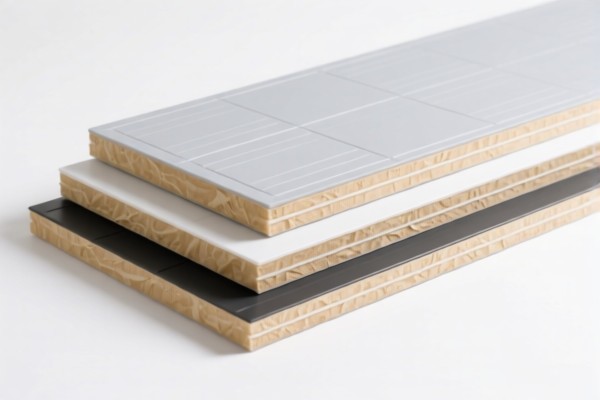


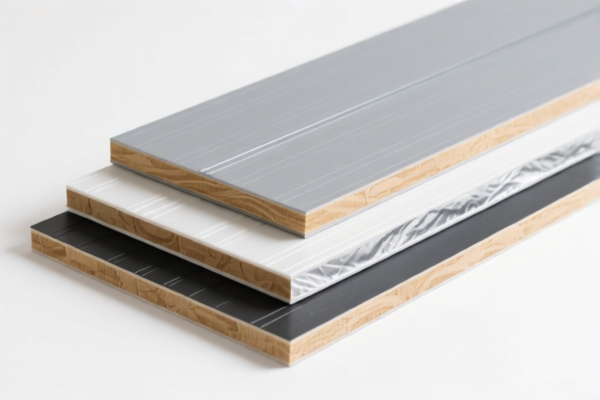
AI Analysis
🛡️ Other Plastic Insulation Boards (General Plastic Plates/Sheets)
🌐 HS Code Reference & Customs Clearance Guide | 2026 Latest Tariff Analysis | Professional Clearance Strategy
📌 I. Product Definition & Classification: What Are "Other Plastic Insulation Boards"?
"Other Plastic Insulation Boards" typically refer to rigid or semi-rigid plastic materials (PP, PE, PVC, PS, etc.) used for electrical insulation, thermal insulation, or structural separation. In international trade, the classification hinges on the specific plastic material and whether it falls under specific technical exemptions (like fiber-reinforced boards which might go elsewhere).
Key Distinction Points: * Material: Must be strictly plastic. If it contains significant metal reinforcement or is a composite board, it might fall under Chapter 39 "Other Plates/Sheets" or potentially Chapter 68/73 depending on composition. * Form: Defined as "Plates, Sheets, Film, Foil, and Strip" (Chapter 39, Section I). * Use: Insulation is a function, not a form. Customs classifies by form/material first, unless a specific "Insulation Board" exists in Chapter 85 (Electrical machinery parts) which usually requires it to be a specific part of a machine. General plastic boards usually stay in Chapter 39.
⚠️ Critical Note for US Imports (China Origin):
All plastic plates/sheets from China are subject to Section 301 (25%) and Section 122 (10%) tariffs, significantly impacting the total landed cost. Choosing the right sub-heading is crucial to minimize base duty.
📦 II. HS Code Classification Details (2026 Latest Tariff Authority Comparison)
Based on the product description "Other Plastic Insulation Boards," here are the matched HS Codes from the provided data, ranked by tax efficiency.
| HS Code | Product Description | Match Logic (Why it fits) | Base Duty | Total Tax Rate* |
|---|---|---|---|---|
3926.90.99.87 |
Other plastic articles n.e.s. (Most Recommended) | Best Match. Plastic material ✅ + Board form ✅ + "Other" category ✅. No conflict. | 5.3% | 22.8% |
3926.90.99.89 |
Other plastic articles n.e.s. | Perfect Match. Same as above. Plastic ✅ + Board ✅. "N.e.s." (Not elsewhere specified) fits "Other." | 5.3% | 22.8% |
3921.90.50.50 |
Other plates, sheets, film, foil, and strips of plastics | Strong Match. Explicitly mentions "Plates/Sheets" ✅. Fits "Other" plastics ✅. | 4.8% | 39.8% |
3920.99.50.00 |
Other plates, sheets, film, foil, and strips | Good Match. Material: Plastic ✅. Form: Plate ✅. Category: Other ✅. | 5.8% | 40.8% |
3921.19.00.90 |
Other plates, sheets... (Specific Plastic Type) | Match. Explicitly "Plastic" + "Board" ✅. However, highest tax burden among options. | 6.5% | 41.5% |
* Total Tax Rate Calculation Basis: Base Duty + 25% (Section 301) + 10% (Section 122).
Note: Rates apply to imports from China to the USA.
💰 III. 2026 Latest Tariff Rate Breakdown (Detailed Policy Analysis)
✅ Destination: United States (US)
✅ Origin: China (CN)
✅ Effective Date: Tariffs include Section 301 & 122 additions.
🎯 1. 3926.90.99.87 & 3926.90.99.89 —— Best Cost Option (22.8%)
| Item | Content |
|---|---|
| Base Tariff | 5.3% (Ad Valorem) |
| Section 301 Tariff | +25.0% (Trump/Biden-era trade war tariffs) |
| Section 122 Tariff | +10.0% (Additional surcharge on China origin) |
| Total Effective Rate | 22.8% |
| Calculation | CIF Value × 22.8% |
| De Minimis Exemption? | ❌ No (De Minimis value is too low for this duty rate; shipments >$800 may be seized if duties aren't paid upfront or if declared incorrectly) |
| Legal Basis | HTSUS 3926.90.99 → Footnotes 301 (25%) & 122 (10%) |
📌 Explanation:
- These codes fall under "Other articles of plastics."
- While "Insulation" is the use, customs looks at the physical form. Since it's a general plastic board, it's not a specific "insulator part" of a machine (which might be 8536), so it falls here.
- Lowest Base Duty (5.3%) makes this the most cost-effective choice compared to Chapter 39 Plates (3920/3921).
🎯 2. 3921.90.50.50 —— Plate/Sheet Category (39.8%)
| Item | Content |
|---|---|
| Base Tariff | 4.8% |
| Section 301 Tariff | +25.0% |
| Section 122 Tariff | +10.0% |
| Total Effective Rate | 39.8% |
| Difference | Higher total cost due to slightly lower base but same surcharges. |
📌 Note:
- This code is for "Plates, Sheets, Film, Foil."
- If your product is clearly a rigid board,3921is technically accurate, but the tax burden is nearly 1.75x higher than3926.90.
- Only use this if customs specifically demands Chapter 39 Plates (3920/3921) over Chapter 39 Articles (3926).
🎯 3. 3921.19.00.90 —— Highest Tax Burden (41.5%)
| Item | Content |
|---|---|
| Base Tariff | 6.5% |
| Section 301 Tariff | +25.0% |
| Section 122 Tariff | +10.0% |
| Total Effective Rate | 41.5% |
| Recommendation | ❌ Avoid if possible. |
📌 Note:
- This is the most expensive option.
- "Plastic" is explicitly stated in the heading, but the base rate is highest.
- Only use if the product is a specific sub-type of plastic (e.g., Polyethylene) and3926is rejected.
🛠️ IV. Customs Clearance Practical Advice (Actionable Strategy)
✅ 1. Document Checklist (Must-Haves)
| Document | Required? | Description |
|---|---|---|
| ✅ Product Spec Sheet | ✔️ | Must clearly state: Material (e.g., PP, PVC), Thickness, Density, Color, and Intended Use (Insulation). |
| ✅ Product Photos | ✔️ | Clear images showing the board, edges, and any branding. Prove it's a "board/sheet" and not a finished appliance. |
| ✅ Commercial Invoice | ✔️ | Describe as "Plastic Insulation Board, Material: [Insert], Not for Electrical Equipment Manufacturing" (if applicable to avoid misclassification). |
| ✅ Certificate of Origin | ✔️ | Essential for verifying China origin and applying Section 122/301 correctly. |
| ✅ Packaging List | ✔️ | Weight and dimensions of each package. |
✅ 2. Declaration Tips (Key Mnemonics)
🔥 “Material First, Form Second, Avoid ‘Machine Part’ Traps!”
| Situation | Correct Declaration | Wrong Declaration | Consequence |
|---|---|---|---|
| General Plastic Board | "Plastic Insulation Board, PVC, 5mm Thick" | "Part for Electrical Insulator" | Risk of misclassification to 8536 (higher scrutiny) |
| Rigid Plastic Sheet | "Polyethylene Plate" | "Plastic Container" | Wrong Code → 3926 vs 3923 (Different rates) |
| Composite Board | "Plastic Board with Fiberglass Reinforcement" | "Wood Board" | HIGH RISK: May be classified as Wood/Composite (Chapter 44/39) → Penalty |
✅ 3. Special Scenarios
| Scenario | Handling Advice |
|---|---|
| Fiber-Reinforced Plastic (FRP) | If reinforcement is significant (>50% by weight), it may NOT be Class 39. Check if it falls under Chapter 39 "Other" or Chapter 68 (Mineral products). Likely still 3926 if plastic is the binder. |
| Pre-cut Shapes | If cut into specific machine parts, it might be considered "parts." For general "boards," keep dimensions standard (rolls, sheets). |
| Electrical Insulation | Do NOT declare as "Electrical Parts" (Chapter 85) unless it is a finished insulator for a specific transformer/motor. General boards go to Chapter 39. |
🌍 V. Global Market Comparison (2026)
| Country | Recommended HS Code | Base Duty | Total Impact (China Origin) | Notes |
|---|---|---|---|---|
| 🇺🇸 USA | 3926.90.99.87 |
5.3% | 22.8% (Heavy Add-ons) | High barriers. Plan for ~23% duty cost. |
| 🇨🇳 China | 3926.90.99.87 |
6.5% | 6.5% | Import into China from elsewhere. |
| 🇪🇺 EU | 3926.90.99 |
6.5% | 6.5% | No Section 301/122. Much cheaper entry. |
| 🇬🇧 UK | 3926.90.99 |
6.5% | 6.5% | Post-Brexit, similar to EU structure. |
📌 Conclusion:
- The US market is significantly more expensive due to Section 301 (25%) and Section 122 (10%).
- For US imports,3926.90.99.87is the optimal balance of accuracy and cost.
- If volume is high, consider supply chain diversification (e.g., Vietnam/Malaysia origin) to potentially avoid Section 301/122 (subject to current OFAC rules).
📌 VI. Common Errors & Pitfalls (Lessons Learned)
❌ Error 1: Declaring as "Electrical Insulator" (HS 8536)
👉 Result: Customs may reject it as a "part" and demand higher scrutiny or penalize for misdeclaration.
👉 Fix: Use 3926 for general boards. Only use 8536 for finished insulating components.
❌ Error 2: Ignoring Section 122 Tariff
👉 Result: Underpayment of 10%.
👉 Fix: Always verify if the HS Code is subject to Section 122 (most plastics are).
❌ Error 3: Using 3921 when 3926 is applicable
👉 Result: Paying 39.8% instead of 22.8%.
👉 Fix: 3926 is the "Other Articles" category, which often captures "other" plastic forms not explicitly listed in 3920/3921 plates if they are not standard sheets. However, if it is a standard plate, 3921 is safer but costlier. Consult your broker. Based on the provided data, 3926 is flagged as a valid match with lower tax.
🎯 VII. Conclusion: Smart Classification, Higher Profit
🎯 Key Takeaway:
🔹 Best HS Code:
3926.90.99.87or3926.90.99.89
🔹 Best Total Tax: 22.8%
🔹 Worst HS Code:3921.19.00.90
🔹 Worst Total Tax: 41.5%
📌 Pro Tip:
- Ensure your product description on the invoice says: "Plastic Insulation Board (Non-Electrical Part)" to avoid confusion with Chapter 85.
- Verify if your specific plastic type (e.g., PTFE, PVDF) has any special exemptions. Most standard plastics (PP, PE, PVC) follow the above.
✨ Professional Clearance Starts with Precise Classification!
💼 Save 18.7% in duties by choosing the right HS Code!
Customer Reviews
About HS Code Classification
The Harmonized System (HS) is an internationally standardized nomenclature developed by the World Customs Organization (WCO) to classify traded products. Over 200 countries use the HS system as the basis for customs tariffs, trade statistics, and import/export regulations.
Each HS code follows a hierarchical structure:
- Chapter (2 digits) — Broad category of goods (e.g., Chapter 84: Machinery and Mechanical Appliances)
- Heading (4 digits) — More specific grouping within the chapter
- Subheading (6 digits) — Internationally standardized breakdown, used by all WCO member countries
- National subdivisions (8-10 digits) — Country-specific extensions for further classification, such as US HTSUS 10-digit codes
Correct HS code classification is essential for smooth customs clearance, accurate duty payment, and compliance with trade regulations. Misclassification can lead to customs delays, overpayment of duties, or penalties.
When importing from CN to US, the applicable tariff rates may include:
- Most-Favored-Nation (MFN) rate — The standard duty rate applied to WTO members
- General rate — Applied to countries without trade agreements
- Trade remedy duties — Additional tariffs such as Section 301 (anti-dumping), Section 232 (national security), or countervailing duties
The information provided on this page is for reference purposes only. For official classification, please consult with your local customs authority or a licensed customs broker.