Other plastic monofilaments for construction
CN → US| HS Code | Tariff Rate | Origin | Destination | Doc |
|---|---|---|---|---|
| 3916903000 | 41.5% | CN | US | Official Doc |
| 3916905000 | 40.8% | CN | US | Official Doc |
| 5404198080 | 41.9% | CN | US | Official Doc |
| 5404198040 | 41.9% | CN | US | Official Doc |
Product Images
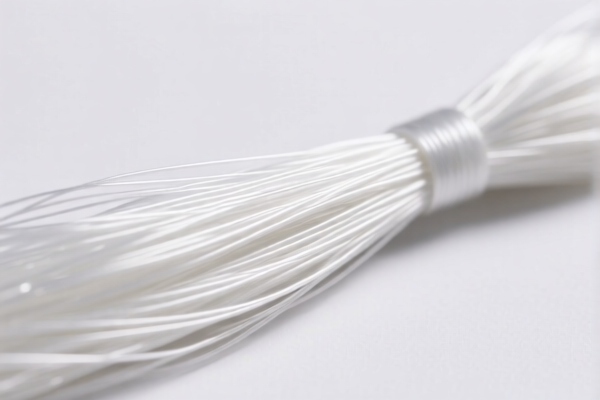
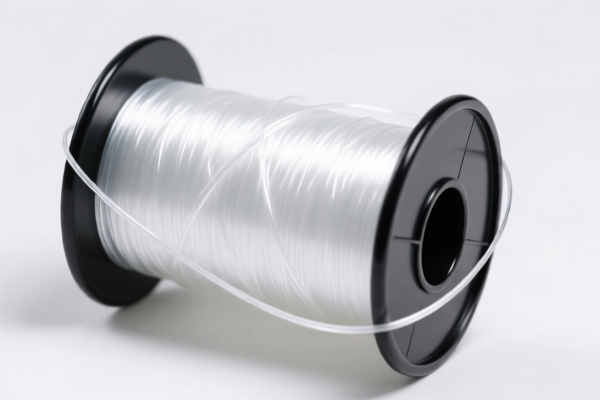

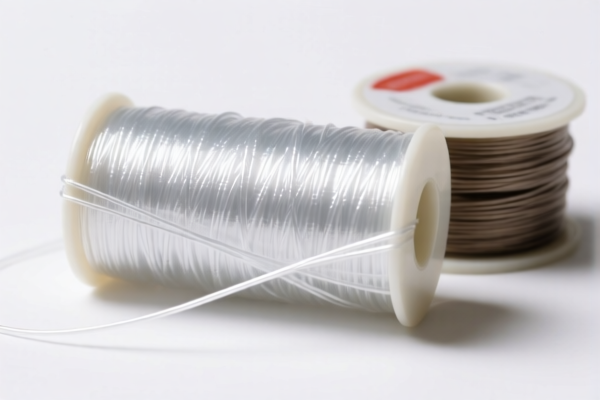
AI Analysis
🏗️ Other Plastic Monofilaments for Construction
🌐 HS Code Reference & Customs Clearance Guide | 2026 Latest Tariff Analysis | Professional Entry Strategy 📌 I. Product Definition & Classification: What Exactly Is "Construction Monofilament"?
In international trade, "Other Plastic Monofilaments for Construction" refer to single strands of plastic material (exceeding 1mm in any cross-sectional dimension) designed for structural reinforcement, binding, or reinforcement in concrete, asphalt, and civil engineering projects. These are distinct from synthetic filaments like fishing line or textile fibers.
They are categorized primarily by their material composition and specific HS Code subheadings:
⚠️ Key Distinction Point: - If the monofilament is made of generic plastic (not specified as polyester or nylon in the primary description) and fits the general "other plastic monofilament" definition → It falls under Chapter 39 or Chapter 54. - The specific HS codes provided in the data reflect different material nuances within "plastic" (broad sense) and "synthetic" categories, leading to slight variations in base tariffs, though all attract significant Section 301 (25%) and Section 122 (10%) additional duties.
📦 II. HS Code Classification Details (2026 Latest Tariff Authority Comparison)
Based on the provided data, here are the precise HS Codes for "Other Plastic Monofilaments for Construction," along with their specific summaries and tax breakdowns.
| HS Code | Product Description (Summary) | Key Material/形态 Feature | Total Tax Rate* |
|---|---|---|---|
| 3916.90.30.00 | Plastic monofilaments, compliant with plastic material and monofilament morphology definition. | Broad "Plastic" category, generic definition. | 41.5% |
| 3916.90.50.00 | Plastic monofilaments, material is plastic, morphology is monofilament. | Specific emphasis on "Plastic Material" + "Monofilament Form". | 40.8% |
| 5404.19.80.80 | Synthetic monofilaments, material is plastic, not polyester or nylon. | Excludes common synthetics (PET/Nylon); treated as "Other Synthetic". | 41.9% |
| 5404.19.80.40 | Synthetic monofilaments, material is plastic, may include polyester fibers etc. | Includes blends or types containing polyester-like synthetic components. | 41.9% |
🔍 Critical Reminder: - All items listed above are subject to Additional Tariffs. There is NO de minimis exemption. - The difference in Base Tariffs (5.8% - 6.9%) is negligible compared to the Additional Tariffs (35% total). - Chapter 39 vs. Chapter 54: Chapter 39 covers "Plastics and Articles Thereof," while Chapter 54 covers "Continuous Filament Material." The classification depends on the exact chemical composition and manufacturing process. If it's a pure plastic extrusion, 3916 is common. If it's a synthetic filament derived from polymers like polyester but not specifically classified elsewhere, 5404 may apply.
💰 III. 2026 Latest Tariff Rate Breakdown (Including Surtaxes & Policy Add-ons)
✅ Applicable Country: United States (US) ✅ Country of Origin: China (CN) ✅ Effective Date: All rates apply to imports entering the US.
🎯 1. HS Code 3916.90.30.00 — Plastic Monofilaments (General)
| Item | Detail |
|---|---|
| Base Tariff | 6.5% (Ad Valorem) |
| Section 301 Surtax | +25.0% (Under Trade Enhancement Act/301 Investigation) |
| Section 122 Surtax | +10.0% (Specific legislative add-on) |
| Total Effective Rate | 41.5% |
| Calculation Basis | CIF Value (Cost, Insurance, Freight) × 41.5% |
| De Minimis Exemption? | ❌ NO (Denied for these HS codes) |
| Legal Authority Path | HTSUS:3916.90.30.00 → USITC:Section301 → Section122 |
📌 Explanation: - The 25% Section 301 tariff is the most significant burden, targeting Chinese-made plastic products. - The 10% Section 122 tariff is an additional layer, bringing the total surcharge to 35% on top of the base 6.5%. - High Cost Alert: This is a high-tariff category. Profit margins must account for this ~41.5% land cost.
🎯 2. HS Code 3916.90.50.00 — Plastic Monofilaments (Specific Form)
| Item | Detail |
|---|---|
| Base Tariff | 5.8% (Ad Valorem) |
| Section 301 Surtax | +25.0% |
| Section 122 Surtax | +10.0% |
| Total Effective Rate | 40.8% |
| Calculation Basis | CIF Value × 40.8% |
| De Minimis Exemption? | ❌ NO |
| Legal Authority Path | HTSUS:3916.90.50.00 → USITC:Section301 → Section122 |
📌 Note: - This code offers a slightly lower base tariff (5.8% vs 6.5%), resulting in a 0.7% total savings compared to 3916.90.30.00. - Use this code if the product documentation explicitly emphasizes the "plastic material" and "monofilament morphology" as defined by customs rulings for this specific subheading.
🎯 3. HS Codes 5404.19.80.80 & 5404.19.80.40 — Synthetic Monofilaments
| Item | Detail (Both Codes) |
|---|---|
| Base Tariff | 6.9% (Ad Valorem) |
| Section 301 Surtax | +25.0% |
| Section 122 Surtax | +10.0% |
| Total Effective Rate | 41.9% |
| Calculation Basis | CIF Value × 41.9% |
| De Minimis Exemption? | ❌ NO |
| Legal Authority Path | HTSUS:5404.19.80.xx → USITC:Section301 → Section122 |
📌 Note: - These codes fall under Chapter 54 (Synthetic Filament Yarn & Textile Materials). - They are used when the monofilament is classified as a synthetic textile material rather than a general plastic article. - 5404.19.80.80 is for those not made of polyester or nylon. - 5404.19.80.40 includes those that may contain polyester fibers. - Highest Base Tariff: At 6.9%, this category has the highest base cost, but the additional tariffs remain the same.
🛠️ IV. Customs Clearance Practical Advice (Battle-Tested Pitfall Guide)
✅ 1. Required Documentation Checklist (Non-Negotiable)
| Document | Mandatory? | Purpose |
|---|---|---|
| ✅ Product Specification Sheet | ✔️ | Details material type (e.g., PP, PE, PET), diameter, tensile strength, and intended use (construction). |
| ✅ Certificate of Origin (CO) | ✔️ | To prove Chinese origin (which triggers these tariffs). If transshipped, proof of substantial transformation is needed. |
| ✅ Commercial Invoice | ✔️ | Must clearly state "Plastic Monofilament for Construction" and match the HS Code exactly. |
| ✅ Packing List | ✔️ | Shows net/gross weight and carton dimensions for verification. |
| ✅ Bill of Lading (B/L) | ✔️ | Consistent with invoice and CO. |
| ✅ Test Report (Optional but Recommended) | ✔️ | Confirms material composition (e.g., lab test showing it's PP, not Nylon) to support 5404 vs. 3916 classification. |
✅ 2. Declaration Strategy (Key Mantra)
🔥 "Match the Material, Declare the Form, Avoid the Split!"
| Scenario | Correct Declaration | Incorrect Practice |
|---|---|---|
| Generic Plastic Strand | 3916.90.30.00 or 3916.90.50.00 |
Mislabeling as "Nylon Monofilament" (different HS, different tariff). |
| Polyester-Based Construction Fiber | 5404.19.80.40 |
Declaring as "Plastic" under Chapter 39 to avoid synthetic scrutiny → Customs Audit Risk. |
| Bundled with Concrete Accessories | Separate HS Codes | Mixing with steel rebar or tools → Complex Clearance & Higher Scrutiny. |
| Small Samples for Testing | Still Pay Full Tariff | Assuming samples are exempt → Detained & Returned. |
✅ 3. Special Situations & Mitigation
| Situation | Recommendation |
|---|---|
| Material Change (e.g., PP to PET) | Ensure the HS Code matches the actual chemical composition. PP is often Ch. 39; PET filaments may fall under Ch. 54. |
| Transshipment from Vietnam/Malaysia | Warning: US Customs checks for Substantial Transformation. Simple repacking or relabeling does NOT qualify for origin change. The 301/122 tariffs will still apply if the plastic production occurred in China. |
| OEM Custom Dimensions | Provide detailed drawings. If the diameter is >1mm, it’s a monofilament. If <1mm, it might be a filament yarn (different tariff). Accuracy is key. |
| Construction Use Justification | Clearly state "For Use in Concrete Reinforcement" or "Asphalt Stabilization" in the invoice description to support the "Construction" claim, though it doesn't change the tariff, it helps with CBP examination focus. |
🌍 V. Global Market Comparison (2026 Latest)
| Country/Region | Recommended HS Code | Tariff Rate (China Origin) | Notes |
|---|---|---|---|
| 🇺🇸 USA | 3916.90.30.00 / 5404.19.80.xx |
40.8% – 41.9% | Includes 25% Sec 301 + 10% Sec 122. Very High. |
| 🇨🇳 China | 3916.90.30.00 |
~6.5% | Low base tariff, no surcharges. |
| 🇪🇺 EU | 3916.90.90 |
~6.5% | No US-style 301/122 tariffs. Standard MFN rate. |
| 🇦🇺 Australia | 3916.90.90 |
~5% | Low tariff, but verify anti-dumping rules. |
| 🇯🇵 Japan | 3916.90.90 |
~3-6% | Varies by specific plastic type. |
📌 Conclusion: - The US market is the most expensive due to the 35% additional tariffs (25% + 10%). - For other markets, the cost is significantly lower, making non-US destinations more competitive for Chinese-made plastic monofilaments.
📌 VI. Common Mistakes & Pitfall Guide (Lessons Learned)
❌ Mistake 1: Assuming "Plastic" means only Chapter 39.
👉 Consequence: If the material is Polyester (PET), customs may reclassify to Chapter 54 (5404.19.80.40), which has a higher base rate (6.9% vs 5.8%) and triggers potential anti-dumping investigations if applicable.
❌ Mistake 2: Ignoring the 10% Section 122 Tariff. 👉 Consequence: Underquoting duties by 10% leads to seizure, fines, and penalties upon audit.
❌ Mistake 3: Claiming "De Minimis" for small shipments. 👉 Consequence: Denied. These HS codes are explicitly not eligible for the $800 de minimis exemption. Every shipment, no matter the value, pays the full 41.5%.
❌ Mistake 4: Mixing "Monofilament" (>1mm) with "Filament Yarn" (<1mm). 👉 Consequence: Misclassification. Filament yarn may have different tariffs and restrictions. Ensure diameter measurement is accurate.
✅ Correct Action:
"PP Plastic Monofilament, Diameter 1.5mm, for Concrete Reinforcement, Made in China. HS Code: 3916.90.50.00."
🎯 VII. Conclusion: Professional Declaration, Cost Control, Compliance
🎯 Remember the Mantra:
🔹 "35% Extra is Inevitable (US Market), Plan Your Margin!" 🔹 "Check Material: PP vs. PET Determines Chapter 39 vs. 54." 🔹 "No De Minimis: Every Shipment Pays the Full Rate."
📌 Pro Tip:
- If your product is Polypropylene (PP), consider
3916.90.50.00(40.8%) as it has the lowest total tax.- If your product is Polyester (PET) based, it likely falls under
5404.19.80.40(41.9%).- Always apply for an Advance Ruling from CBP if your material composition is ambiguous, to avoid post-entry audits and penalties.
📣 Immediate Action:
📞 Contact a licensed customs broker. 📄 Provide Material Safety Data Sheet (MSDS) and technical specs. 📉 Calculate landed cost with 41.5% duty included. 🚀 Safe, compliant, and cost-effective entry into the US market!
✨ Precision in Classification is the First Step to Profitability! 💼 Your Supply Chain, Optimized for the US Market.
Customer Reviews
About HS Code Classification
The Harmonized System (HS) is an internationally standardized nomenclature developed by the World Customs Organization (WCO) to classify traded products. Over 200 countries use the HS system as the basis for customs tariffs, trade statistics, and import/export regulations.
Each HS code follows a hierarchical structure:
- Chapter (2 digits) — Broad category of goods (e.g., Chapter 84: Machinery and Mechanical Appliances)
- Heading (4 digits) — More specific grouping within the chapter
- Subheading (6 digits) — Internationally standardized breakdown, used by all WCO member countries
- National subdivisions (8-10 digits) — Country-specific extensions for further classification, such as US HTSUS 10-digit codes
Correct HS code classification is essential for smooth customs clearance, accurate duty payment, and compliance with trade regulations. Misclassification can lead to customs delays, overpayment of duties, or penalties.
When importing from CN to US, the applicable tariff rates may include:
- Most-Favored-Nation (MFN) rate — The standard duty rate applied to WTO members
- General rate — Applied to countries without trade agreements
- Trade remedy duties — Additional tariffs such as Section 301 (anti-dumping), Section 232 (national security), or countervailing duties
The information provided on this page is for reference purposes only. For official classification, please consult with your local customs authority or a licensed customs broker.