Other plastic packaging box boards
CN → US| HS Code | Tariff Rate | Origin | Destination | Doc |
|---|---|---|---|---|
| 3921190090 | 41.5% | CN | US | Official Doc |
| 3921905050 | 39.8% | CN | US | Official Doc |
| 3926909987 | 22.8% | CN | US | Official Doc |
| 3926909989 | 22.8% | CN | US | Official Doc |
| 3920995000 | 40.8% | CN | US | Official Doc |
Product Images
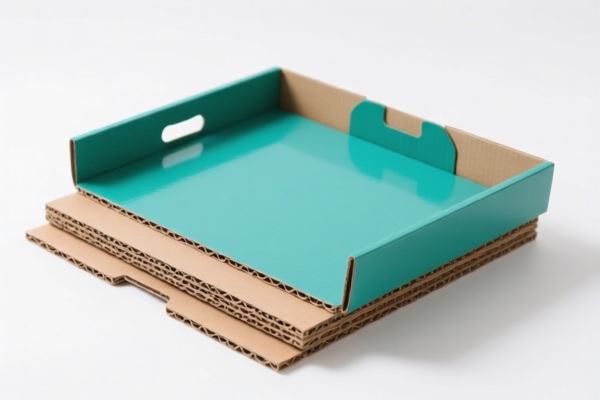
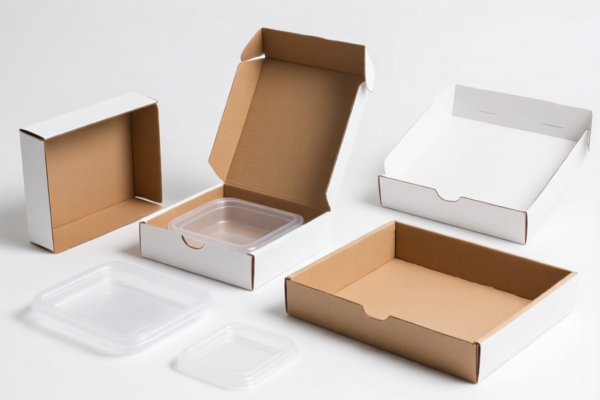
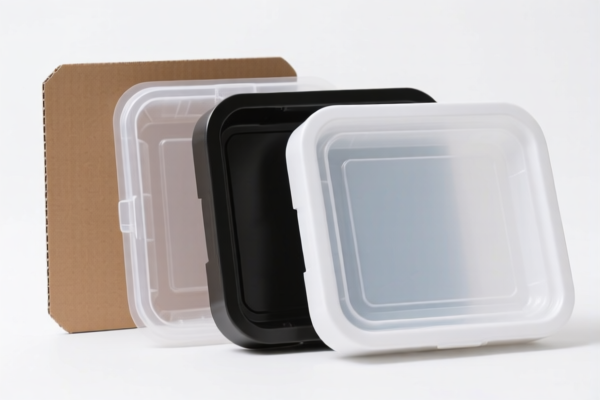
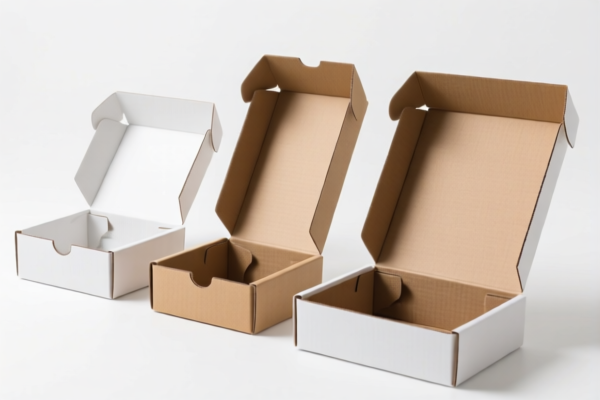
AI Analysis
📦 Plastic Packaging Box Boards (Other Plastic Packagings)
🌐 HS Code Reference & Customs Clearance Guide | 2026 Latest Tariff Analysis | Professional Strategy for US Imports
📌 1. Product Definition: What Are "Plastic Packaging Box Boards"?
In international trade, "plastic packaging box boards" typically refer to rigid or semi-rigid plastic sheets, plates, or films used to construct boxes, trays, lids, or protective packaging. They are distinct from finished containers (like bottles or bags) and are often classified under Chapter 39 (Plastics and Articles Thereof).
The classification depends heavily on: - Material Composition: Pure plastic vs. composite. - Form Factor: Plate, sheet, film, or foil. - End Use: Specifically for packaging vs. general industrial use.
⚠️ Key Distinction:
- If the product is a finished box → Likely Chapter 3904–3926 (Finished articles).
- If the product is a raw board/sheet used to make boxes → Likely Chapter 3920–3921 (Plates, sheets, films).
- The term "Other" in HS codes often acts as a fallback category for items not specifically listed elsewhere.
📦 2. HS Code Classification Matrix (Based on Provided Data)
The following HS Codes are derived from the provided data for "Other plastic packaging box boards." Note that these codes reflect specific US tariff lines with applicable additional duties.
| HS Code | Product Description & Summary | Taxation Profile | Key Characteristics |
|---|---|---|---|
3921.19.00.90 |
Other plates, sheets, film, foil & strip, of plastics | Total Tax: 41.5% | Base: 6.5% + Section 301: 25% + 122 Clause: 10% Fits "Other plastic board/sheet" description. |
3921.90.50.50 |
Other plates, sheets, film, foil & strip, of plastics | Total Tax: 39.8% | Base: 4.8% + Section 301: 25% + 122 Clause: 10% Plastic board in "Other" category; no material/form conflict. |
3926.90.99.87 |
Other articles of plastics and articles of other materials | Total Tax: 22.8% | Base: 5.3% + Section 301: 7.5% + 122 Clause: 10% Fallback category for plastic board-like articles; lowest duty risk. |
3926.90.99.89 |
Other articles of plastics and articles of other materials | Total Tax: 22.8% | Base: 5.3% + Section 301: 7.5% + 122 Clause: 10% Plastic制品 (articles) in "Other" class; no conflict. |
3920.99.50.00 |
Other plates, sheets, film, foil & strip, of plastics | Total Tax: 40.8% | Base: 5.8% + Section 301: 25% + 122 Clause: 10% Plastic board definition; other categories aligned. |
🔍 Analysis:
- High-Duty Codes (3920&3921): These are for unworked or semi-worked plastic plates/sheets. They attract 25% Section 301 tariffs because they are considered intermediate industrial goods.
- Low-Duty Codes (3926): These are for finished or partially finished articles ("Other articles"). They attract a lower Section 301 rate of 7.5%, making them significantly cheaper for clearance.
💰 3. 2026 Latest Tariff Rate Breakdown (US Imports from China)
✅ Applicable Country: United States (US)
✅ Origin: China (CN)
✅ Effective Date: Ongoing (as per provided data)
🎯 1. High-Tariff Path: 3921.19.00.90 & 3920.99.50.00
| Item | Content |
|---|---|
| Base Duty Rate | 5.8% – 6.5% (Ad Valorem) |
| Section 301 Duty | +25.0% (USITC Footnote 9903.88.01) |
| 122 Clause Duty | +10.0% (Special Measure) |
| Total Effective Rate | ~40.8% – 41.5% |
| Calculation Basis | CIF Value × Total Rate |
| De Minimis Exemption | ❌ Not Eligible (Deny de minimis for Section 301 goods) |
| Legal Path | USITC:3921.19.00.90 → FOOTNOTE:301 → 122 CLAUSE |
📌 Explanation:
- These codes fall under Chapter 3904–3921 (Plastics in primary forms or simple sheets).
- The 25% penalty is mandatory for Chinese-origin goods under current trade policies.
- Risk: High classification risk if goods are misidentified as "packaging" instead of "raw plastic sheet."
🎯 2. Low-Tariff Path: 3926.90.99.87 & 3926.90.99.89
| Item | Content |
|---|---|
| Base Duty Rate | 5.3% (Ad Valorem) |
| Section 301 Duty | +7.5% (USITC Footnote 9903.88.01) |
| 122 Clause Duty | +10.0% (Special Measure) |
| Total Effective Rate | 22.8% |
| Calculation Basis | CIF Value × 22.8% |
| De Minimis Exemption | ❌ Not Eligible |
| Legal Path | USITC:3926.90.99.87 → FOOTNOTE:301 (7.5%) → 122 CLAUSE |
📌 Strategic Advantage:
- 3926 covers "Other articles of plastics." If your "packaging box boards" are pre-cut, molded, or have specific packaging shapes (not just flat rolls), they can often be argued as "articles" rather than "sheets."
- Savings: ~19% lower total tax compared to 3921/3920 codes.
🛠️ 4. Customs Clearance Operational Advice
✅ 1. Essential Documentation Checklist
| Document | Required? | Notes |
|---|---|---|
| Product Specification Sheet | ✔️ | Must detail dimensions, thickness, material (e.g., PET, PP, PE), and hardness. |
| Technical Drawing | ✔️ | Show if the "board" is flat (Chapter 3920/21) or shaped/cut (Chapter 3926). |
| Commercial Invoice | ✔️ | Clearly state: "Plastic Board for Packaging Construction" vs. "Finished Plastic Packaging Box." |
| Material Composition Statement | ✔️ | Confirm 100% plastic. No wood or metal components allowed in Chapter 39. |
| Certificate of Origin | ✔️ | Essential for applying 122 Clause and Section 301 duties correctly. |
✅ 2. Classification Strategy (Critical!)
🔥 "Shape Defines Duty: Flat Sheets = High Tax; Shaped Articles = Lower Tax!"
| Scenario | Recommended HS Code | Reasoning |
|---|---|---|
| Flat Rolls or Large Sheets | 3921.19.00.90 or 3920.99.50.00 |
These are "plates/sheets" in primary form. High duty (41.5%). |
| Pre-cut Rectangular Boards | 3921.90.50.50 |
Still considered sheets, but "other" type. High duty (39.8%). |
| Molded Trays or Shaped Boards | 3926.90.99.87 |
Considered "articles" because they are worked beyond simple shaping. Lower duty (22.8%). |
| Custom-Fitted Box Parts | 3926.90.99.89 |
Fits "other articles." Best for complex packaging components. Lower duty (22.8%). |
✅ 3. Risk Mitigation Tips
- Avoid Ambiguity: Do not use generic terms like "plastic box." Use specific technical terms like "Rigid Plastic Tray for E-Commerce Packaging" if aiming for 3926.
- Proof of Work: For 3926, provide photos showing the board is not just a raw sheet but has been cut, molded, or assembled into a functional packaging component.
- 122 Clause Compliance: Ensure all paperwork explicitly states the origin as China to avoid penalties for misdeclaration.
🌍 5. Global Market Comparison (2026)
| Market | Recommended HS Code | Est. Total Duty | Notes |
|---|---|---|---|
| 🇺🇸 USA | 3926.90.99.87 |
22.8% | Best option via 3926 classification. |
| 🇺🇸 USA | 3921.19.00.90 |
41.5% | Avoid if possible; high Section 301 burden. |
| 🇨🇳 China | 3921.19.00.90 |
~6.5% | No Section 301; simple import duty. |
| 🇪🇺 EU | 3921.90.00 |
~5-7% | No equivalent 122 clause; lower barriers. |
| 🇲🇽 Mexico | 3926.90.99 |
~5-10% | USMCA may apply if qualifying. |
📌 Conclusion:
For US imports, classifying as "Article of Plastic" (3926) rather than "Plate/Sheet" (3920/3921) can save ~19% in duties. This requires clear product documentation proving the item is a manufactured packaging component, not raw material.
📌 6. Common Mistakes & Pitfalls
❌ Mistake 1: Calling a flat plastic sheet a "Packaging Box" to avoid 3920/3921.
👉 Result: Customs will reclassify it as a sheet → Back taxes + Penalties.
❌ Mistake 2: Using 3926 for unprocessed raw rolls.
👉 Result: Misclassification → Shipment held, inspection required, delays.
❌ Mistake 3: Ignoring the 122 Clause.
👉 Result: Incorrect duty calculation → Seizure or fine.
✅ Best Practice:
"If it’s flat, it’s a sheet (High Tax). If it’s shaped or cut for purpose, it’s an article (Lower Tax). Be specific!"
🎯 7. Final Recommendation
🎯 Action Plan:
1. Audit Product Form: Are the boards flat (sheets) or shaped (articles)?
2. Select HS Code:
- Flat → 3921.19.00.90 (Budget ~41.5%)
- Shaped/Cut → 3926.90.99.87 (Budget ~22.8%)
3. Document Thoroughly: Provide technical drawings proving the "article" nature if targeting 3926.
4. Consult Broker: File an Advance Ruling with US CBP if the product shape is borderline.
📣 Pro Tip:
Always label products as "Plastic Packaging Component" rather than "Raw Plastic Sheet" if seeking the 3926 classification. This subtle semantic shift, backed by technical specs, can significantly reduce landed costs.
✨ Precise Classification Saves Money!
💼 Every percentage point matters in global trade.
Customer Reviews
About HS Code Classification
The Harmonized System (HS) is an internationally standardized nomenclature developed by the World Customs Organization (WCO) to classify traded products. Over 200 countries use the HS system as the basis for customs tariffs, trade statistics, and import/export regulations.
Each HS code follows a hierarchical structure:
- Chapter (2 digits) — Broad category of goods (e.g., Chapter 84: Machinery and Mechanical Appliances)
- Heading (4 digits) — More specific grouping within the chapter
- Subheading (6 digits) — Internationally standardized breakdown, used by all WCO member countries
- National subdivisions (8-10 digits) — Country-specific extensions for further classification, such as US HTSUS 10-digit codes
Correct HS code classification is essential for smooth customs clearance, accurate duty payment, and compliance with trade regulations. Misclassification can lead to customs delays, overpayment of duties, or penalties.
When importing from CN to US, the applicable tariff rates may include:
- Most-Favored-Nation (MFN) rate — The standard duty rate applied to WTO members
- General rate — Applied to countries without trade agreements
- Trade remedy duties — Additional tariffs such as Section 301 (anti-dumping), Section 232 (national security), or countervailing duties
The information provided on this page is for reference purposes only. For official classification, please consult with your local customs authority or a licensed customs broker.