Other plastic profile shapes for illumination
CN → US| HS Code | Tariff Rate | Origin | Destination | Doc |
|---|---|---|---|---|
| 3916901000 | 41.5% | CN | US | Official Doc |
| 9405920000 | 38.7% | CN | US | Official Doc |
| 3916905000 | 40.8% | CN | US | Official Doc |
| 3926909989 | 22.8% | CN | US | Official Doc |
| 3926305000 | 22.8% | CN | US | Official Doc |
Product Images
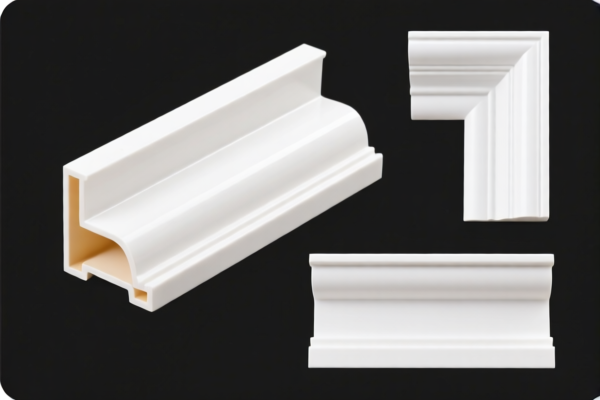

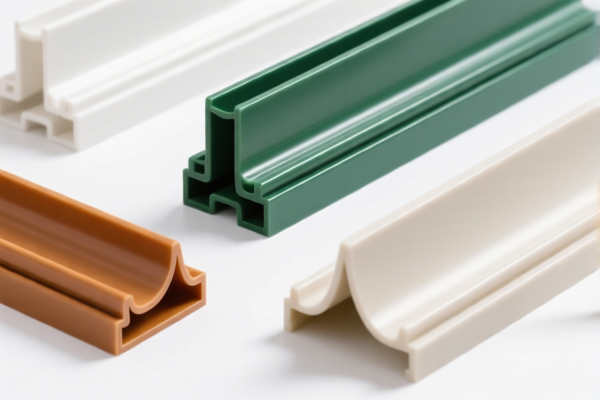
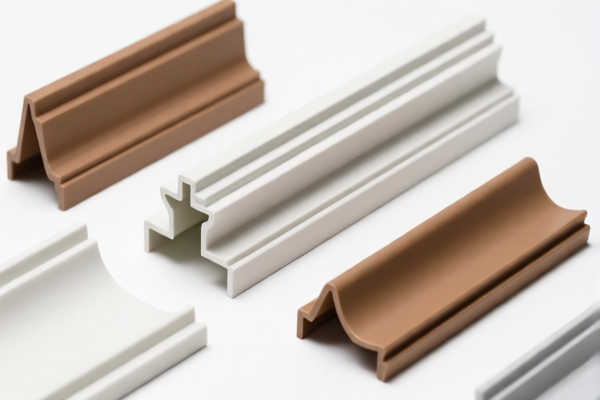
AI Analysis
💡 Other Plastic Profile Shapes for Illumination (Acrylic/Plastic Extrusions)
🌐 HS Code Reference & Customs Clearance Guide | 2026 Latest Tariff Analysis | Professional通关 Strategy
📌 I. Product Definition & Classification: What Exactly Are "Plastic Profiles for Lighting"?
"Other plastic profile shapes for illumination" typically refers to extruded or molded plastic components used in lighting fixtures. These are not the light source itself (like LED chips), but the structural or optical housing that directs, diffuses, or supports the light.
Key materials include: * Acrylic (Polymethyl Methacrylate - PMMA): Known for high light transmission and clarity. * Other Plastics: Such as Polycarbonate (PC), PVC, or ABS, used for structural components, heat sinks, or diffusers.
⚠️ Critical Distinction Point:
- If the profile is specifically Acrylic and used for its optical properties (light transmission), it often falls under Chapter 39 (Articles of Plastics), specifically heading 3916 (Plastics, extruded, in the form of rods, tubes, etc.).
- If the profile is considered a part of a lighting fixture (a functional component of a lamp), it may fall under Chapter 94 (Articles of furniture; lighting fittings...), specifically heading 9405.
- If it is a generic plastic structural part not specifically recognized as a lighting part, it may fall under Chapter 39, heading 3926 (Other articles of plastics).
📦 II. HS Code Classification Details (2026 Latest Tariff Authority Comparison)
Based on the provided data, here are the specific classifications for "Other plastic profile shapes for illumination":
| HS Code | Product Description | Application Scenario | Material/Form | Tax Rate (Total) |
|---|---|---|---|---|
3916.90.10.00 |
Acrylic Plastic Profiles for Lighting | Optical housings, light guides, diffusers | Acrylic Polymer, Extruded Profile | 41.5% |
9405.92.00.00 |
Plastic Parts of Lighting Fittings | Structural components, reflectors, mounts | Plastic, Lamp Component | 38.7% |
3916.90.50.00 |
Other Plastic Rods/Profiles | General plastic extrusions for lighting | Plastic, Rod/Profile Form | 40.8% |
3926.90.99.89 |
Other Plastic Articles | Non-specific plastic parts for lighting | Plastic, Other Plastic Article | 22.8% |
3926.30.50.00 |
Plastic Structural Parts for Lamps | Support structures, brackets, frames | Plastic, Lamp Structural Part | 22.8% |
🔍 Key Insight:
- Acrylic vs. Other Plastics: Profiles made of Acrylic (3916.90.10.00) carry a higher base tariff (6.5%) compared to general plastic parts (3926series, base 5.3%).
- Functional Classification: Items classified as Lamp Parts (9405.92.00.00) have a lower base tariff (3.7%) but still incur high additional duties.
- "Other" Category: The3926codes (3926.90.99.89and3926.30.50.00) offer the lowest total tax (22.8%) but require proving the item is a "general plastic article" or "structural part," not an optical component.
💰 III. 2026 Latest Tariff Rate Breakdown (Including Additional Duties & Policy Surcharges)
✅ Applicable Country: United States (US)
✅ Origin: China (CN)
✅ Effective Date: From November 10, 2025 (including subsequent imports)
🎯 1. 3916.90.10.00 —— Acrylic Plastic Profiles for Lighting
| Item | Content |
|---|---|
| Base Tariff | 6.5% |
| Section 301 Additional Duty | +25.0% |
| Section 122 Duty (IEEPA) | +10.0% |
| Total Tax Rate | 41.5% |
| Tax Calculation | CIF Value × 41.5% |
| De Minimis Exemption | ❌ Not Applicable (deny_de_minimis) |
| Legal Basis Path | USITC:3916.90.10.00 → FOOTNOTE:301 → IEEPA:Section 122 |
📌 Explanation:
- Acrylic is often scrutinized due to its optical nature and high value.
- The 6.5% base is higher than other plastics.
- Total 41.5% is significant. Ensure the material is explicitly stated as Acrylic (PMMA) to avoid misclassification.
🎯 2. 9405.92.00.00 —— Plastic Parts of Lighting Fittings
| Item | Content |
|---|---|
| Base Tariff | 3.7% |
| Section 301 Additional Duty | +25.0% |
| Section 122 Duty (IEEPA) | +10.0% |
| Total Tax Rate | 38.7% |
| Tax Calculation | CIF Value × 38.7% |
| De Minimis Exemption | ❌ Not Applicable |
| Legal Basis Path | USITC:9405.92.00.00 → FOOTNOTE:301 → IEEPA:Section 122 |
📌 Note:
- This classification relies on the item being recognized as a "Part of a Lighting Fitting."
- You must provide evidence that the profile is intended for use in a lamp (e.g., functional diagrams, compatibility with specific lighting models).
🎯 3. 3916.90.50.00 —— Other Plastic Rods/Profiles
| Item | Content |
|---|---|
| Base Tariff | 5.8% |
| Section 301 Additional Duty | +25.0% |
| Section 122 Duty (IEEPA) | +10.0% |
| Total Tax Rate | 40.8% |
| Tax Calculation | CIF Value × 40.8% |
| De Minimis Exemption | ❌ Not Applicable |
| Legal Basis Path | USITC:3916.90.50.00 → FOOTNOTE:301 → IEEPA:Section 122 |
📌 Note:
- This is for non-acrylic plastics extruded into rods/profiles.
- If you claim this code, ensure the material is NOT acrylic (e.g., Polycarbonate, ABS, PVC).
🎯 4. 3926.90.99.89 & 3926.30.50.00 —— Other Plastic Articles / Structural Parts
| Item | Content |
|---|---|
| Base Tariff | 5.3% |
| Section 301 Additional Duty | +7.5% |
| Section 122 Duty (IEEPA) | +10.0% |
| Total Tax Rate | 22.8% |
| Tax Calculation | CIF Value × 22.8% |
| De Minimis Exemption | ❌ Not Applicable |
| Legal Basis Path | USITC:3926... → FOOTNOTE:301 (7.5%) → IEEPA:Section 122 |
📌 Strategic Advantage:
- Lowest Total Tax (22.8%) among all options.
- Section 301 Rate is only 7.5% instead of 25%.
- Risk: Must prove the item is not an optical component (Acrylic) and not a specific lamp part (9405). It must be a general plastic structural part. Misclassification can lead to penalties.
🛠️ IV. Customs Clearance Practical Advice (Real-World Pitfall Avoidance)
✅ 1. Documentation Checklist (Mandatory)
| Document | Required? | Description |
|---|---|---|
| ✅ Product Specification Sheet | ✔️ | Must clearly state Material Composition (e.g., 100% Acrylic vs. PC) and Form (Extruded Profile/Rod). |
| ✅ Functional Description | ✔️ | Explain how the profile is used. Is it for light diffusion (optical) or structural support? |
| ✅ Product Photos | ✔️ | Clear images showing cross-section, surface finish, and any markings. |
| ✅ Commercial Invoice | ✔️ | Clearly describe item as "Plastic Profile for Lighting" or "Acrylic Extrusion for Light Guides." Avoid vague terms like "Plastic Part." |
| ✅ Packing List | ✔️ | Detail weight and dimensions. |
| ✅ Certificate of Origin (CO) | ✔️ | For origin verification, though US-China tariffs still apply. |
✅ 2. Declaration Strategy (Key Mnemonics)
🔥 "Material First, Function Second, Code Determines Cost!"
| Scenario | Correct HS Code | Why? |
|---|---|---|
| Acrylic Profile (High Clarity, Light Transmission) | 3916.90.10.00 |
Material is Acrylic, Form is Extruded Profile. |
| Non-Acrylic Plastic Rod (e.g., PC, PVC) | 3916.90.50.00 |
Material is Plastic (not Acrylic), Form is Rod/Profile. |
| Specific Lamp Component (e.g., Reflector, Mount) | 9405.92.00.00 |
Functional part of a lighting fitting. |
| General Structural Plastic Part (Bracket, Frame) | 3926.30.50.00 |
Structural use, not optical, not specific lamp part. |
| Other Plastic Item (Miscellaneous) | 3926.90.99.89 |
Catch-all for other plastic articles. |
✅ 3. Special Situation Handling
| Situation | Handling Advice |
|---|---|
| Mixed Materials | If the profile has both Acrylic and non-Acrylic parts, declare based on the essential character (usually the Acrylic if optical). |
| Co-Extruded Profiles | If multiple plastics are extruded together, determine the primary material. If Acrylic is the functional layer, use 3916.90.10.00. |
| Custom Colors/Additives | Additives (e.g., UV stabilizers) do not change the HS code unless they fundamentally alter the plastic type (e.g., from Acrylic to Polycarbonate). |
| Low-Value Shipments | ❌ No De Minimis Exemption: All these codes are subject to deny_de_minimis. Even small shipments pay full tax. |
🌍 V. Global Market Customs Comparison (2026 Latest)
| Country/Region | Recommended HS Code | Tariff (China Origin) | Certification Requirements | Notes |
|---|---|---|---|---|
| 🇺🇸 USA | 3916.90.10.00 / 9405.92.00.00 |
22.8% - 41.5% | No specific US certs for plastic profiles, but ensure RoHS/REACH compliance if EU-bound. | Section 301 & 122 duties apply. |
| 🇨🇳 China | 3916.90.10.00 |
6.5% (Base) | CCC (if applicable for final product) | No additional US-style tariffs. |
| 🇪🇺 EU | 3916.90.90 |
6.5% | CE, RoHS, REACH | No Section 301/122. |
| 🇦🇺 Australia | 3916.90.90 |
5% | RCM (if electrical accessory) | No Section 301/122. |
| 🇯🇵 Japan | 3916.90.90 |
0% | PSE (if electrical) | No Section 301/122. |
📌 Conclusion:
- The USA is the only market with high additional tariffs (Section 301 + Section 122).
- Cost Optimization: If feasible, classify under3926(22.8%) instead of3916(41.5%) by proving the item is a structural part rather than an optical profile.
- Material Accuracy: Always declare the exact polymer type (Acrylic vs. PC vs. ABS). Misdeclaring Acrylic as "Plastic" can lead to audits and penalties.
📌 VI. Common Errors & Pitfall Avoidance (Blood & Tears Lessons)
❌ Error 1: Declaring Acrylic Profiles as "General Plastic Parts" (3926) to save tax.
👉 Consequence: Customs will reject the declaration, demand proof of material, and apply 41.5% + penalties.
✅ Fix: Be honest. If it’s Acrylic, use 3916.90.10.00.
❌ Error 2: Declaring Lamp Parts as "Plastic Profiles" (3916) to avoid Chapter 94 scrutiny.
👉 Consequence: Customs may reclassify to 9405.92.00.00 (38.7%). Minor difference, but potential delay.
✅ Fix: Use 9405.92.00.00 if it’s clearly a lamp component.
❌ Error 3: Ignoring Section 122 (10%) in cost calculations.
👉 Consequence: Underestimating landed cost by 10%.
✅ Fix: Always add 10% for Section 122 in total tax calculations for China-origin goods to the US.
❌ Error 4: Using vague terms like "Plastic Strip" or "Plastic Bar" in the commercial invoice.
👉 Consequence: Customs will ask for clarification, causing delays.
✅ Fix: Use precise terms: "Acrylic Extruded Light Guide Profile, Model XYZ" or "Polycarbonate Structural Mount for LED Luminaire."
🎯 VII. Conclusion: Professional Declaration, Cost Optimization, Efficiency!
🎯 Remember the Mantra:
🔹 "Acrylic? Use 3916. Lamp Part? Use 9405. Structural? Use 3926. Vague Terms? Delayed!"
🔹 "Base + 301 + 122 = Total Tax. Don’t Forget the 10% IEEPA!"
📌 Pro Tip:
If your plastic profiles are originally sourced from Vietnam, Mexico, Thailand, or Malaysia, you may qualify for IEEPA Exemption or reduced Section 301 duties.
👉 Recommendation: Apply for an Advance Ruling from US Customs and Border Protection (CBP) to confirm the correct HS Code before shipment. This avoids unexpected duties and delays.
📣 Immediate Action:
📞 Contact a Professional Customs Broker + Provide Product Photos + Apply for HS Code Advance Ruling
🚀 Ensure your Plastic Profiles clear customs smoothly, efficiently, and at the lowest possible tax rate!
✨ Professional Customs Clearance Starts with Accurate Classification!
💼 Every Cent of Tax Paid Should Be Justified and Optimized!
Customer Reviews
About HS Code Classification
The Harmonized System (HS) is an internationally standardized nomenclature developed by the World Customs Organization (WCO) to classify traded products. Over 200 countries use the HS system as the basis for customs tariffs, trade statistics, and import/export regulations.
Each HS code follows a hierarchical structure:
- Chapter (2 digits) — Broad category of goods (e.g., Chapter 84: Machinery and Mechanical Appliances)
- Heading (4 digits) — More specific grouping within the chapter
- Subheading (6 digits) — Internationally standardized breakdown, used by all WCO member countries
- National subdivisions (8-10 digits) — Country-specific extensions for further classification, such as US HTSUS 10-digit codes
Correct HS code classification is essential for smooth customs clearance, accurate duty payment, and compliance with trade regulations. Misclassification can lead to customs delays, overpayment of duties, or penalties.
When importing from CN to US, the applicable tariff rates may include:
- Most-Favored-Nation (MFN) rate — The standard duty rate applied to WTO members
- General rate — Applied to countries without trade agreements
- Trade remedy duties — Additional tariffs such as Section 301 (anti-dumping), Section 232 (national security), or countervailing duties
The information provided on this page is for reference purposes only. For official classification, please consult with your local customs authority or a licensed customs broker.