Other plastic sheet
CN → US| HS Code | Tariff Rate | Origin | Destination | Doc |
|---|---|---|---|---|
| 3919905010 | 40.8% | CN | US | Official Doc |
| 3919905060 | 40.8% | CN | US | Official Doc |
| 3921190090 | 41.5% | CN | US | Official Doc |
| 3921905050 | 39.8% | CN | US | Official Doc |
| 3926909987 | 22.8% | CN | US | Official Doc |
Product Images
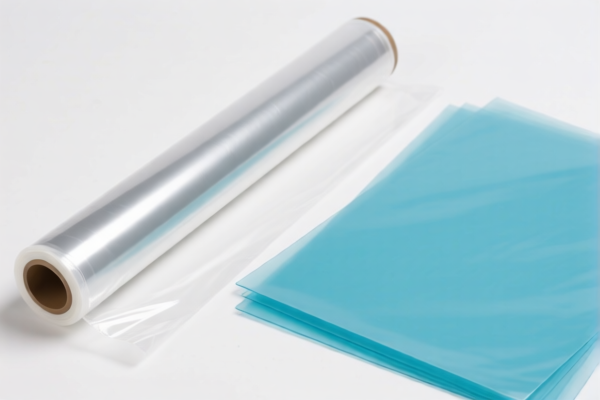
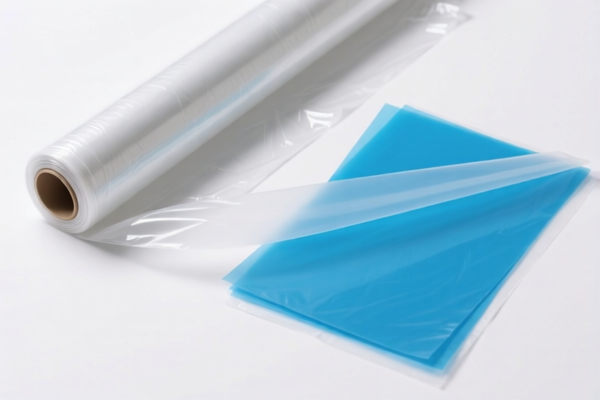
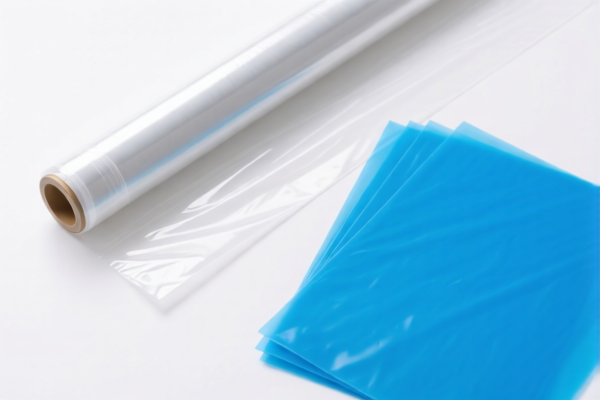
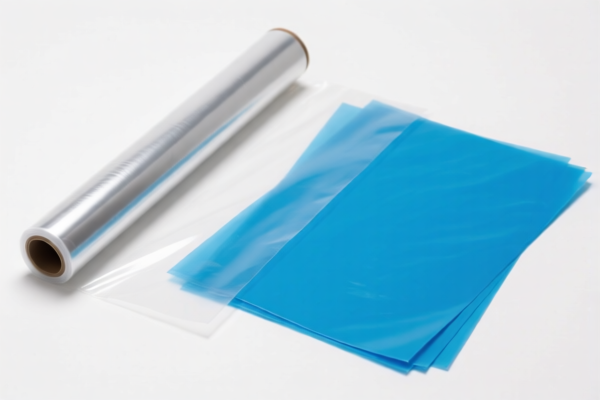
AI Analysis
🧱 Other Plastic Sheets & Panels (General Plastic Products)
🌐 HS Code Reference & Customs Clearance Guide | 2026 Latest Tariff Analysis | Professional Clearance Strategy
📌 I. Product Definition & Classification: Do You Understand "Other Plastic Sheets" Truly?
"In other plastic sheet" is a broad, catch-all category in international trade, typically referring to plastic films, sheets, plates, and strips that do not fall into specific high-value categories (like self-adhesive tapes, rigid laminates, or specific consumer goods). In this context, the term often covers self-adhesive colored sheets, two-color boards, and other generic plastic board/film formats.
In international trade, these products are primarily categorized by their physical form (sheet vs. plate), adhesive properties (self-adhesive vs. non-adhesive), and specific usage (decorative, industrial, packaging).
⚠️ Key Distinction Points:
- Self-Adhesive (3919): Must have an adhesive backing applied during manufacturing. If the product is just a plastic sheet with a separate roll of tape, it might be classified differently.
- Plates/Sheets (3921/3926): "Plate" usually implies a rigid, thicker form; "Sheet" or "Film" implies a thinner, flexible form.
- Two-Color Boards (3921/3926): These are laminates or co-extruded products with two distinct color layers, often used for signage, crafting, or industrial labeling.
📦 II. HS Code Classification Details (2026 Latest Tariff Authority Cross-Reference)
Based on the provided dataset, here are the specific classifications for "Other Plastic Sheets" and related items:
| HS Code | Product Description | Application Scenario | Classification Category |
|---|---|---|---|
3919.90.50.10 |
Other Plastic Self-Adhesive Colored Sheets | Decorative vinyl, craft sheets, adhesive backing films | Self-Adhesive / Sheet / Other |
3919.90.50.60 |
Other Plastic Self-Adhesive Colored Sheets | Industrial adhesive tapes, specialized colored films | Self-Adhesive / Sheet / Other |
3921.19.00.90 |
Other Plastic Two-Color Boards | Rigid decorative panels, signage cores, packaging inserts | Plastic Plate/Sheet/Film / Other |
3921.90.50.50 |
Other Plastic Two-Color Boards | General industrial plastic boards, multi-layer sheets | Plastic Plate/Sheet/Film / Other |
3926.90.99.87 |
Other Plastic Two-Color Boards (Other) | Niche plastic boards, miscellaneous plastic articles | Catch-all / Other Plastic Articles |
🔍 Important Note:
-3919is specifically for self-adhesive products. If the sheet is NOT self-adhesive, it cannot go here.
-3921covers plates, sheets, film, foil, and strip. Two-color boards usually fall here as they are composite plastic plates.
-3926is the "Nuisance Clause" (Catch-all) for other plastic articles not specified elsewhere. If a board doesn't fit the strict definition of 3921, it may fall here.
💰 III. 2026 Latest Tariff Rate Details (Including Surcharges & Policy Add-ons)
✅ Applicable Country: United States (US)
✅ Origin: China (CN)
✅ Effective Date: 2025/2026 (Based on current trade policies)
🎯 1. 3919.90.50.10 & 3919.90.50.60 —— Self-Adhesive Plastic Sheets
| Item | Content |
|---|---|
| Base Tariff Rate | 5.8% |
| Section 301 Surcharge | +25.0% (Trade Remedy Duties) |
| Section 122 Tariff | +10.0% (Newly applied surcharge) |
| Total Tax Rate | 40.8% |
| Calculation Method | CIF Value × 40.8% |
| De Minimis Eligibility | ❌ Not Eligible (High duty burden prevents low-value exemption benefits in many contexts) |
| Legal Basis Path | USITC:3919.90.50.10 → SECTION301:Footnote 9903.88.01 → SECTION122 |
📌 Explanation:
- The 25% Section 301 duty is the standard penalty for Chinese plastic goods.
- The 10% Section 122 tariff is an additional layer added in recent trade updates, pushing the total cost to 40.8%.
- This makes self-adhesive sheets high-cost imports. Profit margins must account for this high duty.
🎯 2. 3921.19.00.90 —— Other Plastic Two-Color Boards (Specific Sub-category)
| Item | Content |
|---|---|
| Base Tariff Rate | 6.5% |
| Section 301 Surcharge | +25.0% |
| Section 122 Tariff | +10.0% |
| Total Tax Rate | 41.5% |
| Calculation Method | CIF Value × 41.5% |
| De Minimis Eligibility | ❌ Not Eligible |
| Legal Basis Path | USITC:3921.19.00.90 → SECTION301:Footnote 9903.88.01 → SECTION122 |
📌 Explanation:
- Slightly higher base rate (6.5% vs 5.8%) leads to a higher total duty (41.5%).
- This category is for rigid two-color plates/sheets. Ensure your product is not classified as a "sheet" (3919) if it is rigid, to avoid misclassification penalties.
🎯 3. 3921.90.50.50 —— Other Plastic Two-Color Boards (General Sub-category)
| Item | Content |
|---|---|
| Base Tariff Rate | 4.8% |
| Section 301 Surcharge | +25.0% |
| Section 122 Tariff | +10.0% |
| Total Tax Rate | 39.8% |
| Calculation Method | CIF Value × 39.8% |
| De Minimis Eligibility | ❌ Not Eligible |
| Legal Basis Path | USITC:3921.90.50.50 → SECTION301:Footnote 9903.88.01 → SECTION122 |
📌 Explanation:
- Lowest duty rate among the 3921 codes (39.8%).
- This is the most common code for general-purpose plastic boards. If your two-color board is not "specialized" (covered by 3921.19), use this code to save 1.7% compared to3921.19.00.90.
🎯 4. 3926.90.99.87 —— Other Plastic Two-Color Boards (Catch-all)
| Item | Content |
|---|---|
| Base Tariff Rate | 5.3% |
| Section 301 Surcharge | +7.5% (Reduced Section 301 Rate*) |
| Section 122 Tariff | +10.0% |
| Total Tax Rate | 22.8% |
| Calculation Method | CIF Value × 22.8% |
| De Minimis Eligibility | ❌ Not Eligible |
| Legal Basis Path | USITC:3926.90.99.87 → SECTION301:Reduced Rate → SECTION122 |
📌 Explanation:
- Lowest Total Duty (22.8%).
- ⚠️ Critical Risk: This rate is significantly lower because the Section 301 surcharge is only 7.5% instead of 25%.
- Warning: This reduction may apply only to specific sub-categories or due to recent exclusions/legal challenges. Do not use this code arbitrarily. Misclassification can lead to audits, back-taxes, and penalties. Only use if your product explicitly fits the "Other" category under 3926 and qualifies for the reduced surcharge.
🛠️ IV. Customs Clearance Practical Advice (Combat Pitfall Guide)
✅ 1. Required Documentation Checklist (Non-Negotiable)
| Document | Mandatory? | Description |
|---|---|---|
| ✅ Product Specification Sheet | ✔️ | Must clearly state: Material (e.g., PVC, PET, PP), Thickness, Width, Length, Color, Adhesive Type (if any). |
| ✅ Product Photos | ✔️ | High-res images showing the cross-section (for two-color boards) and surface texture. |
| ✅ Commercial Invoice | ✔️ | Must describe goods as "Plastic Sheet," "Plastic Plate," or "Self-Adhesive Film," NOT vague terms like "Accessory." |
| ✅ Packing List | ✔️ | Detail net/gross weight. Ensure packaging matches declaration. |
| ✅ Material Safety Data Sheet (MSDS) | ✔️ | Required for customs to verify chemical composition, especially for plastic products. |
| ✅ Certificate of Origin (CO) | ✔️ | Essential for proving Chinese origin to apply (or deny) surcharges. |
✅ 2. Declaration Tactics (Key Mantras)
🔥 “Shape Determines Code, Adhesive Determines Chapter, Rigidity Determines Sub-heading!”
| Scenario | Correct Declaration | Wrong Practice |
|---|---|---|
| Self-Adhesive Roll/Sheet | Use 3919.xxxxxx |
Declare as 3921 (Plastic Sheet) → Misclassification Risk |
| Rigid Two-Color Board | Use 3921.xxxxxx |
Declare as 3926 (Other) → May face higher scrutiny for duty evasion |
| Flexible Plastic Sheet (No Adhesive) | Use 3920 or 3921 |
Declare as 3919 → Rejected by Customs |
| Niche Plastic Article | Use 3926.90.99.87 |
Use 3921 without justification → Audit Trigger |
✅ 3. Special Circumstances Handling
| Situation | Handling Suggestion |
|---|---|
| OEM Custom Colors | Provide color codes (Pantone) and client approval emails to prove "Special Purpose" if claiming lower duties. |
| Mixed Shipment (Adhesive + Non-Adhesive) | Split Declaration. Do not mix 3919 and 3921 in one line item. Separate HS codes on separate lines. |
| Two-Color Board (Laminated vs. Co-extruded) | Provide manufacturing process diagram. Laminated may be treated differently than co-extruded. |
| Sample vs. Bulk | Samples are still subject to duties if declared as commercial goods. Mark clearly as "Non-Commercial Sample" if eligible, but duties may still apply under de minimis rules. |
🌍 V. Global Market Clearance Comparison (2026 Latest)
| Country/Region | Recommended HS Code | Tariff (China Origin) | Certification Requirements | Notes |
|---|---|---|---|---|
| 🇺🇸 USA | 3921.90.50.50 |
39.8% | None Specific | High duty burden. Section 122 adds 10%. |
| 🇨🇳 China | 3921.90.50.50 |
5.0% | None | Low import duty for domestic trade. |
| 🇪🇺 EU | 3921.90 |
6.5% | REACH, RoHS | No Section 301. Lower overall cost. |
| 🇬🇧 UK | 3921.90 |
6.5% | UKCA | Post-Brexit rules apply. |
| 🇦🇺 Australia | 3921.90 |
5.0% | EESS (if electrical) | Generally low duties. |
📌 Conclusion:
- USA is the most expensive market for plastic sheets due to Section 301 + Section 122 surcharges.
- EU/UK/Australia offer much more competitive duty rates.
- Strategic Tip: If targeting the US, consider transshipment through Vietnam or Mexico (with substantial transformation) to mitigate US tariffs, though trade compliance must be strict.
📌 VI. Common Mistakes & Pitfall Guide (Lessons Learned)
❌ Mistake 1: Classifying a Self-Adhesive Sheet as a General Plastic Sheet (3921)
👉 Consequence: Incorrect HS Code → Customs Audit → Back Taxes + Penalties (Even if duty is similar, accuracy is key).
❌ Mistake 2: Ignoring the Section 122 Tariff in Cost Calculations
👉 Consequence: Underestimating landed cost by 10% → Profit Margin Erosion.
❌ Mistake 3: Using 3926.90.99.87 to Avoid Higher Duties Without Justification
👉 Consequence: Misdeclaration. Customs may reject the 7.5% surcharge and impose 25%, plus fines.
❌ Mistake 4: Not Specifying "Two-Color" in Description
👉 Consequence: Customs may classify as single-color sheet, leading to valuation disputes or reclassification.
✅ Correct Declaration Example:
"Plastic Self-Adhesive Colored Sheet, PVC Material, 0.5mm Thickness, Roll Form, Blue Color, Model XYZ"
OR
"Rigid Plastic Two-Color Board, PET/PP Composite, 2mm Thickness, White/Black, Cut to Size, Model ABC"
🎯 VII. Conclusion: Precision Classification Saves Money!
🎯 Remember the Mantra:
🔹 “Self-Adhesive is 3919, Rigid Board is 3921, Catch-all is 3926.”
🔹 “Section 122 Adds 10%, Don’t Forget It!”
🔹 “3926 is Low Duty, But High Risk – Use with Caution!”
📌 Pro Tip:
If your plastic sheets are exclusively for domestic use in China, the duty is low. If exporting to the US, calculate the 40%+ landed duty into your pricing.
Consider applying for an HS Code Advance Ruling from US Customs if your product is unique (e.g., hybrid materials) to avoid post-clearance disputes.
📣 Immediate Action:
📞 Contact a Licensed Customs Broker + Provide Product Cross-Section Photos + Request Advance Ruling if ambiguous.
🚀 Ensure Compliant Declaration, Prevent Delays, Protect Profits!
✨ Professional Clearance, Starts with Accurate Classification!
💼 Every Percent of Duty is a Percent of Profit!
Customer Reviews
About HS Code Classification
The Harmonized System (HS) is an internationally standardized nomenclature developed by the World Customs Organization (WCO) to classify traded products. Over 200 countries use the HS system as the basis for customs tariffs, trade statistics, and import/export regulations.
Each HS code follows a hierarchical structure:
- Chapter (2 digits) — Broad category of goods (e.g., Chapter 84: Machinery and Mechanical Appliances)
- Heading (4 digits) — More specific grouping within the chapter
- Subheading (6 digits) — Internationally standardized breakdown, used by all WCO member countries
- National subdivisions (8-10 digits) — Country-specific extensions for further classification, such as US HTSUS 10-digit codes
Correct HS code classification is essential for smooth customs clearance, accurate duty payment, and compliance with trade regulations. Misclassification can lead to customs delays, overpayment of duties, or penalties.
When importing from CN to US, the applicable tariff rates may include:
- Most-Favored-Nation (MFN) rate — The standard duty rate applied to WTO members
- General rate — Applied to countries without trade agreements
- Trade remedy duties — Additional tariffs such as Section 301 (anti-dumping), Section 232 (national security), or countervailing duties
The information provided on this page is for reference purposes only. For official classification, please consult with your local customs authority or a licensed customs broker.