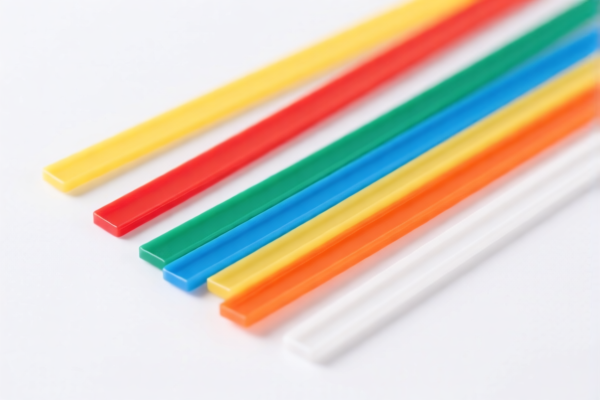
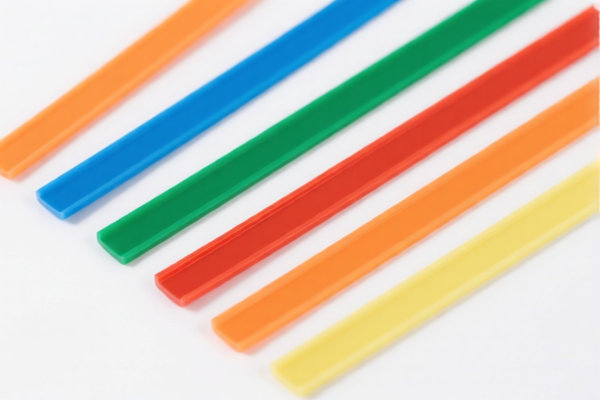
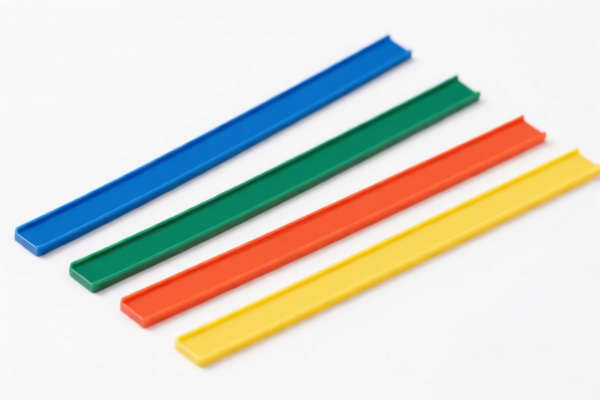
Other plastic strips (Toy use)
CN → US| HS Code | Tariff Rate | Origin | Destination | Doc |
|---|---|---|---|---|
| 9503000073 | 10.0% | CN | US | Official Doc |
| 9503000071 | 10.0% | CN | US | Official Doc |
Product Images

AI Analysis
🧸 Plastic Toy Strips (Other Plastic Strips for Toy Use)
🌐 HS Code Reference & Customs Clearance Guide | 2026 Latest Tariff Analysis | Professional Clearance Strategy
📌 I. Product Definition & Classification: What Exactly Are "Plastic Toy Strips"?
"Plastic strips for toy use" generally refer to extruded or molded plastic components that form part of a larger toy assembly (e.g., chassis frames for pedal cars, structural supports for dolls' carriages, or body parts for simplified models). In international trade, these are not classified as "toys" themselves if they are merely parts, nor as generic plastic articles if they are clearly identifiable as parts of specific toys.
The key distinction lies in specificity: * Generic Plastic Parts: Simple strips, sheets, or rods without specific toy shaping → Likely classified under Chapter 39 (Plastics). * Identifiable Toy Parts: Strips designed specifically for tricycles, scooters, dolls' carriages, or models → Classified under HS 9503 (Toys) as "Parts and Accessories."
⚠️ Critical Distinction:
- If the plastic strip is a generic raw material or unshaped component → It may fall under Chapter 39 (e.g., 3926.90).
- If the plastic strip is specifically shaped or designated for use in toys listed in 9503 (tricycles, dolls' carriages, etc.) → It must be classified under 9503.00.00.
- Note: The provided data indicates that "Parts and accessories thereof" for the toys described in 9503 are covered. Therefore, strips identified as parts of these toys fall under the same HS code as the toy itself.
📦 II. HS Code Classification Details (2026 Latest Tariff Authority Comparison)
Based on the provided <DATA>, the classification depends on the intended user age group, which is a mandatory labeling requirement for "Children's Products" under 15 U.S.C. § 2052.
| HS Code | Product Description | Intended User Age | Category |
|---|---|---|---|
9503.00.00.73 |
Tricycles, scooters, pedal cars, dolls' carriages, dolls, models, puzzles; parts and accessories thereof | 3 to 12 years of age | Children's Product (Standard) |
9503.00.00.71 |
Tricycles, scooters, pedal cars, dolls' carriages, dolls, models, puzzles; parts and accessories thereof | Under 3 years of age | Children's Product (Infant/Toddler) |
🔍 Important Note on "Plastic Strips":
If your "plastic strips" are identifiable parts of the toys listed above (e.g., a plastic chassis rail for a pedal car), they are classified under 9503.00.00.71/73 as "parts and accessories."
If they are generic plastic strips not specifically shaped for these toys, they would not be in this data set. However, the prompt implies they are "Toy use," so we assume they are identifiable parts.
💰 III. 2026 Latest Tariff Rate Detail (Including Surtaxes, Policy Surcharges)
✅ Applicable Country: United States (US)
✅ Origin: China (CN) [Assumed based on tariff structure in data]
✅ Effective Time: Current rates as per provided data
🎯 1. 9503.00.00.73 —— Toys for Ages 3-12 (Including Parts)
| Item | Content |
|---|---|
| Base Tariff | 0.0% |
| Section 301 Surtax | 0.0% |
| Total Tariff Rate | 0.0% |
| Tax Detail | "基础关税: 0.0%, 加征关税: 0.0%" |
| De Minimis Eligibility | ❓ Generally yes for low-value shipments, but check current US CBP rules for Section 301 exclusions. |
📌 Explanation:
- Base Tariff: Toys under heading 9503 generally have a 0% base MFN rate.
- Surtax: The provided data explicitly states "Section 301 Surtax: 0.0%". This is unusual for many Chinese goods, but toys have historically been excluded or had 0% additional duties in certain periods or for specific subcategories. Verify this with the latest USITC tariff schedule, as tariffs can change. As per the provided data, it is 0%.
🎯 2. 9503.00.00.71 —— Toys for Under 3 Years (Including Parts)
| Item | Content |
|---|---|
| Base Tariff | 0.0% |
| Section 301 Surtax | 0.0% |
| Total Tariff Rate | 0.0% |
| Tax Detail | "基础关税: 0.0%, 加征关税: 0.0%" |
| De Minimis Eligibility | ❓ Same as above. |
📌 Explanation:
- Identical tax treatment as the 3-12 age group in the provided data.
- 0% Total Tax makes this a highly competitive category for export to the US, provided compliance with safety standards is met.
🛠️ IV. Customs Clearance Practical Advice (Practical Pitfall Avoidance Guide)
✅ 1. Preparation Checklist (Missing Documents = Delay)
| Document | Required | Notes |
|---|---|---|
| ✅ Product Specifications | ✔️ | Clearly state: "Plastic Strip, Part for Toy [Model X]," material (e.g., PP, ABS), and intended assembly. |
| ✅ Age Group Labeling | ✔️ | CRITICAL: Must label as "For Children 3-12" or "Under 3 Years" depending on the HS code selected. Mislabeling leads to misclassification. |
| ✅ Composition Statement | ✔️ | Specify plastic type (e.g., "Polypropylene") for chemical compliance. |
| ✅ Safety Test Reports | ✔️ | ASTM F963 (US) or CPSIA compliance is mandatory for children's products. Include lead/phthalate test results. |
| ✅ Commercial Invoice | ✔️ | Description must include: "Plastic Parts for Toy Tricycle, HS 9503.00.00.73" |
| ✅ Packing List | ✔️ | Indicate if strips are packaged with the toy or shipped separately. |
✅ 2. Declaration Tips (Key Mantra)
🔥 "Identify as Part, Label Age, Comply with Safety!"
| Scenario | Correct Declaration | Incorrect Practice |
|---|---|---|
| Plastic strips are identifiable parts of a tricycle/doll carriage | HS 9503.00.00.71/73 (Parts of Toys) | Misdeclare as "Plastic Products" (Ch 39) → Risk of penalty & back taxes |
| Generic plastic strips (no specific toy shape) | HS 3926.90 (Other Plastic Articles) | Misdeclare as "Toy Parts" → May trigger unnecessary safety scrutiny if not truly parts |
| Shipped separately from the main toy | HS 9503.00.00.71/73 | Declare separately as "Plastic Extrusions" → Incorrect classification |
✅ 3. Special Situations
| Situation | Handling Advice |
|---|---|
| OEM Custom Strips | Provide the toy manufacturer's PO showing these strips are for a specific toy model. |
| Mixed Shipment (Toys + Parts) | Declare toys and parts separately if they have different HS codes, but note they are related. |
| "Under 3" Labeling | If the product contains small parts or strings, ensure it meets ASTM F963 for choking hazards. If it fails, it cannot be sold as "Under 3" even if labeled as such. |
🌍 V. Global Market Clearance Comparison (2026 Latest)
| Country/Region | Recommended HS Code | Tariff Rate | Certification Requirements | Notes |
|---|---|---|---|---|
| 🇺🇸 USA | 9503.00.00.71/73 |
0% (as per data) | CPSIA, ASTM F963, CC Card | Strict age labeling required. |
| 🇨🇳 China | 9503.00.00 |
0-5% | CCC (if applicable) | Export-oriented. |
| 🇪🇺 EU | 9503.00 |
0% | CE Mark, EN71, REACH | Must meet EN71 safety standards. |
| 🇬🇧 UK | 9503.00 |
0% | UKCA Mark, EN71 | Post-Brexit rules apply. |
📌 Conclusion:
- USA: 0% tariff is excellent, but compliance costs (testing, labeling) are high.
- EU/UK: Also 0% tariff, but EN71/CE certification is mandatory and costly.
- Key Risk: Misclassification of "parts" as "generic plastics" can lead to duty evasion claims if discovered later.
📌 VI. Common Errors & Pitfalls (Lessons Learned)
❌ Error 1: Declaring "Plastic Strips" as 3926.90 (Plastic Articles) instead of 9503 (Toy Parts)
👉 Consequence: If customs determines they are identifiable toy parts, you face back duties + penalties (even if 0% now, it sets a bad precedent). Also, you might miss safety compliance checks.
❌ Error 2: Mislabeling Age Group
👉 Consequence: If a toy labeled "Under 3" has small parts, it will be detained for safety violations (CPSIA/ASTM F963). If labeled "3-12" but intended for toddlers, it may be rejected by retailers.
❌ Error 3: Ignoring "Parts and Accessories" Clause
👉 Consequence: Shipping parts separately without referencing the main toy HS code can lead to classification disputes. Always link parts to the parent product.
✅ Correct Approach:
"Plastic Chassis Strip for Toy Pedal Car, HS 9503.00.00.73, CPSIA Compliant, Intended for Ages 3-12"
🎯 VII. Conclusion: Precise Classification Saves Time and Money!
🎯 Remember the Mantra:
🔹 "Identify Part, Age Label Right, Safety First!"
🔹 "0% Duty is Great, But Compliance is Key!"
🔹 "Don't misdeclare toy parts as generic plastics – the risk isn't worth it!"
📌 Tips:
- Ensure your supplier provides accurate material safety data sheets (MSDS) for the plastic used.
- If you are unsure if the strip is "identifiable," consult a customs broker with product images.
- Keep test reports from accredited labs (CPSC-accepted) for at least 5 years.
📣 Immediate Action:
📞 Contact your customs broker + Provide product photos + Verify age-appropriate labeling
🚀 Let your toy parts clear customs smoothly, avoid penalties, and maximize profit!
✨ Professional Clearance Starts with Accurate Classification!
💼 Every dollar of cost should be precisely calculated!
Customer Reviews
About HS Code Classification
The Harmonized System (HS) is an internationally standardized nomenclature developed by the World Customs Organization (WCO) to classify traded products. Over 200 countries use the HS system as the basis for customs tariffs, trade statistics, and import/export regulations.
Each HS code follows a hierarchical structure:
- Chapter (2 digits) — Broad category of goods (e.g., Chapter 84: Machinery and Mechanical Appliances)
- Heading (4 digits) — More specific grouping within the chapter
- Subheading (6 digits) — Internationally standardized breakdown, used by all WCO member countries
- National subdivisions (8-10 digits) — Country-specific extensions for further classification, such as US HTSUS 10-digit codes
Correct HS code classification is essential for smooth customs clearance, accurate duty payment, and compliance with trade regulations. Misclassification can lead to customs delays, overpayment of duties, or penalties.
When importing from CN to US, the applicable tariff rates may include:
- Most-Favored-Nation (MFN) rate — The standard duty rate applied to WTO members
- General rate — Applied to countries without trade agreements
- Trade remedy duties — Additional tariffs such as Section 301 (anti-dumping), Section 232 (national security), or countervailing duties
The information provided on this page is for reference purposes only. For official classification, please consult with your local customs authority or a licensed customs broker.