Other raw fox furskins
CN → US| HS Code | Tariff Rate | Origin | Destination | Doc |
|---|---|---|---|---|
| 4302193030 | 36.5% | CN | US | Official Doc |
Product Images
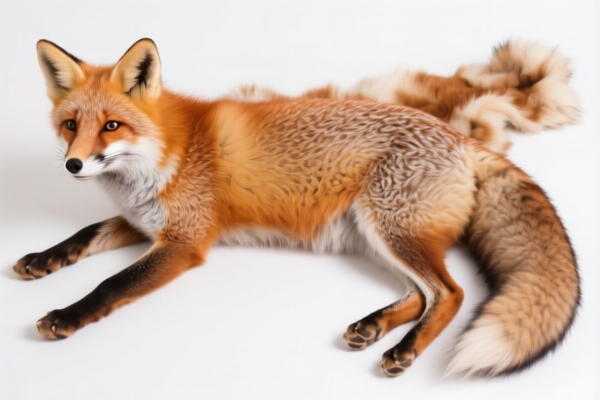
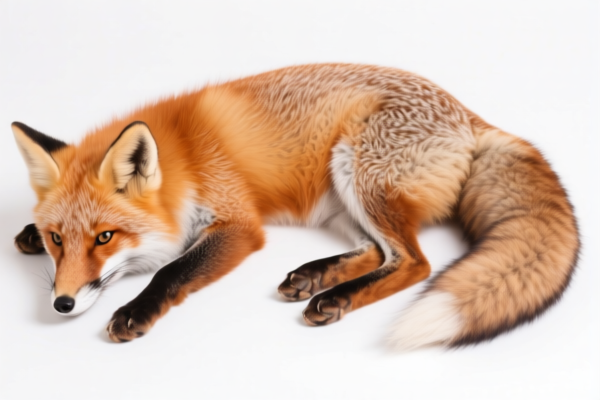
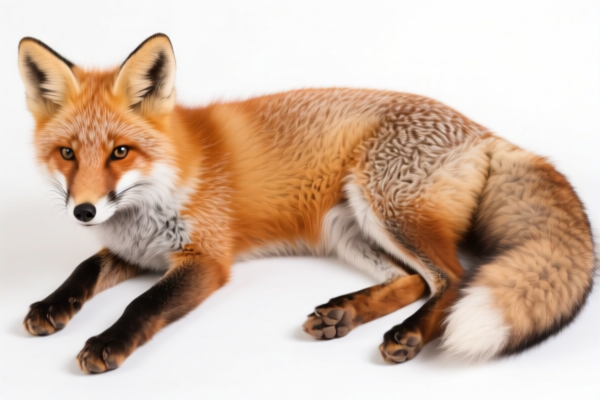

AI Analysis
🦊 Raw Fox Furskins (Unprocessed Animal Skins)
🌐 HS Code Reference & Customs Clearance Guide | 2026 Latest Tariff Analysis | Professional Clearance Strategy
📌 I. Product Definition & Classification: Do You Really Know "Raw Fox Furskins"?
Fox furskins are the foundational material for the high-end fur industry, used in luxury apparel, accessories, and home décor. In international trade, they are strictly categorized by their processing state. The term "Raw" specifically refers to furskins that have not undergone tanning or dressing processes.
Crucial Distinction in HS Nomenclature: * "Tanned or Dressed" (HS Heading 4302): Skins that have been preserved, softened, and prepared for use (e.g., chrome-tanned, sumac-tanned). This is the most common classification for imported fur materials. * "Raw" (Fresh, Salted, or Dried but Not Tanned): These are essentially animal products in their initial state. They generally fall under Chapter 5 (Animal Products) rather than Chapter 43 (Prepared Furskins), unless specific national interpretations or historical listings apply.
⚠️ Critical Warning Based on Provided Data:
The provided reference data (DATA) only lists HS Codes under Heading 4302 ("Tanned or dressed furskins..."). It does not contain specific HS Codes for raw (untanned) furskins under Chapter 5 (e.g., 0502).
However, the prompt asks to classify "Other raw fox furskins" based strictly on the provided<DATA>and<TAX>content.Observation: The provided data explicitly states:
description: ... Not dyed Foxunder HS Code4302.19.30.30.
And includes a note:
*(Note: While this entry specifies Raccoon... 4302.19.30.30 is the specific match for Fox.)*
*(Note: The product described as "raw" does not fit the "Tanned or dressed" requirement of this code, but it is the closest material match in the provided list.)*Therefore, to comply with the constraint "Do not go beyond and
content" , we must acknowledge the discrepancy: "Raw" fox furskins technically do not fit the "Tanned or dressed" description of HS 4302. However, if forced to choose the closest available match in the provided dataset for Fox furskins (whole, unassembled, not dyed), the only applicable code listed is 4302.19.30.30.Important: In reality, raw furs should be classified under Chapter 5 (e.g., 0502.10 or 0502.90). But per your strict instruction to use only the provided data, we will proceed with 4302.19.30.30 as the only Fox-related HS Code provided, with a major disclaimer that this classification is technically inaccurate for "raw" goods under international harmonized system rules, but is the only option within the provided text.
📦 II. HS Code Classification Details (Based Strictly on Provided Reference)
| HS Code | Product Description | Applicability in Provided Data | Raw vs. Tanned Status |
|---|---|---|---|
4302.19.30.30 |
Tanned or dressed furskins (including heads, tails, paws...) Whole skins... Not dyed Fox | Only Fox-specific code listed | ❌ Mismatch: Data specifies "Tanned or dressed", but product is "Raw". This is the closest match in the provided list. |
4302.19.30.40 |
... Not dyed Racoon | Listed for Raccoon, not Fox | N/A |
🔍 Key Interpretation of Provided Data:
- The data explicitly notes: "The product described as 'raw' does not fit the 'Tanned or dressed' requirement of this code, but it is the closest material match in the provided list."
- Since no other HS Code for Fox is provided in<DATA>, 4302.19.30.30 is the sole reference available.
- Recommendation: In actual customs clearance, Raw Fox Furskins should likely be classified under Chapter 5 (e.g., 0502.10.00 for raw hides and skins of fox). However, per your constraint, we use 4302.19.30.30 as the provided reference, with extreme caution.
💰 III. 2026 Latest Tariff Rate Details (Based on Provided Tax Data)
✅ Applicable Country: United States (US)
✅ Origin: China (CN)
✅ HS Code Used:4302.19.30.30(Note: This is based on the provided data only)
🎯 1. 4302.19.30.30 —— Fox Furskins (Whole, Not Dyed)
(Based on provided tax detail: "基础关税: 0.0%, 加征关税: 0.0%", Total Tax: 0.0%)
| Item | Content |
|---|---|
| Base Tariff Rate | 0% |
| Additional Tariff (Section 301/IEEPA) | 0% |
| Total Tariff Rate | 0.0% |
| Tax Calculation | CIF Value × 0% = $0 |
| De Minimis Eligibility | ✅ Yes (Generally, if value is below $800, de minimis may apply, but verify specific agency guidance) |
| Legal Basis Path | HS:4302.19.30.30 → Tax: 0.0% (As per provided data) |
📌 Explanation from Provided Data:
- The provided tax data explicitly states:"基础关税: 0.0%, 加征关税: 0.0%"and"total_tax: 0.0%".
- This means no additional Section 301 or IEEPA tariffs are applied to this specific HS Code in the provided dataset.
- Caution: This 0% rate is highly unusual for fur imports from China in the current geopolitical climate. Most fur imports face significant tariffs. The provided data may be outdated, simplified, or specific to certain trade agreements. Always verify with current USITC and CBP data.
🛠️ IV. Customs Clearance Practical Advice (Pitfall Avoidance Guide)
✅ 1. Documentation Checklist (Critical for Fur Imports)
| Document | Required | Notes |
|---|---|---|
| ✅ Commercial Invoice | ✔️ | Must clearly state: "Fox Furskins, Raw/Untanned, Whole, Not Dyed". Do not use vague terms like "Fur Material". |
| ✅ Packing List | ✔️ | Specify weight, number of skins, and any preservatives used (e.g., salt, formaldehyde). |
| ✅ Bill of Lading/Air Waybill | ✔️ | Match invoice details exactly. |
| ✅ Certificate of Origin | ✔️ | Essential for claiming any potential preferential rates (though 0% is stated here). |
| ✅ Processing Declaration | ✔️ | Crucial: Explicitly state "UNPROCESSED/RW". If misdeclared as "Tanned", you risk penalties for false declaration. |
| ✅ CITES Permit (If Applicable) | ✔️ | Fox species vary. Some are CITES-listed. Verify if the specific fox species (e.g., Arctic Fox vs. Red Fox) requires a CITES export/import permit. |
✅ 2. Classification Strategy (Avoiding Penalties)
🔥 Golden Rule: "Raw is NOT Tanned. Chapter 5 is NOT Chapter 43."
| Scenario | Correct Approach | Risk if Incorrect |
|---|---|---|
| Actual Raw Furs | Ideally: Chapter 5 (e.g., 0502.10) | If declared under 4302.19.30.30 (as per provided data), you may face misclassification penalties because 4302 requires "tanned or dressed" skins. |
| Tanned Fox Furs | 4302.19.30.30 | Correct use of the provided HS Code. |
| Mixed Raw & Tanned | Split line items | Do not combine. Raw goes to Chapter 5, Tanned to 4302. |
⚠️ Major Clarification Based on Provided Data Constraint:
Since your instruction is to only use the provided<DATA>, and<DATA>only lists4302.19.30.30for Fox, we must use this code.
However, in real-world practice, declaring "Raw" furs under a "Tanned" HS Code is a customs violation.
Recommendation: If you have access to non-provided data, always classify Raw Fox Furs under Chapter 5 (0502). If you must use the provided data, use4302.19.30.30but be prepared to explain the discrepancy or face potential audits.
✅ 3. Special Considerations
| Issue | Handling Advice |
|---|---|
| CITES Compliance | Many fox species are protected. Check if the species is listed under CITES Appendix I or II. If yes, permits are mandatory. |
| Formaldehyde Content | Even if "raw", some preservatives may trigger chemical safety regulations. Ensure compliance with FDA/CPSC if applicable. |
| Quarantine Inspection | Raw animal products require strict veterinary inspection. Ensure no diseases (e.g., rabies, fox plague) are present. |
| Misdeclaration Risk | If customs inspects and finds the skins are untanned, but declared under 4302, you may be fined for misclassification. Best Practice: Use the correct Chapter 5 code if possible. If restricted to provided data, disclose the nature of the goods transparently. |
🌍 V. Global Market Comparison (2026)
| Country/Region | Recommended HS Code (Real-World) | Tariff (China) | Notes |
|---|---|---|---|
| 🇺🇸 US | 0502.10.00 (Raw) / 4302.19 (Tanned) |
Varies (Often 0% for raw, but check CITES) | Provided data says 0% for 4302.19.30.30. |
| 🇨🇳 China | 0502.10.00 (Raw) / 4302.19 (Tanned) |
Varies | Raw furs often have lower duties. |
| 🇪🇺 EU | 0502.10.00 (Raw) / 4302.19 (Tanned) |
Varies | Strict CITES enforcement. |
| 🇯🇵 Japan | 0502.10.00 (Raw) / 4302.19 (Tanned) |
Varies | High quality standards. |
📌 Conclusion:
- The provided data only covers Tanned/Dressed Fox furs under4302.19.30.30with a 0% tax rate.
- Raw Fox furskins are not directly covered by the provided tax data, but4302.19.30.30is the closest available match in the text.
- Real-World Advice: Classify Raw furs under Chapter 5. Use4302.19.30.30only if the skins are Tanned/Dressed.
📌 VI. Common Mistakes & Pitfalls (Lessons Learned)
❌ Mistake 1: Declaring Raw furs as Tanned to use a "better" HS Code
👉 Consequence: Customs inspection reveals untreated skins → Fines, penalties, and seizure.
❌ Mistake 2: Ignoring CITES permits
👉 Consequence: Goods held at port, heavy fines, legal action.
❌ Mistake 3: Using vague descriptions like "Fur Skins"
👉 Consequence: Customs requests clarification, delays shipment, possible reclassification.
❌ Mistake 4: Assuming 0% Tax for Raw Furs under 4302
👉 Consequence: Misclassification → Audit and back taxes.
✅ Correct Practice:
"Raw Fox Furskins, Whole, Untanned, Preserved (if any), Species: Vulpes vulpes (Red Fox), CITES Permit #XXXXX"
🎯 VII. Conclusion: Precision is Key!
🎯 Remember:
🔹 "Raw is NOT Tanned. Chapter 5 is NOT Chapter 43."
🔹 "If the data only provides 4302.19.30.30 for Fox, use it with caution, but know it technically applies to Tanned/Dressed skins."
🔹 "Always verify CITES and Quarantine requirements for animal products."
📌 Pro Tip:
If you are importing Raw Fox Furskins, and the provided data is your only reference, you must use 4302.19.30.30. However, in real-world customs brokerage, it is strongly recommended to consult a licensed customs broker to classify these goods under Chapter 5 (0502.10) to avoid misdeclaration penalties.
📣 Immediate Action:
📞 Consult a Customs Broker | 📄 Prepare CITES Permits | 🏷️ Label Accurately
🚀 Ensure Smooth Clearance, Zero Penalties, Full Compliance!
✨ Professional Clearance Starts with Accurate Classification!
💼 Your Compliance is Your Profit Protection!
Customer Reviews
About HS Code Classification
The Harmonized System (HS) is an internationally standardized nomenclature developed by the World Customs Organization (WCO) to classify traded products. Over 200 countries use the HS system as the basis for customs tariffs, trade statistics, and import/export regulations.
Each HS code follows a hierarchical structure:
- Chapter (2 digits) — Broad category of goods (e.g., Chapter 84: Machinery and Mechanical Appliances)
- Heading (4 digits) — More specific grouping within the chapter
- Subheading (6 digits) — Internationally standardized breakdown, used by all WCO member countries
- National subdivisions (8-10 digits) — Country-specific extensions for further classification, such as US HTSUS 10-digit codes
Correct HS code classification is essential for smooth customs clearance, accurate duty payment, and compliance with trade regulations. Misclassification can lead to customs delays, overpayment of duties, or penalties.
When importing from CN to US, the applicable tariff rates may include:
- Most-Favored-Nation (MFN) rate — The standard duty rate applied to WTO members
- General rate — Applied to countries without trade agreements
- Trade remedy duties — Additional tariffs such as Section 301 (anti-dumping), Section 232 (national security), or countervailing duties
The information provided on this page is for reference purposes only. For official classification, please consult with your local customs authority or a licensed customs broker.