Other raw furskins (with paws)
CN → US| HS Code | Tariff Rate | Origin | Destination | Doc |
|---|---|---|---|---|
| 4301800290 | 17.5% | CN | US | Official Doc |
| 4103901190 | 17.5% | CN | US | Official Doc |
| 4301900000 | 10.0% | CN | US | Official Doc |
| 4103901130 | 17.5% | CN | US | Official Doc |
| 4303100060 | 39.0% | CN | US | Official Doc |
Product Images
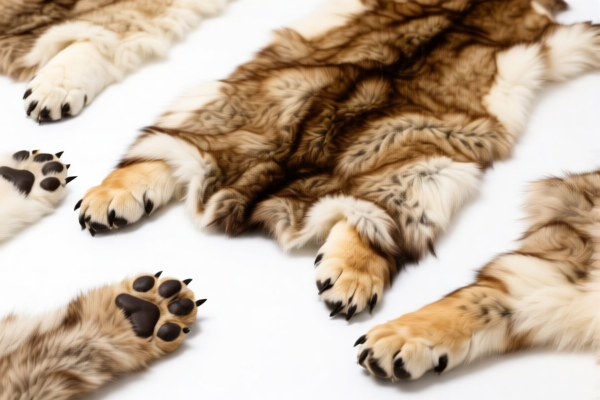
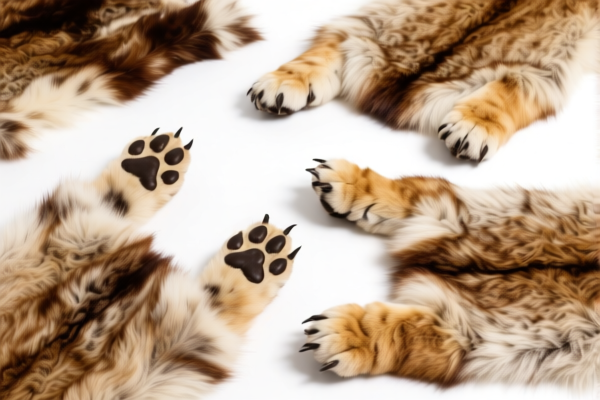
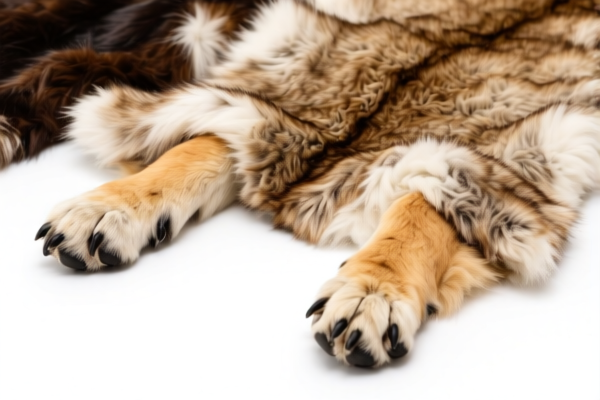
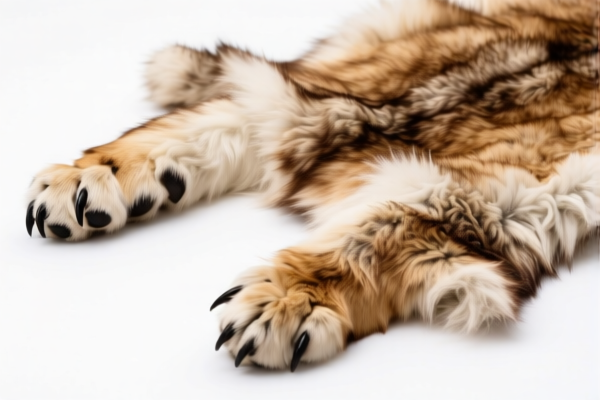
AI Analysis
🐾 Other Raw Furskins (With Paws) – HS Code Classification & Customs Clearance Guide
🌐 HS Code Reference & Customs Clearance Strategy | 2026 Latest Tariff Analysis | Professional Compliance Guide
📌 I. Product Definition & Classification: What Exactly Are "Other Raw Furskins (With Paws)"?
"Other raw furskins (with paws)" refers to ungutted or gutted animal skins/furs that have NOT been tanned, dressed, or finished, but are kept in their natural state including the feet/paws. This distinguishes them from: 1. Raw hides without paws (often processed differently); 2. Dressed/Tanned furskins (which are considered finished products); 3. Manufactured fur garments (which are ready-to-wear).
⚠️ Key Distinction:
- If the skin is untanned and includes paws → It falls under Chapter 41 (Raw Hides) or Chapter 43 (Furskins). - If the skin is tanned/dressed (soft, flexible, ready for use) → It falls under Chapter 43 (Dressed Furskins). - If the paws are removed → Classification may shift to broader "other raw hides" categories.
📦 II. HS Code Classification Details (Based on Provided Data)
Below are the five possible HS Codes identified for "Other raw furskins (with paws)" with their corresponding tax implications:
| HS Code | Product Description | Summary & Rationale | Total Tax Rate | Tax Breakdown |
|---|---|---|---|---|
| 4301.90.00.00 | Raw Furskins (With Paws) | Matches "raw furskins" material and "with paws" form. Classified as raw furskins with paws. | 10.0% | Basic: 0.0% Section 301: 0.0% Section 122: 10% |
| 4103.90.11.30 | Other Raw Furskins | Matches "Other raw furskins" for other raw hides. "With paws" is a common form for raw hides. | 17.5% | Basic: 0.0% Section 301: 7.5% Section 122: 10% |
| 4301.80.02.90 | Other Raw Furskins | Matches "Other raw furskins" for other raw furskins. "With paws" fits the description. | 17.5% | Basic: 0.0% Section 301: 7.5% Section 122: 10% |
| 4103.90.11.90 | Raw Furskins (Other) | Matches "raw furskins" as un-tanned raw hide. "Other" fits the residual category. | 17.5% | Basic: 0.0% Section 301: 7.5% Section 122: 10% |
| 4303.10.00.60 | Whole Furskins (Other) | Matches "whole furskins" as other fur articles. Fits the form of fur articles. | 39.0% | Basic: 4.0% Section 301: 25.0% Section 122: 10% |
🔍 Key Observation:
- HS Code 4301.90.00.00 has the lowest total tax rate (10%) because it only incurs the Section 122 tariff (10%). - HS Codes 4103.90.11.30, 4301.80.02.90, and 4103.90.11.90 have a higher tax rate (17.5%) due to the addition of Section 301 tariffs (7.5%) plus Section 122 (10%). - HS Code 4303.10.00.60 has the highest tax rate (39.0%) because it is classified as a finished fur article ("Whole Furskins"), incurring basic duties (4%), Section 301 (25%), and Section 122 (10%).
💰 III. 2026 Latest Tariff Rate Breakdown (Including Additional Taxes)
✅ Applicable Country: United States (US)
✅ Origin: China (CN)
✅ Effective Date: November 10, 2025 (and onwards)
🎯 1. HS Code 4301.90.00.00 — Raw Furskins (With Paws)
| Item | Details |
|---|---|
| Base Rate | 0% (ad valorem) |
| USITC Section 301 Tariff | +0% (No additional Section 301 duty) |
| IEEPA Section 122 Tariff | +10% (Targeted at Chinese/Hong Kong products) |
| Total Tariff Rate | 10% |
| Tax Calculation | CIF Value × 10% |
| De Minimis Exemption | ❌ Not Applicable (Deny de minimis) |
| Legal Authority Path | IEEPA:9903.01.25 → USITC:4301.90.00.00 → FOOTNOTE:122 |
📌 Explanation:
- This classification benefits from no Section 301 tariff, making it the most cost-effective option. - The 10% Section 122 tariff is the only additional charge. - Total tax burden: 10%, which is significantly lower than other classifications.
🎯 2. HS Codes 4103.90.11.30, 4301.80.02.90, 4103.90.11.90 — Other Raw Furskins
| Item | Details |
|---|---|
| Base Rate | 0% |
| USITC Section 301 Tariff | +7.5% |
| IEEPA Section 122 Tariff | +10% |
| Total Tariff Rate | 17.5% |
| Tax Calculation | CIF Value × 17.5% |
| De Minimis Exemption | ❌ Not Applicable |
| Legal Authority Path | IEEPA:9903.01.24 → USITC:4103.90.11.30/4301.80.02.90/4103.90.11.90 → FOOTNOTE:301 & 122 |
📌 Note:
- These codes incur both Section 301 (7.5%) and Section 122 (10%) tariffs. - Total tax burden: 17.5%, which is 7.5% higher than HS Code4301.90.00.00. - Even though the product description is similar, the legal classification triggers additional duties.
🎯 3. HS Code 4303.10.00.60 — Whole Furskins (Other)
| Item | Details |
|---|---|
| Base Rate | 4.0% |
| USITC Section 301 Tariff | +25.0% |
| IEEPA Section 122 Tariff | +10% |
| Total Tariff Rate | 39.0% |
| Tax Calculation | CIF Value × 39.0% |
| De Minimis Exemption | ❌ Not Applicable |
| Legal Authority Path | IEEPA:9903.01.25 → USITC:4303.10.00.60 → FOOTNOTE:301 & 122 |
📌 Warning:
- This classification is for finished fur articles, not raw materials. - Total tax burden: 39%, which is nearly 4x higher than HS Code4301.90.00.00. - Misclassifying raw furskins as finished fur articles can lead to severe overpayment of duties.
🛠️ IV. Customs Clearance Practical Advice (Avoiding Pitfalls)
✅ 1. Required Documentation Checklist
| Document | Required? | Notes |
|---|---|---|
| Product Specification Sheet | ✔️ | Must clearly state "Raw," "Untanned," "With Paws." |
| Photographs | ✔️ | Show the paws intact and the raw, unprocessed state of the skin. |
| Commercial Invoice | ✔️ | Use precise description: "Raw Furskins, With Paws, Untanned." |
| Packing List | ✔️ | Ensure no finished fur goods are mixed in. |
| Certificate of Origin | ✔️ | Required for Section 122 tariff calculation. |
| Third-Party Inspection Report | ✔️ | Confirm "raw" and "untanned" status to avoid reclassification. |
✅ 2. Declaration Tips (Critical Keywords)
🔥 "Raw, Untanned, With Paws – Avoid 'Finished' or 'Dressed'!"
| Scenario | Correct Declaration | Incorrect Declaration |
|---|---|---|
| Raw furskins with paws | "Raw Furskins (Untanned), With Paws" | "Fur Skins" or "Whole Furskins" |
| Tanned/dressed furskins | "Dressed Furskins" | "Raw Furskins" |
| Fur garments | "Fur Garments" | "Raw Furskins" |
📌 Key Advice:
- Use the term "Raw" or "Untanned" explicitly in the description. - Avoid vague terms like "Fur Skins" without specifying the processing state. - Ensure the HS Code 4301.90.00.00 is used to minimize tariffs.
✅ 3. Special Cases
| Case | Recommendation |
|---|---|
| Mixed Shipments (Raw + Tanned) | Separate declarations! Mixing raw and finished furskins can lead to reclassification of the entire shipment to the highest tax rate. |
| OEM/Custom Orders | Provide detailed specifications to confirm "raw" status. |
| Small Samples | If under $800 (de minimis), ensure they are not classified as "finished goods" to avoid duty. However, Section 122 may still apply. |
| Military/Research Use | May qualify for exemptions, but requires prior approval and documentation. |
🌍 V. Global Market Comparison (2026 Latest)
| Country/Region | Recommended HS Code | Tariff Rate | Certification Requirements | Notes |
|---|---|---|---|---|
| 🇺🇸 United States | 4301.90.00.00 |
10% | None specific | Lowest duty option due to no Section 301 tariff. |
| 🇨🇳 China | 4301.90.00.00 |
5% | None | No additional surcharges. |
| 🇪🇺 European Union | 4301.90.00.00 |
0% | CE (if applicable) | No additional tariffs. |
| 🇦🇺 Australia | 4301.90.00.00 |
5% | None | No additional surcharges. |
| 🇯🇵 Japan | 4301.90.00.00 |
0% | None | No additional surcharges. |
📌 Conclusion:
- The United States is the only market with significant additional tariffs (Section 122 and Section 301). - China-origin raw furskins with paws face 10% total duty in the US if correctly classified under 4301.90.00.00. - Misclassification can lead to tax rates up to 39%, significantly impacting profitability.
📌 VI. Common Mistakes & Pitfalls (Lessons Learned)
❌ Mistake 1: Declaring "Raw Furskins" as "Whole Furskins"
👉 Consequence: Tax rate jumps from 10% to 39%.
❌ Mistake 2: Failing to specify "With Paws"
👉 Consequence: Customs may classify as "Other Raw Hides" (4103.90.11.30), incurring 17.5% tax instead of 10%.
❌ Mistake 3: Mixing raw and tanned furskins in one shipment
👉 Consequence: Entire shipment may be reclassified to the highest duty rate (39%).
❌ Mistake 4: Using vague terms like "Fur Skins" without specifying "Raw" or "Untanned"
👉 Consequence: Customs may dispute classification, leading to delays, penalties, or retroactive taxes.
✅ Correct Approach:
"Raw Furskins, Untanned, With Paws, Origin: China, HS Code: 4301.90.00.00"
🎯 VII. Conclusion: Precise Classification Saves Money!
🎯 Key Takeaway:
🔹 "Raw + Untanned + With Paws = 4301.90.00.00"
🔹 "Section 122 Only (10%) = Lowest Duty!"
🔹 "Avoid 'Finished' or 'Dressed' Labels!"
📌 Pro Tip:
- If your furskins are sourced from Vietnam, Mexico, or Thailand, you may qualify for IEEPA exemptions, reducing tariffs to 0%–5%.
- Request an Advance Ruling (Pre-Classification) from US Customs to confirm the correct HS Code before shipment.
📣 Action Plan:
📞 Contact a Professional Customs Broker
📄 Provide Product Photos & Specifications
🚀 Apply for HS Code Pre-Classification
💡 Ensure "Raw" and "With Paws" are Clearly Declared
✨ Professional Clearance Starts with Accurate Classification!
💼 Every Percent of Duty Saved is Profit Added!
Customer Reviews
About HS Code Classification
The Harmonized System (HS) is an internationally standardized nomenclature developed by the World Customs Organization (WCO) to classify traded products. Over 200 countries use the HS system as the basis for customs tariffs, trade statistics, and import/export regulations.
Each HS code follows a hierarchical structure:
- Chapter (2 digits) — Broad category of goods (e.g., Chapter 84: Machinery and Mechanical Appliances)
- Heading (4 digits) — More specific grouping within the chapter
- Subheading (6 digits) — Internationally standardized breakdown, used by all WCO member countries
- National subdivisions (8-10 digits) — Country-specific extensions for further classification, such as US HTSUS 10-digit codes
Correct HS code classification is essential for smooth customs clearance, accurate duty payment, and compliance with trade regulations. Misclassification can lead to customs delays, overpayment of duties, or penalties.
When importing from CN to US, the applicable tariff rates may include:
- Most-Favored-Nation (MFN) rate — The standard duty rate applied to WTO members
- General rate — Applied to countries without trade agreements
- Trade remedy duties — Additional tariffs such as Section 301 (anti-dumping), Section 232 (national security), or countervailing duties
The information provided on this page is for reference purposes only. For official classification, please consult with your local customs authority or a licensed customs broker.