Other recovered paperboard (bleached chemical pulp, uncolored)
CN → US| HS Code | Tariff Rate | Origin | Destination | Doc |
|---|---|---|---|---|
| 4805247000 | 12.0% | CN | US | Official Doc |
| 4805245000 | 35.0% | CN | US | Official Doc |
Product Images
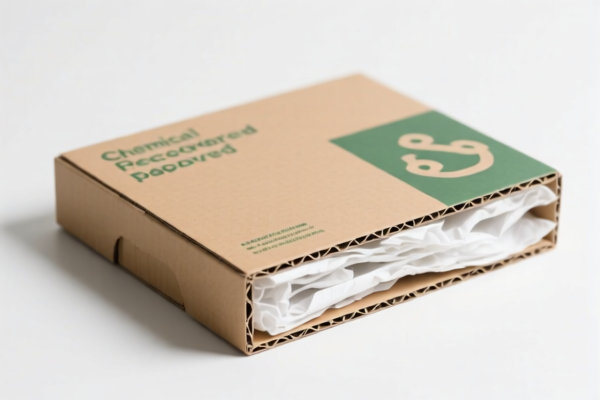
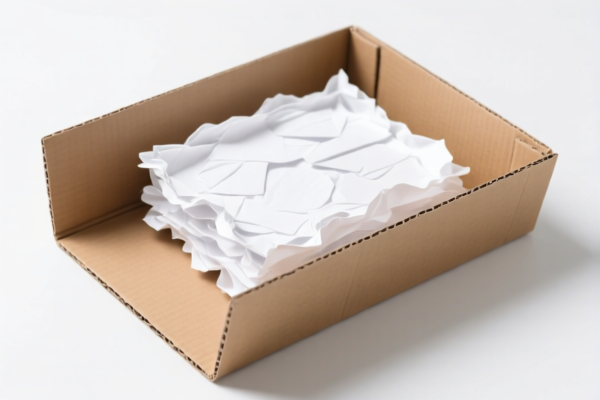
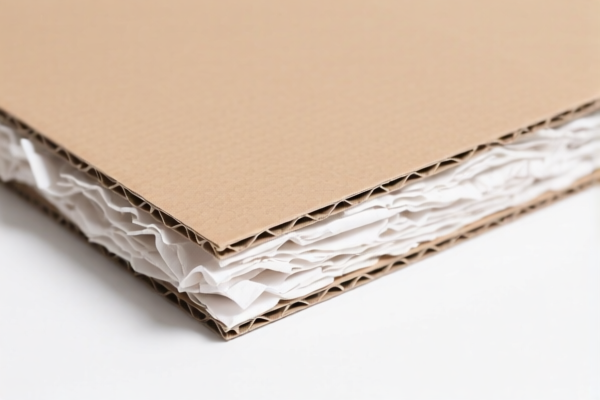
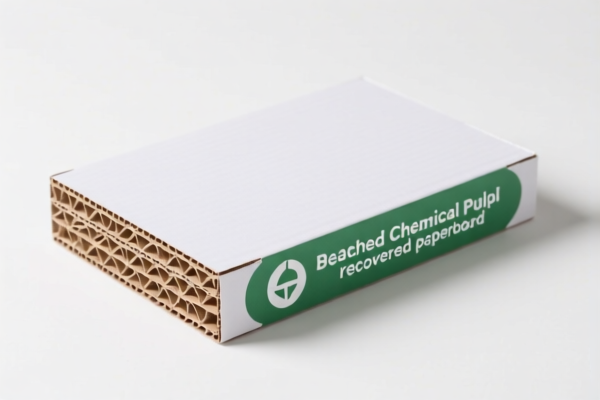
AI Analysis
📜 Testliner & Recycled Paperboard (Uncoated Paper & Paperboard)
🌐 HS Code Reference & Customs Clearance Guide | 2026 Latest Tariff Analysis | Professional Entry Strategy
📌 I. Product Definition & Classification: What is "Other Recovered Paperboard"?
In international trade, "Testliner" (often referred to as recycled linerboard or recovered paperboard) is a key packaging material made primarily from recycled paper fibers. Unlike corrugated medium (fluting), Testliner is used as the outer, smooth layer of corrugated board, providing printability and crush strength.
The data provided specifically refers to Uncoated Paper and Paperboard, in rolls or sheets, classified under Chapter 48. It is crucial to distinguish Testliner from coated papers (like C1S/C2S art paper) or unbleached kraft paper (which has different chemical pulp requirements).
⚠️ Key Distinction Point:
- Material: Recycled fibers (Recovered paper), not virgin wood pulp.
- Surface: Uncoated (raw surface), suitable for direct printing or laminating.
- Weight (Grammage): The classification strictly depends on the weight per square meter ($g/m^2$).
- $\le 15 g/m^2$: Ultra-lightweight (Rare for standard linerboard, often for specific industrial uses).
- $> 15 g/m^2$ to $\le 30 g/m^2$: Very light testliner.
- Standard Testliner: Usually $100–200 g/m^2$, but the provided data only covers the $\le 150 g/m^2$ segment.
📦 II. HS Code Classification Details (2026 Latest Tariff Authority Comparison)
Based on the provided data, only two specific weight brackets are covered for Testliner (recycled liner board) with a weight of 150 g/m² or less.
| HS Code | Product Description | Weight Criteria | Typical Application |
|---|---|---|---|
4805.24.50.00 |
Other uncoated paper/board, in rolls/sheets: Testliner: $\le 150 g/m^2$: $\le 15 g/m^2$ | $\le 15 g/m^2$ | Specialized industrial linings, lightweight packaging components, or experimental materials. |
4805.24.70.00 |
Other uncoated paper/board, in rolls/sheets: Testliner: $\le 150 g/m^2$: $> 15 g/m^2$ but $\le 30 g/m^2$ | $> 15 g/m^2$ to $\le 30 g/m^2$ | Light-duty packaging, inner liners, or specific retail packaging where high strength is not required. |
🔍 Critical Note:
- Excluded Categories: Standard corrugated linerboard (typically $100–200 g/m^2$) is NOT included in this specific data set. If your product weighs $> 30 g/m^2$ and $\le 150 g/m^2$ but falls outside the specific $15–30$ range, it may fall under a different subheading (e.g.,4805.24.30.00for $30-60$, or4805.24.50.00/70.00variations depending on exact national sub-tariff lines).
- "Recovered Paperboard": This term implies recycled content. Ensure your product description clearly states "Recycled" or "Recovered" to avoid misclassification as virgin kraft paper (4802.5x).
💰 III. 2026 Latest Tariff Rate Breakdown (Including Additional Taxes & Policies)
✅ Applicable Country: United States (US)
✅ Origin: China (CN)
✅ Effective Date: From November 10, 2025 (and subsequent imports)
🎯 1. 4805.24.50.00 —— Testliner (Uncoated), $\le 15 g/m^2$
| Item | Detail |
|---|---|
| Base Tariff Rate | 0.0% (Ad valorem) |
| Additional Tariff (Section 301) | +25.0% |
| Total Tariff Rate | 25.0% |
| Tax Calculation | CIF Value $\times$ 25% |
| De Minimis Exemption | ❌ Not Applicable (High value/section 301 items generally excluded from $800 threshold) |
| Legal Basis | USITC 4805.24.50.00 $\rightarrow$ Section 301 Footnote |
📌 Explanation:
- Although the base MFN tariff is 0%, the Section 301 additional tariff of 25% applies to paper products from China.
- This makes the total landed cost impact 25% of the customs value.
- Note: This category is for very light paper ($\le 15 g/m^2$). If you are shipping standard boxboard ($> 30 g/m^2$), do NOT use this code if it doesn't match your weight.
🎯 2. 4805.24.70.00 —— Testliner (Uncoated), $> 15 g/m^2$ to $\le 30 g/m^2$
| Item | Detail |
|---|---|
| Base Tariff Rate | 0.0% (Ad valorem) |
| Additional Tariff (Section 301) | +25.0% |
| Total Tariff Rate | 25.0% |
| Tax Calculation | CIF Value $\times$ 25% |
| De Minimis Exemption | ❌ Not Applicable |
| Legal Basis | USITC 4805.24.70.00 $\rightarrow$ Section 301 Footnote |
📌 Explanation:
- Same tariff structure as above. The 25% additional duty is the primary cost driver.
- This bracket covers the $15–30 g/m^2$ range.
- Warning: Many exporters mistakenly believe paper is duty-free. While the base rate is 0%, the 25% punitive tariff remains in effect for 2026.
🛠️ IV. Customs Clearance Operational Advice (Practical Pitfall Avoidance)
✅ 1. Preparation Checklist (Non-Negotiable)
| Document | Required | Reason |
|---|---|---|
| Product Specification Sheet | ✅ Yes | Must explicitly state: "Uncoated," "Recycled/Recovered Fiber," and Grammage ($g/m^2$). |
| HS Code Pre-Ruling (Optional but Recommended) | ✅ Yes | Due to the narrow weight brackets ($\le 15$, $15-30$), a pre-ruling prevents misclassification disputes. |
| Commercial Invoice | ✅ Yes | Must match the HS Code description exactly. Do not use generic terms like "Cardboard." |
| Packing List | ✅ Yes | Detail roll length, diameter, and weight to prove the grammage calculation. |
| Material Safety Data Sheet (MSDS) | ✅ No | Paper is generally non-hazardous, but some mills require it for chemical pulp verification. |
✅ 2. Declaration Tips (Key Mantra)
🔥 "Weight is King, Recycling is Key, Uncoated is Clear!"
| Scenario | Correct Declaration | Error to Avoid |
|---|---|---|
| Standard Testliner (e.g., 150 g/m²) | ❌ Not in Provided Data | Do NOT force 4805.24.50.00 or 70.00 if weight is $> 30 g/m^2$. Check other subheadings (e.g., 4805.24.30.00). |
| Light Testliner (20 g/m²) | 4805.24.70.00 |
Do NOT declare as 4805.24.50.00 (which is for $\le 15 g/m^2$). |
| Ultra-Light (10 g/m²) | 4805.24.50.00 |
Ensure it is truly Testliner (recycled liner), not just "thin paper." |
| Coated Paper | Different HS Code | Do NOT use 4805.xx for coated paper; it goes to 4802.55 or 4810.xx. |
✅ 3. Special Circumstances Handling
| Situation | Handling Advice |
|---|---|
| Mixed Weights in One Shipment | Split the Declaration! You cannot mix $\le 15 g/m^2$ and $15-30 g/m^2$ in one line item. Each line must have a uniform grammage bracket. |
| Recycled Content Proof | Customs may ask for Fiber Analysis Reports. Keep lab test results ready to prove "Recovered/Recycled" status. |
| Section 301 Exemptions | Check if your specific HS Code had a Section 301 exclusion in previous years. As of 2026, most paper products remain subject to 25%. Verify with USITC. |
🌍 V. Global Market Clearance Comparison (2026 Latest)
| Country/Region | Recommended HS Code | Tariff (China Origin) | Certification | Remarks |
|---|---|---|---|---|
| 🇺🇸 USA | 4805.24.50.00 / 70.00 |
25% (Total) | None | Section 301 applies. High cost. |
| 🇪🇺 EU | 4805.24.90 |
0% | CE/REACH (if chemical additives) | Generally duty-free. |
| 🇨🇳 China | 4805.24.90 |
8% | N/A | Import duty applies to inbound. |
| 🇯🇵 Japan | 4805.24.90 |
3-6% | None | Moderate duty. |
📌 Conclusion:
- The USA is the most expensive market for Testliner due to the 25% Section 301 tariff.
- Europe and Japan offer significantly better tariff advantages.
- If shipping to the US, consider supply chain optimization (e.g., transshipment, though risky) or pricing adjustments to absorb the 25% cost.
📌 VI. Common Errors & Pitfall Guide (Lessons Learned)
❌ Error 1: Declaring $25 g/m^2$ paper as 4805.24.50.00 ($\le 15 g/m^2$)
👉 Consequence: Customs reclassification, penalty, and potential seizure.
❌ Error 2: Ignoring the "Recycled/Recovered" specification
👉 Consequence: If deemed "Virgin Kraft," it may fall under 4802.54 or 4802.58, which have different duties and different Section 301 histories.
❌ Error 3: Assuming "Paper" is always duty-free
👉 Consequence: The 0% base rate is misleading. The 25% additional tariff is the real cost.
✅ Correct Approach:
"Uncoated Testliner, Recycled Fiber, 25 g/m², Roll Form, 1000kg Net Weight, HS 4805.24.70.00"
🎯 VII. Conclusion: Precision Saves Money!
🎯 Remember the Mantra:
🔹 "Weight Bracket is Law: $\le 15$ vs $15-30$."
🔹 "Base is 0%, But 25% is the Reality."
🔹 "Recycled Content Must Be Proven."
📌 Pro Tip:
If your product weighs $> 30 g/m^2$ (e.g., 100–150 g/m²), it is NOT covered by the provided HS codes 4805.24.50.00 or 4805.24.70.00. You must check other subheadings like 4805.24.30.00 ($30-60$) or 4805.24.80.00 ($> 60-150$), which may have different tariff rates. Always verify the full tariff schedule for weights outside the $30 g/m^2$ limit.
📣 Immediate Action:
📞 Contact your customs broker with grammage proof and fiber origin statements.
🚀 Accurate Classification = Predictable Costs!
✨ Professional Clearance Starts with Accurate HS Codes!
💼 Your Margin Depends on Your Tariff Rate!
Customer Reviews
About HS Code Classification
The Harmonized System (HS) is an internationally standardized nomenclature developed by the World Customs Organization (WCO) to classify traded products. Over 200 countries use the HS system as the basis for customs tariffs, trade statistics, and import/export regulations.
Each HS code follows a hierarchical structure:
- Chapter (2 digits) — Broad category of goods (e.g., Chapter 84: Machinery and Mechanical Appliances)
- Heading (4 digits) — More specific grouping within the chapter
- Subheading (6 digits) — Internationally standardized breakdown, used by all WCO member countries
- National subdivisions (8-10 digits) — Country-specific extensions for further classification, such as US HTSUS 10-digit codes
Correct HS code classification is essential for smooth customs clearance, accurate duty payment, and compliance with trade regulations. Misclassification can lead to customs delays, overpayment of duties, or penalties.
When importing from CN to US, the applicable tariff rates may include:
- Most-Favored-Nation (MFN) rate — The standard duty rate applied to WTO members
- General rate — Applied to countries without trade agreements
- Trade remedy duties — Additional tariffs such as Section 301 (anti-dumping), Section 232 (national security), or countervailing duties
The information provided on this page is for reference purposes only. For official classification, please consult with your local customs authority or a licensed customs broker.