Other retreaded pneumatic tires
CN → US| HS Code | Tariff Rate | Origin | Destination | Doc |
|---|---|---|---|---|
| 4011908050 | 38.4% | CN | US | Official Doc |
| 4012198000 | 20.9% | CN | US | Official Doc |
| 4016996050 | 37.5% | CN | US | Official Doc |
| 4016993550 | 35.0% | CN | US | Official Doc |
| 4012194000 | 39.0% | CN | US | Official Doc |
Product Images
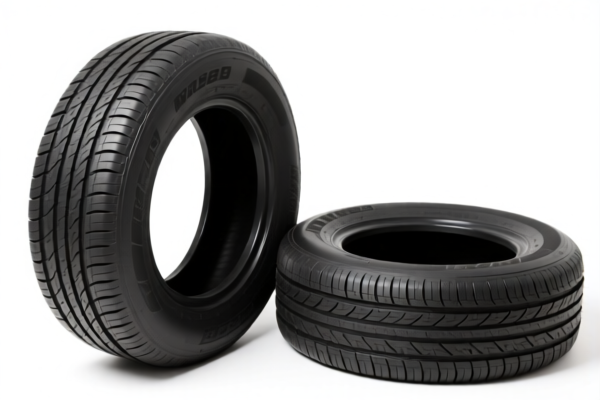
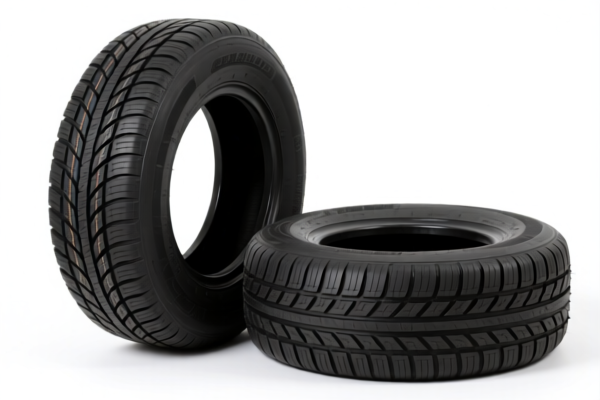
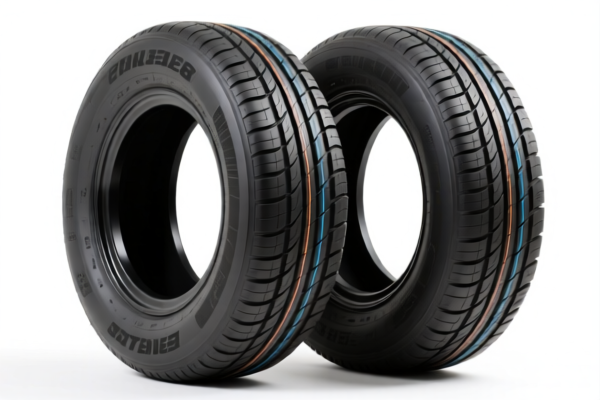
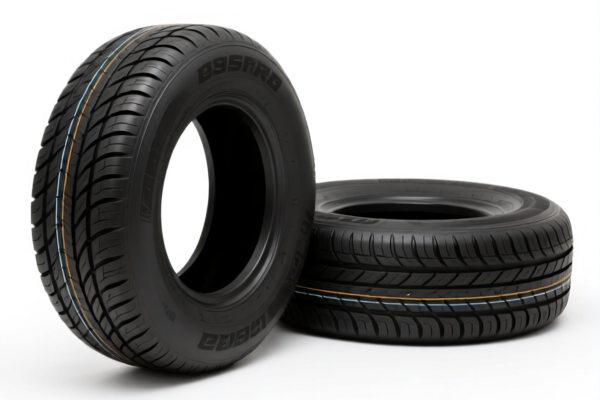
AI Analysis
🛞 Other Retreaded Pneumatic Tires (Rubber Retreads)
🌐 HS Code Reference & Customs Clearance Guide | 2026 Latest Tariff Analysis | Professional Clearance Strategy
📌 I. Product Definition & Classification: Do You Truly Understand “Retreaded Tires”?
Retreaded pneumatic tires are used tires that have been recapped or recrowned with new tread material and other materials used in retreading, intended for reuse. In international trade, they are often subject to strict scrutiny and high tariffs, particularly when originating from China and importing into the United States, due to trade remedy laws (Section 301, Section 232, and IEEPA).
Core Elements for Classification: * Used Base: Must be a previously used pneumatic tire. * Retreading Process: New tread and sidewall (if applicable) applied via buffing, cementing, and vulcanizing. * Function: Intended for reuse, not recycling or disposal.
⚠️ Key Distinction Point:
- If the tire is newly manufactured with rubber from recycled granules but not on a used casing → It is NOT a retread. It falls under general rubber articles.
- If it is a used casing with new tread applied → It IS a retreaded tire.
- Critical Note: Misclassification between "New Rubber Articles" (Chapter 40.16) and "Retreaded Tires" (Chapter 40.12) can lead to massive tariff discrepancies and customs penalties.
📦 II. HS Code Classification Details (2026 Latest Tariff Authority Comparison)
| HS Code | Product Description | Scenario | Tax Detail Breakdown (Total) |
|---|---|---|---|
4011.90.80.50 |
Retreaded pneumatic tires, classified as "Other new-type pneumatic tires made of rubber" | High-risk classification often triggered by generic descriptions | 38.4% • Base: 3.4% • Section 301: 25.0% • Section 122 (IEEPA): 10% |
4012.19.80.00 |
Retreaded pneumatic tires, fully complying with core elements in classification explanations | Recommended & Most Accurate for standard retreads | 20.9% • Base: 3.4% • Section 301: 7.5% • Section 122 (IEEPA): 10% |
4016.99.60.50 |
Vulcanized rubber articles; retreaded tires fall within the scope of rubber articles | Incorrectly classified as generic rubber parts | 37.5% • Base: 2.5% • Section 301: 25.0% • Section 122 (IEEPA): 10% |
4016.99.35.50 |
Vulcanized rubber articles; retreaded tires considered as rubber processing products | Incorrectly classified as generic rubber parts | 35.0% • Base: 0.0% • Section 301: 25.0% • Section 122 (IEEPA): 10% |
4012.19.40.00 |
Retreaded pneumatic tires, conforming to the definition of retreaded tires in the code | High-tariff error zone | 39.0% • Base: 4.0% • Section 301: 25.0% • Section 122 (IEEPA): 10% |
🔍 Focus Reminder:
-4012.19.80.00is the lowest duty option (20.9%) among the provided codes and is described as "fully complying with core elements." This suggests it is the most legally robust classification for standard retreaded tires, avoiding the "Section 301" 25% trap if properly documented.
- Codes under 4016 are technically incorrect for pneumatic tires as they fall under Chapter 40 heading 4012 for "Rubber goods used in repairs or in the construction of other goods" specifically for retreads. Using 4016 codes risks reclassification by Customs.
- All listed codes include Section 122 (IEEPA) 10% tariff, which is critical for Chinese-origin goods.
💰 III. 2026 Latest Tariff Rate Details (Including Surcharges & Policy Additions)
✅ Applicable Country: United States (US)
✅ Origin: China (CN)
✅ Effective Time: Post-2025 (Based on current IEEPA & Section 301 frameworks)
🎯 1. 4012.19.80.00 —— Optimal Classification: Retreaded Pneumatic Tires
| Item | Content |
|---|---|
| Base Duty Rate | 3.4% (ad valorem) |
| Section 301 Surcharge | +7.5% (Reduced from original 25% for certain HS codes, or specific exclusion applies) |
| IEEPA Section 122 Surcharge | +10% (Targeting Chinese products, effective from Nov 10, 2025) |
| Total Duty Rate | 20.9% |
| Tax Calculation | CIF Value × 20.9% |
| De Minimis Exemption | ❌ Not Eligible (De minimis value does not apply to Section 301/122 tariffs for this category) |
| Legal Path | HTSUS: 4012.19.80.00 → Section 301 Footnote → IEEPA: Section 122 |
📌 Explanation:
- The 7.5% Section 301 rate is significantly lower than the standard 25%. This may indicate a specific exemption or rate reduction applied to certain retreaded tire subcategories or a different trade policy phase.
- The 10% IEEPA tariff is mandatory for Chinese-origin rubber articles subject to emergency powers.
- Total 20.9% is competitive compared to the 35-39% range of other classifications. Proper documentation is key to maintaining this lower Section 301 rate.
🎯 2. 4011.90.80.50 —— High-Risk Classification (New-Type Pneumatic Tires)
| Item | Content |
|---|---|
| Base Duty Rate | 3.4% |
| Section 301 Surcharge | +25.0% (Standard high penalty) |
| IEEPA Section 122 Surcharge | +10% |
| Total Duty Rate | 38.4% |
| De Minimis Exemption | ❌ Not Eligible |
| Legal Path | HTSUS: 4011.90.80.50 → Section 301 Footnote → IEEPA: Section 122 |
📌 Warning:
- Classifying retreads here attracts the full 25% Section 301 tariff. This is likely a "catch-all" or misapplied code.
- Avoid this code unless the tire has unique characteristics not covered under 4012.19.
🎯 3. 4016.99.60.50 & 4016.99.35.50 —— Rubber Articles (Incorrect Subheading)
| Item | Content |
|---|---|
| Base Duty Rate | 2.5% / 0.0% |
| Section 301 Surcharge | +25.0% |
| IEEPA Section 122 Surcharge | +10% |
| Total Duty Rate | 37.5% / 35.0% |
| De Minimis Exemption | ❌ Not Eligible |
| Legal Path | HTSUS: 4016.99.xx.xx → Section 301 Footnote → IEEPA: Section 122 |
📌 Risk:
- These codes fall under Chapter 40, Heading 4016 ("Other articles of vulcanized rubber other than hard rubber").
- Retreaded tires are explicitly covered under Heading 4012 ("Tyres, tyres, inner tubes, tyre casings, and tyre flaps, of rubber... other than new pneumatic tyres; used pneumatic tyres; tyre casings").
- Misclassification here leads to high Section 301 penalties (25%) and potential customs audits for incorrect HTSUS selection.
🎯 4. 4012.19.40.00 —— Alternative 4012 Code
| Item | Content |
|---|---|
| Base Duty Rate | 4.0% |
| Section 301 Surcharge | +25.0% |
| IEEPA Section 122 Surcharge | +10% |
| Total Duty Rate | 39.0% |
| De Minimis Exemption | ❌ Not Eligible |
| Legal Path | HTSUS: 4012.19.40.00 → Section 301 Footnote → IEEPA: Section 122 |
📌 Analysis:
- This code also incurs the full 25% Section 301 tariff.
- It is less favorable than4012.19.80.00(20.9% total) despite being in the same heading.
- Verify if your product meets the specific criteria for80.00(the most general/compliant subheading) to benefit from the lower 7.5% rate.
🛠️ IV. Customs Clearance Practical Advice (Battle-Tested Pitfall Guide)
✅ 1. Required Documentation Checklist (Non-negotiable)
| Document | Required | Explanation |
|---|---|---|
| ✅ Product Specification Sheet | ✔️ | Must clearly state: "Retreaded Pneumatic Tire," brand, model, size, tread depth, and manufacturing process (buff/cure/vulcanize). |
| ✅ Certificate of Origin (CO) | ✔️ | Essential for proving Chinese origin (triggers IEEPA/301). If re-treaded in a third country (e.g., Vietnam, Thailand), provide evidence of substantial transformation to claim different origin rules. |
| ✅ Business License & Export Permit | ✔️ | For the retreading facility. |
| ✅ Commercial Invoice | ✔️ | Clearly describe as "Retreaded Tires" not "New Tires" or "Rubber Parts." Value must reflect CIF. |
| ✅ Packing List | ✔️ | Detail quantity, weight, and dimensions. |
| ✅ Customs Bond | ✔️ | Ensure sufficient bond coverage for the total duty liability (20.9%+). |
✅ 2. Declaration Strategy (Key Mantra)
🔥 “Correct Heading 4012, Avoid 4016, Claim Lower 7.5% if Eligible, IEEPA Always Applies!”
| Situation | Correct Declaration | Wrong Approach |
|---|---|---|
| Standard Retreaded Tire | 4012.19.80.00 |
Declaring as 4016.99... (Rubber Part) → 35-37.5% + Audit Risk |
| Retreaded Tire with Unique Spec | 4012.19.80.00 or 4012.19.40.00 |
Declaring as 4011... (New Tire) → 38.4% |
| Origin: China | All codes trigger IEEPA 10% | Ignoring IEEPA → Seizure/Penalty |
| Origin: Non-China (e.g., Vietnam) | Check if IEEPA Section 122 applies | Assuming no IEEPA if not Chinese-made (Section 122 targets specific Chinese supply chains; verify exemption) |
✅ 3. Special Cases Handling
| Situation | Handling Advice |
|---|---|
| OEM Retreading | Provide the retreading facility’s license and the brand owner’s authorization. |
| Mixed Container | Clearly separate retreads from new tires in documentation. Do not bundle. |
| Used vs. Retreaded | Used Tires (unretreaded) often face outright bans or extremely high duties (Section 301 may not even be the main issue; Section 423 or EPA rules may apply). Retreaded Tires are legal but taxed. Ensure you are not shipping "Used Tires" disguised as "Retreads" to avoid illegal shipment charges. |
| IEEPA Section 122 Exemption | Verify if your specific retreading process or origin qualifies for any exemptions under the International Emergency Economic Powers Act. Most Chinese-origin goods are included. |
🌍 V. Global Market Customs Comparison (2026 Latest)
| Country/Region | Recommended HS Code | Duty (China Origin) | Certification | Notes |
|---|---|---|---|---|
| 🇺🇸 USA | 4012.19.80.00 |
20.9% | No special cert needed | High IEEPA + Section 301 impact. 4012.19.80.00 is the most cost-effective legal code. |
| 🇨🇳 China | 4012.19.80.00 |
~3-7% (Varies) | CCC (if applicable) | Domestic trade rules differ. |
| 🇪🇺 EU | 4012.19.80.00 |
0-6% (Check EU Tariff) | CE Marking | No Section 301/IEEPA. Lower duties but strict environmental/safety standards. |
| 🇯🇵 Japan | 4012.19.80.00 |
3-5% | JIS Standard | Competitive market for retreads. |
📌 Conclusion:
- The US market is the most challenging due to layered tariffs (Base + 301 + IEEPA).
-4012.19.80.00is the strategic best practice for US imports, balancing legal compliance with the lowest possible duty rate (20.9%) among the provided options.
- Avoid4016codes to prevent customs delays and penalty risks.
📌 VI. Common Mistakes & Pitfall Guide (Lessons Learned)
❌ Mistake 1: Classifying retreads under 4016.99 (General Rubber Articles)
👉 Consequence: Customs may reject the classification, apply Section 301 25%, and fine for misdeclaration. Duty jumps to 35-37.5%.
❌ Mistake 2: Not declaring Chinese Origin explicitly when required
👉 Consequence: IEEPA 10% tariff is automatically applied to Chinese goods. If origin is hidden, it’s fraud.
❌ Mistake 3: Confusing Retreaded with New tires
👉 Consequence: New tires (4011) face different regulations. Misdeclaration can lead to seizure if the product fails new-tire safety tests.
❌ Mistake 4: Ignoring Section 122 (IEEPA)
👉 Consequence: This 10% tariff is on top of everything else. Missing it leads to underpayment and penalties.
✅ Correct Approach:
“Retreaded Pneumatic Tire, Size 11R22.5, Brand X, Process: Full Buff, Origin: China, HTSUS: 4012.19.80.00”
🎯 VII. Conclusion: Professional Declaration, Cost Optimization, Risk Mitigation!
🎯 Remember the Mantra:
🔹 “Retreads go to 4012, not 4016!”
🔹 “Aim for 4012.19.80.00 to save 18% vs. other codes!”
🔹 “IEEPA 10% is always there for China, don’t forget it!”
📌 Pro Tip:
If your retreads are originated in Vietnam, Thailand, or Mexico (and meet substantial transformation rules), you may avoid IEEPA Section 122 and potentially lower Section 301 rates.
Recommend Applying for an Advance Ruling (CBP Ruling) before shipment to confirm the correct HS Code and duty rate.
📣 Immediate Action:
📞 Contact a licensed Customs Broker + Provide Product Specs + Apply for CBP Ruling for
4012.19.80.00
🚀 Ensure Smooth Clearance, Minimize Costs, and Maximize Profits!
✨ Professional Customs Clearance Starts with Accurate Classification!
💼 Every Percent of Duty Saved is Pure Profit!
Customer Reviews
About HS Code Classification
The Harmonized System (HS) is an internationally standardized nomenclature developed by the World Customs Organization (WCO) to classify traded products. Over 200 countries use the HS system as the basis for customs tariffs, trade statistics, and import/export regulations.
Each HS code follows a hierarchical structure:
- Chapter (2 digits) — Broad category of goods (e.g., Chapter 84: Machinery and Mechanical Appliances)
- Heading (4 digits) — More specific grouping within the chapter
- Subheading (6 digits) — Internationally standardized breakdown, used by all WCO member countries
- National subdivisions (8-10 digits) — Country-specific extensions for further classification, such as US HTSUS 10-digit codes
Correct HS code classification is essential for smooth customs clearance, accurate duty payment, and compliance with trade regulations. Misclassification can lead to customs delays, overpayment of duties, or penalties.
When importing from CN to US, the applicable tariff rates may include:
- Most-Favored-Nation (MFN) rate — The standard duty rate applied to WTO members
- General rate — Applied to countries without trade agreements
- Trade remedy duties — Additional tariffs such as Section 301 (anti-dumping), Section 232 (national security), or countervailing duties
The information provided on this page is for reference purposes only. For official classification, please consult with your local customs authority or a licensed customs broker.