Other soft leather
CN → US| HS Code | Tariff Rate | Origin | Destination | Doc |
|---|---|---|---|---|
| 4114100000 | 38.2% | CN | US | Official Doc |
| 4106910000 | 38.3% | CN | US | Official Doc |
| 4113903000 | 38.3% | CN | US | Official Doc |
| 4113906000 | 36.6% | CN | US | Official Doc |
| 4114207000 | 36.6% | CN | US | Official Doc |
Product Images
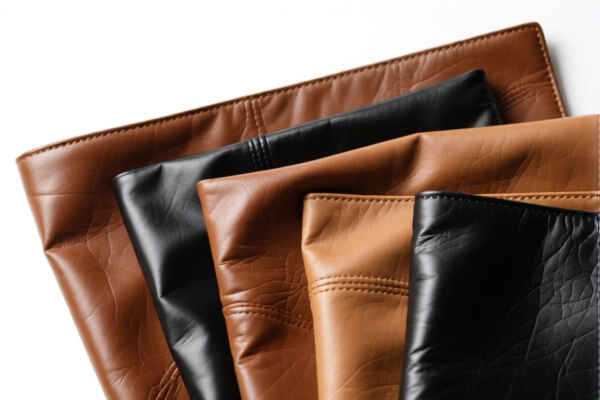
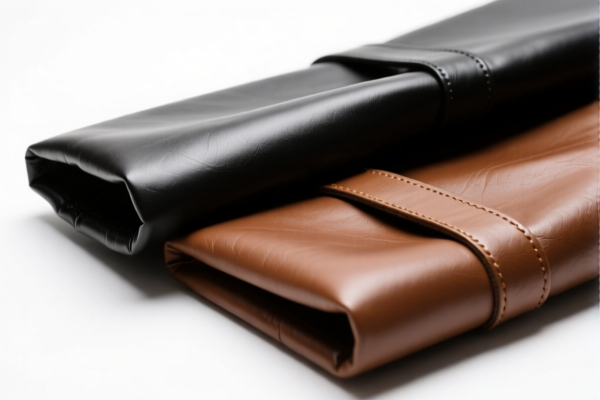
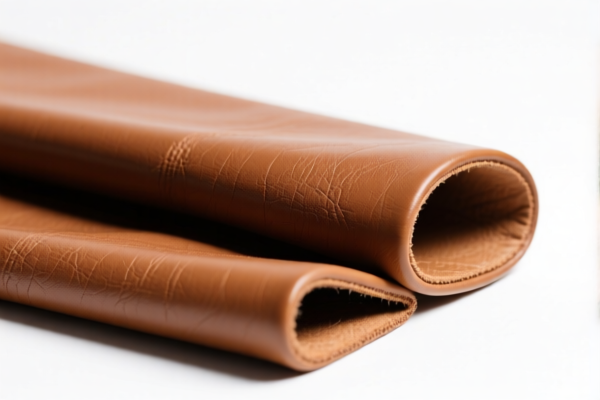
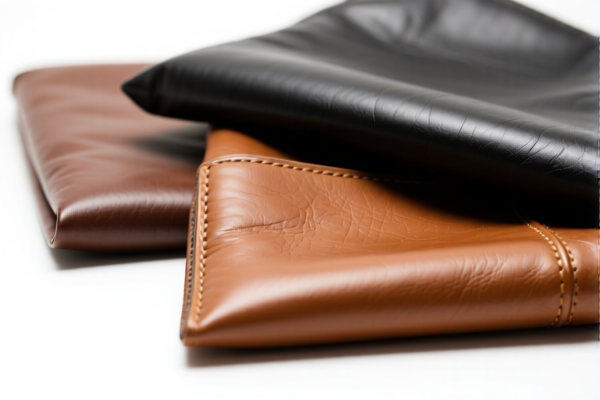
AI Analysis
🧵 Other Soft Leather (Unspecified Animal Origin/Processing)
🌐 HS Code Reference & Customs Clearance Guide | 2026 Latest Tariff Analysis | Specialized Transit Strategy
📌 I. Product Definition: What is "Other Soft Leather"?
"Other Soft Leather" is a residual category in international trade for leather products that do not fit into the specific definitions of tanned fur skins, split leather, or leather goods. It generally refers to tanned or half-tanned leather that is soft, flexible, and not further processed into specific items (like bags or shoes).
Key Characteristics: * Material: Leather from various animal sources (excluding those specifically categorized by species like bovine or equine in other chapters). * Processing Status: Tanned, crusted, or semi-tanned, but not further manufactured into articles (e.g., not yet cut for bags). * Texture: Must be "soft" (flexible), distinguishing it from stiff crust leather or raw hides.
⚠️ Critical Distinction:
- If the leather is from a specific animal (e.g., Cow, Sheep) and fits specific processing rules, it might fall under4104,4105, etc.
- If it is a generic "other" soft leather without specific animal specification or processing that excludes it from other headings, it falls under Chapter 41 (4106 or 4114).
📦 II. HS Code Classification Details (2026 Latest Tariff Data)
Based on the provided data, the following HS Codes are applicable for "Other Soft Leather." All entries reflect high tariffs due to US-China trade tensions (Section 301 & IEEPA).
| HS Code | Product Description & Rationale | Total Tax Rate | Tax Breakdown (Base + 301 + 122) |
|---|---|---|---|
| 4114.20.70.00 | Other Soft Leather ✅ Rationale: Matches product name "Other Soft Leather" with consistent material attributes. No conflicts with other categories. 📌 Best Fit: Most precise match for generic "other soft leather." |
36.6% | Base: 1.6% + Sec 301: 25.0% + Sec 122: 10% |
| 4106.92.00.00 | Other Soft Leather, Other ✅ Rationale: "Other soft leather" aligns with the classification of leather that is not further processed. Soft leather is an attribute of unshaved/unsplit tanned leather. 📌 Alternative: Used if leather is considered "other" under heading 4106. |
38.3% | Base: 3.3% + Sec 301: 25.0% + Sec 122: 10% |
| 4114.10.00.00 | Other Soft Leather ✅ Rationale: Soft leather meets material requirements. The "other" category acts as a catch-all with no conflicts. 📌 Note: Lower base tariff (3.2%) but still high total. |
38.2% | Base: 3.2% + Sec 301: 25.0% + Sec 122: 10% |
| 4106.91.00.00 | Other Soft Leather, Other ✅ Rationale: Aligns with classification. Soft leather fits the attribute of tanned or semi-tanned leather under heading 4106. 📌 Alternative: Focuses on tanning stage. |
38.3% | Base: 3.3% + Sec 301: 25.0% + Sec 122: 10% |
| 4113.90.30.00 | Other Soft Leather, Other ✅ Rationale: Leather material matches; fits description of non-specific animal leather and processing characteristics. 📌 Alternative: For leather that doesn't fit 4104/4105/4106/4107 specificities. |
38.3% | Base: 3.3% + Sec 301: 25.0% + Sec 122: 10% |
🔍 Key Insight:
- 4114.20.70.00 has the lowest total tax rate (36.6%) because its base tariff is lower (1.6% vs 3.3%).
- All other codes have a base tariff of 3.3%, leading to a 38.3% total rate.
- Section 122 Tariff (10%) and Section 301 Tariff (25%) are applied uniformly across all these codes for Chinese-origin goods.
💰 III. 2026 Latest Tariff Rate Details (Including Surcharges)
✅ Applicable Country: United States (US)
✅ Origin: China (CN)
✅ Effective Date: As per current trade policies (Section 301 & IEEPA)
🎯 1. 4114.20.70.00 — Other Soft Leather (Lowest Total Tax)
| Item | Detail |
|---|---|
| Base Tariff | 1.6% (Ad Valorem) |
| USITC Surcharge (Sec 301) | +25.0% |
| IEEPA Surcharge (Sec 122) | +10.0% |
| Total Tax Rate | 36.6% |
| Calculation | CIF Value × 36.6% |
| De Minimis Exemption | ❌ Not Eligible (deny_de_minimis) |
| Legal Path | IEEPA:9903.01.25 → USITC:4114.20.70.00 → FOOTNOTE:Sec122 |
📌 Explanation:
- The 25% surcharge is due to USITC Section 301 duties on Chinese goods.
- The 10% surcharge is from IEEPA Section 122 (if applicable to specific leather categories).
- Total 36.6% is a significant cost driver. Proper classification to this code saves 1.7% compared to other options.
🎯 2. 4106.92.00.00 / 4106.91.00.00 / 4114.10.00.00 / 4113.90.30.00 — Other Soft Leather (Higher Tax)
| Item | Detail |
|---|---|
| Base Tariff | 3.2% – 3.3% (Ad Valorem) |
| USITC Surcharge (Sec 301) | +25.0% |
| IEEPA Surcharge (Sec 122) | +10.0% |
| Total Tax Rate | 38.2% – 38.3% |
| Calculation | CIF Value × 38.3% (Max) |
| De Minimis Exemption | ❌ Not Eligible (deny_de_minimis) |
📌 Note:
- The difference between 36.6% and 38.3% is small but critical for high-volume shipments.
- 4114.10.00.00 has a base of 3.2% (Total 38.2%), while others have 3.3% (Total 38.3%).
- All are subject to the same surcharges.
🛠️ IV. Customs Clearance Practical Advice (Pitfall Avoidance)
✅ 1. Required Documentation Checklist
| Document | Mandatory? | Purpose |
|---|---|---|
| ✅ Product Specification Sheet | ✔️ | Must state: "Soft Leather," material source (if known), tanning process, and dimensions. |
| ✅ Commercial Invoice | ✔️ | Must clearly describe as "Other Soft Leather" and specify HS Code (preferably 4114.20.70.00). |
| ✅ Packing List | ✔️ | Detail weight, dimensions, and packaging type. |
| ✅ Certificate of Origin (CO) | ✔️ | Proof of Chinese origin to assess correct surcharges. |
| ✅ Tanning Certificate | ✔️ | To prove the leather is tanned/semi-tanned, not raw hides. |
| ✅ Photos of Goods | ✔️ | Show texture, flexibility, and lack of further processing (e.g., no stitching, no bags formed). |
✅ 2. Declaration Strategy (Key Tips)
🔥 "Softness is Key, Specify Origin, Use Correct HS!"
| Scenario | Correct Declaration | Incorrect Declaration |
|---|---|---|
| Generic Soft Leather | Use 4114.20.70.00 ("Other Soft Leather") |
Using 4104/4105 (Bovine/Sheep) if not specified → Higher scrutiny |
| Leather for Bag Making | Declare as "Raw Material: Soft Leather" | Declaring as "Bag Parts" → Misclassification |
| Mixed Materials | Separate "Leather" from "Fabric" | Combining into one line item → Risk of audit |
| Chinese Origin | Must declare CN origin | Hiding origin → Penalty & Deportation |
✅ 3. Special Circumstances
| Situation | Recommendation |
|---|---|
| OEM Custom Leather | Provide customer specifications and design files to prove it is not a finished good. |
| Sample Shipment | Even samples are subject to tariffs if value exceeds $800 de minimis (unlikely for leather samples, but verify). Note: De Minimis does NOT apply to Section 301 goods from China. |
| Leather from Non-China Origin | If origin is Vietnam/Mexico, apply for IEEPA/Sec 301 Exemption → Tariff drops to ~3-5%. |
| Dispute on "Softness" | Customs may test flexibility. Ensure product meets "soft" criteria, not "crust" or "stiff." |
🌍 V. Global Market Comparison (2026)
| Country/Region | Recommended HS Code | Base Tariff | Sec 301 | Sec 122 | Total Rate (China Origin) |
|---|---|---|---|---|---|
| 🇺🇸 USA | 4114.20.70.00 |
1.6% | +25% | +10% | 36.6% |
| 🇺🇸 USA | 4106.92.00.00 |
3.3% | +25% | +10% | 38.3% |
| 🇨🇳 China | 4114.20.70.00 |
1.6% | 0% | 0% | 1.6% |
| 🇪🇺 EU | 4114.20.00.00 |
5.5% | 0% | 0% | 5.5% |
| 🇯🇵 Japan | 4114.20.00.00 |
10.5% | 0% | 0% | 10.5% |
📌 Conclusion:
- USA is the most expensive market for Chinese-origin soft leather due to dual surcharges.
- EU and Japan have significantly lower rates but no Section 301 exemptions for China.
- China-origin goods in the US face a ~37% tax burden, which must be factored into pricing.
📌 VI. Common Mistakes & Pitfalls (Lessons Learned)
❌ Mistake 1: Declaring "Soft Leather" as "Finished Leather Goods"
👉 Consequence: Higher tariff or misclassification penalty.
✅ Fix: Emphasize "Unfinished" or "Raw Material" status.
❌ Mistake 2: Using 4104.41 (Bovine) for non-bovine leather
👉 Consequence: Customs rejects, delays, and demands reclassification.
✅ Fix: If animal type is unknown or mixed, use 4114.20.70.00.
❌ Mistake 3: Ignoring Section 122 Tariff
👉 Consequence: Underpayment of 10% → Fine & Interest.
✅ Fix: Always include 10% Sec 122 in cost calculations for Chinese leather.
❌ Mistake 4: Assuming De Minimis ($800) Applies
👉 Consequence: Goods seized or back-charged.
✅ Fix: Section 301 and 122 goods from China are NEVER eligible for de minimis.
🎯 VII. Conclusion: Professional Declaration, Cost Efficiency
🎯 Remember the Motto:
🔹 "Classify as 4114.20.70.00 to Save 1.7%!"
🔹 "36.6% is the Best Rate for Chinese Soft Leather!"
🔹 "De Minimis Does Not Apply – Plan Budget Accordingly!"
📌 Pro Tip:
If your leather is originating from Vietnam, Mexico, or Thailand, apply for Exemption from Section 301 & 122. You can reduce your tax burden from 36.6% to ~3-5%.
Recommendation:
📞 Contact a licensed customs broker.
📄 Submit product photos and specifications.
🚀 Get an Advance Ruling to lock in the4114.20.70.00classification and avoid audits.
✨ Professional Clearance Starts with Accurate Classification!
💼 Every 1% of tariff saved is pure profit!
Customer Reviews
About HS Code Classification
The Harmonized System (HS) is an internationally standardized nomenclature developed by the World Customs Organization (WCO) to classify traded products. Over 200 countries use the HS system as the basis for customs tariffs, trade statistics, and import/export regulations.
Each HS code follows a hierarchical structure:
- Chapter (2 digits) — Broad category of goods (e.g., Chapter 84: Machinery and Mechanical Appliances)
- Heading (4 digits) — More specific grouping within the chapter
- Subheading (6 digits) — Internationally standardized breakdown, used by all WCO member countries
- National subdivisions (8-10 digits) — Country-specific extensions for further classification, such as US HTSUS 10-digit codes
Correct HS code classification is essential for smooth customs clearance, accurate duty payment, and compliance with trade regulations. Misclassification can lead to customs delays, overpayment of duties, or penalties.
When importing from CN to US, the applicable tariff rates may include:
- Most-Favored-Nation (MFN) rate — The standard duty rate applied to WTO members
- General rate — Applied to countries without trade agreements
- Trade remedy duties — Additional tariffs such as Section 301 (anti-dumping), Section 232 (national security), or countervailing duties
The information provided on this page is for reference purposes only. For official classification, please consult with your local customs authority or a licensed customs broker.