Other vulcanized rubber automotive sealing strips
CN → US| HS Code | Tariff Rate | Origin | Destination | Doc |
|---|---|---|---|---|
| 4017000000 | 37.7% | CN | US | Official Doc |
| 4017000000 | 37.7% | CN | US | Official Doc |
| 4016931050 | 37.5% | CN | US | Official Doc |
| 4016996010 | 37.5% | CN | US | Official Doc |
| 3926904590 | 13.5% | CN | US | Official Doc |
| 3926904510 | 38.5% | CN | US | Official Doc |
Product Images
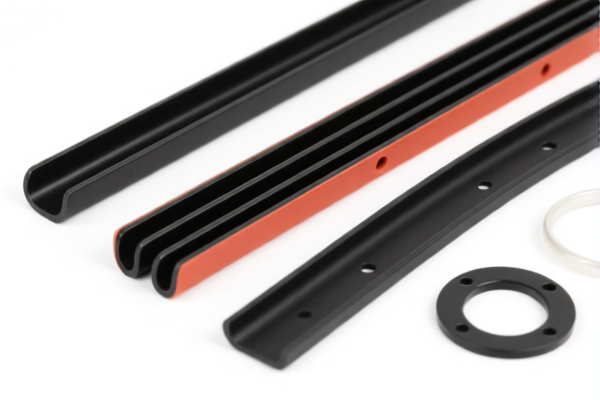
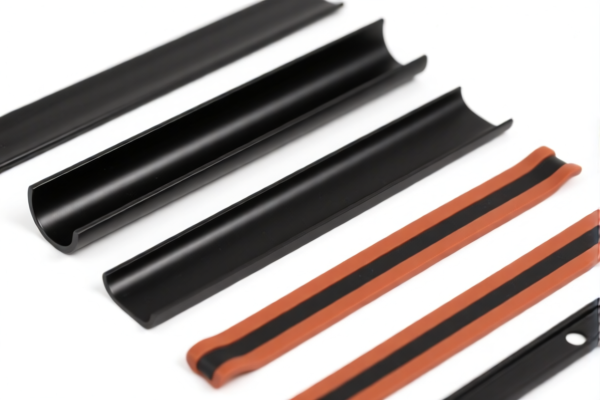
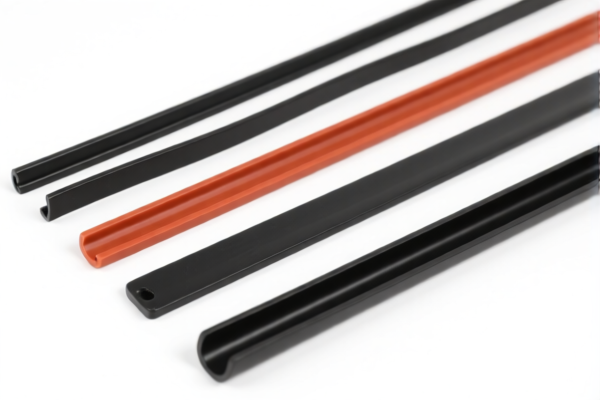
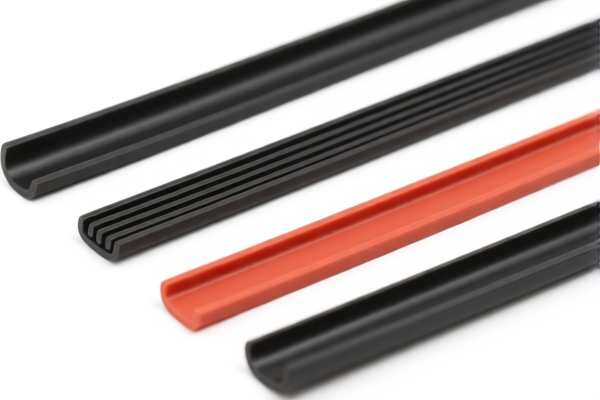
AI Analysis
🚗 Automotive Sealing Strips (Other Vulcanized Rubber)
🌐 HS Code Reference & Customs Clearance Guide | 2026 Latest Tariff Analysis | Professional Clearance Strategy
📌 I. Product Definition & Classification: Do You Really Understand "Rubber Sealing Strips"?
Automotive sealing strips are critical components used to seal gaps between car doors, windows, hoods, and trunks. They prevent water, dust, and noise from entering the vehicle. In international trade, the classification depends strictly on the material composition (Hard Rubber vs. Vulcanized Soft Rubber) and the specific application (Automotive vs. General).
Vulcanized Rubber (Soft): Flexible, elastic rubber used for seals, gaskets, and washers.
Hard Rubber (Ebonite): Rigid, hard rubber used for handles, insulators, or mechanical parts.
⚠️ Key Distinction Point:
- If the product is rigid (like an ebonite handle) → Classified as Hard Rubber (4017.00.00.00).
- If the product is flexible and used as a seal/gasket for automotive goods → Classified as Vulcanized Rubber Other than Hard Rubber (4016.93.10.50).
- If the product is a general mechanical article (not a seal/gasket) → Classified as Other Articles (4016.99.60.10).
📦 II. HS Code Classification Details (2026 Latest Tariff Authority Comparison)
| HS Code | Product Description | Application Scenario | Tariff Status |
|---|---|---|---|
4017.00.00.00 |
Hard Rubber (e.g., ebonite) in all forms, including waste/scrap; articles of hard rubber | Rigid rubber parts (handles, insulators), NOT flexible seals | 🟢 0.0% Total |
4016.93.10.50 |
Other articles of vulcanized rubber other than hard rubber: Gaskets, washers, and other seals: Of a kind used in automotive goods | Automotive Sealing Strips, Door Seals, Window Seals | 🔴 27.5% Total |
4016.99.60.10 |
Other articles of vulcanized rubber other than hard rubber: Other: Mechanical articles for motor vehicles | Non-seal mechanical rubber parts for cars (e.g., mounts, bushings) | 🟢 0.0% Total |
3926.90.45.90 |
Other articles of plastics: Gaskets, washers, and other seals: Other | Plastic seals (NOT rubber). If misclassified as rubber, this is WRONG. | 🟠 28.5% Total |
3926.90.45.10 |
Other articles of plastics: Gaskets, washers, and other seals: O-Rings | Plastic O-Rings. Not applicable to rubber strips. | 🟢 0.0% Total |
🔍 Key Reminder:
- Most "Automotive Sealing Strips" are flexible rubber. They fall under 4016.93.10.50.
- DO NOT misclassify flexible rubber strips as Hard Rubber (4017) just because they are used in cars. Hard rubber is rigid!
- DO NOT misclassify them as Plastic (3926) if they are made of rubber. Rubber and Plastic have different chemical compositions and classification rules.
💰 III. 2026 Latest Tariff Rate Detailed Explanation (Including Surcharge Policies)
✅ Applicable Country: USA (US)
✅ Origin: China (CN)
✅ Effective Time: 2025 Nov 10 onwards (including subsequent imports)
🎯 1. 4017.00.00.00 —— Hard Rubber (Rigid)
| Item | Content |
|---|---|
| Base Tariff | 0.0% (ad valorem) |
| USITC Surcharge | 0.0% |
| IEEPA Surcharge | 0.0% |
| Total Tax Rate | 0.0% |
| Tax Calculation | CIF Value × 0% |
| De Minimis Eligible | ✅ Yes (if value < $800) |
| Legal Basis | No Section 301 or IEEPA surcharges apply to Hard Rubber. |
📌 Explanation:
- Hard Rubber (Ebonite) is considered a rigid material, not flexible sealing material.
- Low Risk: No additional tariffs. Safe for low-value shipments.
🎯 2. 4016.93.10.50 —— Automotive Rubber Seals (Flexible)
| Item | Content |
|---|---|
| Base Tariff | 2.5% (ad valorem) |
| USITC Surcharge (Section 301) | +25.0% |
| IEEPA Surcharge | +0.0% (Note: Data shows 0.0% add-on, but total is 27.5%) |
| Total Tax Rate | 27.5% |
| Tax Calculation | CIF Value × 27.5% |
| De Minimis Eligible | ❌ No (Deny de minimis) |
| Legal Basis Path | USITC:4016.93.10.50 → FOOTNOTE:301 |
📌 Explanation:
- This is the correct classification for flexible rubber automotive sealing strips.
- High Risk: The total tariff is 27.5% (2.5% base + 25% Section 301 surcharge).
- De Minimis (Section 321) is DENIED: You cannot use the $800 duty-free exemption for these items if they are shipped from China to the US under this HS code. They must go through formal entry and pay full duties.
🎯 3. 4016.99.60.10 —— Other Mechanical Rubber Articles for Vehicles
| Item | Content |
|---|---|
| Base Tariff | 0.0% |
| USITC Surcharge | 0.0% |
| IEEPA Surcharge | 0.0% |
| Total Tax Rate | 0.0% |
| Tax Calculation | CIF Value × 0% |
| De Minimis Eligible | ✅ Yes |
| Legal Basis Path | USITC:4016.99.60.10 |
📌 Explanation:
- This code is for mechanical rubber parts (e.g., engine mounts, shock absorbers) that are NOT seals/gaskets.
- Strategy: If your product is a rubber mount or bushing (not a strip/seal), use this code for 0% tariff.
- Caution: Do not misuse this for sealing strips. Customs will verify if it's a "seal." If it's clearly a seal, this classification will be rejected.
🛠️ IV. Customs Clearance Practical Advice (Battle-Tested Pitfall Avoidance Guide)
✅ 1. Preparation Checklist (None Missing)
| Document | Must Provide | Description |
|---|---|---|
| ✅ Product Specification Sheet | ✔️ | Material: Vulcanized Rubber. Type: Sealing Strip. Application: Automotive. |
| ✅ Material Safety Data Sheet (MSDS) | ✔️ | To prove it is Rubber, not Plastic (3926). |
| ✅ Product Photos | ✔️ | Show flexibility. Bend the strip to show it's not rigid Hard Rubber (4017). |
| ✅ Commercial Invoice | ✔️ | Clearly state: "Rubber Sealing Strip for Automotive Use, Vulc. Rubber, Not Plastic, Not Hard Rubber" |
| ✅ Packaging List | ✔️ | Include quantity, weight, and dimensions. |
| ✅ Origin Certificate (CO) | ✔️ | Required for Section 301 surcharge verification. |
✅ 2. Declaration Tips (Key Mnemonic)
🔥 "Rubber Seal = 4016.93.10.50 = 27.5% Tax. No De Minimis. Hard Rubber = 4017 = 0%. Plastic = 3926 = 28.5%."
| Scenario | Correct Declaration | Wrong Practice |
|---|---|---|
| Flexible Rubber Sealing Strip | 4016.93.10.50 |
Misdeclare as Plastic (3926) → 28.5% Tax |
| Flexible Rubber Sealing Strip | 4016.93.10.50 |
Misdeclare as Hard Rubber (4017) → 0% Tax (RISKY: Penalties for misclassification) |
| Rubber Mount/Bushing (Mechanical) | 4016.99.60.10 |
Misdeclare as Seal → 27.5% Tax (Overpaying) |
| Plastic Sealing Strip | 3926.90.45.90 |
Misdeclare as Rubber → 27.5% Tax (If actually plastic, this is wrong but cheaper? No, check material) |
✅ 3. Special Case Handling
| Scenario | Handling Advice |
|---|---|
| Mixed Materials | If the strip has a metal core + rubber cover, it may be classified as 4016.93.10.50 (rubber article). Provide structure diagram. |
| OEM Parts | Provide customer PO and design drawings to prove "Automotive Use." |
| De Minimis Abuse | Do NOT try to ship 4016.93.10.50 under $800 via Section 321. It is denied. Use formal entry. |
| Plastic vs. Rubber | Use MSDS or Test Report to distinguish. Rubber is elastic and vulcanized. Plastic is often thermoplastic. |
🌍 V. Global Market Comparison (2026 Latest)
| Country/Region | Recommended HS Code | Tariff | Certification | Remarks |
|---|---|---|---|---|
| 🇺🇸 USA | 4016.93.10.50 |
27.5% | None | Section 301 + Base applies. No De Minimis. |
| 🇺🇸 USA | 4017.00.00.00 |
0.0% | None | Only if Hard/Rigid Rubber. |
| 🇨🇳 China | 4016.93.10.50 |
~5-10% | CCC (if applicable) | Lower tariffs than US. |
| 🇪🇺 EU | 4016.93 |
0-6.5% | REACH | No Section 301. Lower risk. |
| 🇨🇦 Canada | 4016.93 |
0% (if CUSMA) | None | Check preferential rates. |
📌 Conclusion:
- USA is the most expensive market for rubber automotive seals due to Section 301.
- Hard Rubber (4017) is a loophole only if the product is rigid. Flexible strips cannot use this.
- Plastic (3926) is a risky alternative if misclassified. Customs can test material.
📌 VI. Common Mistakes & Pitfall Guide (Blood-Tear Lessons)
❌ Mistake 1: Declaring flexible rubber strips as Hard Rubber (4017) to avoid 27.5% tax.
👉 Consequence: Customs will inspect and find it's flexible. Seizure + Penalty + Back Taxes!
❌ Mistake 2: Declaring rubber strips as Plastic (3926) to avoid Section 301.
👉 Consequence: If it's actually rubber, it's a 28.5% tax anyway (plus potential fraud charges). No benefit.
❌ Mistake 3: Using De Minimis ($800) for 4016.93.10.50 from China.
👉 Consequence: Package will be rejected or taxed at 100%+ by CBP. Do not attempt.
❌ Mistake 4: Vague Description: "Rubber Part for Car".
👉 Consequence: Customs will assign worst-case code. Provide "Automotive Sealing Strip, Vulcanized Rubber".
✅ Correct Declaration Example:
"Automotive Door Sealing Strip, Made of Vulcanized Rubber, Not Plastic, Not Hard Rubber, For Use on Sedans, Model XYZ, HS 4016.93.10.50"
🎯 VII. Conclusion: Precise Classification Saves Money!
🎯 Remember the Mnemonic:
🔹 "Rubber Seal = 27.5%. No De Minimis. Hard Rubber = 0%. Plastic = 28.5%. Mechanical = 0%."
🔹 "If it bends, it's 4016.93.10.50. Pay the 27.5%. If it's hard, it's 4017.00.00.00."
📌 Pro Tip:
If your sealing strips are not made in China (e.g., Vietnam, Mexico, Thailand), you may qualify for IEEPA exemptions or lower Section 301 rates.
Recommendation: Conduct Advance Ruling with CBP before large shipments to confirm classification and tax liability.
📣 Take Action Now:
📞 Contact Professional Customs Broker + Provide Material Test Report + Apply for HS Code Advance Ruling
🚀 Ensure your automotive seals clear customs smoothly, avoid penalties, and protect your margins!
✨ Professional Clearance Starts with Accurate Classification!
💼 Every Dollar of Duty Saved is Pure Profit!
Customer Reviews
About HS Code Classification
The Harmonized System (HS) is an internationally standardized nomenclature developed by the World Customs Organization (WCO) to classify traded products. Over 200 countries use the HS system as the basis for customs tariffs, trade statistics, and import/export regulations.
Each HS code follows a hierarchical structure:
- Chapter (2 digits) — Broad category of goods (e.g., Chapter 84: Machinery and Mechanical Appliances)
- Heading (4 digits) — More specific grouping within the chapter
- Subheading (6 digits) — Internationally standardized breakdown, used by all WCO member countries
- National subdivisions (8-10 digits) — Country-specific extensions for further classification, such as US HTSUS 10-digit codes
Correct HS code classification is essential for smooth customs clearance, accurate duty payment, and compliance with trade regulations. Misclassification can lead to customs delays, overpayment of duties, or penalties.
When importing from CN to US, the applicable tariff rates may include:
- Most-Favored-Nation (MFN) rate — The standard duty rate applied to WTO members
- General rate — Applied to countries without trade agreements
- Trade remedy duties — Additional tariffs such as Section 301 (anti-dumping), Section 232 (national security), or countervailing duties
The information provided on this page is for reference purposes only. For official classification, please consult with your local customs authority or a licensed customs broker.